Description
British Improper Position Ejection Seat Wind Tunnel Model
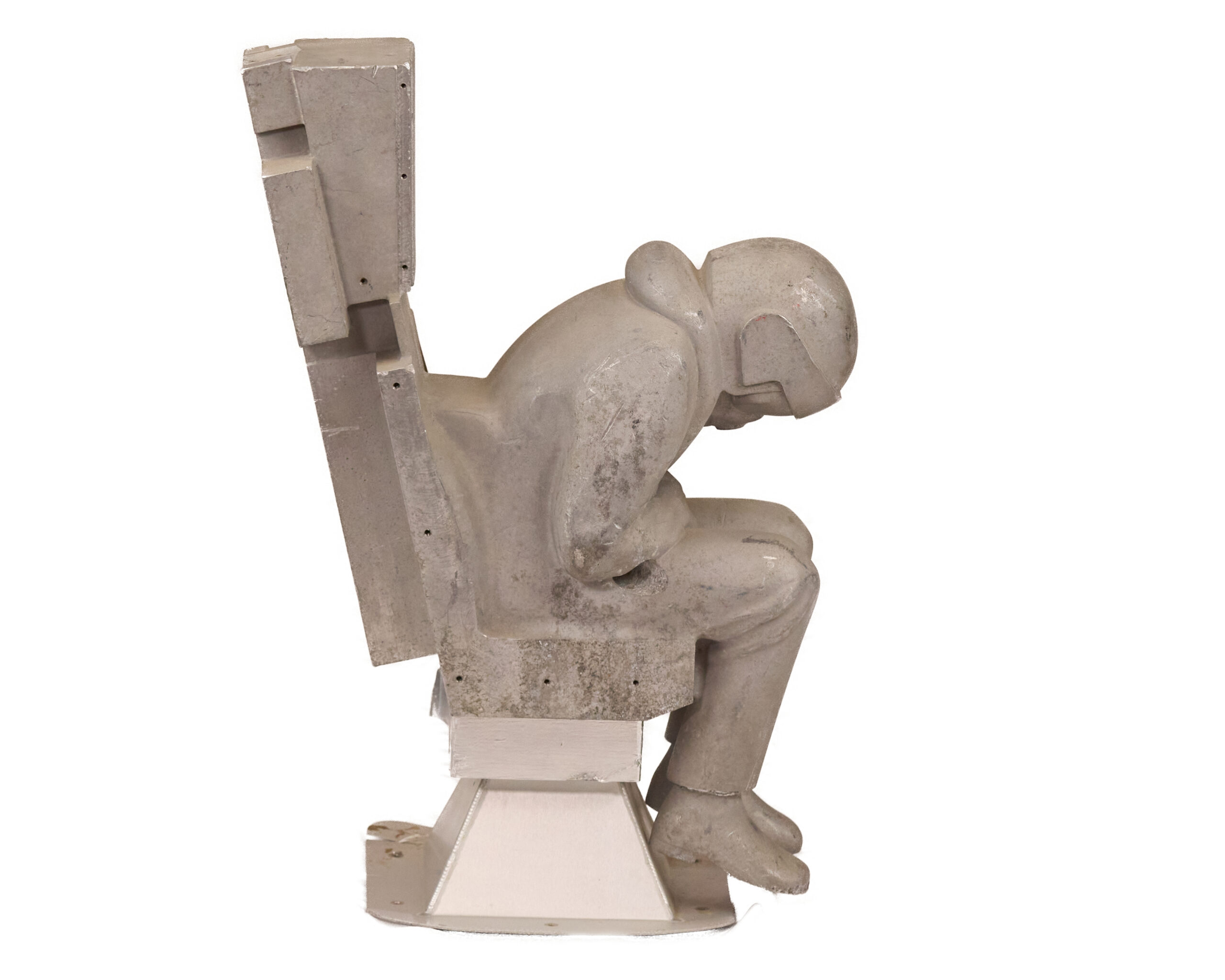
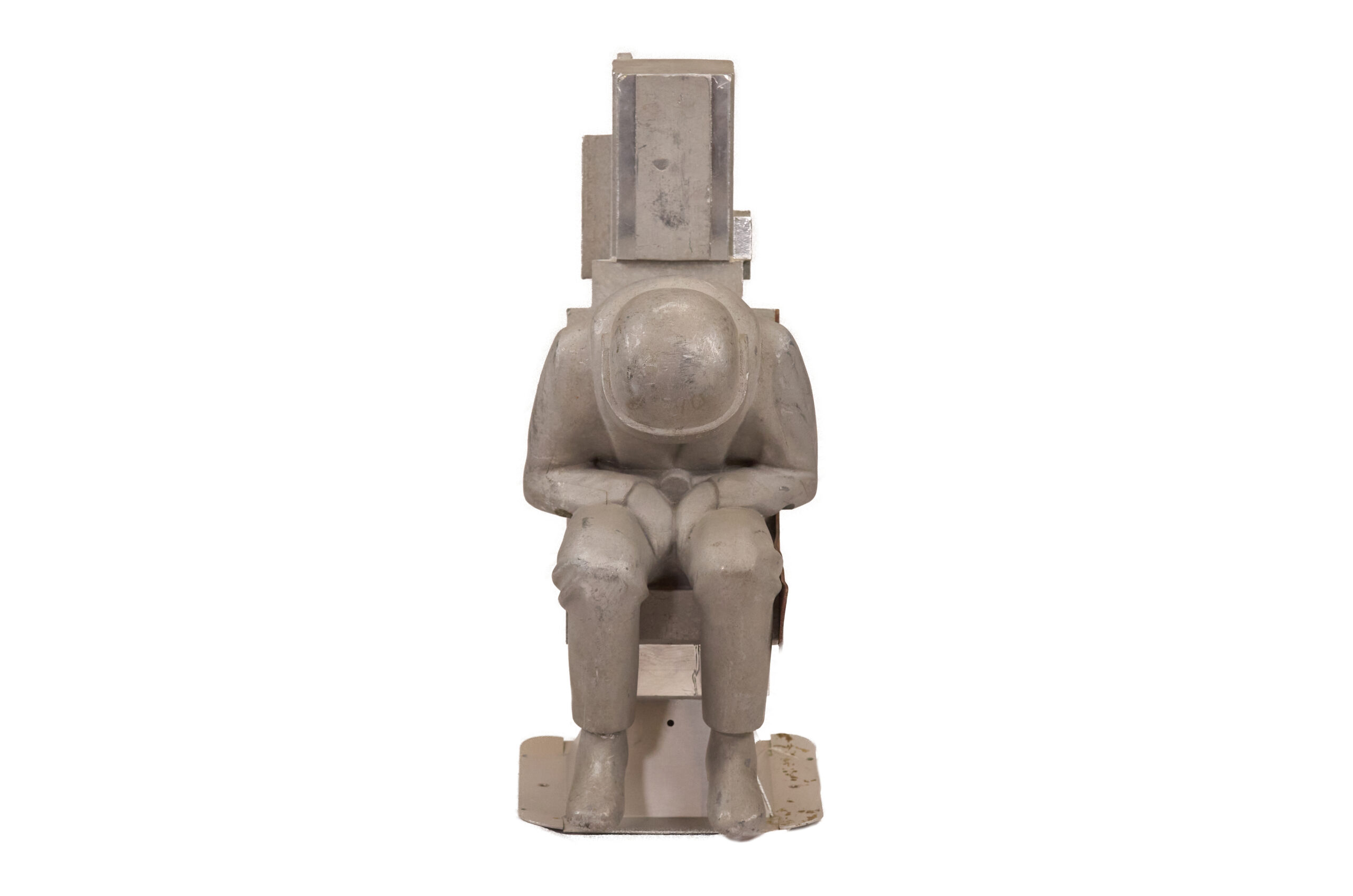
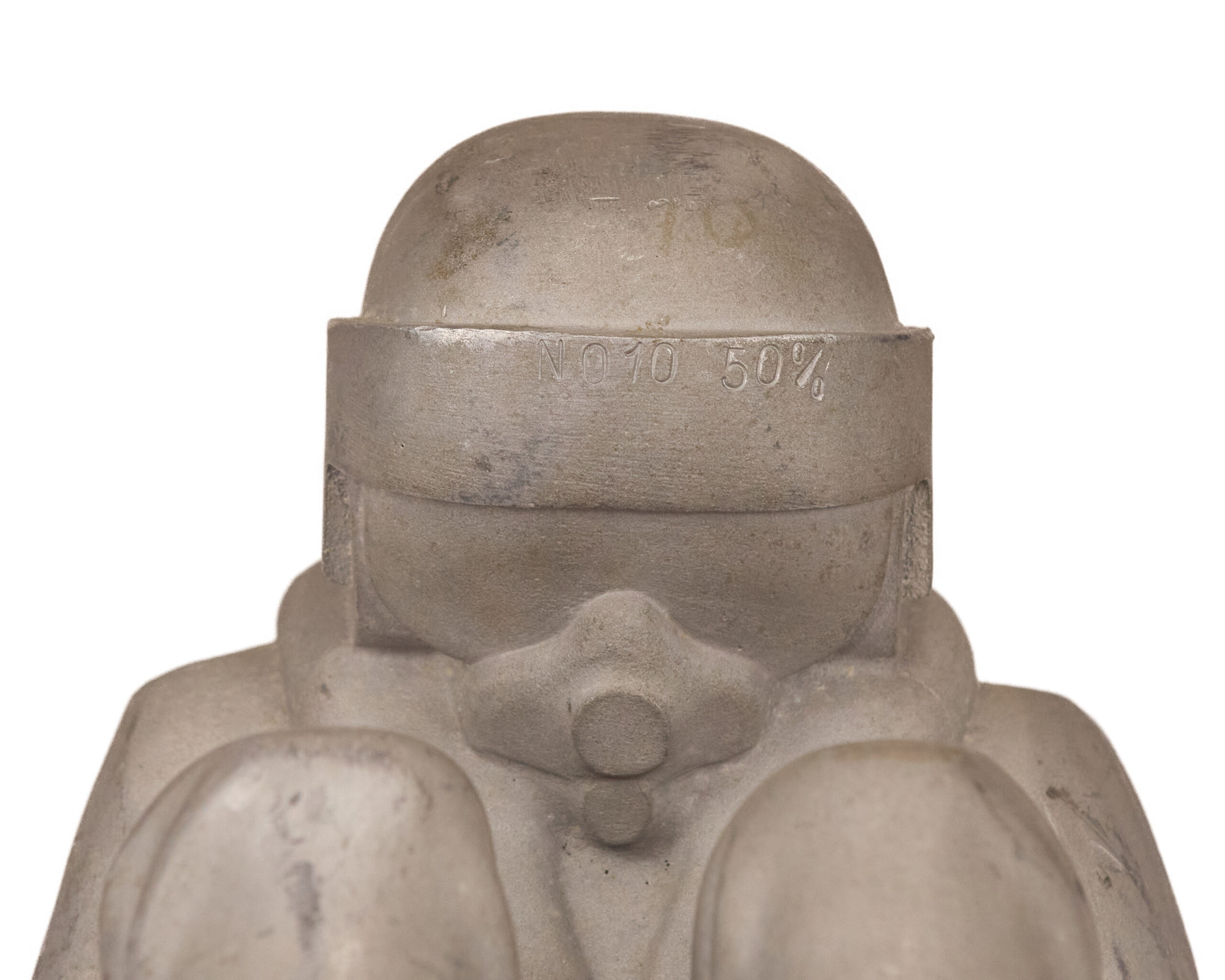
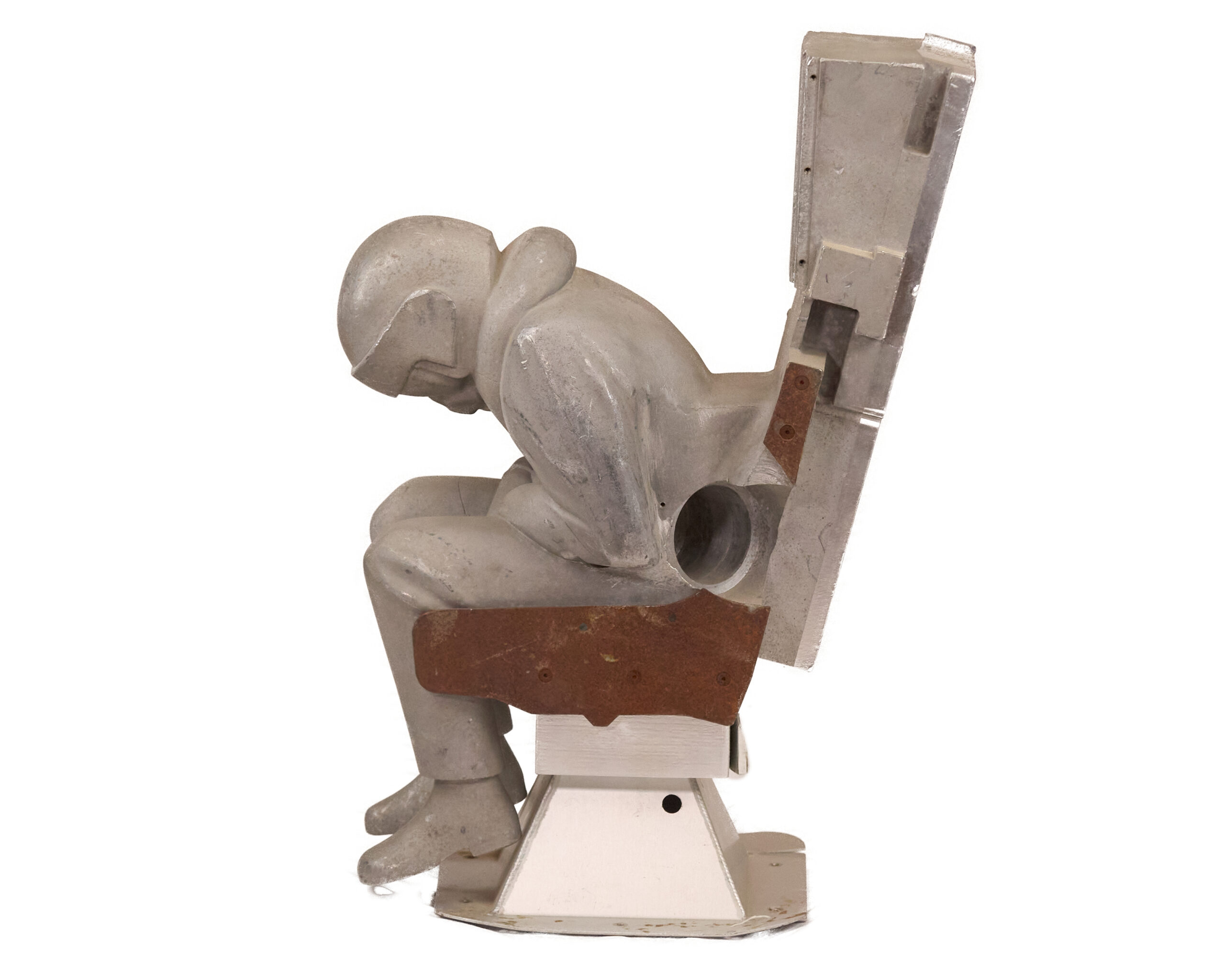
This British ejection seat wind tunnel model is a solid cast aluminum aerodynamic test article showing a seated pilot figure in a forward-slumped position. The model appears to represent an improper or dangerous body posture during ejection. It measures approximately 18 inches tall and weighs about 32 pounds. The helmet area is marked No. 10 50%, which likely indicates a numbered 50-percent scale test model. It is most likely Martin Baker surplus from the 1960’s. Martin baker was a pioneer in pilot safety during the 1960s with their progress made in ejection seat technology. The aluminum models represent the first steps in what is considered modern ejection seats. This model supposedly got saved from a scrapyard.
British Ejection Seat Wind Tunnel Model
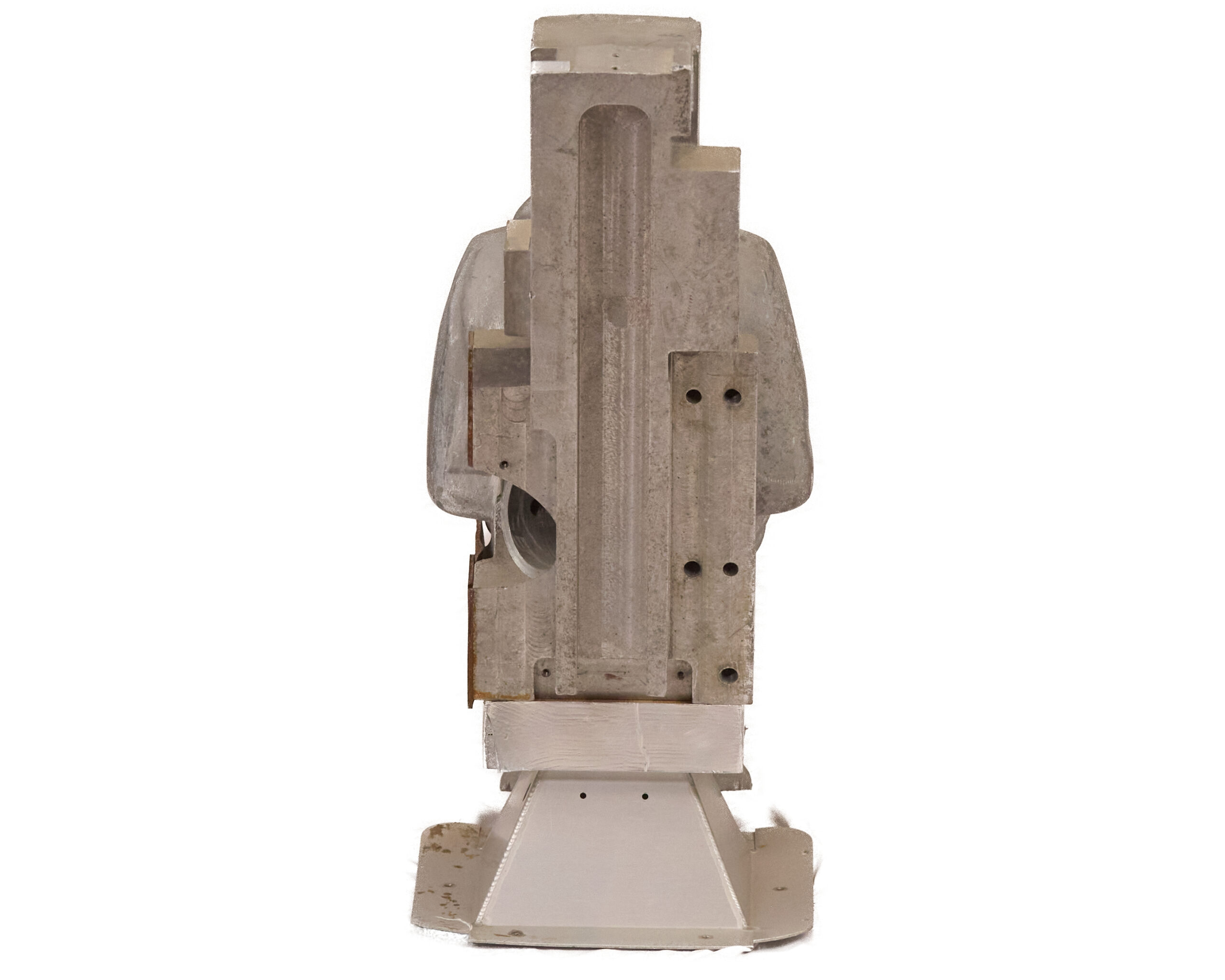
This is not a full-size ejection seat, cockpit trainer, or crew instruction seat. It is a scale wind tunnel model built for test use. The figure, seat back, head box area, and rear guide structure have simplified forms. Those shapes reduce unnecessary detail while preserving the features needed for aerodynamic or biomechanical study.
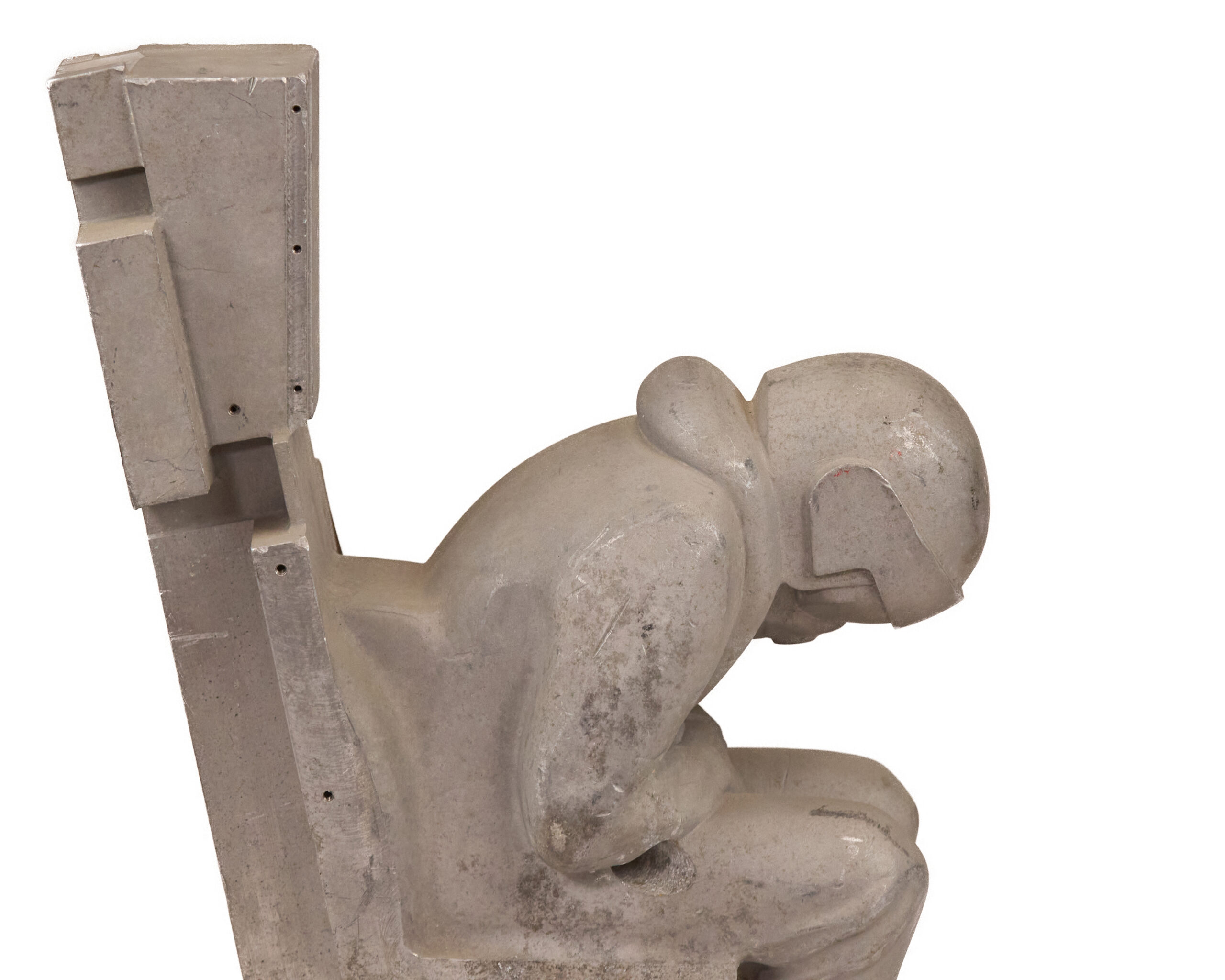
The model shows the pilot hunched forward with the head and upper torso pitched down. That pose would have allowed engineers to study airflow, body attitude, stability, or injury risk when the occupant left the aircraft in a poor position. Ejection research placed heavy emphasis on posture because forward spinal flexion and windblast could increase the danger to the pilot.
Construction / Configuration / Pattern
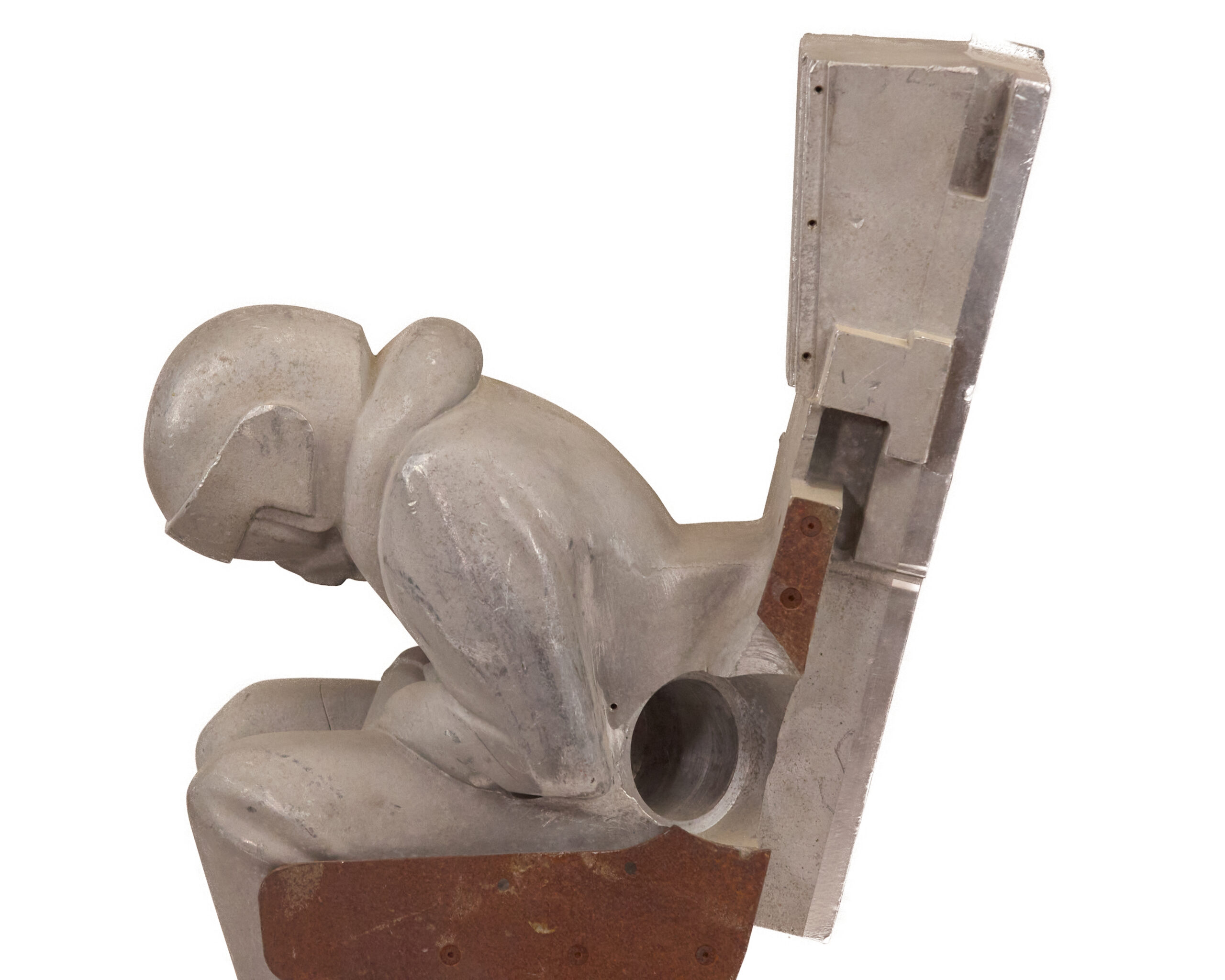
The model is cast in aluminum and finished in a dull grey surface. The figure and seat structure form one heavy test body. The rear section resembles a simplified ejection seat back, guide rail, and head box assembly rather than a complete operational seat. The shape leaves out working hardware, cushions, harness webbing, and survival equipment.
The pilot figure wears a simplified helmet and has rounded shoulders, bent arms, folded legs, and feet set forward. The body posture is the main technical feature. It fixes the occupant in a forward-slumped position rather than the upright posture preferred for ejection.
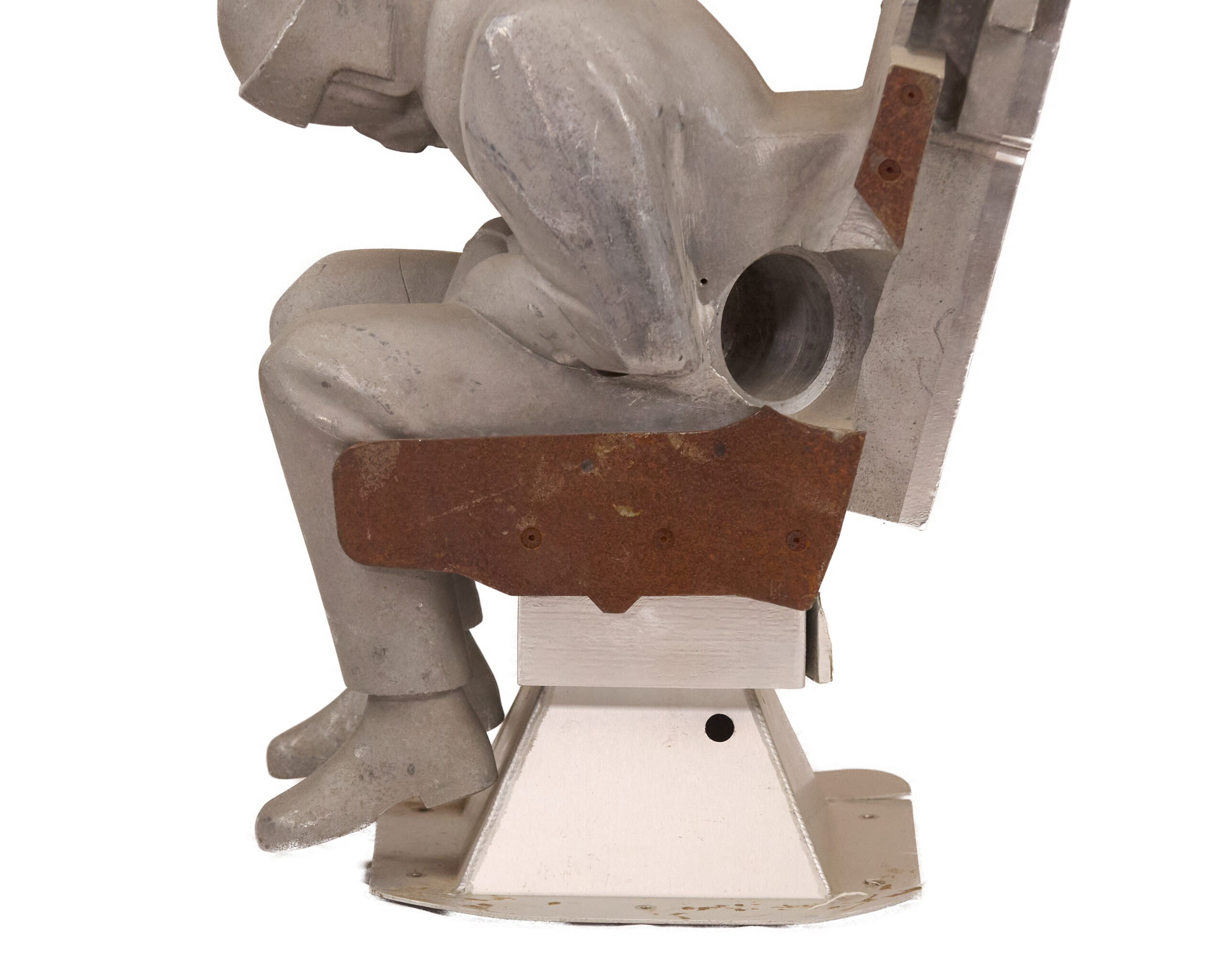
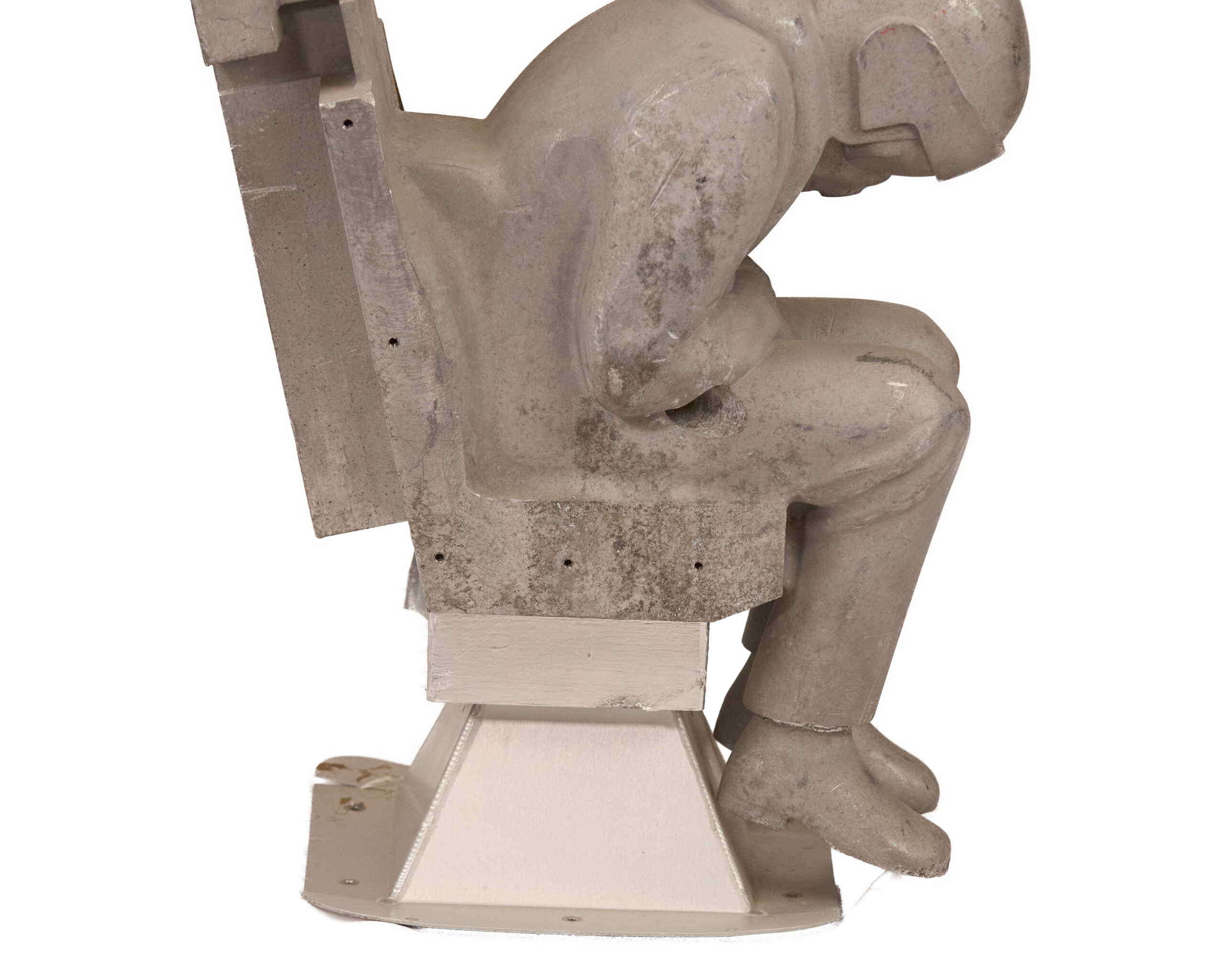
It has a mounting fixture machined in it for the wind tunnel ‘stinger’ arm (behind pilots left shoulder) which would allow precise placement and rotation in the airstream. The white lower base and flat mounting plates suggest that the piece bolted to a wind tunnel support, balance fixture, or test stand. Small drilled holes along the seat back and base also support that interpretation.
Brown side panels sit along the lower seat area. These may represent simplified seat structure, fairing panels, or harness-area geometry. The overall form favors mass, rigidity, and repeatable mounting over anatomical accuracy.
Historical Context / Pattern Development
Early jet aircraft created new problems for aircrew escape. At higher speeds, a pilot could no longer rely on simply leaving the cockpit by hand. Ejection seats solved part of that problem, but they also exposed the occupant to severe acceleration, windblast, and complex motion after leaving the aircraft.
British ejection seat development became closely tied to Martin-Baker after the Second World War. Early test work used dummies, live test firings, towers, aircraft trials, and later controlled development programs. Engineers had to study seat movement, guide rails, occupant restraint, limb position, and airblast effects.
Posture mattered. A safe ejection required the pilot to sit upright, with the spine aligned and the body restrained. A slumped or twisted posture could increase injury risk. Research models like this one gave engineers a way to isolate body position and seat shape in controlled airflow. The model’s forward-bent pose appears to document that exact problem.
Wind tunnel test articles also needed strength and repeatability. A solid aluminum model could withstand repeated mounting, handling, and aerodynamic loading. The large side opening and bolted base indicate a functional test object rather than a desk model or display casting.
The No. 10 50% marking on the helmet band gives the piece an especially technical character. It appears to identify the model number and scale. That mark, combined with the heavy cast construction, mounting features, and simplified ejection seat form, places this object firmly in the world of postwar aerospace escape-system testing.
Condition
This model shows honest test, handling, and storage wear throughout. The cast aluminum body has scuffs, scratches, discoloration, and areas of darker surface staining. The grey finish remains broadly present, but the surface shows age, oxidation, and abrasion.
The forward-slumped pilot form remains intact. The helmet, shoulders, arms, torso, legs, and feet all retain their original cast shape. The No. 70 50% marking remains visible on the helmet area. The rear seat-back structure and guide-rail form also remain present.
The white base shows repaint, chips, scratches, and edge wear. The lower mounting plates show drilled holes from attachment to a fixture or stand. The brown side panels show surface corrosion, finish loss, and age wear. The large circular side opening remains cleanly defined and gives the model a strong technical appearance.
Overall, this is a substantial and unusual British aerospace test artifact. It presents as a solid aluminum wind tunnel model rather than a training aid, full-size seat, or decorative casting.
Find it featured here in collects weekly!
https://www.collectorsweekly.com/stories/144507-ejection-seat-wind-tunnel-models?in=1194