Description
West German Bundeswehr MG3 Lafette Tripod – Hensoldt Optical Sight Set
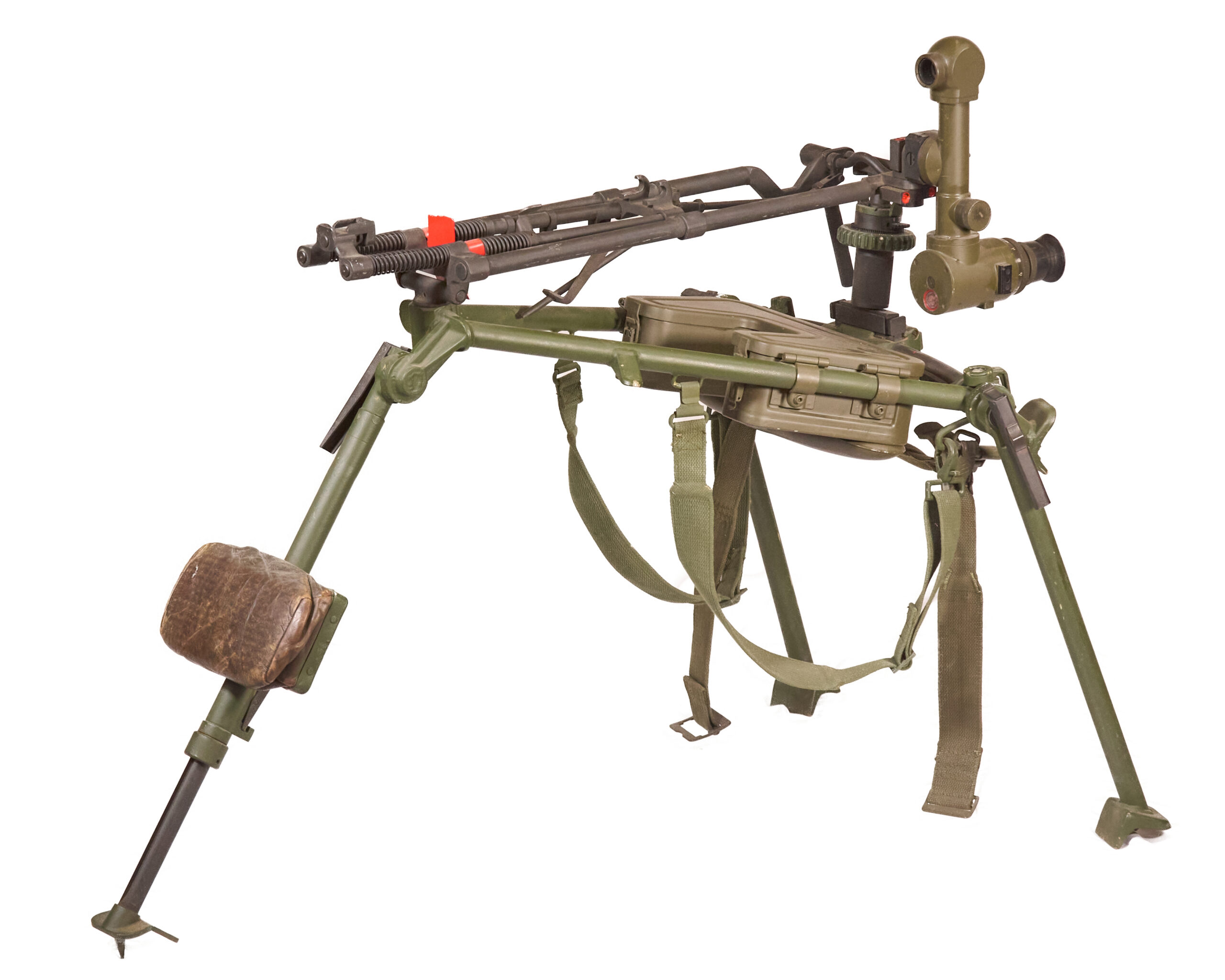
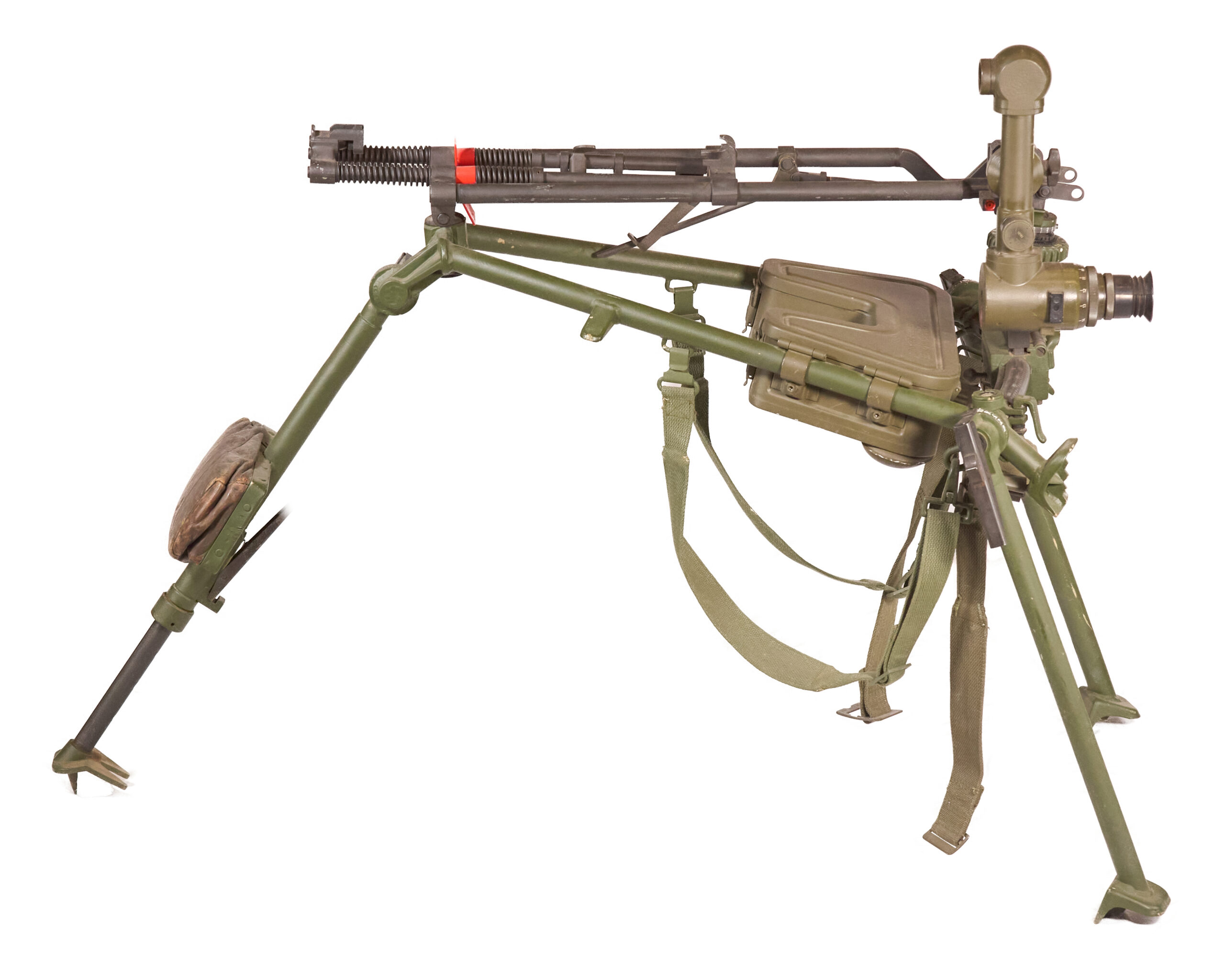
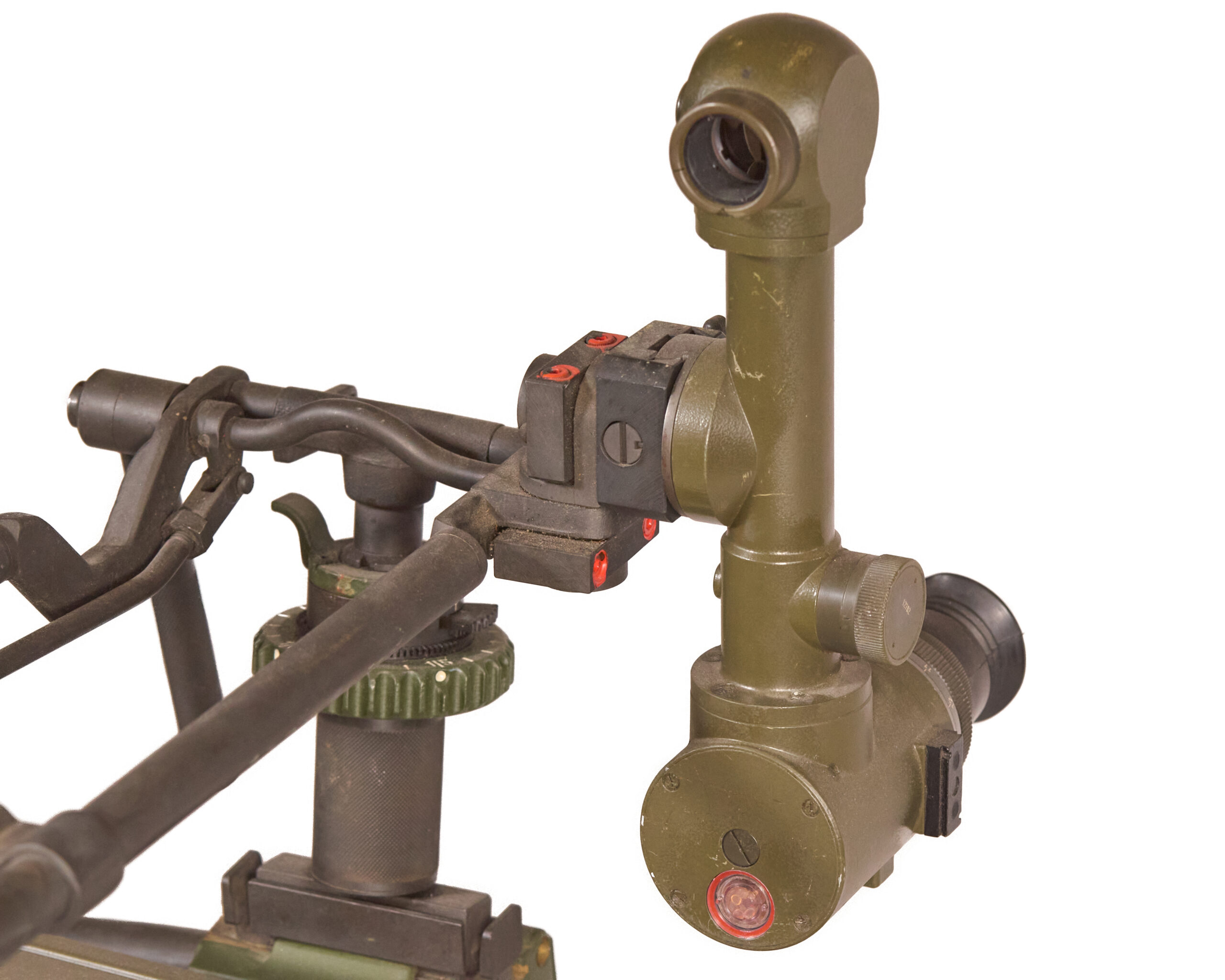
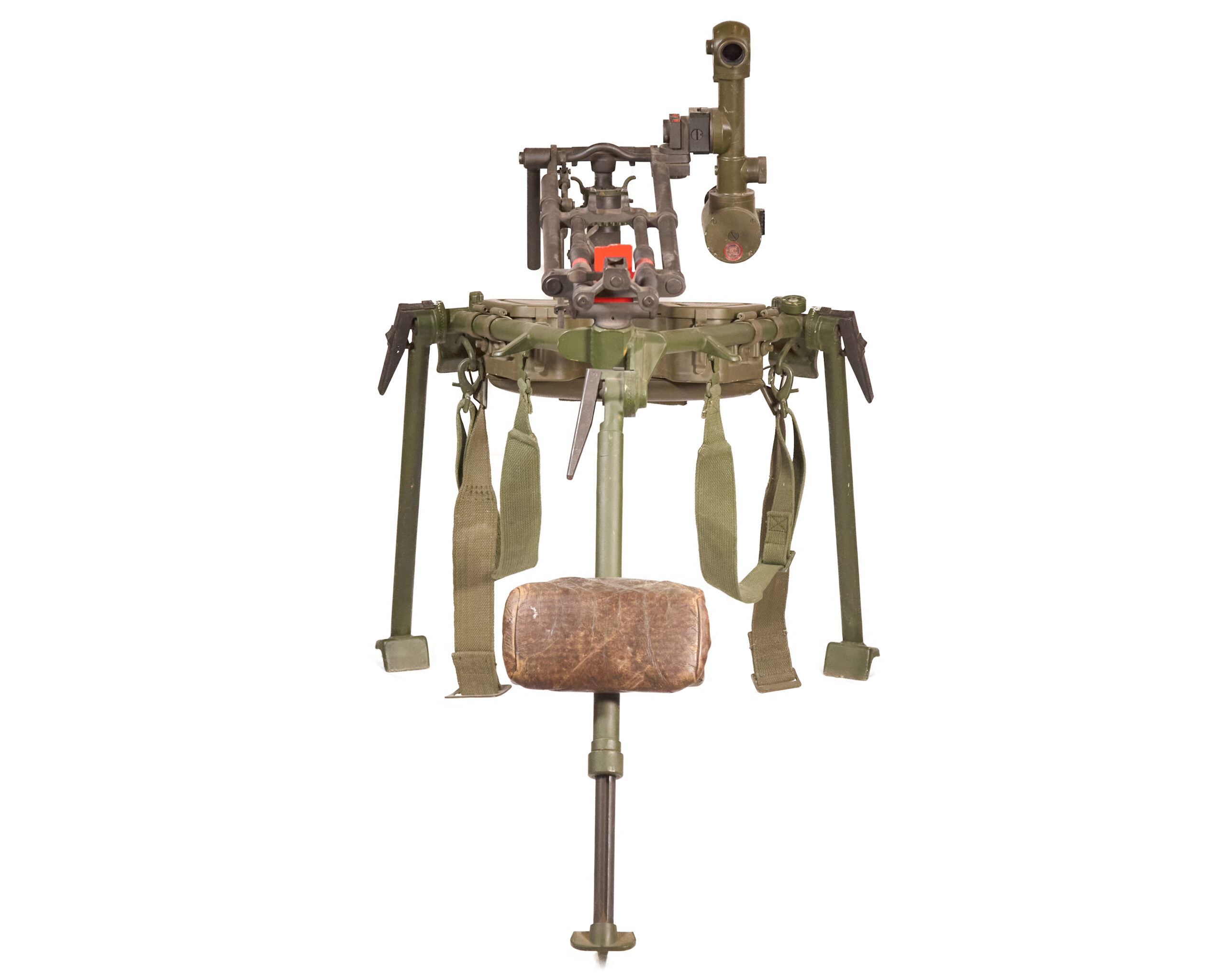
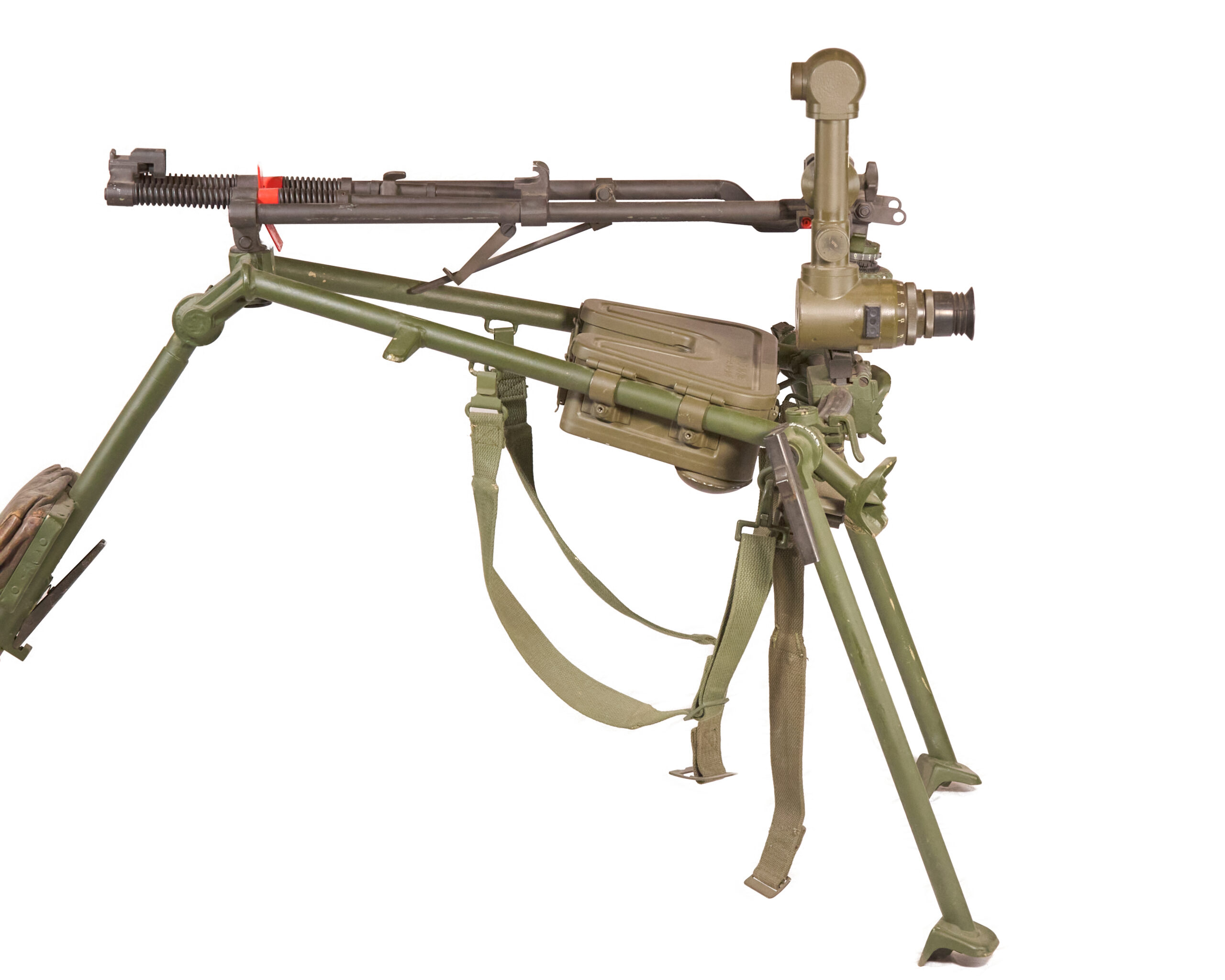
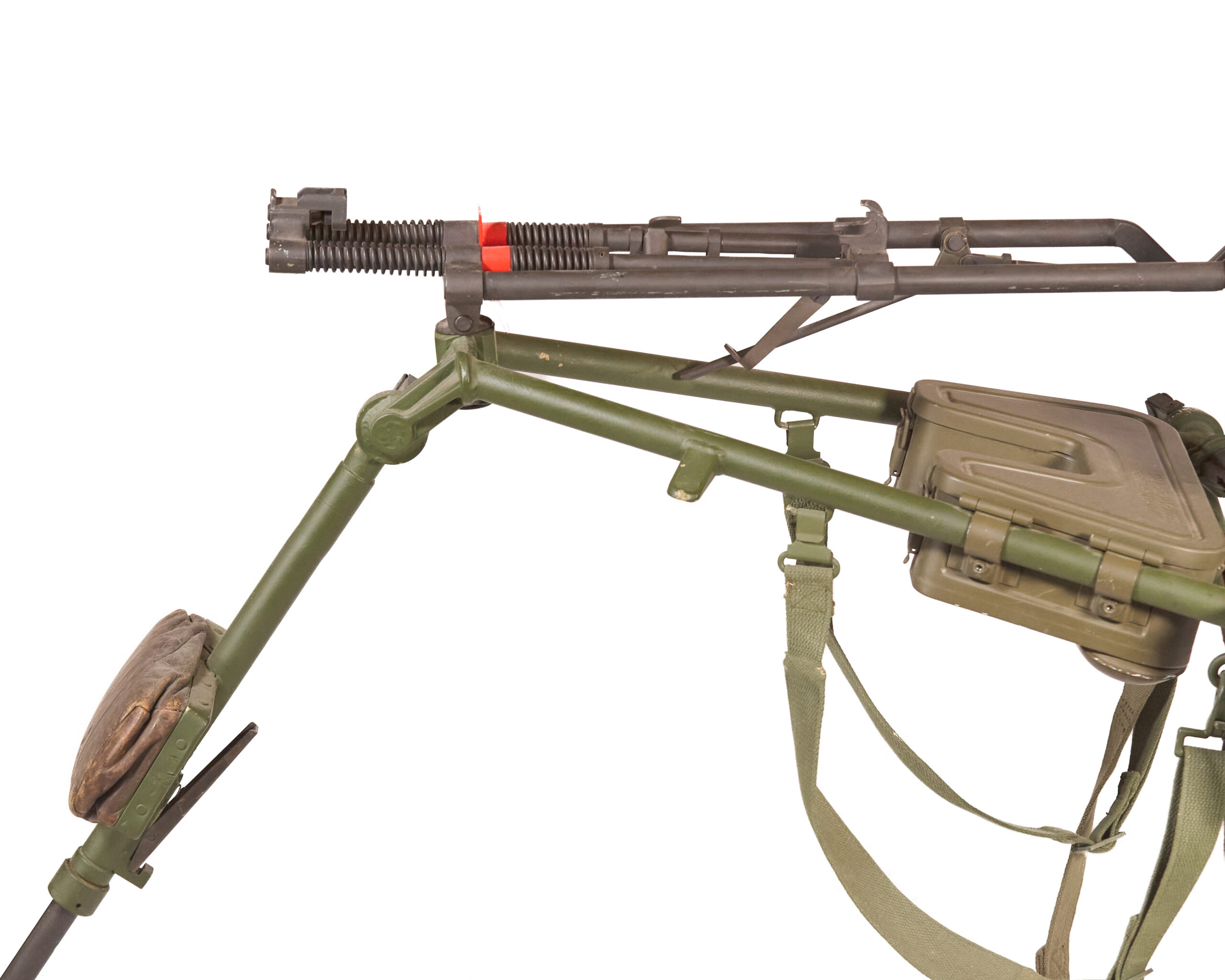
This West German Bundeswehr MG3 Lafette tripod is a postwar sustained-fire mount with Hensoldt Wetzlar optical sight, Bundeswehr acceptance markings, and NATO stock numbering. The mount follows the long German Lafette pattern that began with the MG34 and MG42, but this example is firmly Bundeswehr / Cold War in character rather than wartime Wehrmacht. The finish, straps, hardware, sight assembly, and ammunition-box arrangement all fit the postwar West German service pattern. The optic marking and the stock number prefix also support that identification.
West German Bundeswehr MG3 Lafette Tripod
The German Lafette was never just a simple tripod. From its wartime origins onward, it served as a controlled-fire mount built to give the machine gun a stable platform for sustained fire, deliberate traverse, and repeatable laying. Postwar German service continued that basic concept. Bundeswehr field mounts for the MG42 / MG1-3 / MG53 / MG3 kept the same general role and closely related geometry, even though the equipment itself belongs to the Cold War era rather than the Second World War. Period Bundeswehr field mounts of this type were sold complete with carry straps and 4x optical sight with Strichplatte reticle, and they were specifically described as suitable for MG42, MG1-3, and MG53 patterns as well as the MG3.
Construction / Configuration / Pattern
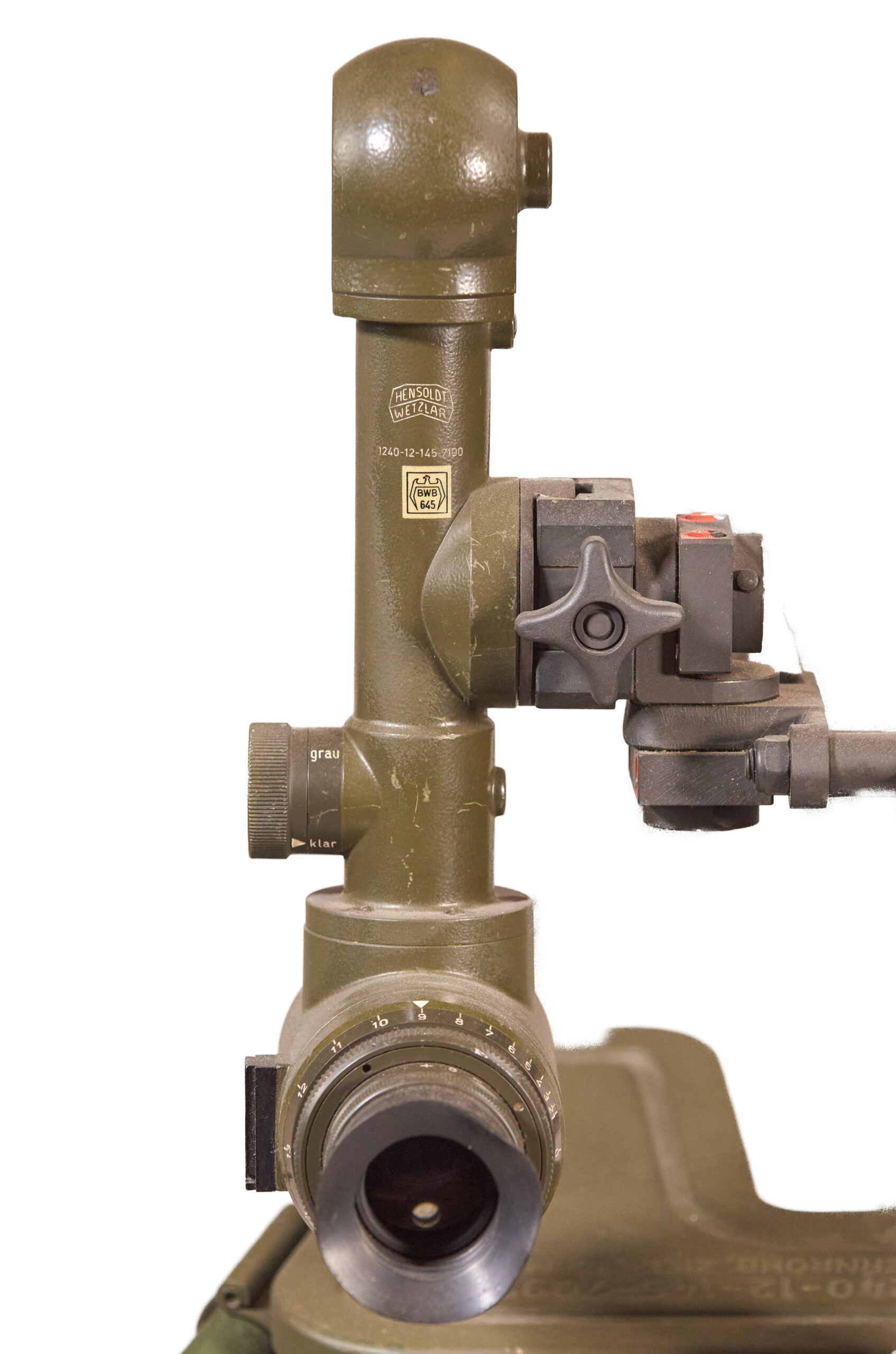
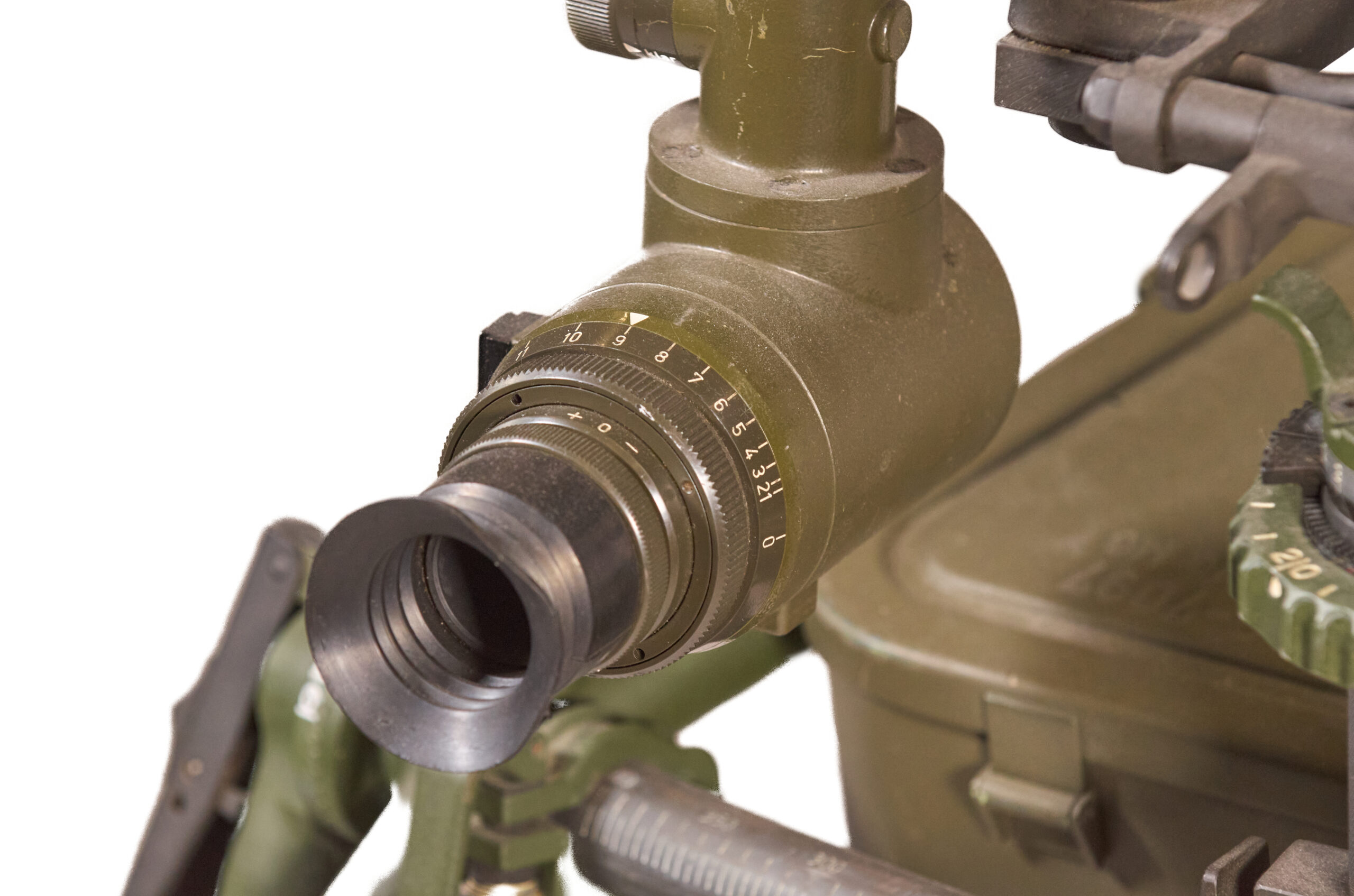
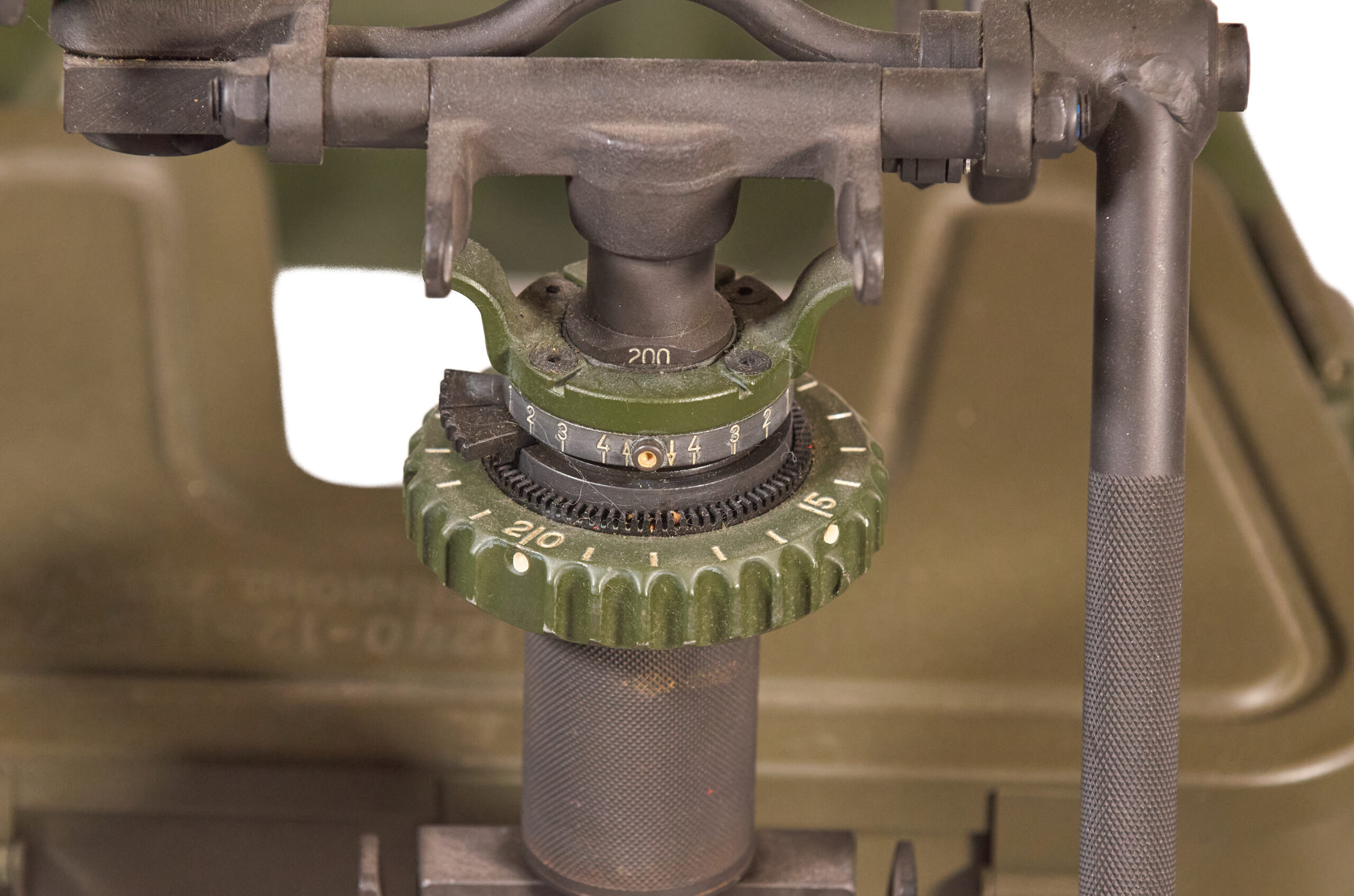
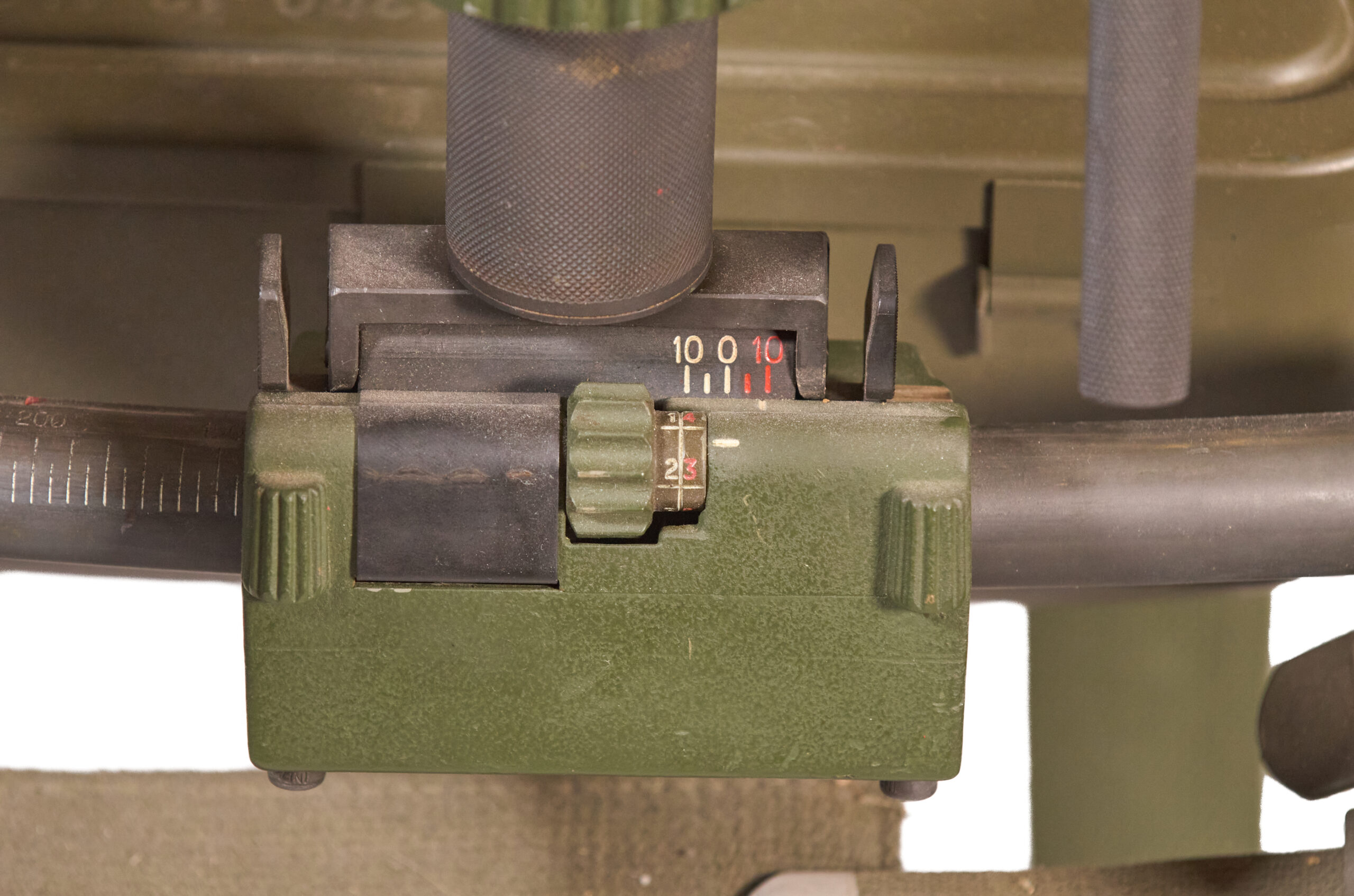
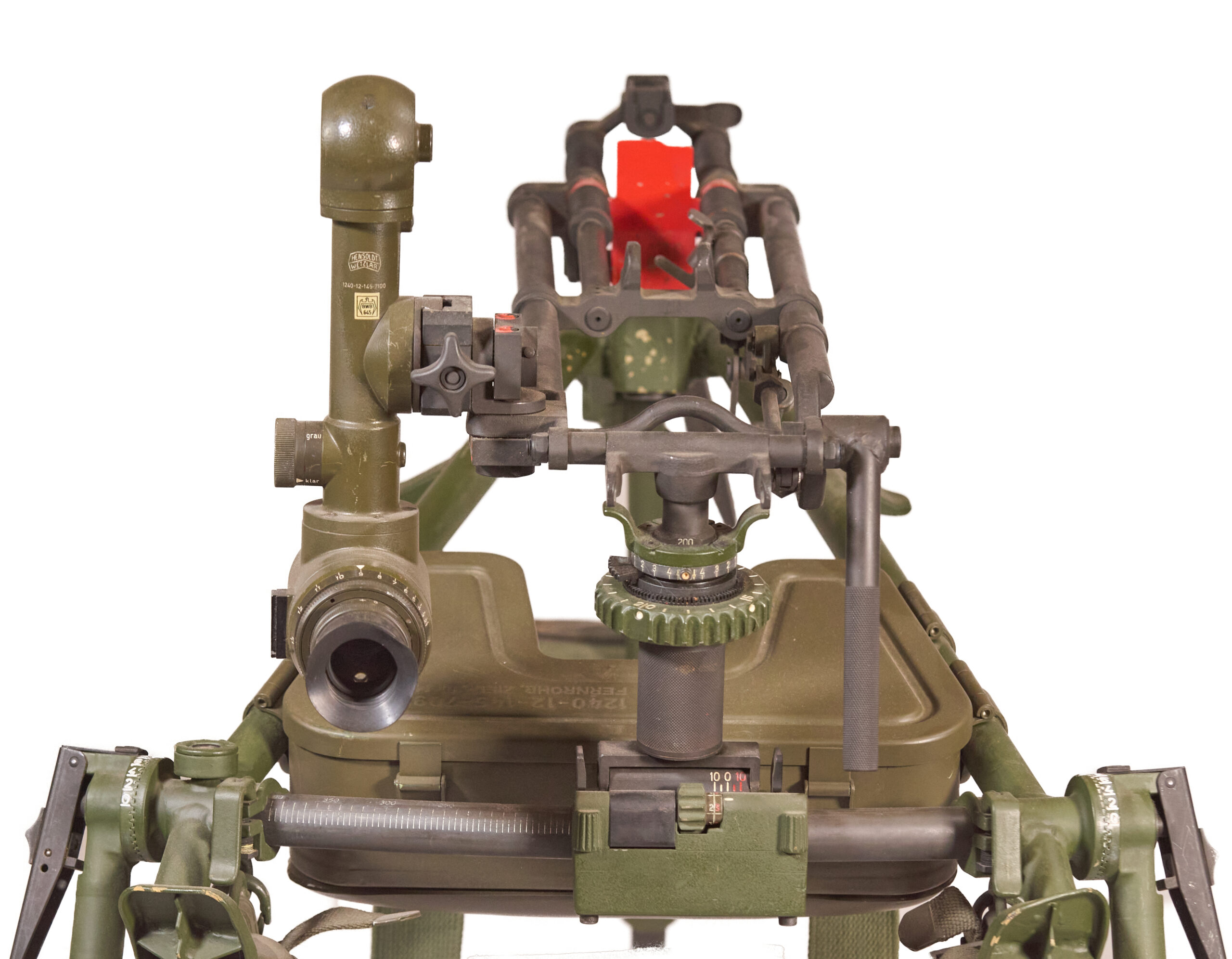
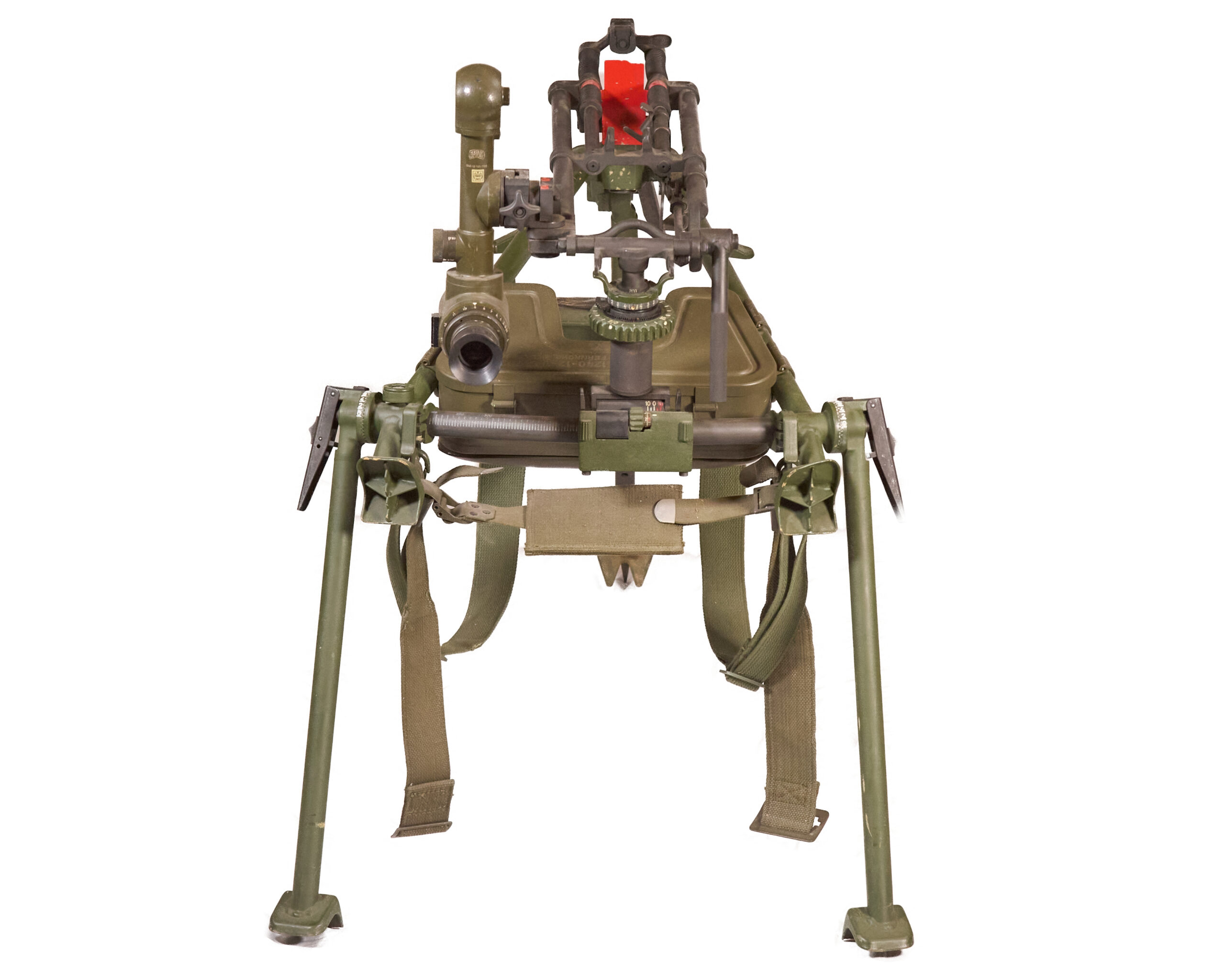
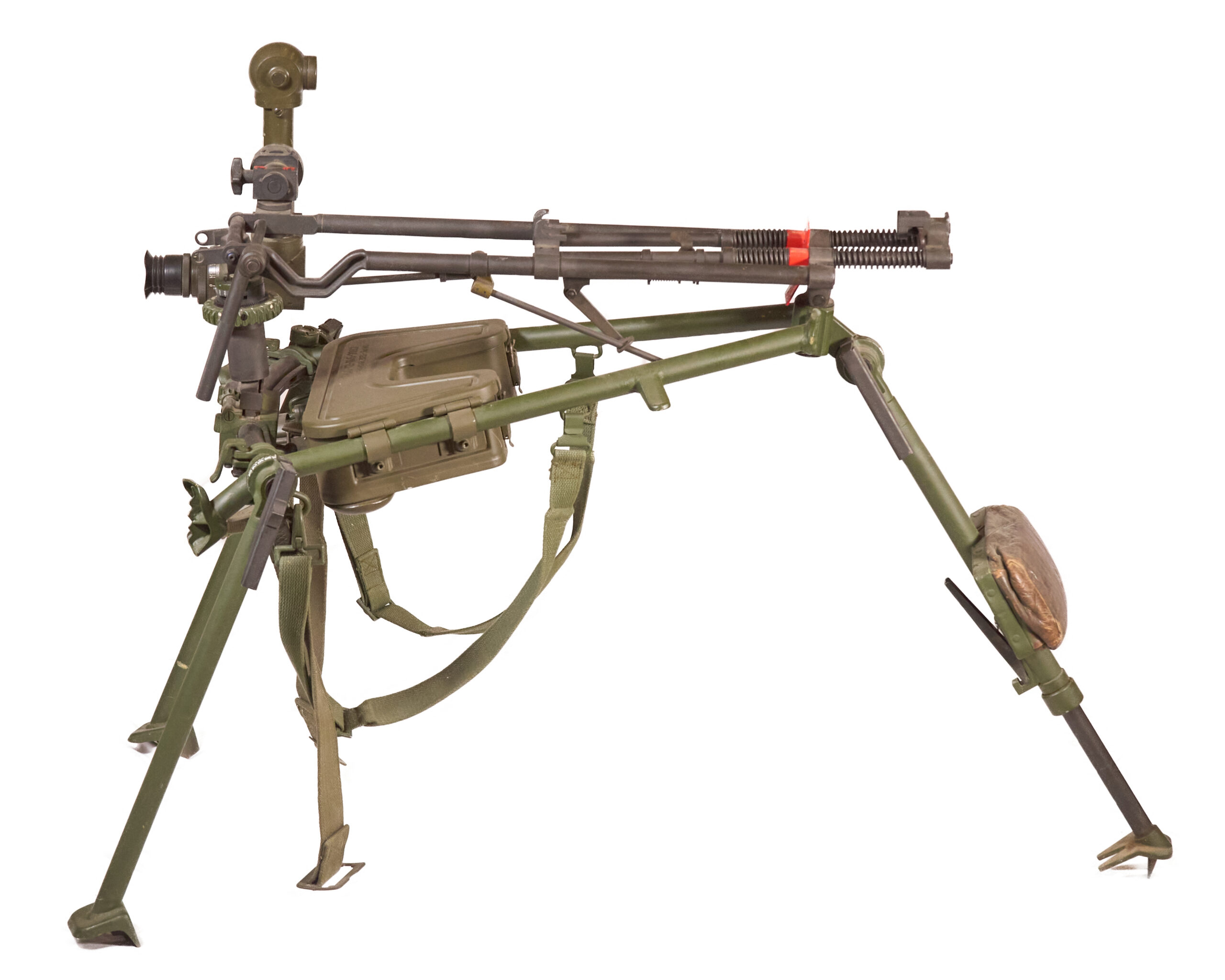
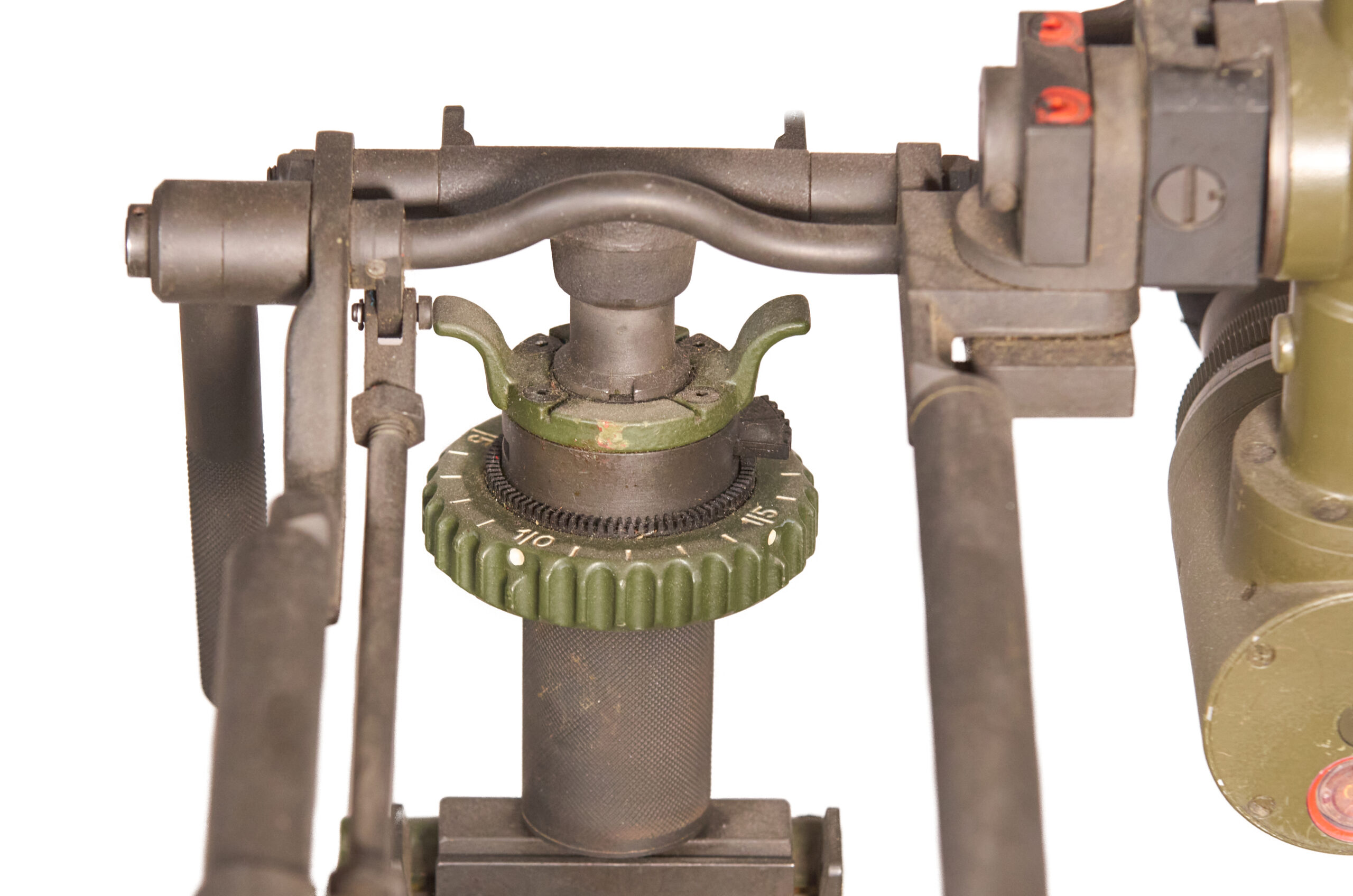
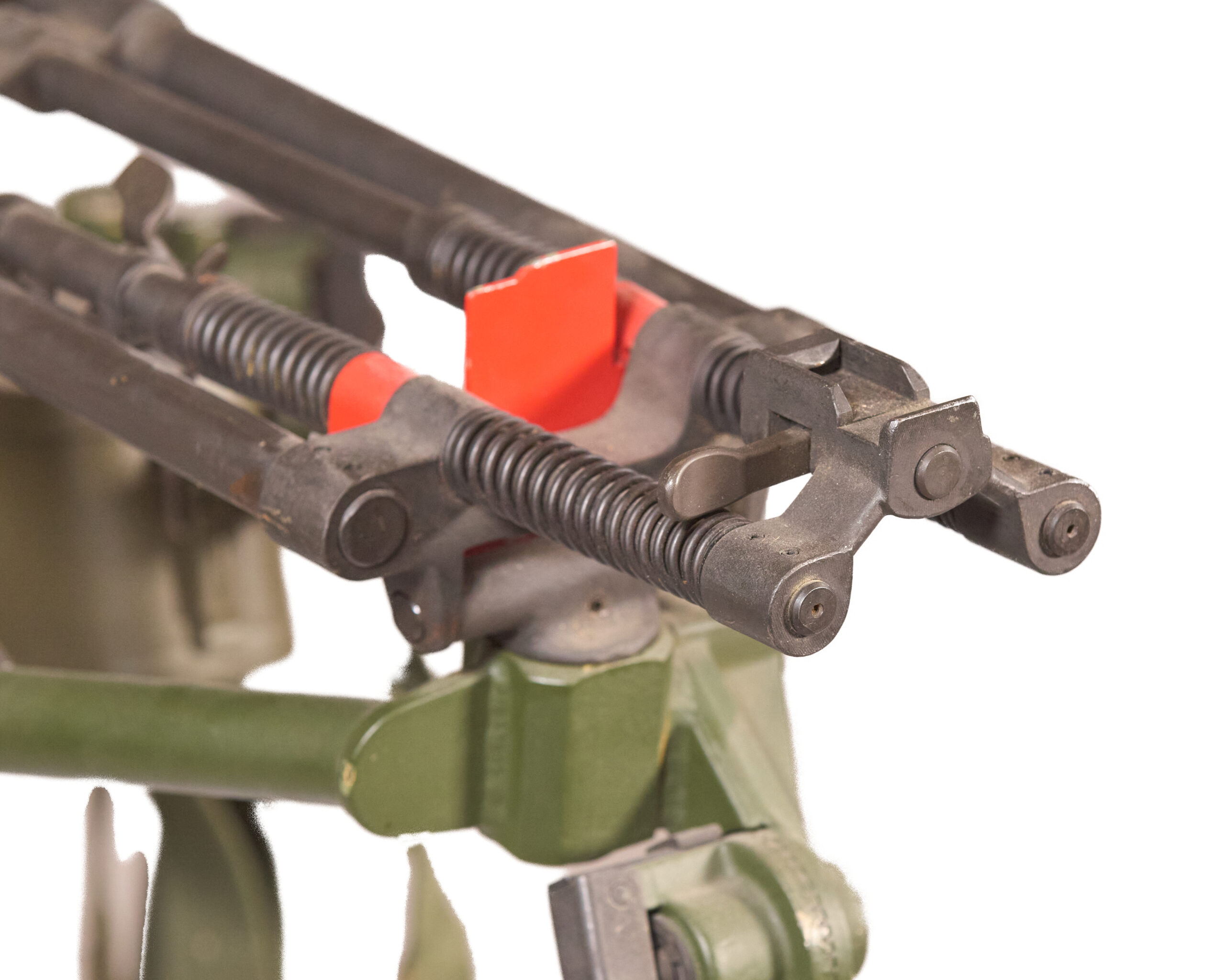
This tripod follows the familiar German Lafette-style arrangement with front legs, rear support, central traversing and elevating mechanism, carry straps, and provision for a mounted optical sight. The sight is marked Hensoldt Wetzlar, a correct and desirable maker for postwar German military optics. Comparable Bundeswehr field-lafette sets are described with 4x Hensoldt optics and a Strichplatte reticle, which is the standard sort of ranging and aiming arrangement associated with these postwar heavy-machine-gun sight units.
The optic also carries a BWB mark and a NATO-style stock number beginning 1240-12. In NATO stock numbering, 1240 is the class for optical sighting and ranging equipment, while the country code 12 identifies Germany as the codifying nation. That numbering pattern fits West German military issue. The Bundeswehr procurement system and NATO codification system were both in regular use during the Cold War period, and sighting equipment with this sort of number belongs naturally in that context.
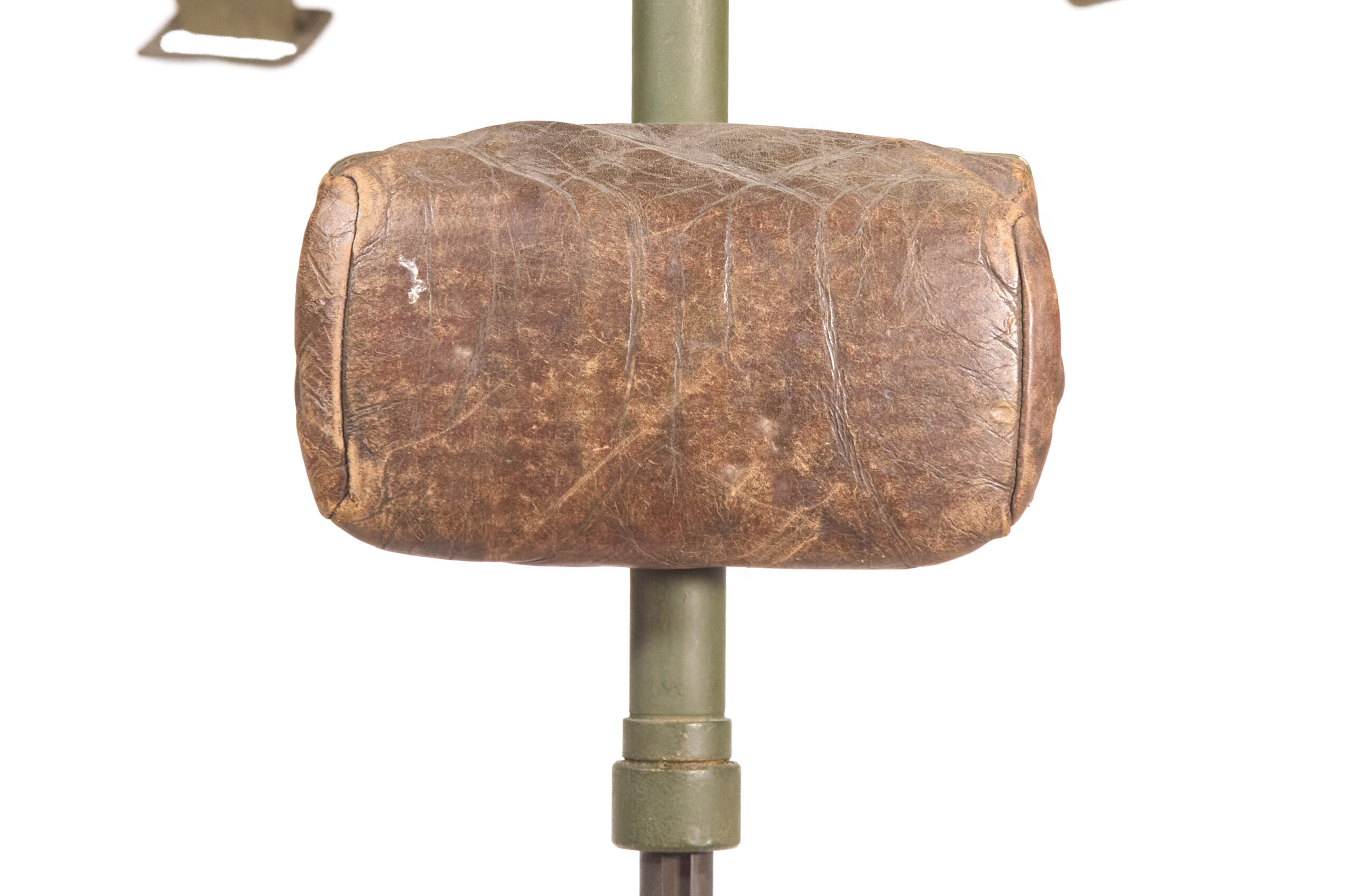
The overall hardware matches that postwar reading. The straps, green service finish, ammunition-box arrangement, and the layout of the sight assembly differ from wartime Wehrmacht Lafette sets. Postwar field-lafette examples for the Bundeswehr are specifically described with carry straps for back transport, and surviving converted or continued-service German mounts show the Lafette pattern carried forward into postwar MG service rather than ending in 1945.
Historical Context / Pattern Development
The historical importance of this tripod lies in continuity. German machine-gun doctrine placed unusual emphasis on a heavy, mechanically controlled mount. During the war, the Lafette 34 and 42 gave the MG34 and MG42 a stable platform for sustained and deliberate fire. That basic idea did not disappear after 1945. In the postwar era, the Bundeswehr continued to use Lafette-style mounts with the MG series, including the MG1-3 and later MG3, preserving the same core logic: stable support, controlled traverse, optical laying, and better fire control than a bipod could provide.
That continuity matters because it explains why a Bundeswehr MG3 field-lafette set still looks immediately related to wartime German mounts. The family resemblance is real. At the same time, the differences matter just as much. Postwar examples show Cold War finishes, Bundeswehr markings, NATO stock numbers, later straps and fittings, and updated optics by firms such as Hensoldt Wetzlar. Those details move the piece out of the Wehrmacht period and into the postwar German rearmament era. This is not a wartime MG34 or MG42 Lafette with a later sight added. It belongs to the Cold War continuation of the German sustained-fire tripod tradition.
The optic is especially important in that context. A Hensoldt sight on a Bundeswehr Lafette shows that the mount was still intended to be used as a laid, sighted support weapon system rather than as a simple emergency rest for the gun. The optical unit completes the mount in the form associated with deliberate machine-gun fire, where the gun is held steadily on line and worked as a crew-served support arm rather than only from the shoulder or bipod.
Condition
This set presents with the features that define a correct Bundeswehr MG3 Lafette group: postwar green finish, later straps and fittings, proper ammunition-box arrangement, and a Hensoldt Wetzlar optical sight with Bundeswehr and NATO identification marks. The overall appearance is military and service-correct rather than commercial or reconstructed. As a result, it reads as a complete Cold War German machine-gun mount set rather than as a loose tripod with unrelated accessories.
Explore More at Old Steel
Follow us on Instagram:
Old Steel Guns on Instagram