Description
McDonnell Douglas 4th Generation Ejection Seat Wind Tunnel Model
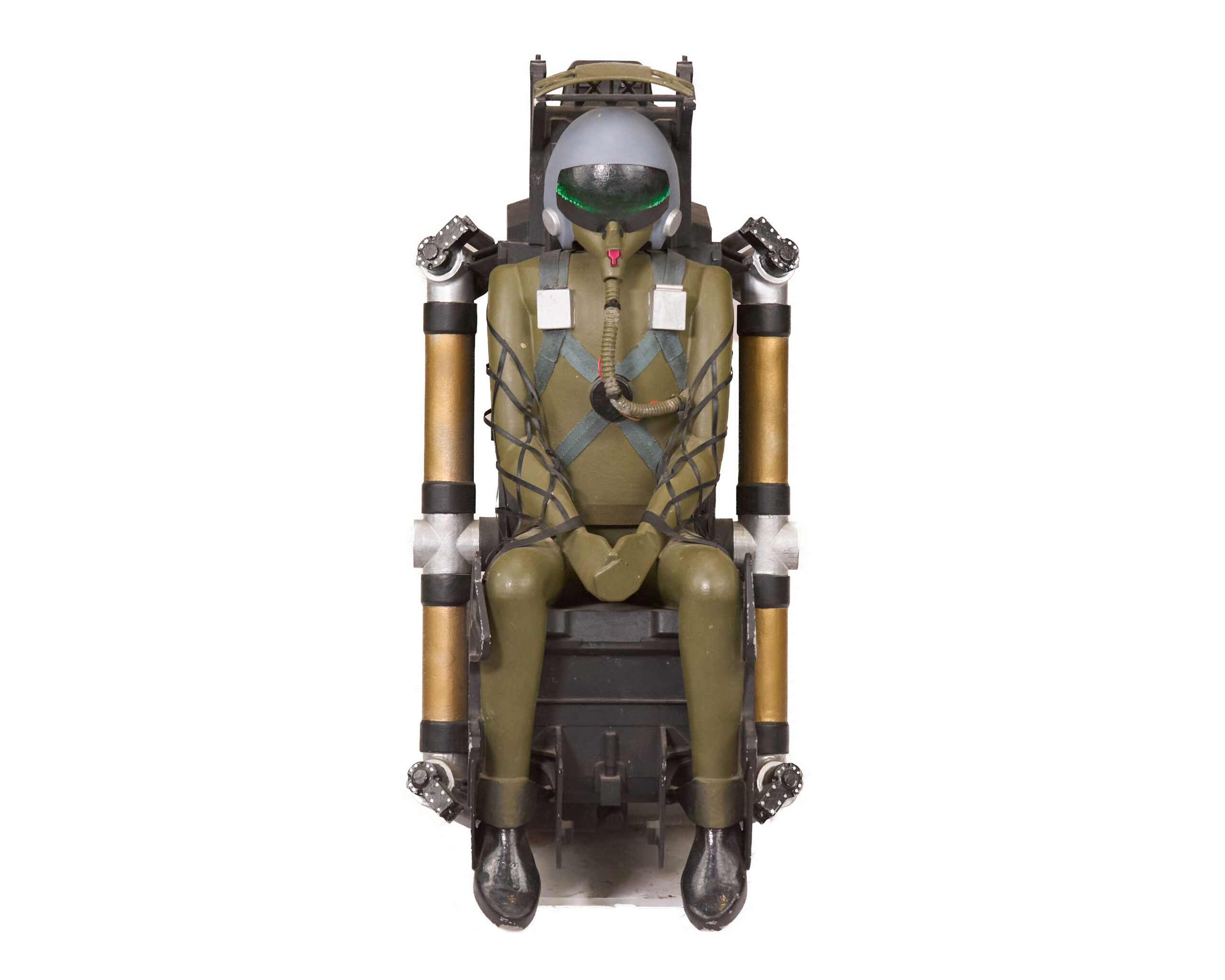
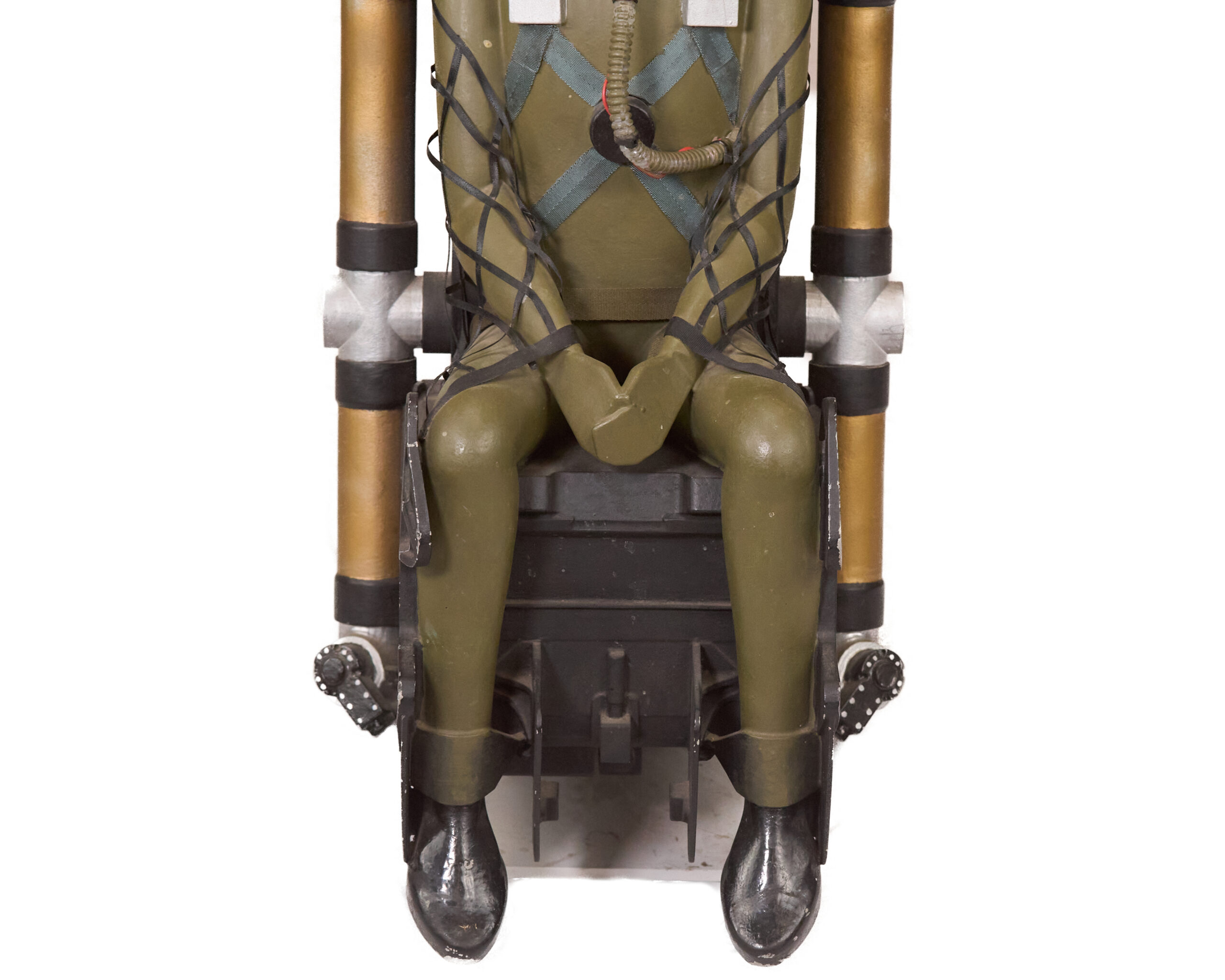
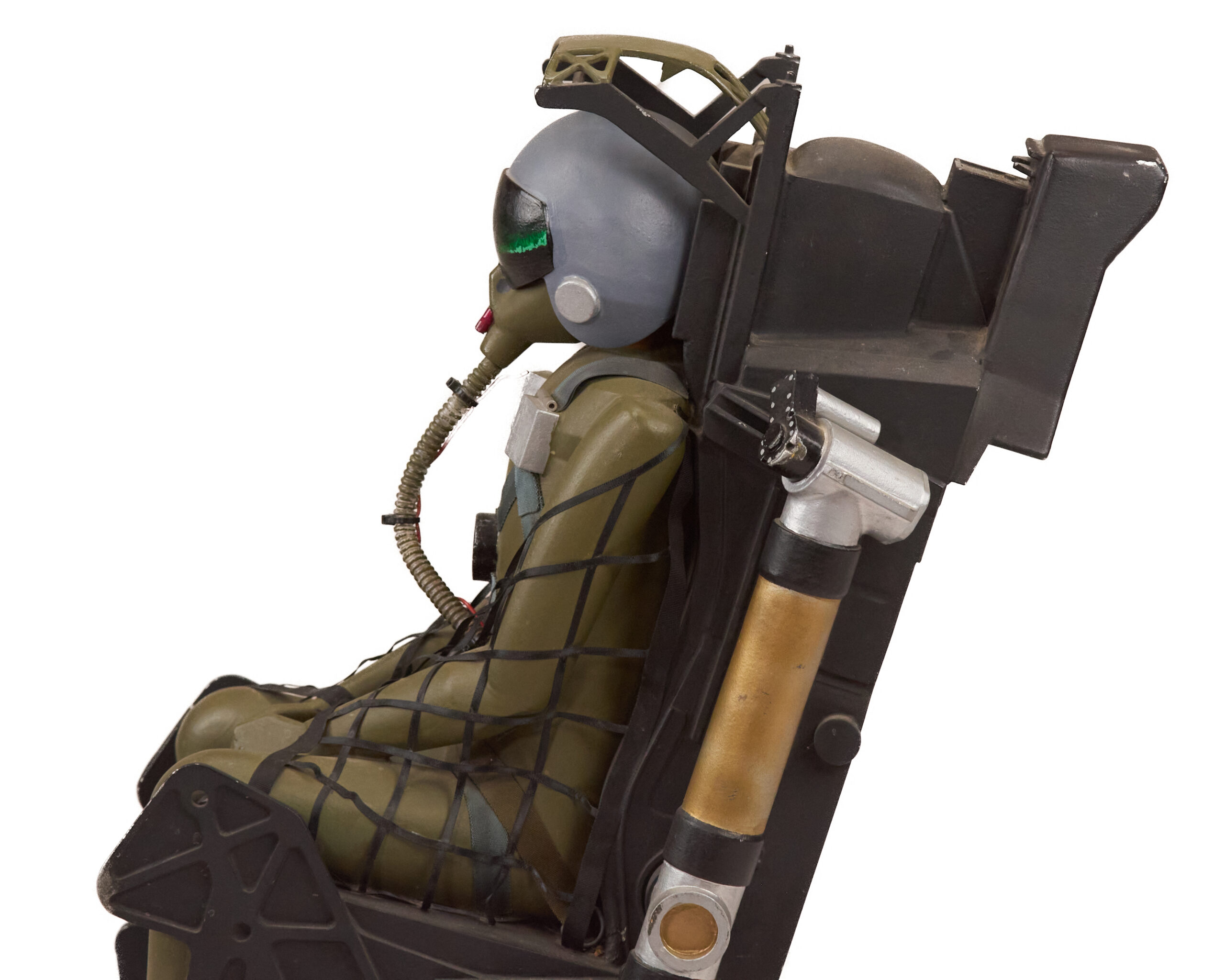
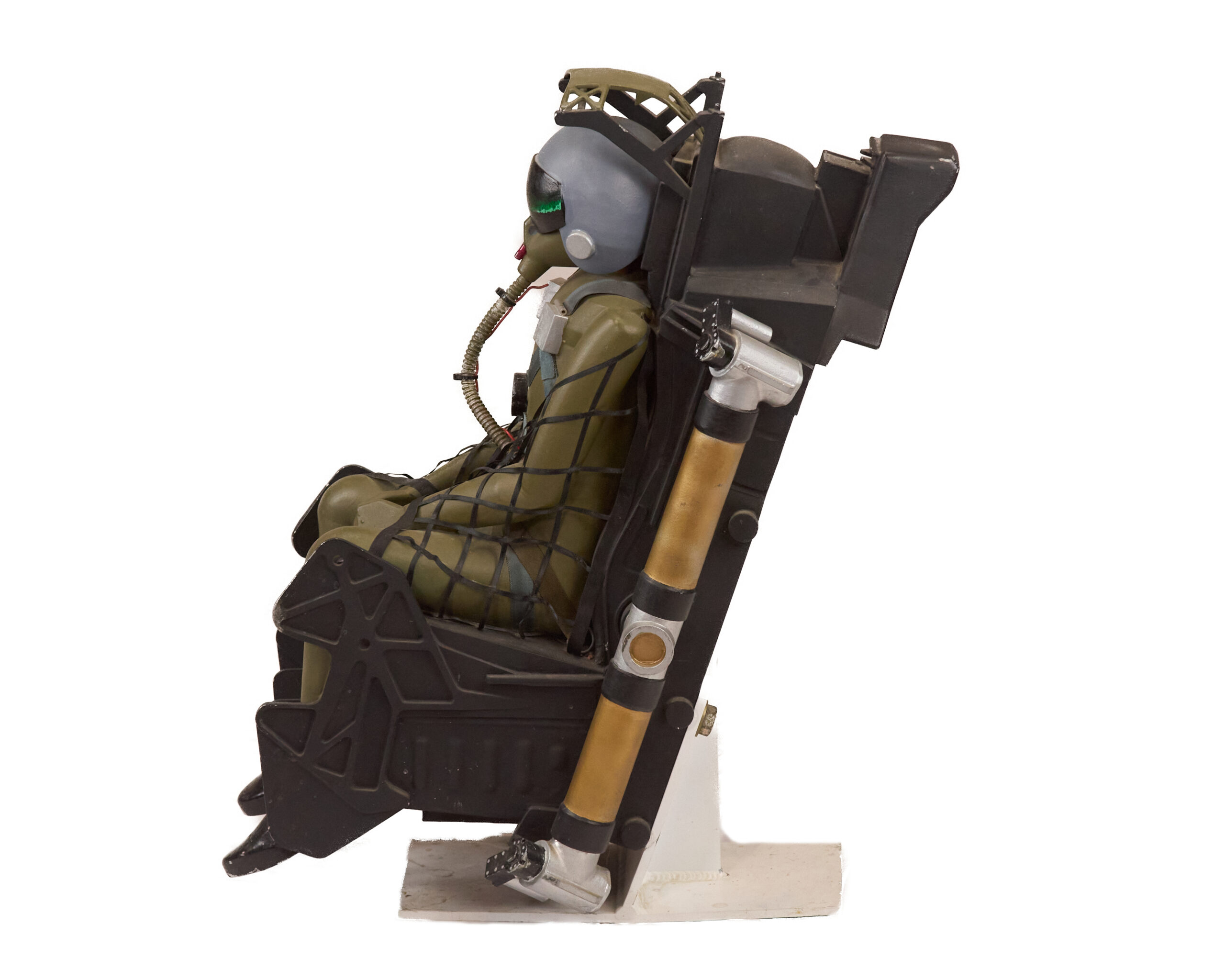
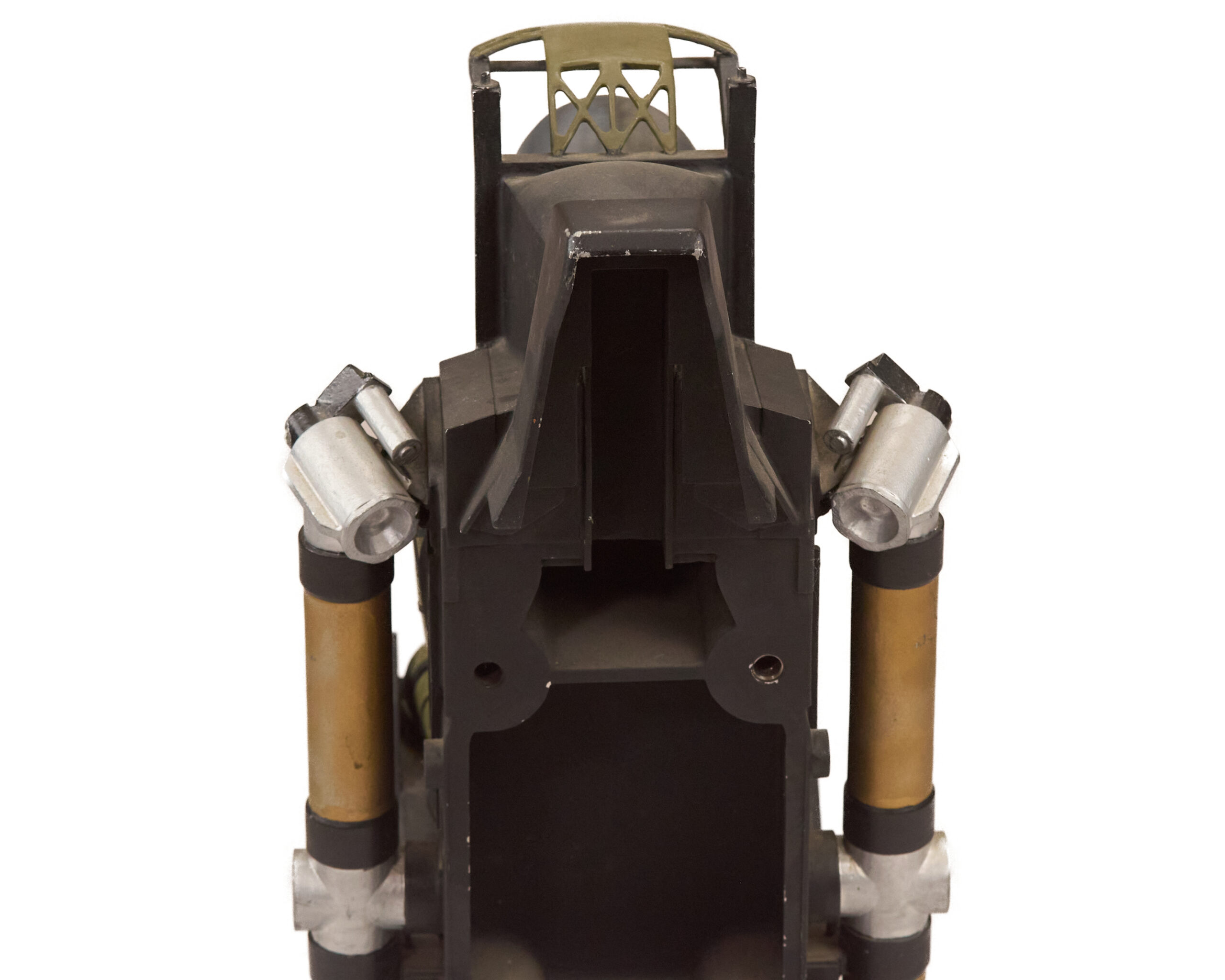
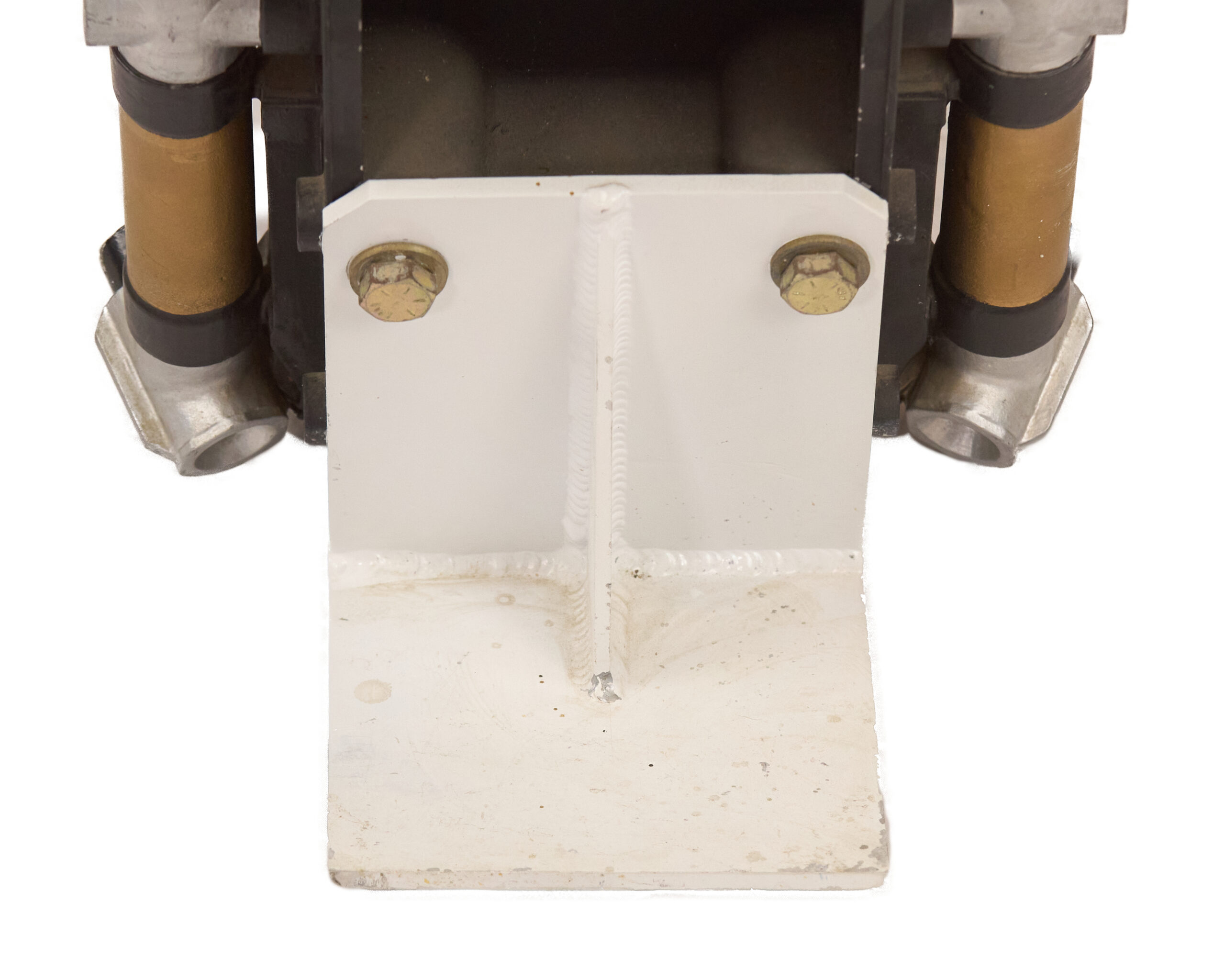
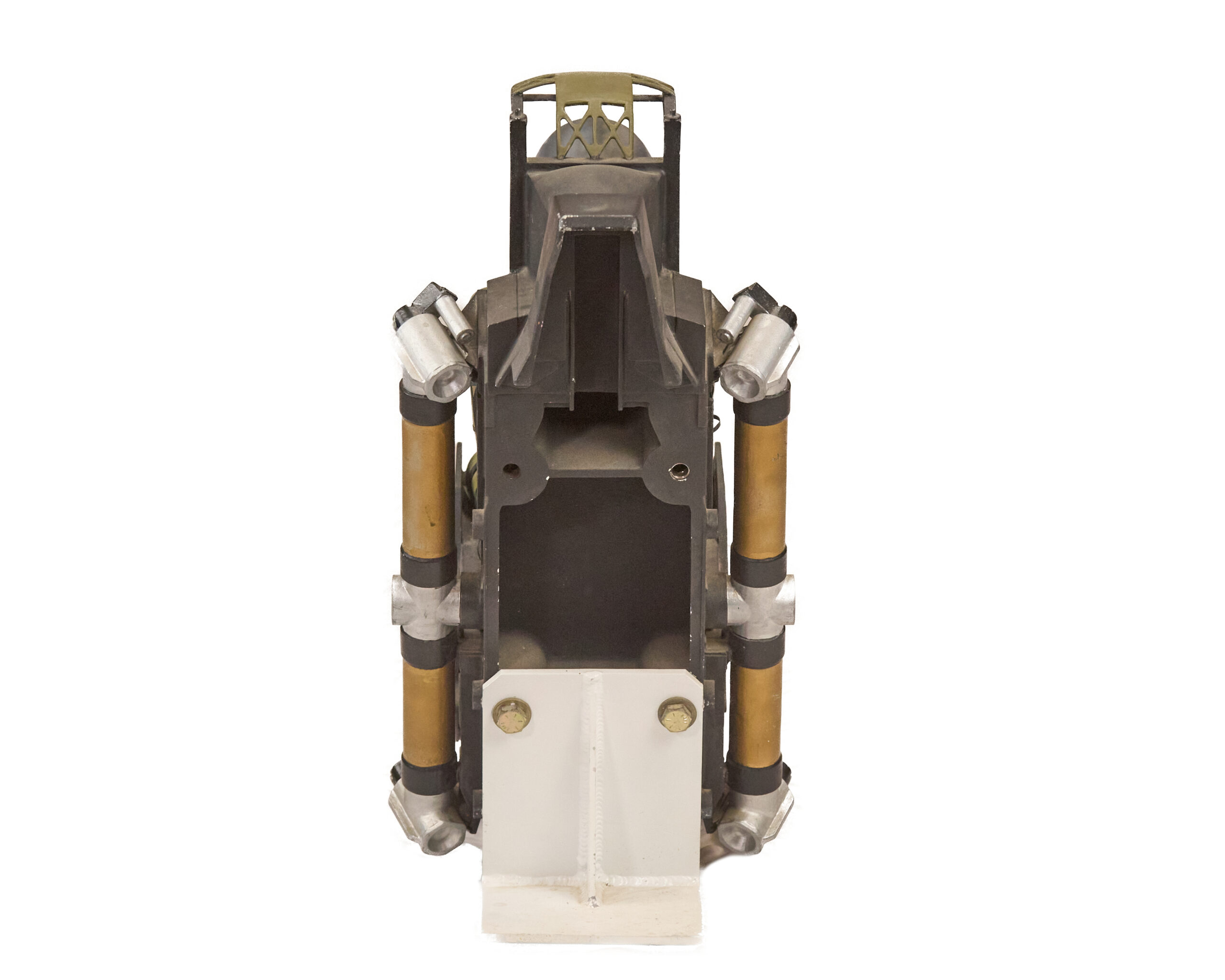
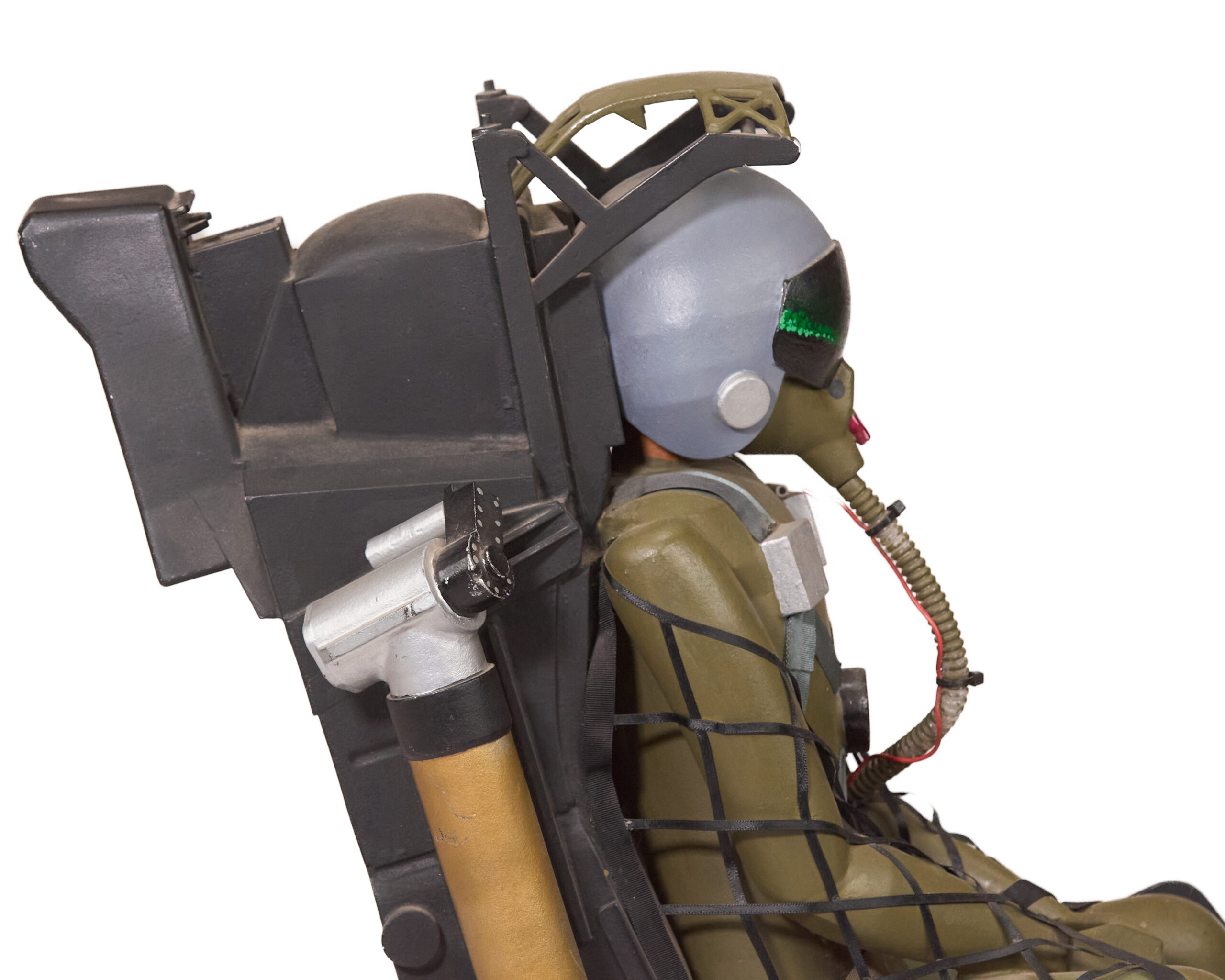
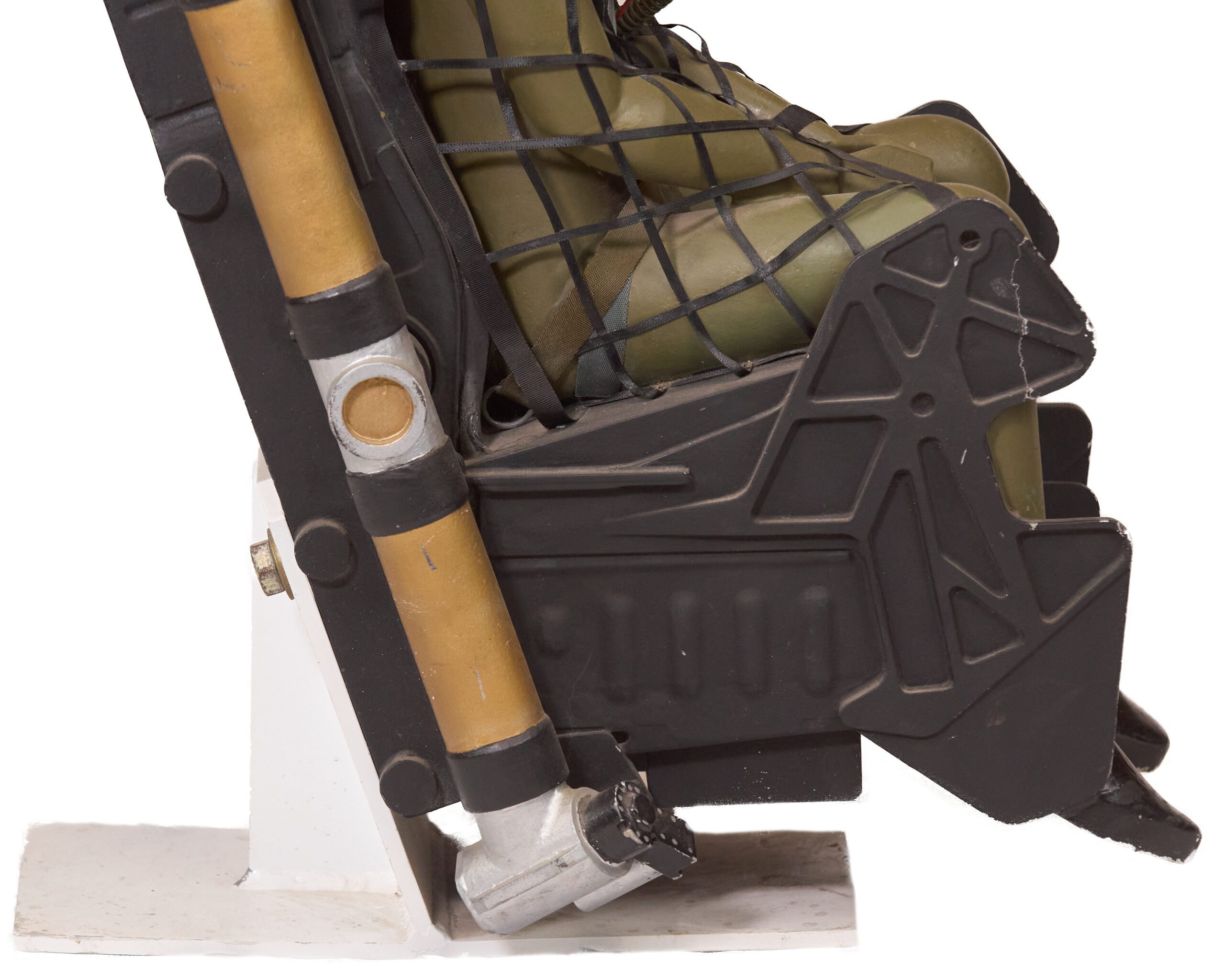
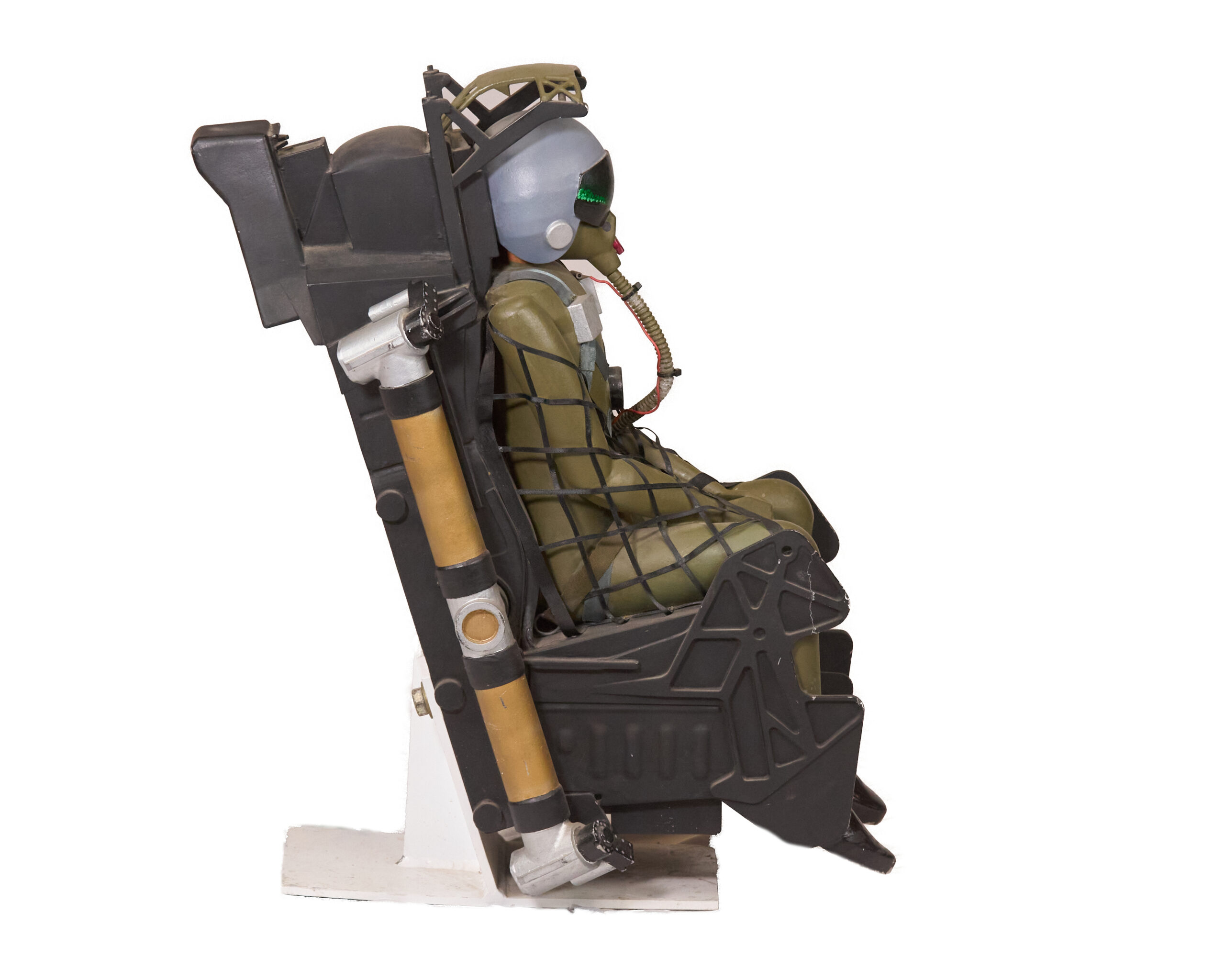
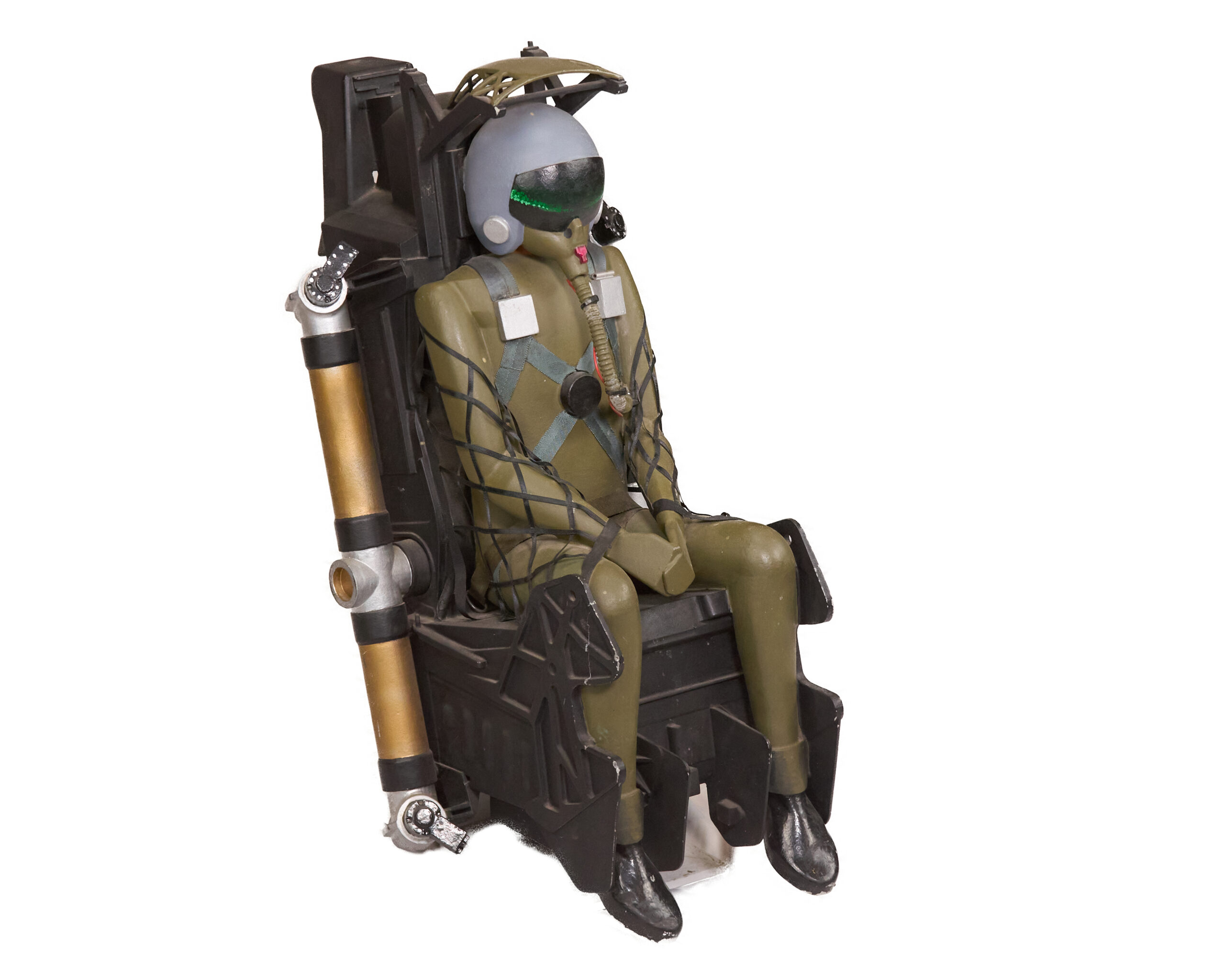
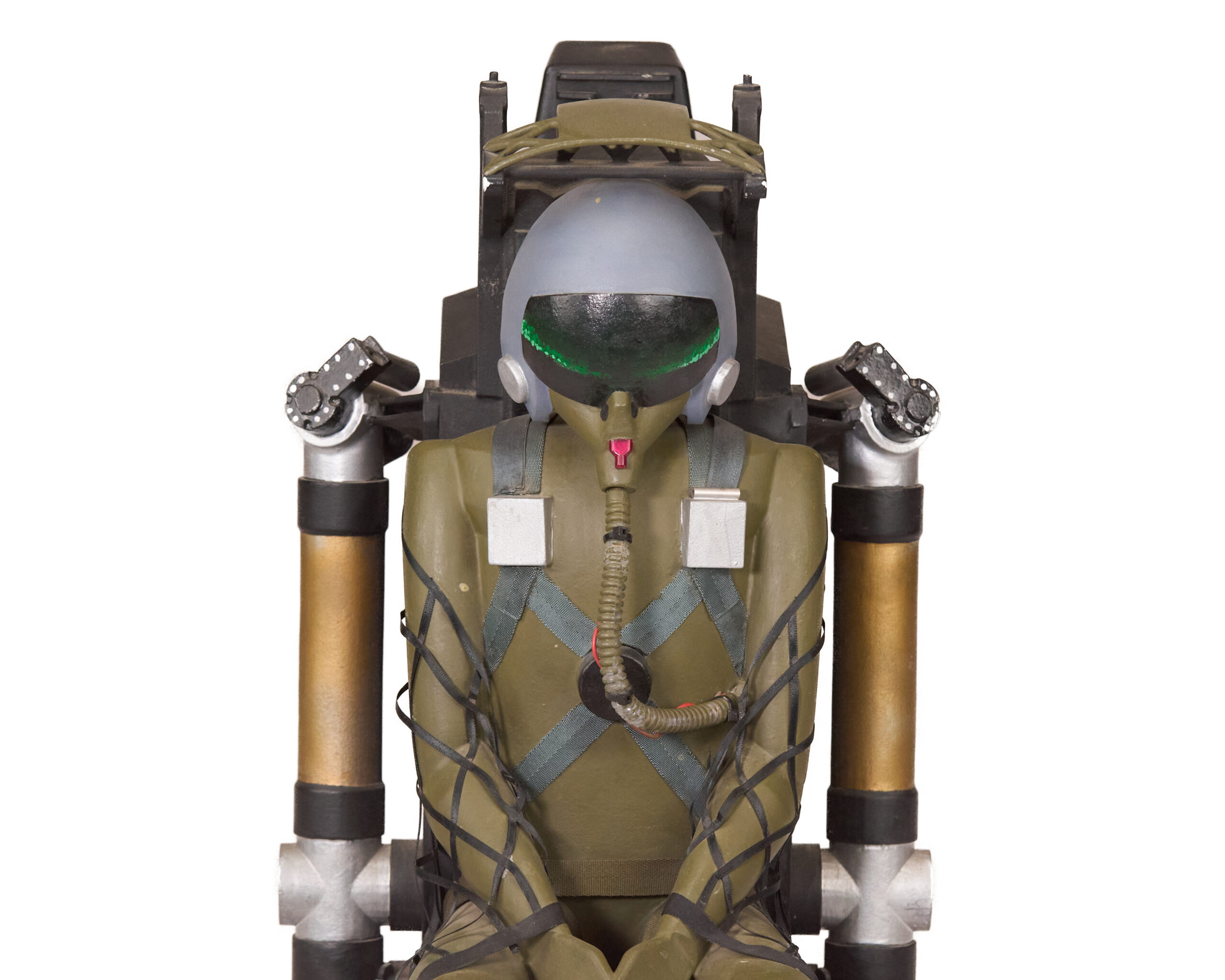
This McDonnell Douglas 4th Generation ejection seat model is a scale wind tunnel test article cast in solid aluminum and finished as a seated pilot in an advanced escape-system seat. It measures approximately 23 inches tall and weighs about 74 pounds. The model shows the later 4th Generation test-seat form with arm restraint netting, side propulsion tubes, a helmet brow or wind foil, oxygen hose detail, harness straps, and a fixed mounting base.
McDonnell Douglas 4th Generation Ejection Seat Model
This is not a full-size ejection seat, cockpit trainer, or functional aircraft component. It is a scale aerodynamic test model. The form represents an advanced late-1990s escape-system concept associated with McDonnell Douglas and later Boeing-era development work.
The model shows a pilot seated upright in the test seat. The figure has a grey helmet, dark visor, oxygen mask, oxygen hose, green torso, harness webbing, and black boots. Arm restraint netting runs along both sides of the pilot. A shaped brow or wind foil sits above the helmet to manage airflow around the head.
Construction / Configuration / Pattern
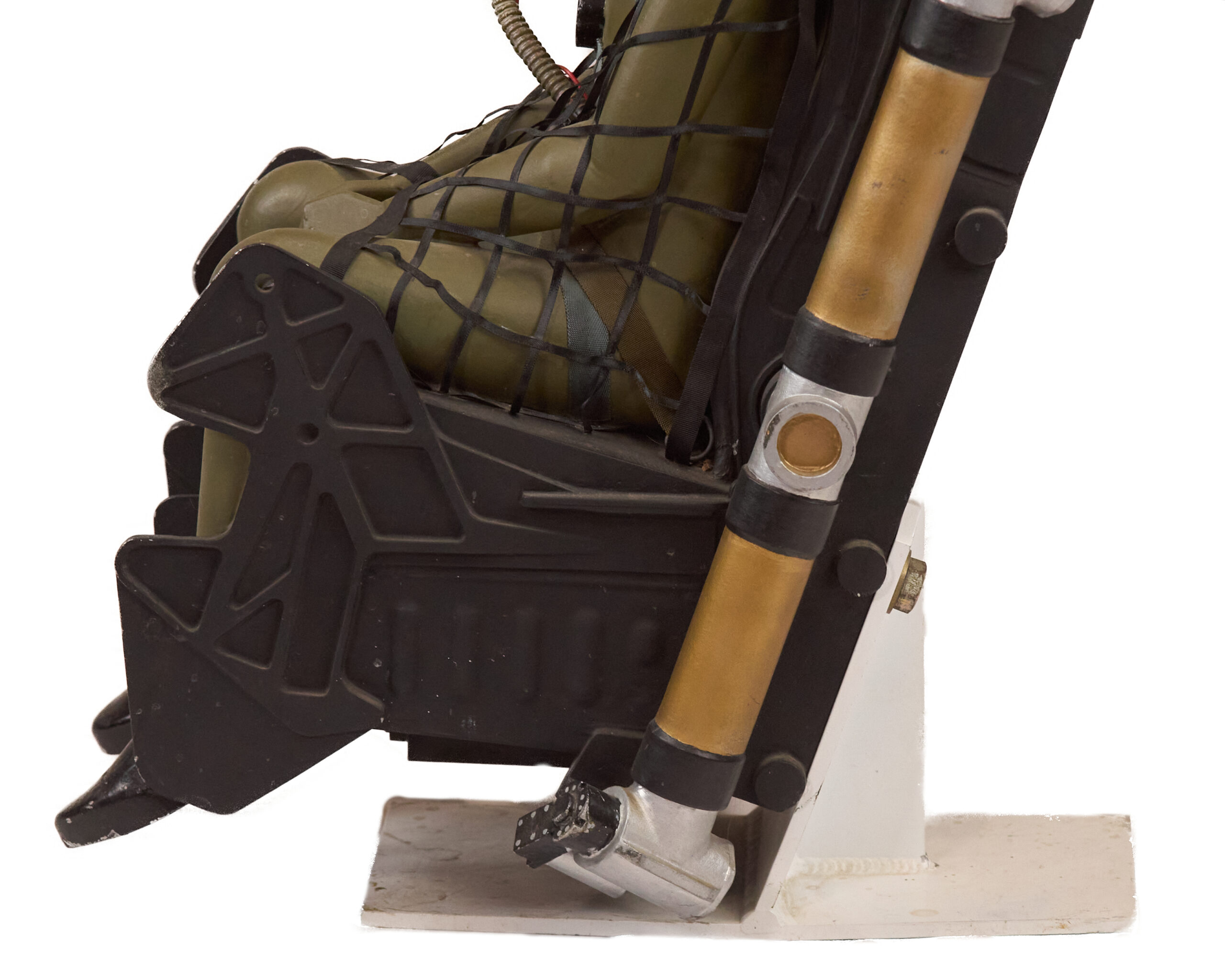
The model is a heavy solid aluminum casting with a painted finish. The pilot, seat shell, and major structure form a rigid test body rather than a working seat. The seat has a dark rear frame, side structures, lower pan, leg guards, and a white mounting base.
The anti-flail arm netting is one of the most important features. It runs across both sides of the pilot and represents the system used to control limb movement during ejection. The model also has a helmet brow structure above the head. That part helped study airflow and head stability under windblast conditions.
Four large side tubes sit along the left and right sides of the seat. These represent the propulsion and guidance hardware central to the 4th Generation concept. The rear frame and headbox area are simplified for test use, but they still preserve the main geometry needed for wind tunnel work.
The white base and rear support structure indicate fixture mounting. The model was built for controlled testing, display, or engineering evaluation rather than pilot instruction. Its size, weight, and construction point to a serious technical article rather than a decorative model.
Historical Context / Pattern Development
Late Cold War and post-Cold War escape-system work focused on better recovery outside the limits of earlier seats. Designers wanted better performance at very low altitude, adverse attitude, and high speed. They also placed more attention on limb restraint, head and neck protection, controlled thrust, and digital guidance.
The 4th Generation ejection seat program built on earlier ACES II escape-system work. It explored a broader escape envelope and tested new crew-protection features. The major goals included improved seat stability, better control after leaving the aircraft, and protection for the pilot during high-windblast ejections.
This model reflects that development path. The arm nets address limb flail. The brow above the helmet addresses head and neck exposure to airflow. The side-mounted propulsion tubes represent the move toward controlled thrust and improved seat guidance. Together, those features show the shift from a simple extraction device toward a guided escape system.
The model’s late-1990s character also matters. Earlier ejection seat test models often used simpler seat shapes and unpainted cast pilots. This example presents a more developed escape-system concept, with visible restraint nets, pilot equipment, and an advanced seat frame.
Condition
This model remains in very good display condition. The painted pilot figure is intact, with helmet, visor, mask, hose, harness straps, boots, and torso details present. The arm restraint netting remains fitted across both sides of the pilot.
The seat structure shows handling marks, light scuffs, and scattered finish wear. The gold side tubes have minor surface wear and edge marks. The black seat frame, side guards, and rear structure show rubbing at high points. The white mounting base has chips, scratches, and contact wear from handling or fixture use.
The model retains a strong technical appearance. The scale, weight, cast construction, restraint nets, helmet brow, and propulsion layout give it the look of an aerospace test article rather than a toy, display mannequin, or training mock-up.
Find it featured here in collects weekly!
https://www.collectorsweekly.com/stories/144510-ejection-seat-wind-tunnel-test-model