Description
German WWII Em 1m R36 Stereoscopic Rangefinder by fwq
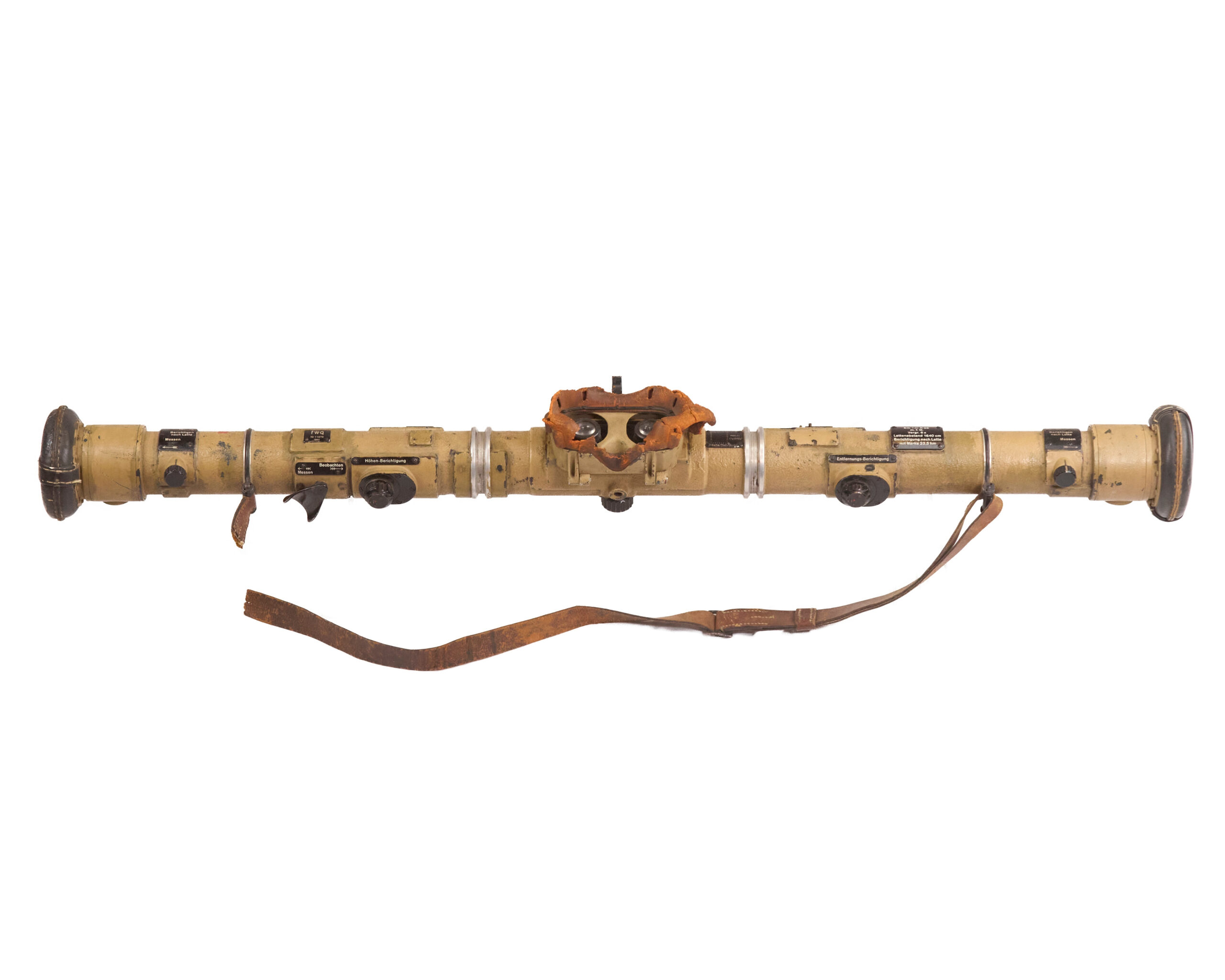
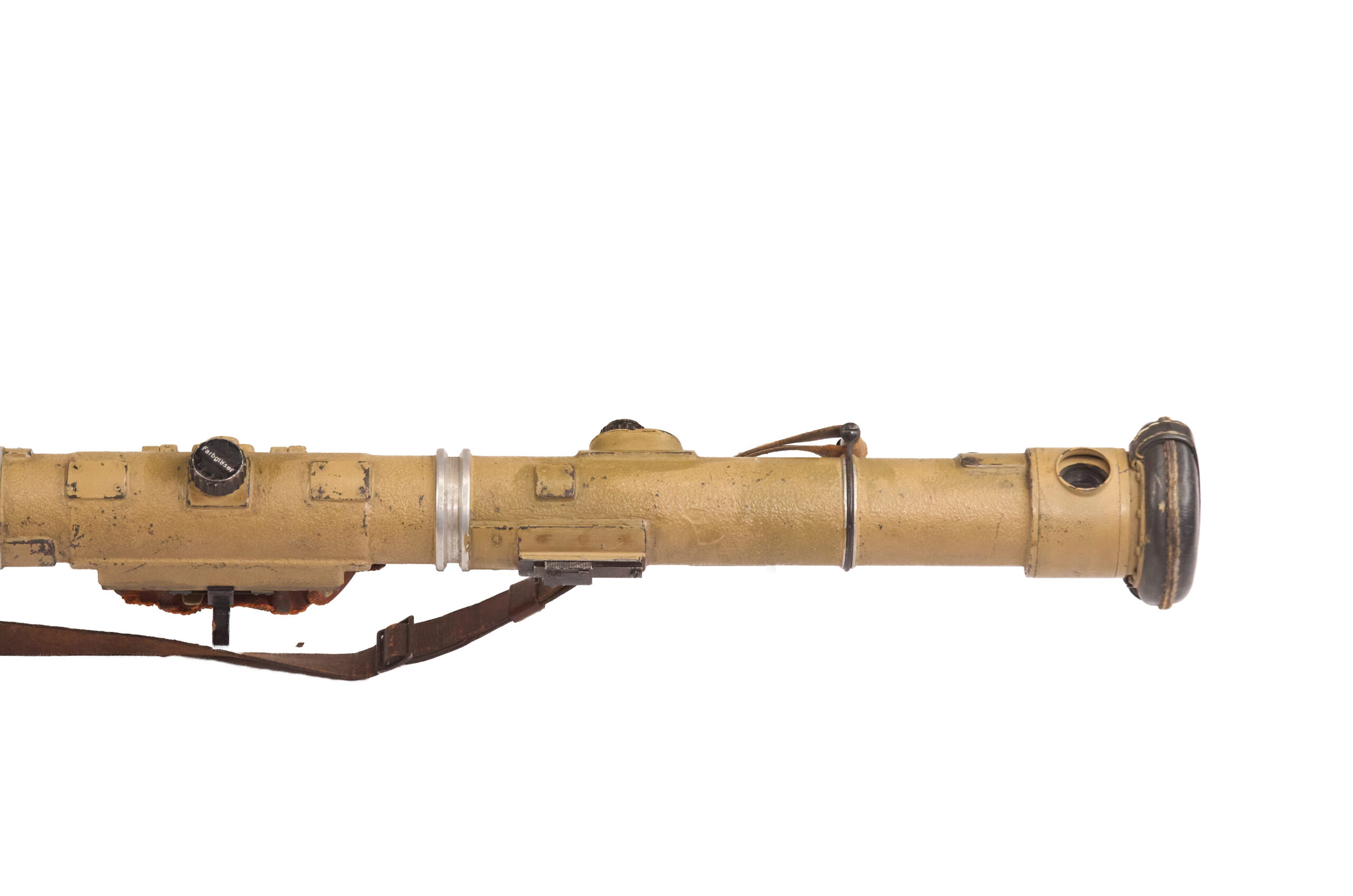
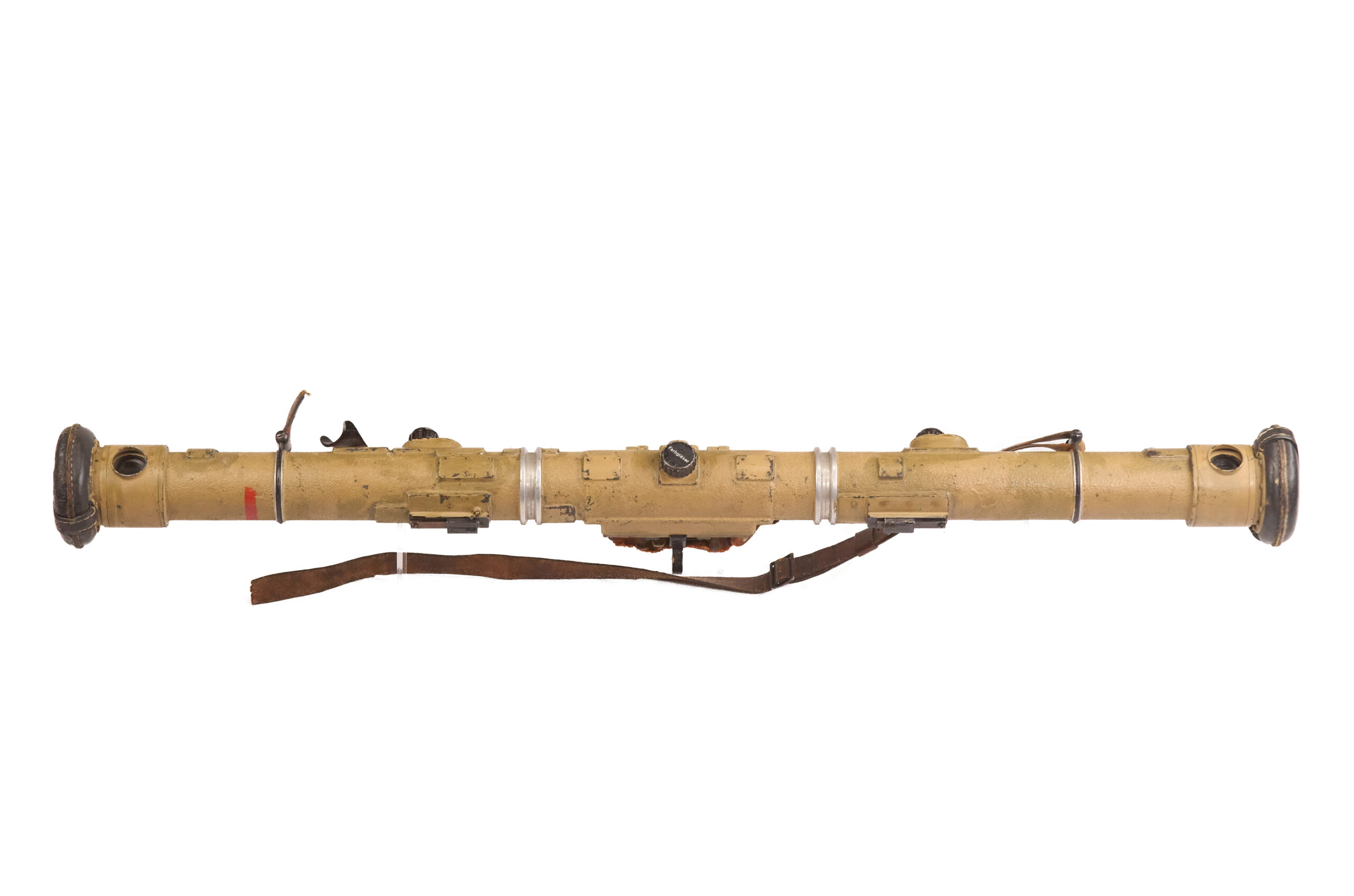
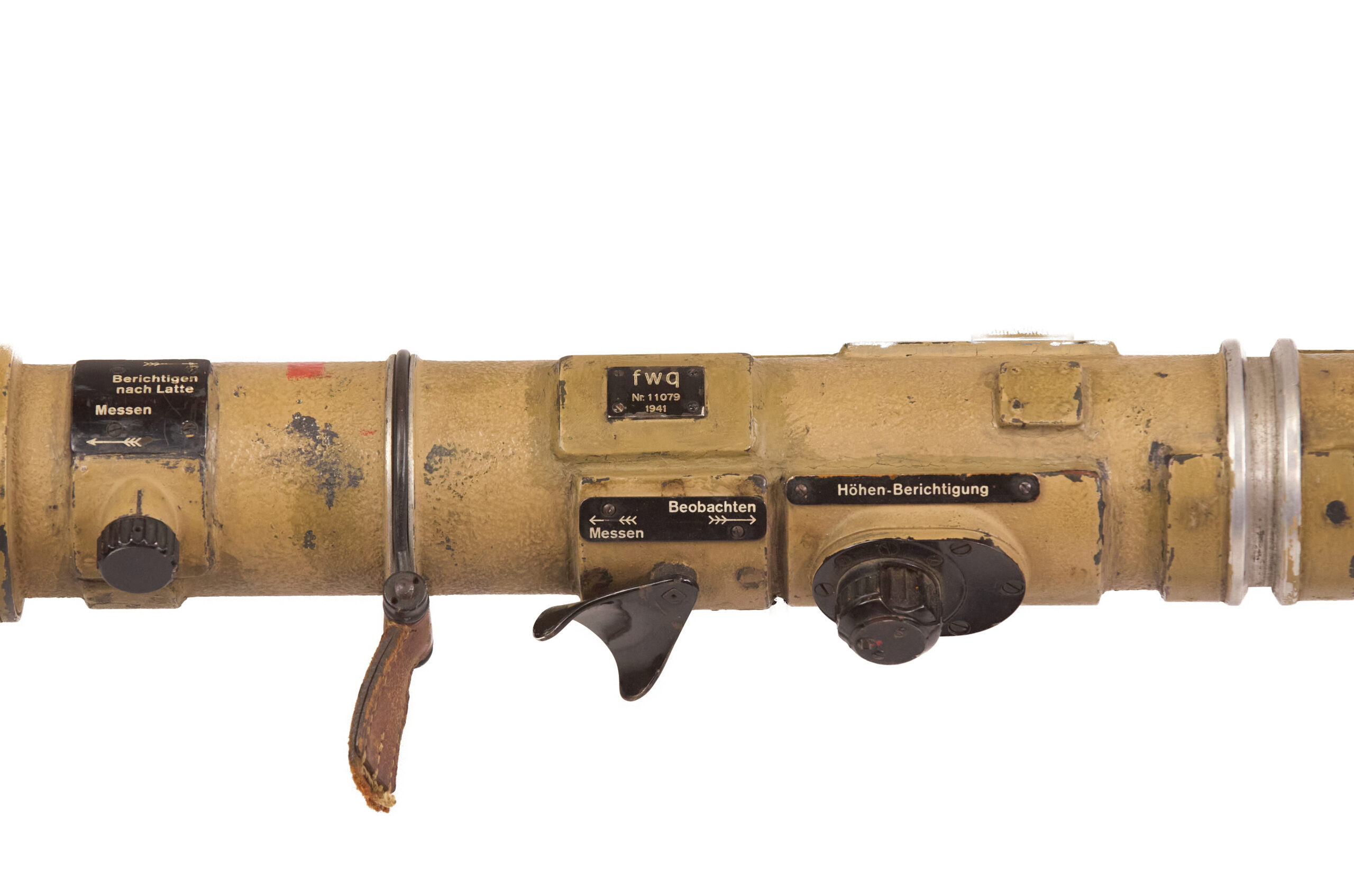
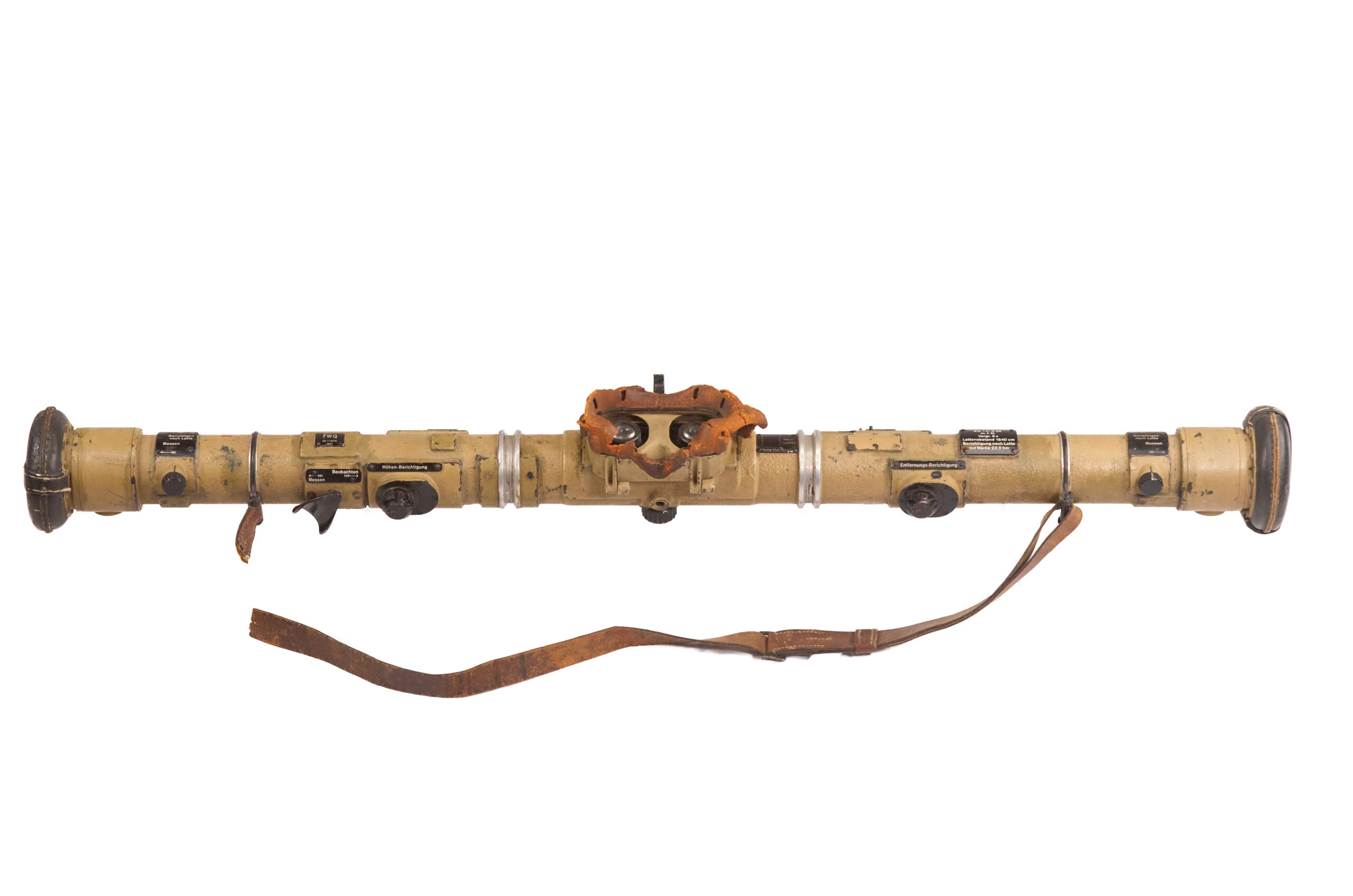
This German WWII Em 1m R36 rangefinder is a 1-meter stereoscopic optical rangefinder dated 1941 and marked fwq Nr. 11079. The maker code fwq identifies Saalfelder Apparatebau GmbH of Saalfeld. The instrument retains its tan textured service finish, black German instruction plates, central binocular eyepiece assembly, leather face shield, end optics, and leather carrying strap. this is a 1-meter stereoscopic rangefinder with 6x magnification, 500-10,000 meter range.
German WWII Em 1m R36 Rangefinder
The Em 1m R36 was a portable German optical rangefinder used for fire-control and observation work. Its full name, Entfernungsmesser 1-meter Raumbild 36, describes a 1-meter stereoscopic rangefinder of the 1936 model. Instruments of this type saw use with light anti-aircraft units, artillery elements, and other crews that needed fast distance measurement for ground or aerial targets.
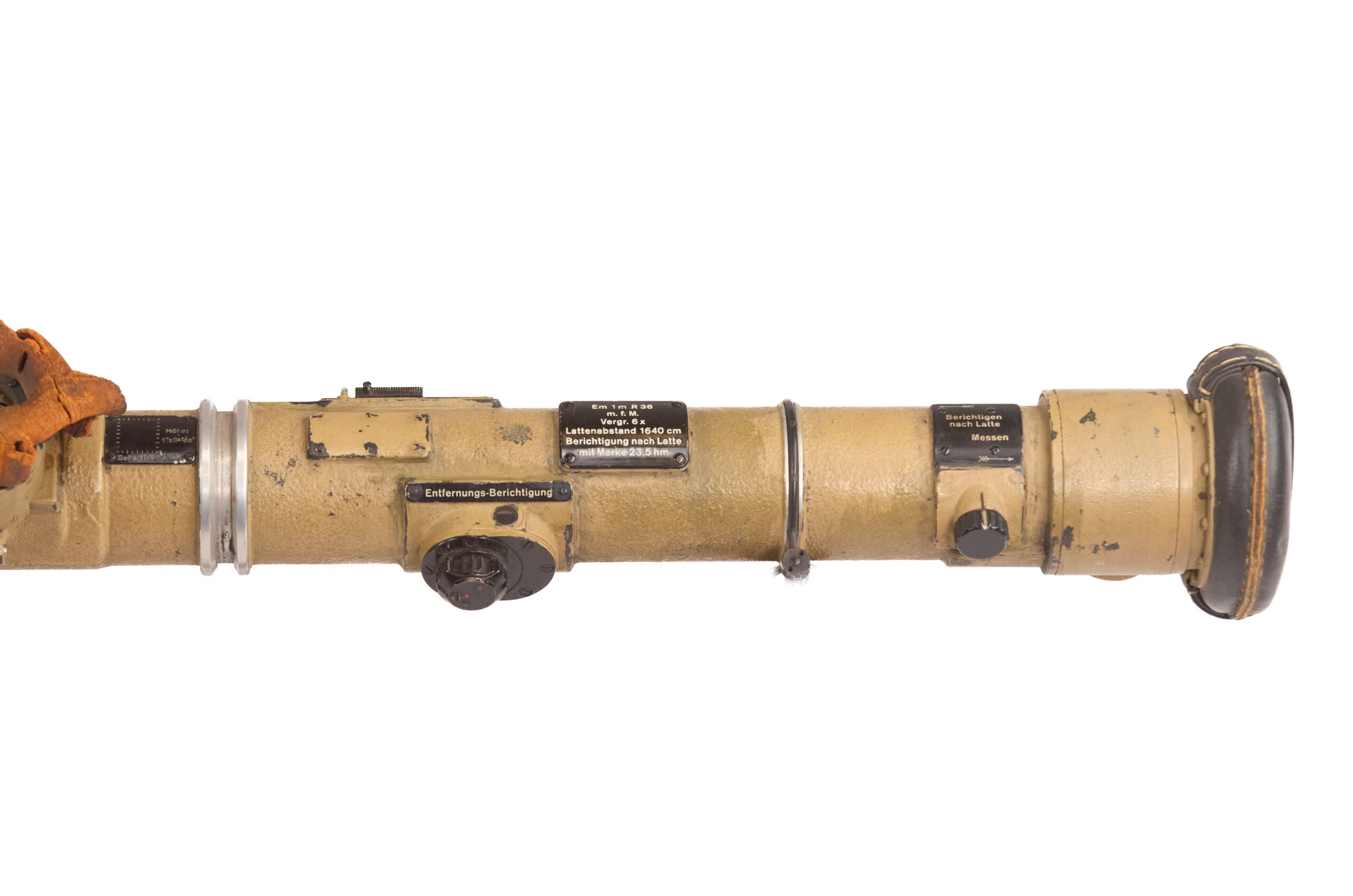
This example shows clear wartime markings. The central data plate reads fwq Nr. 11079 1941. Several black instruction plates remain on the body, including markings for observing, measuring, elevation correction, and range correction. The German control labels give the piece a complete service appearance.
Construction / Configuration / Pattern
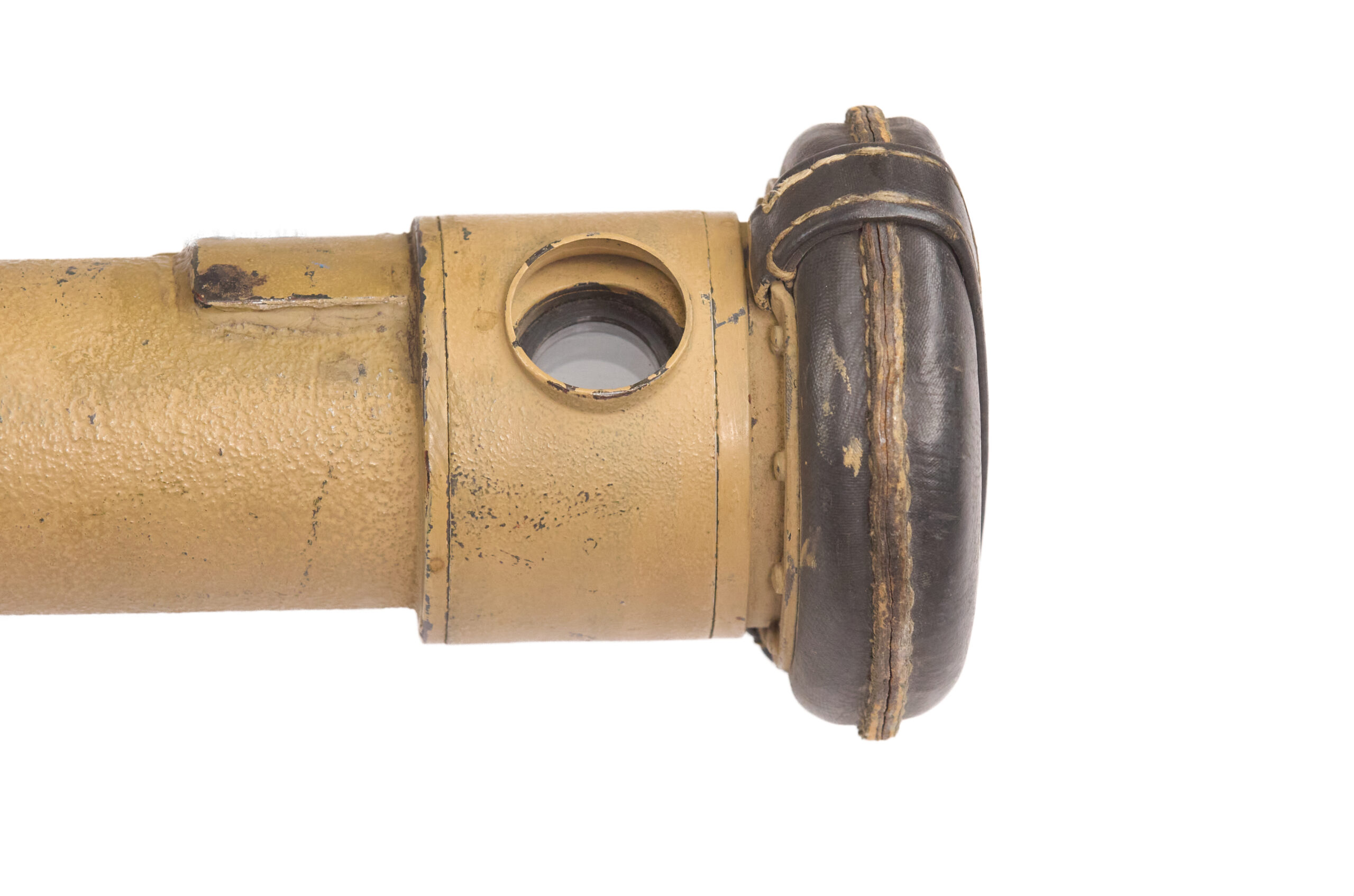
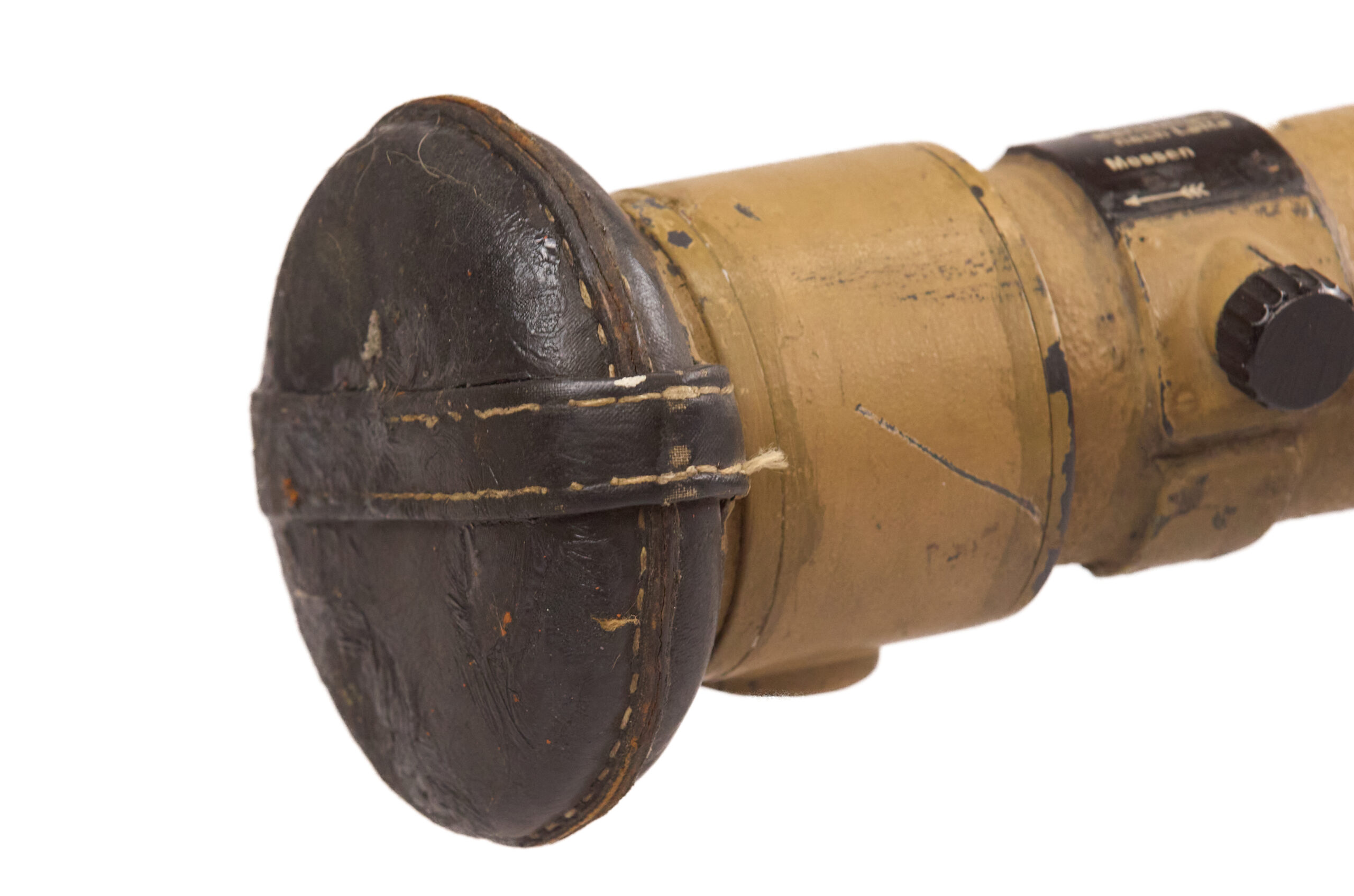
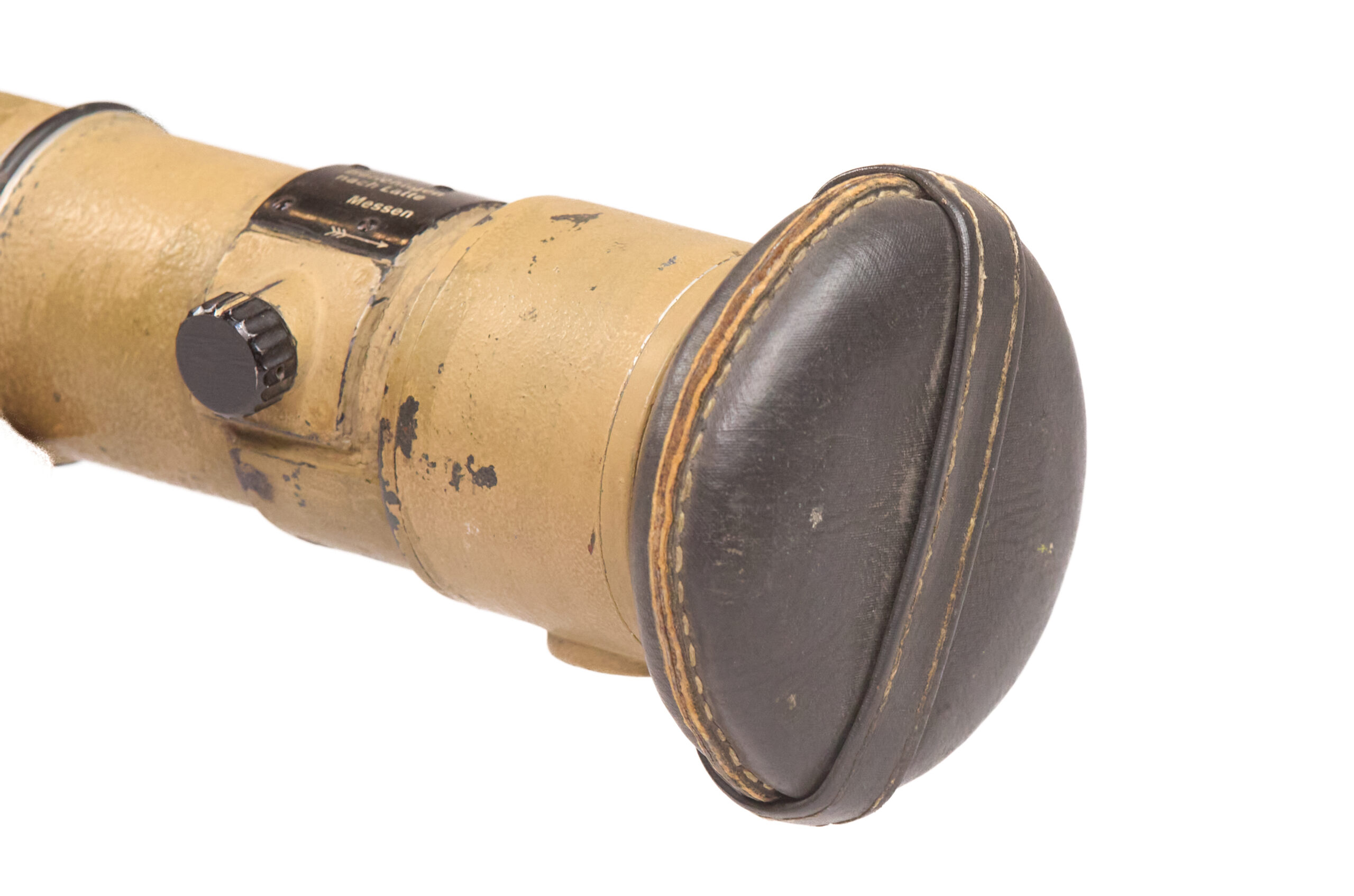
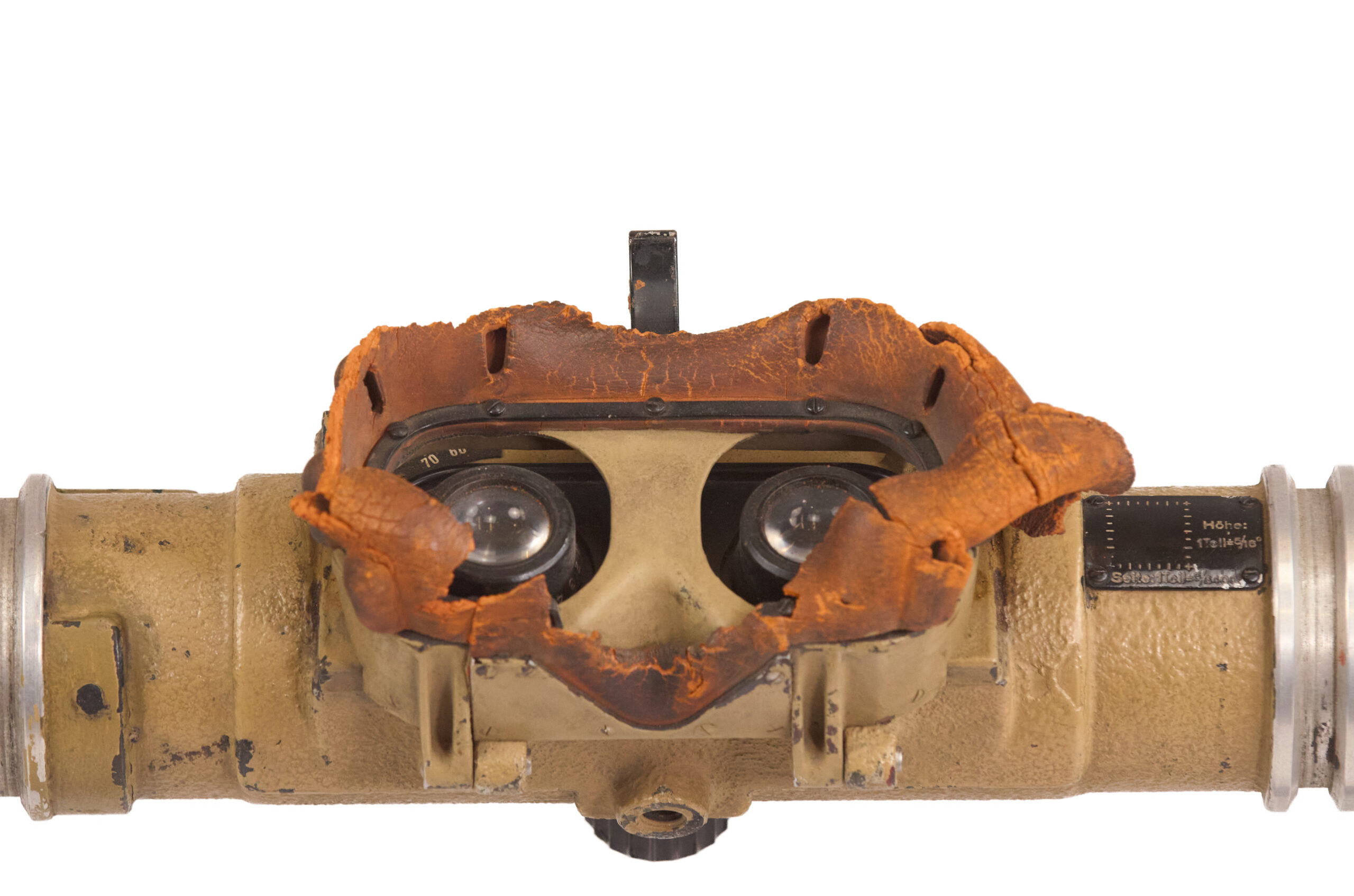
The rangefinder has a long cylindrical body with optical windows at each end and a central viewing station. The instrument uses two eyepieces at the center. A leather face shield surrounds the eyepiece area and helped block stray light during use. The body wears a tan textured finish, with black control plates and silver-toned retaining rings at the end optics.
The visible plates include Beobachten / Messen, Höhen-Berichtigung, and Entfernungs-Berichtigung. The right eyepiece area also carries a small plate marked for Höher / Tiefer adjustment. These controls relate to the instrument’s measuring and correction functions.
A leather shoulder strap remains attached to the body. Both end pads are present, and the central viewing assembly still has its shaped face shield. The lenses are visible in the photographs. The instrument should be treated as an optical collectible unless tested for alignment and function.
Historical Context / Pattern Development
German forces used stereoscopic rangefinders to measure distance through depth comparison. The operator looked through two eyepieces and merged the separate images into one view. Internal reference marks and prism adjustments then allowed the operator to bring the target into coincidence. The instrument translated that adjustment into a range reading.
The Em 1m R36 filled a portable fire-control role. It gave small gun crews and observers a manageable rangefinding instrument without the size of larger artillery or naval rangefinders. The 1-meter base gave the unit enough optical separation for useful field ranging while still allowing transport by a small crew.
The 1936 pattern appeared before the war and remained in German service during the Second World War. Its use with light anti-aircraft guns is especially important. Crews serving 20mm and 37mm weapons needed to judge range quickly against moving targets. Artillery and observation teams also used similar instruments when accurate distance measurement mattered.
The fwq maker code places this example with Saalfelder Apparatebau GmbH. Wartime code markings helped obscure manufacturers while still allowing military procurement and inspection systems to track production. The 1941 date places this instrument in the major expansion period of German wartime optical production.
Condition
This rangefinder shows field and storage wear throughout, but it retains strong display character. The tan textured finish remains broadly present. It shows chips, scratches, rubbed high points, and scattered dark exposed areas. The black German instruction plates remain legible and add important visual detail.
The central rubber face shield is heavily dry, cracked, and deteriorated. Portions of the rubber have broken away around the eyepiece opening. The remaining leather has a dry orange-brown surface with heavy age checking. The leather shoulder strap is present, but it also shows age, dryness, surface wear, and fraying.
The end pads remain fitted and show wear at the seams and edges. The metal body appears complete from the photographs, with end optics, adjustment knobs, control plates, and central eyepiece assembly present. The glass is visible, although optical clarity, alignment, illumination, and mechanical accuracy have not been tested. Overall, this is a visually strong wartime German rangefinder with clear 1941 fwq markings and honest service wear.