Description
DWM MG 08 Display Machine Gun – 1918 Schlittenlafette 08 Heavy Machine Gun Set
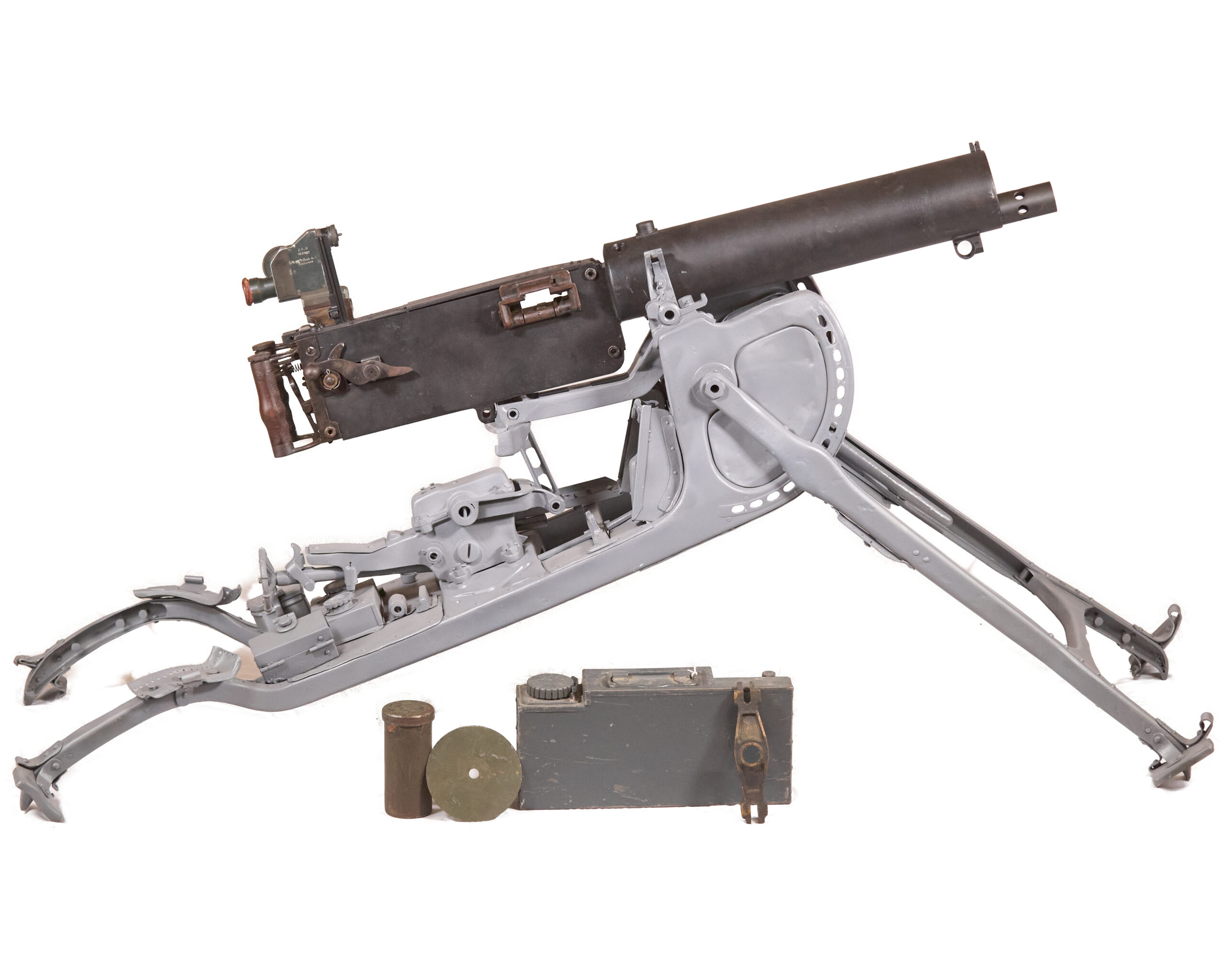
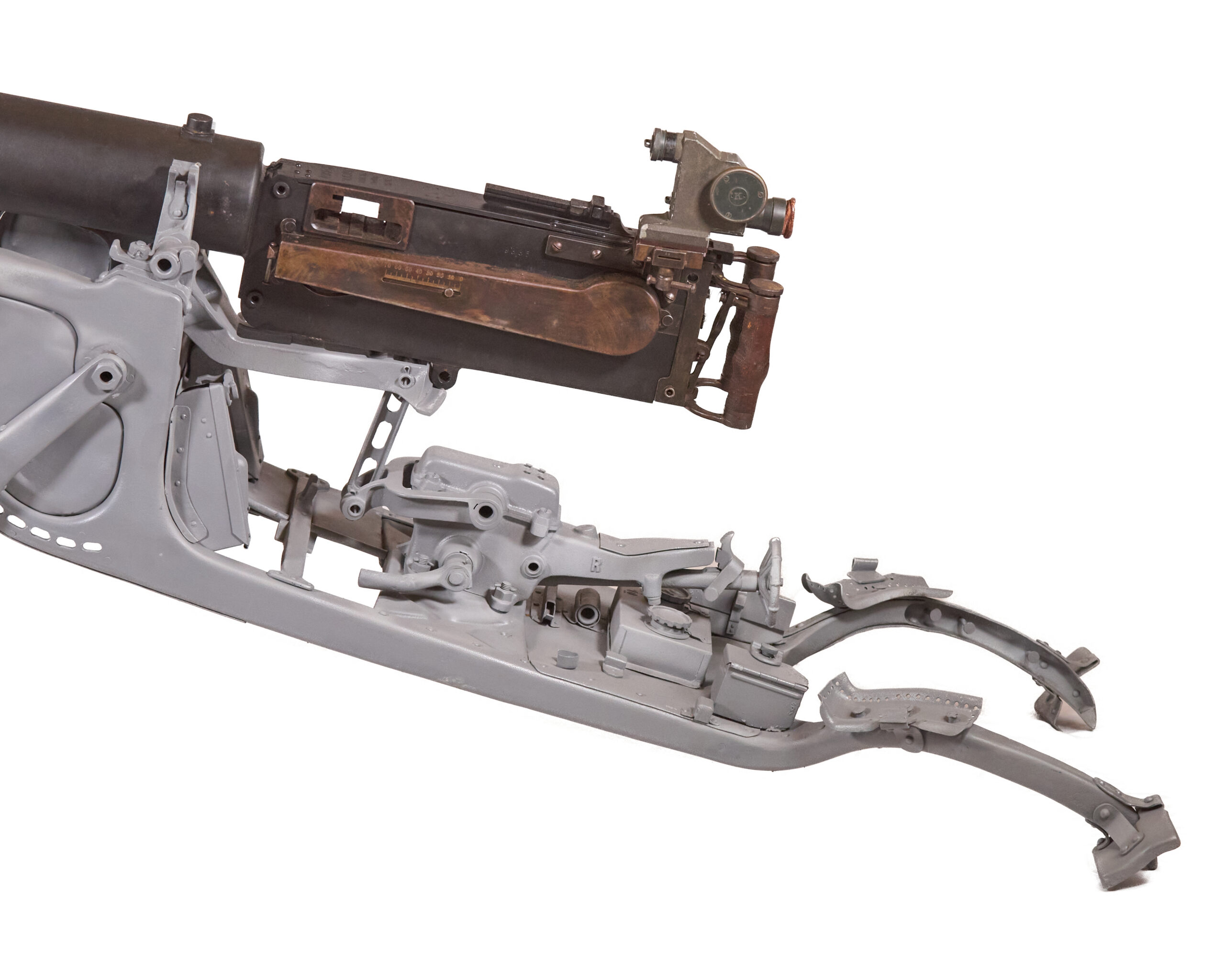
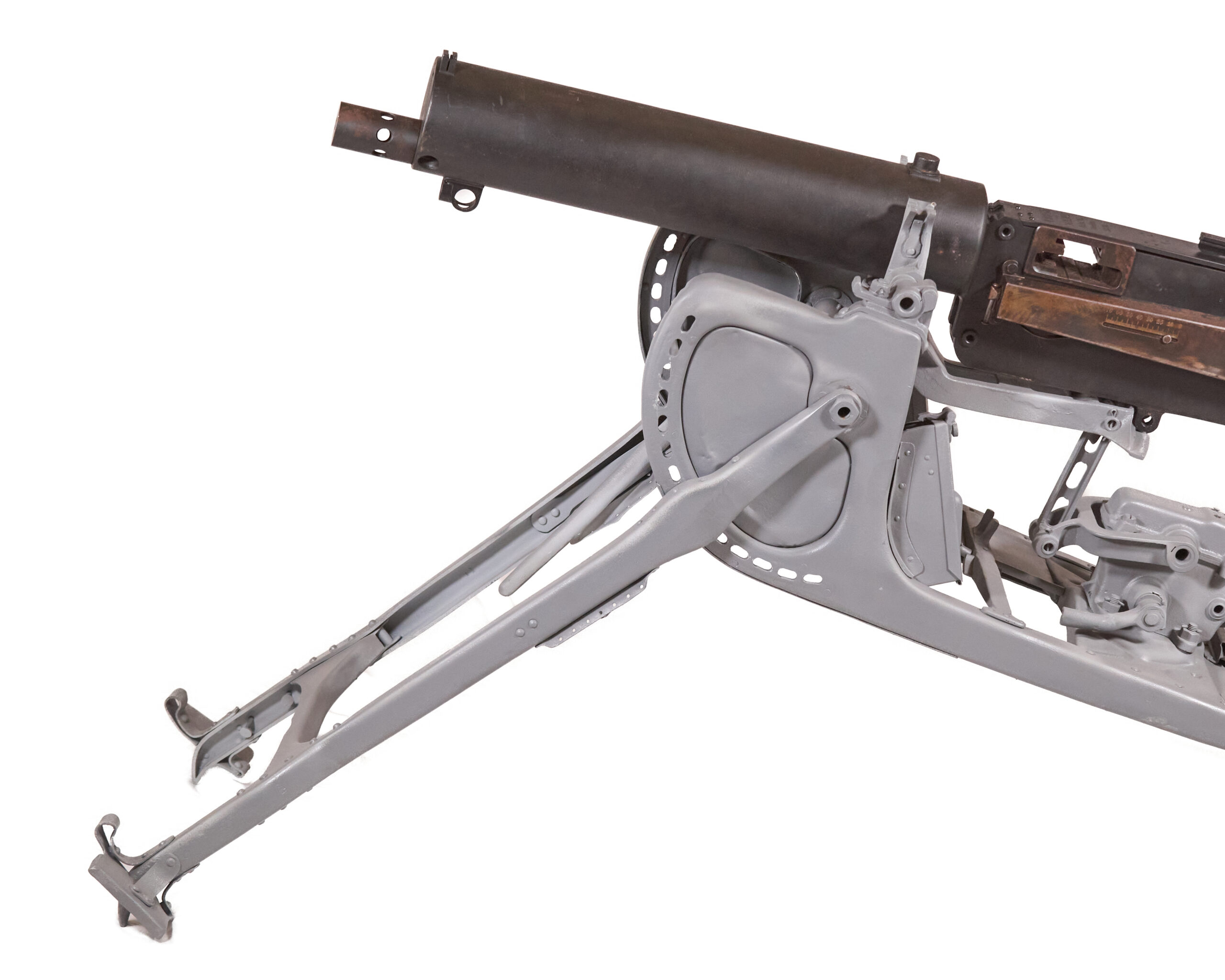
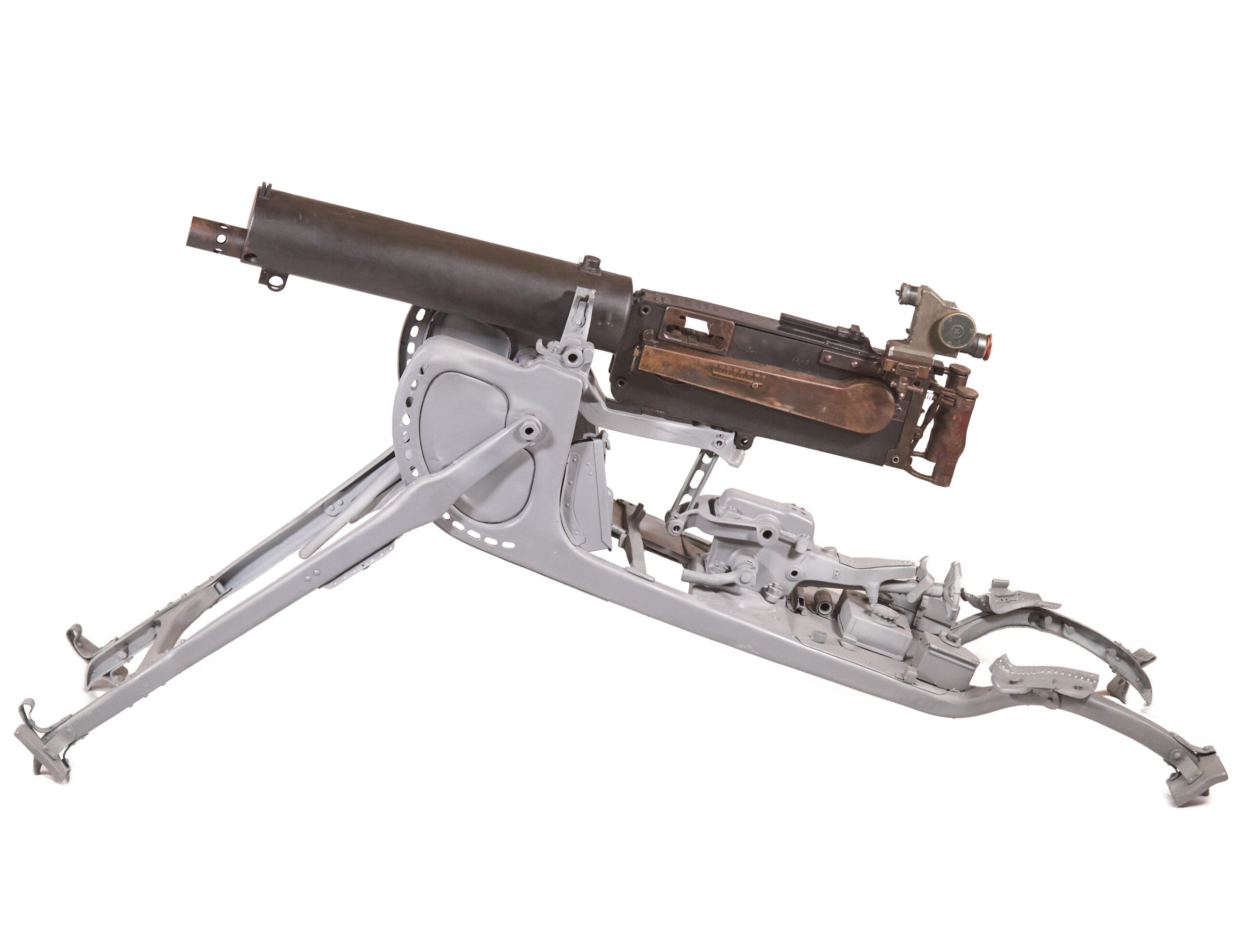
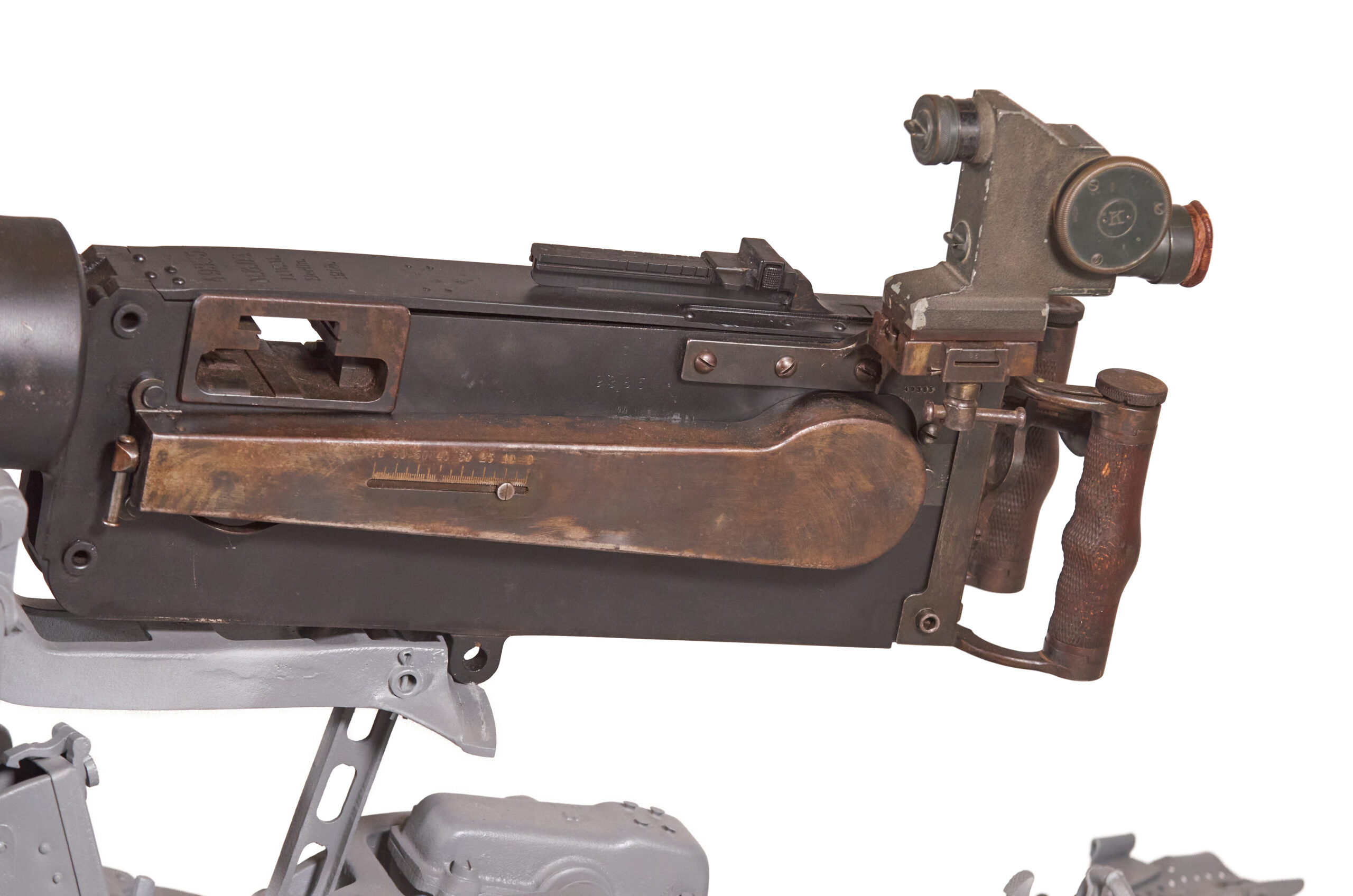
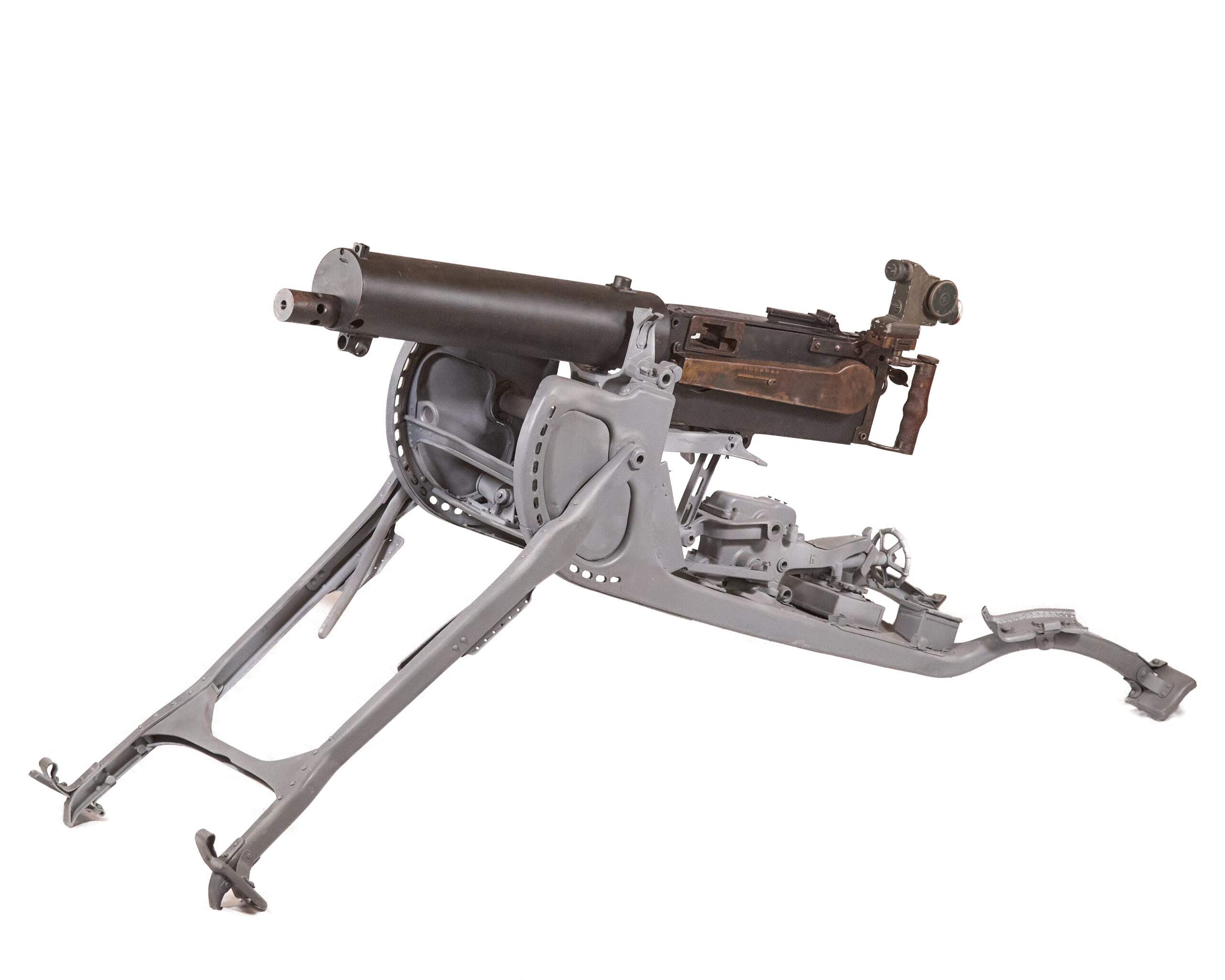
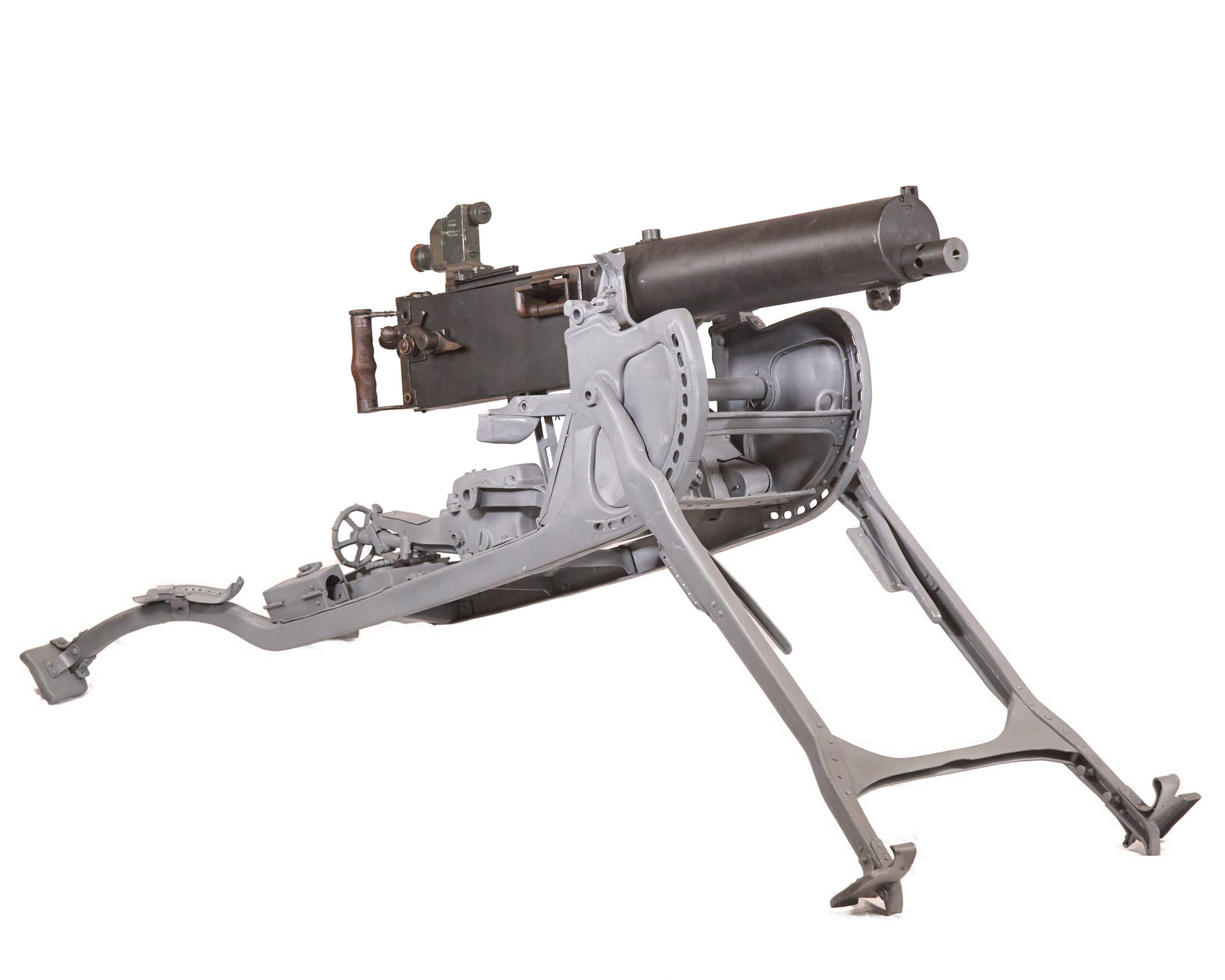
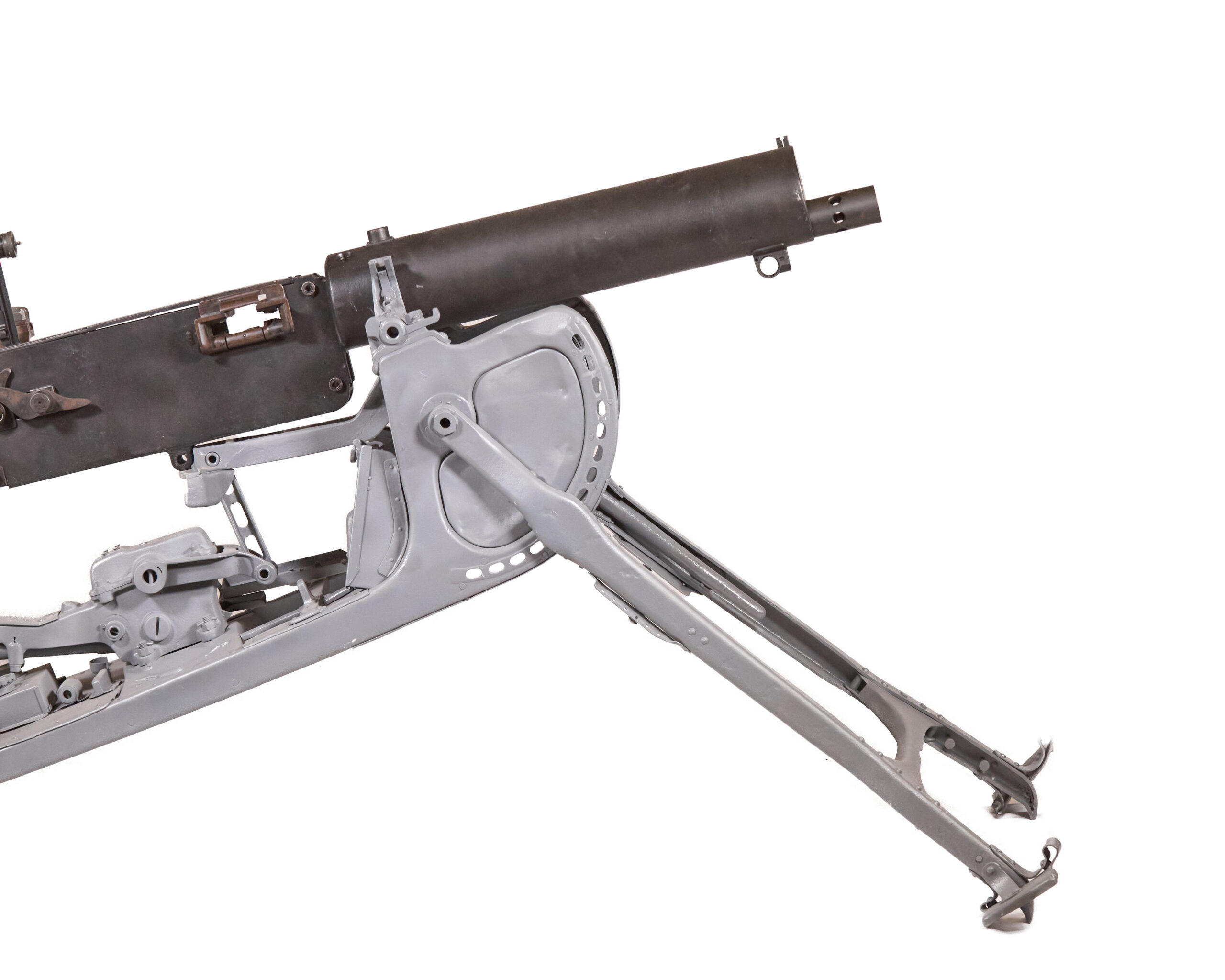
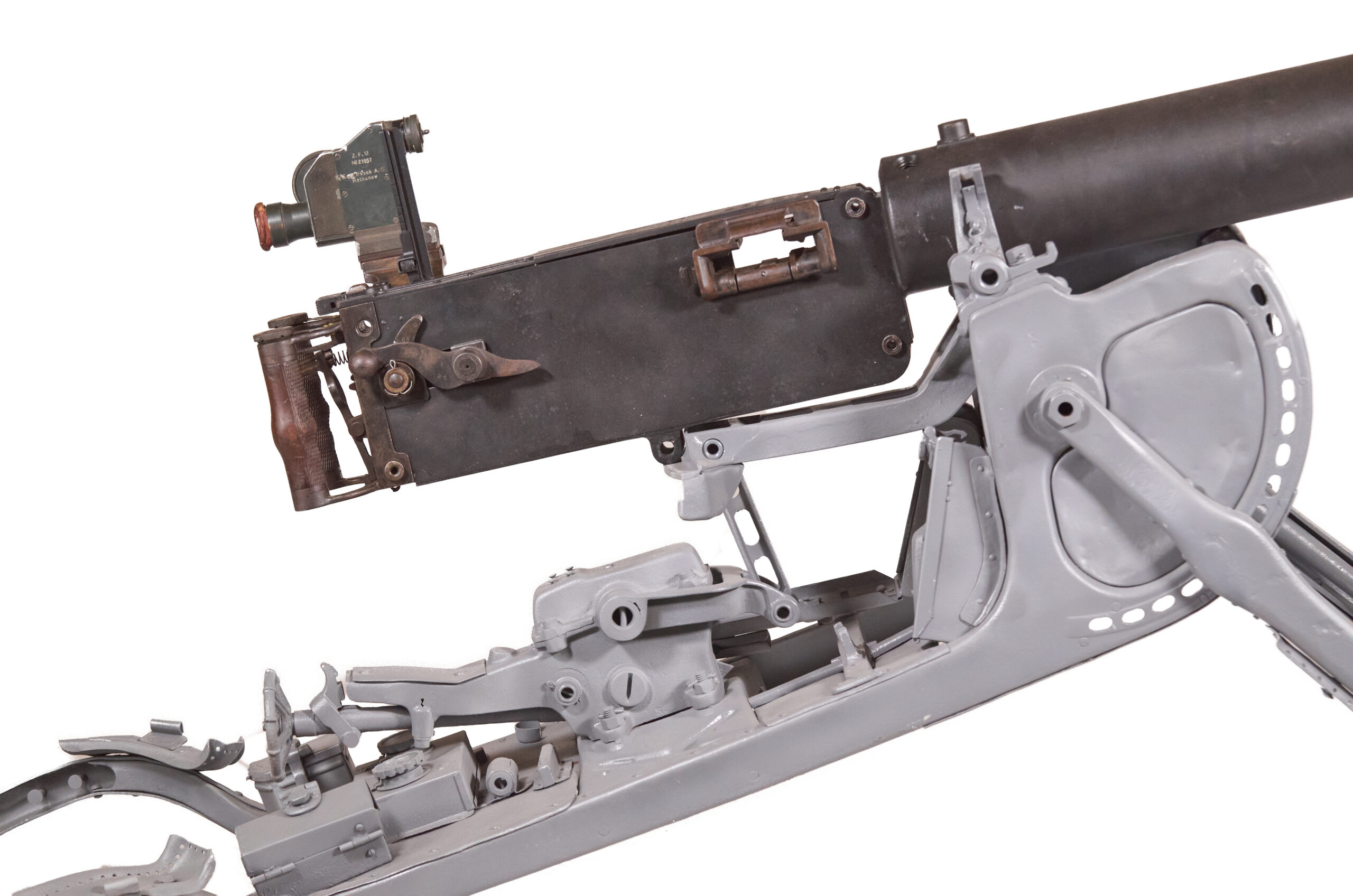
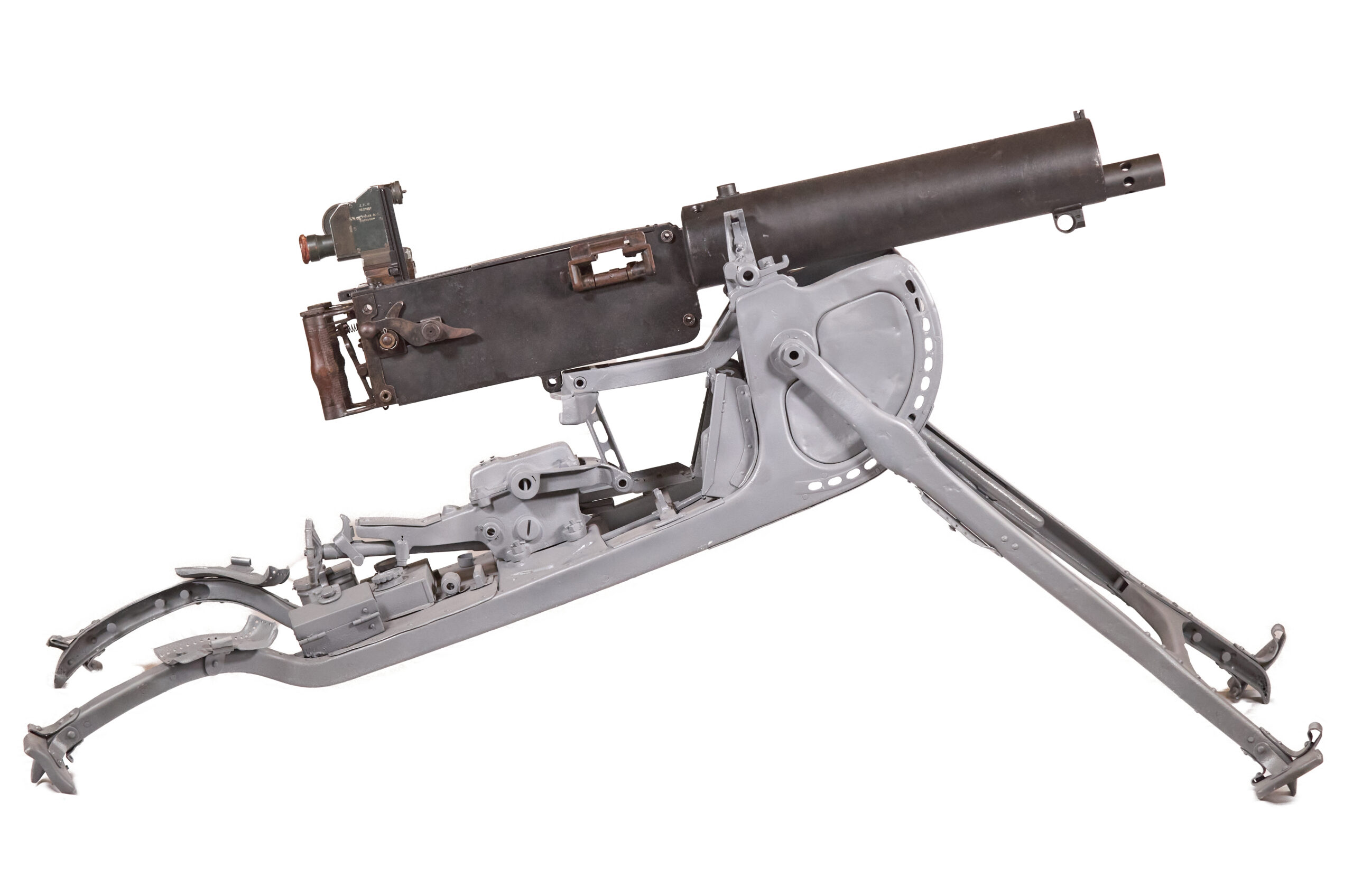
This DWM MG 08 display machine gun is a 1918 example marked D.W.M. Berlin and serial numbered 49385, mounted on a Schlittenlafette 08 sled with Z.F.12 optical sight. In this form, the MG 08 represents the standard Imperial German heavy machine gun system of the late First World War: a water-cooled Maxim-pattern gun, a purpose-built sled mount, and an optical sight intended for stable, deliberate fire from prepared positions. That full arrangement matters. The MG 08 was not simply a heavy automatic weapon. On its sled, it became a crew-served fire-control system designed for sustained fire, controlled traverse, and carefully aimed engagement over distance.
DWM MG 08 Display Machine Gun
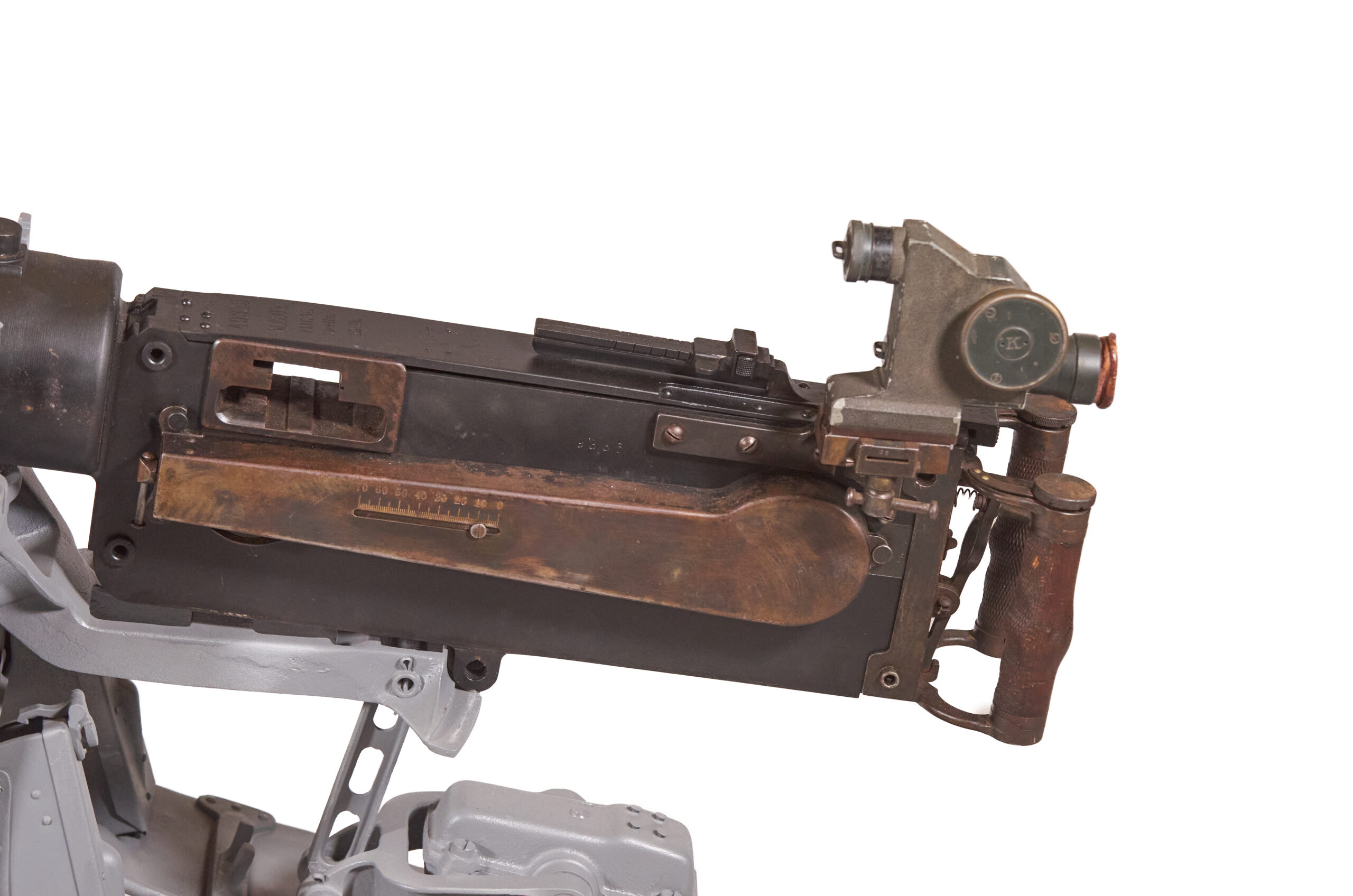
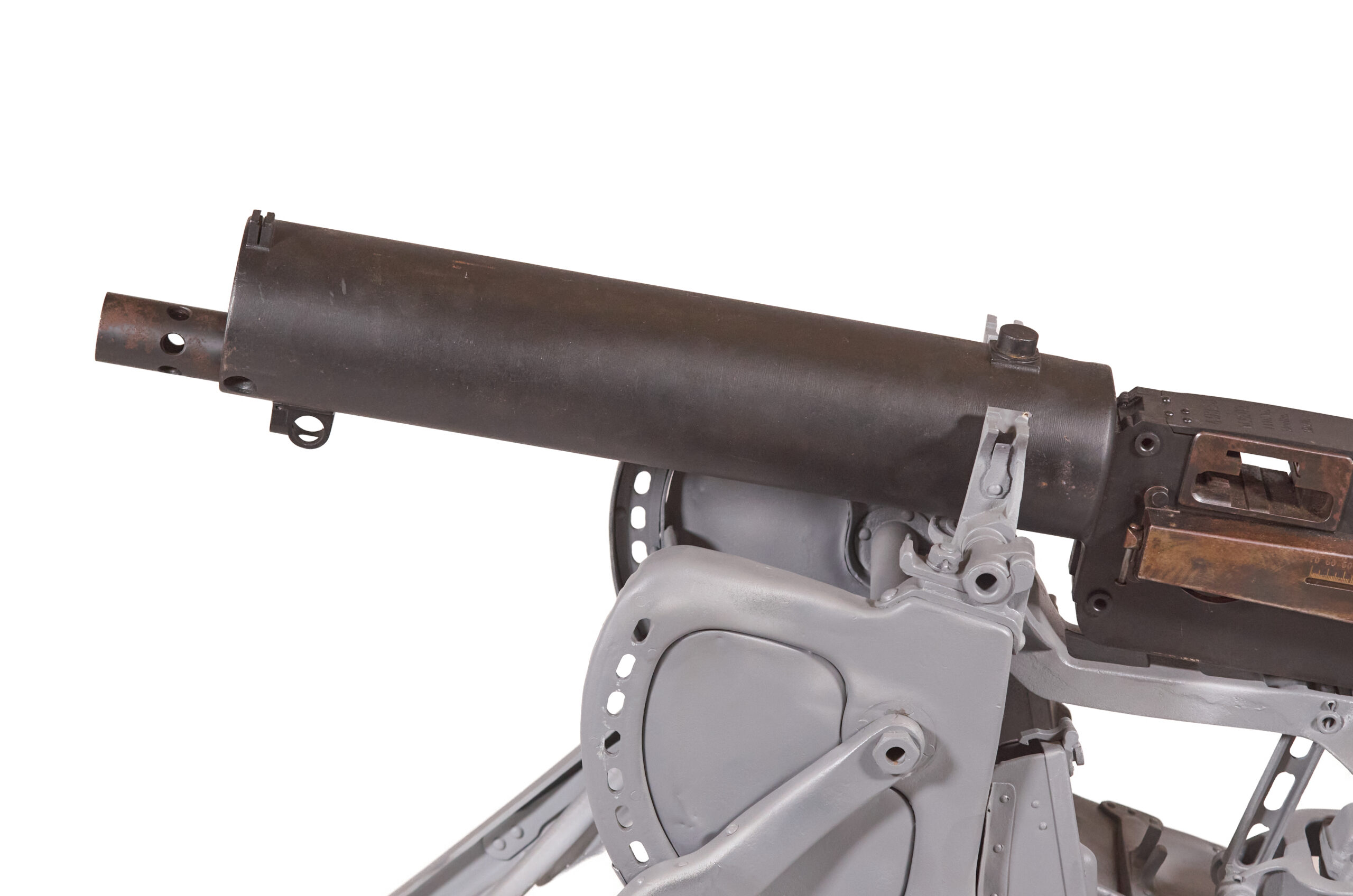
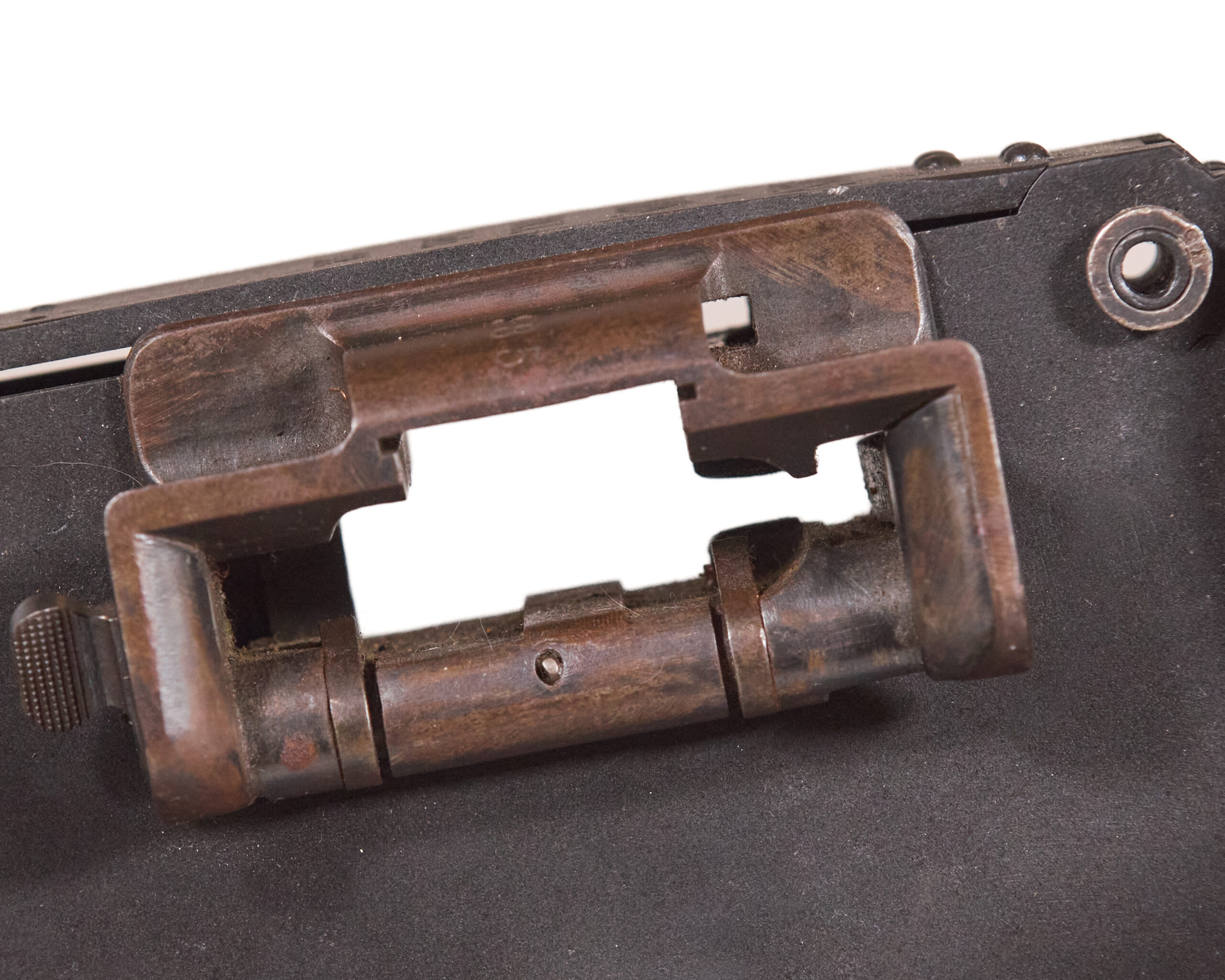
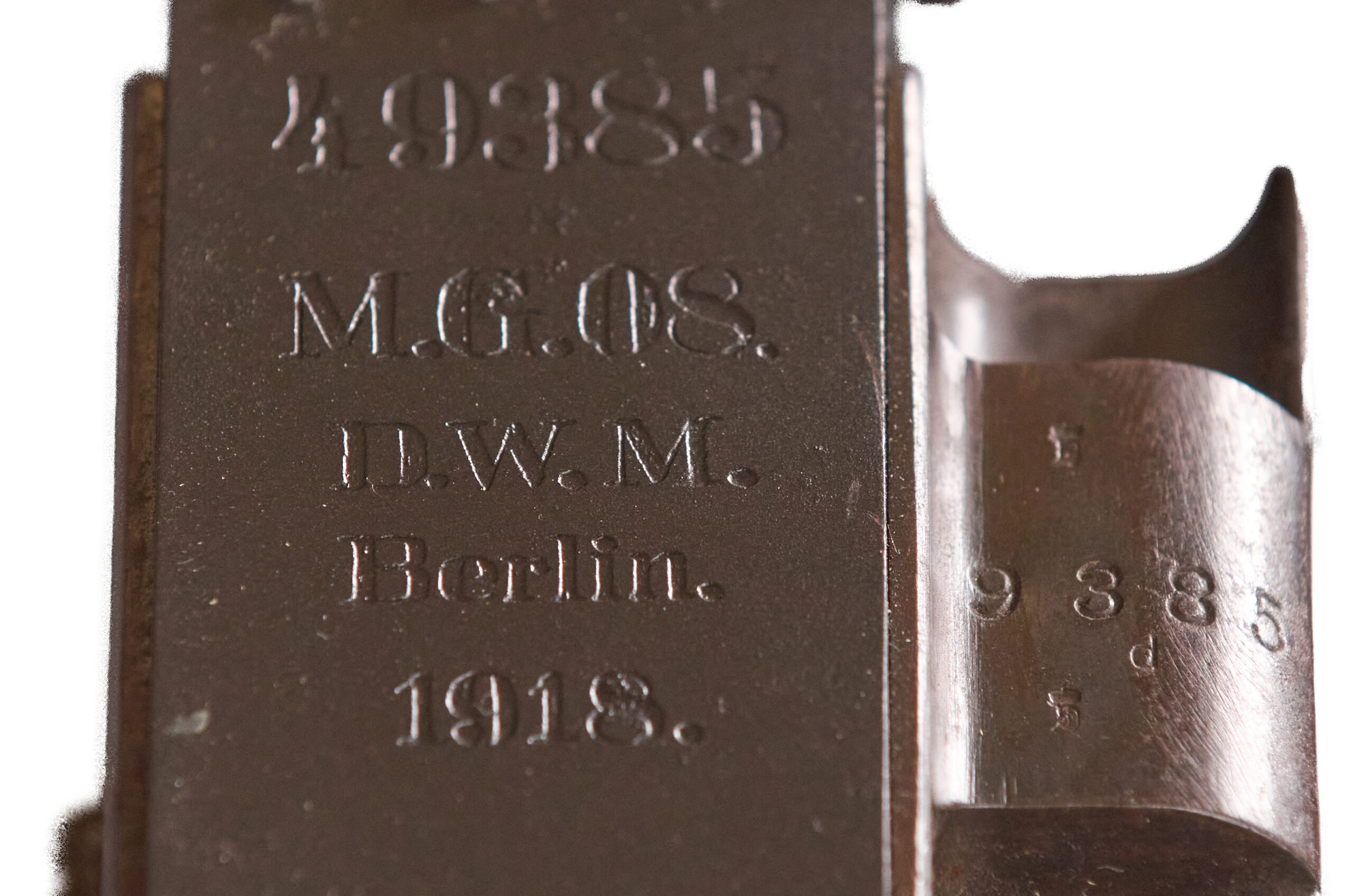
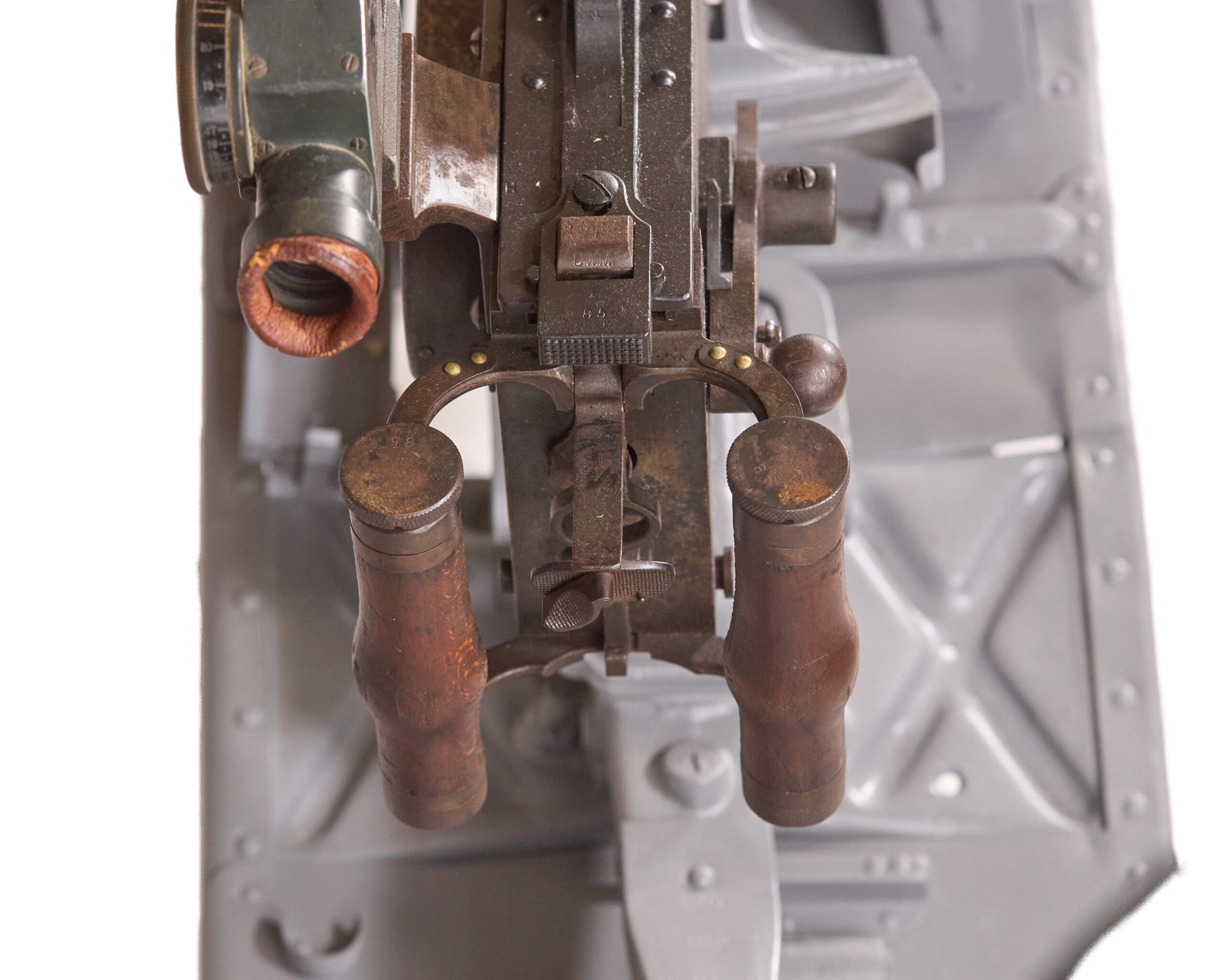
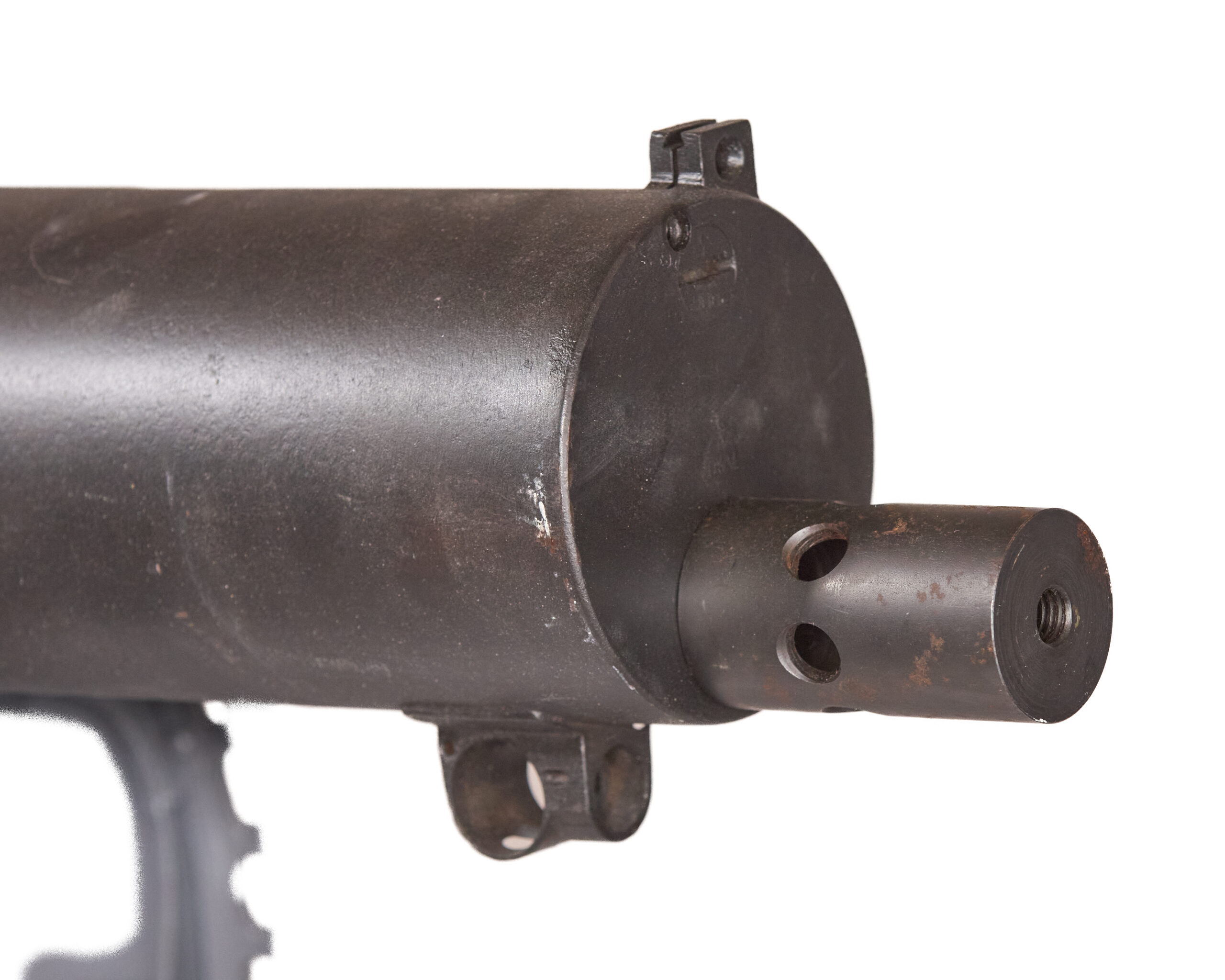
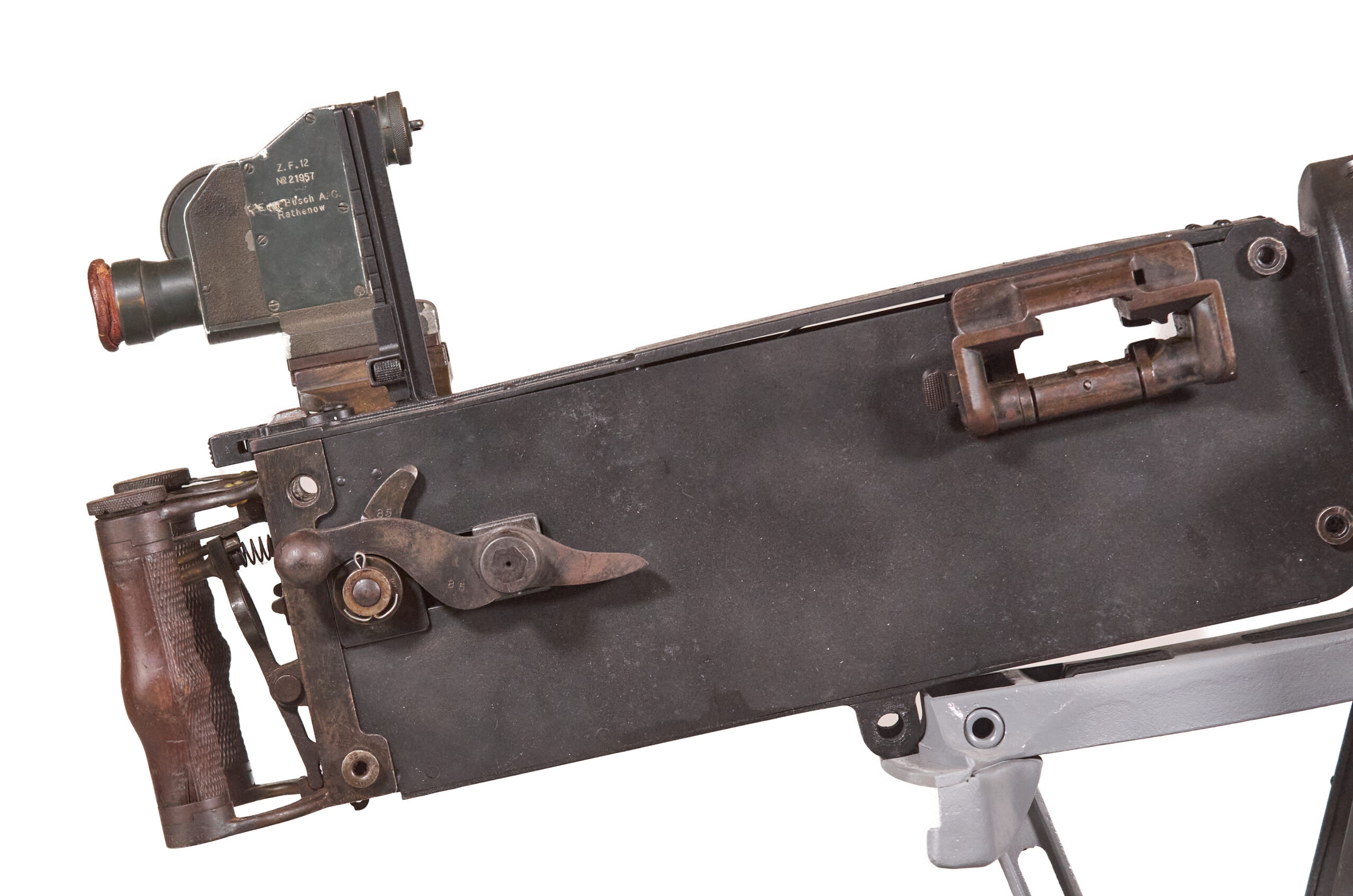
The receiver marking identifies the gun as a product of Deutsche Waffen- und Munitionsfabriken, Berlin (DWM), one of the principal German wartime arms manufacturers. The date 1918 places it in the final production period of the First World War, when the MG 08 remained the established heavy machine gun of German service even as lighter MG 08/15 weapons had taken on more of the mobile role. The gun retains the visual and mechanical features that define the pattern: riveted rectangular receiver, large water jacket, top-cover feed assembly, rear spade grips, tangent rear sight, and left-side optical bracket. Mounted on the Schlittenlafette 08, it presents in the form most closely associated with German heavy machine-gun doctrine rather than as a separated receiver or incomplete display piece.
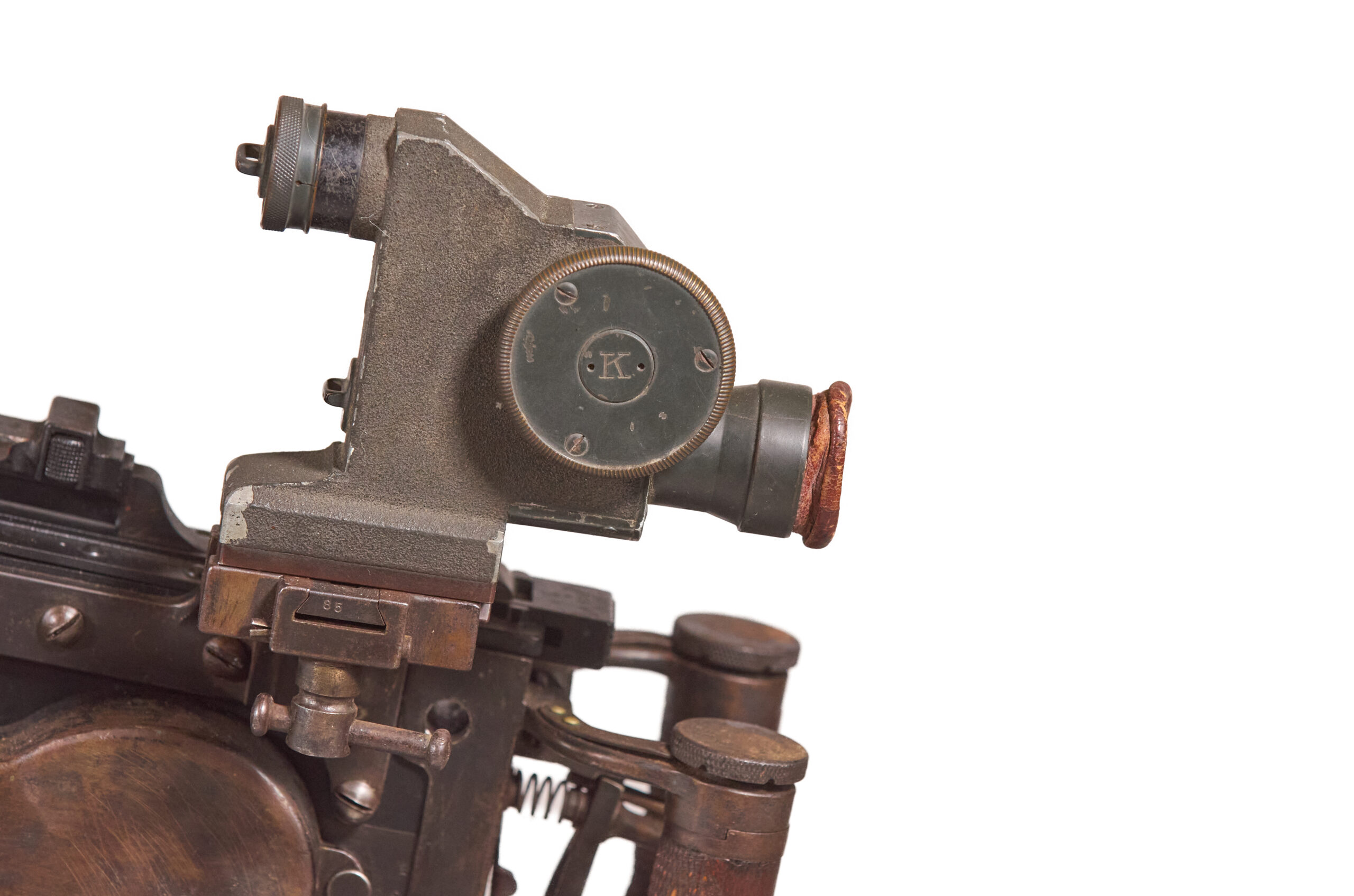
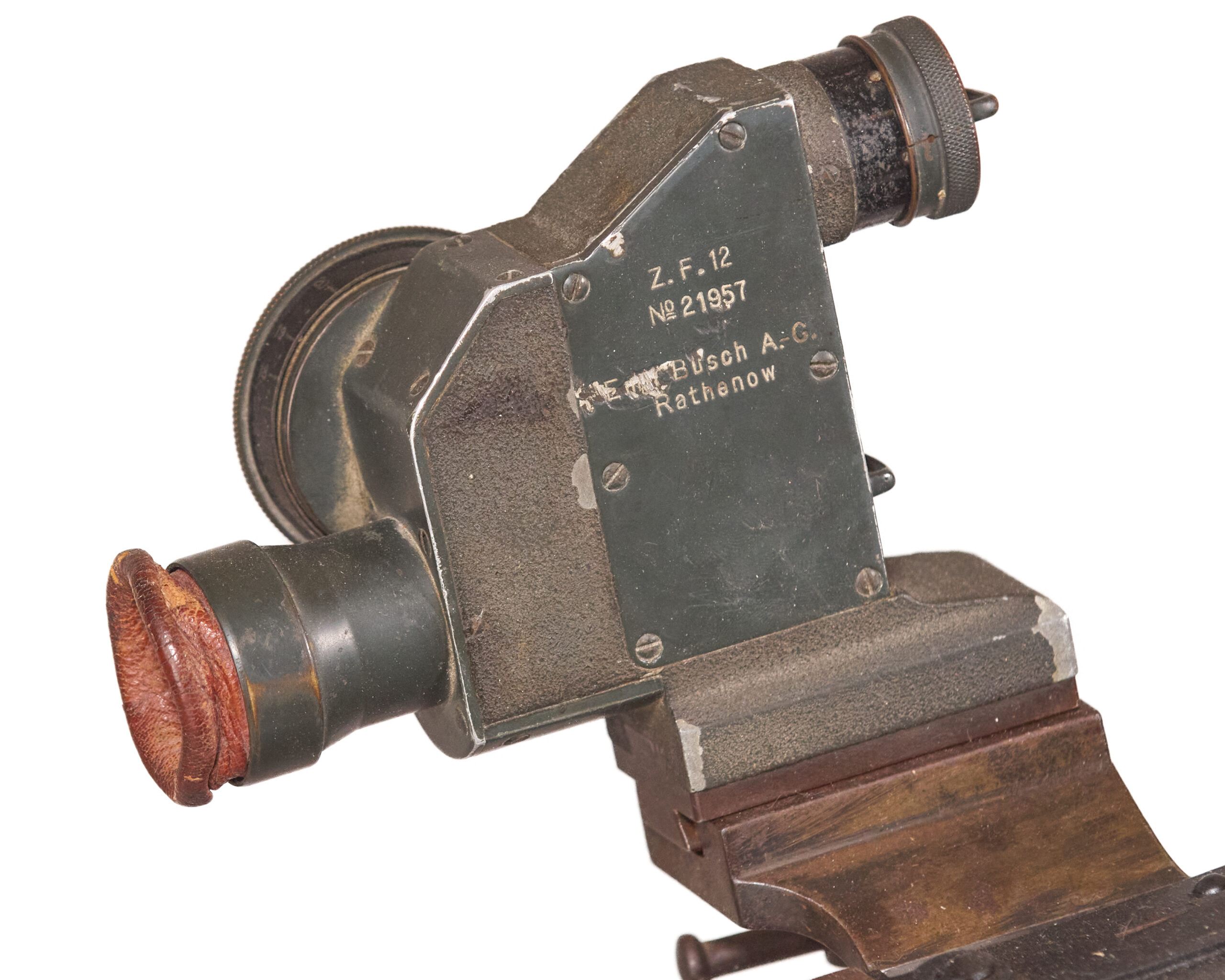
The optical sight adds another important layer. The Z.F.12 is marked to Emil Busch A.G., Rathenow, a major wartime German optics maker. The serial number is No. 21957. With that sight in place, the MG 08 reads as a controlled-fire weapon intended to be laid precisely and held steadily on line, whether for direct fire, fixed fire, or longer-range supporting fire from a prepared position. That is a much better reflection of how the heavy MG 08 was employed than the gun alone on a stripped display stand.
Construction / Configuration / Pattern
Technically, the MG 08 was a water-cooled, belt-fed, short-recoil Maxim system chambered for 7.92×57mm. Standard period figures place the gun itself at about 26.3 kg with water, while the Schlittenlafette 08 weighed about 37 kg, bringing the combined system to more than 63 kg before ammunition, water cans, spare barrels, tools, and crew equipment were added. Feed was by 250-round fabric belt, and the cyclic rate is generally given at about 400 to 450 rounds per minute. Those figures explain the essential character of the MG 08. It was not built for light infantry movement. It was built for stability, endurance, and repeatable fire.
The gun itself shows the classic German Maxim layout. The rectangular receiver houses the locking and feed system under a hinged top cover. The large cylindrical jacket encloses the water-cooled barrel, allowing repeated fire without the rapid overheating associated with lighter air-cooled guns. At the rear, the spade grips and trigger arrangement reflect the gun’s mounted role. On the left side, the optical bracket carries the Z.F.12. That sight was not decorative or incidental. German heavy machine-gun service made real use of optical sighting equipment, especially where stability and prearranged fire mattered.
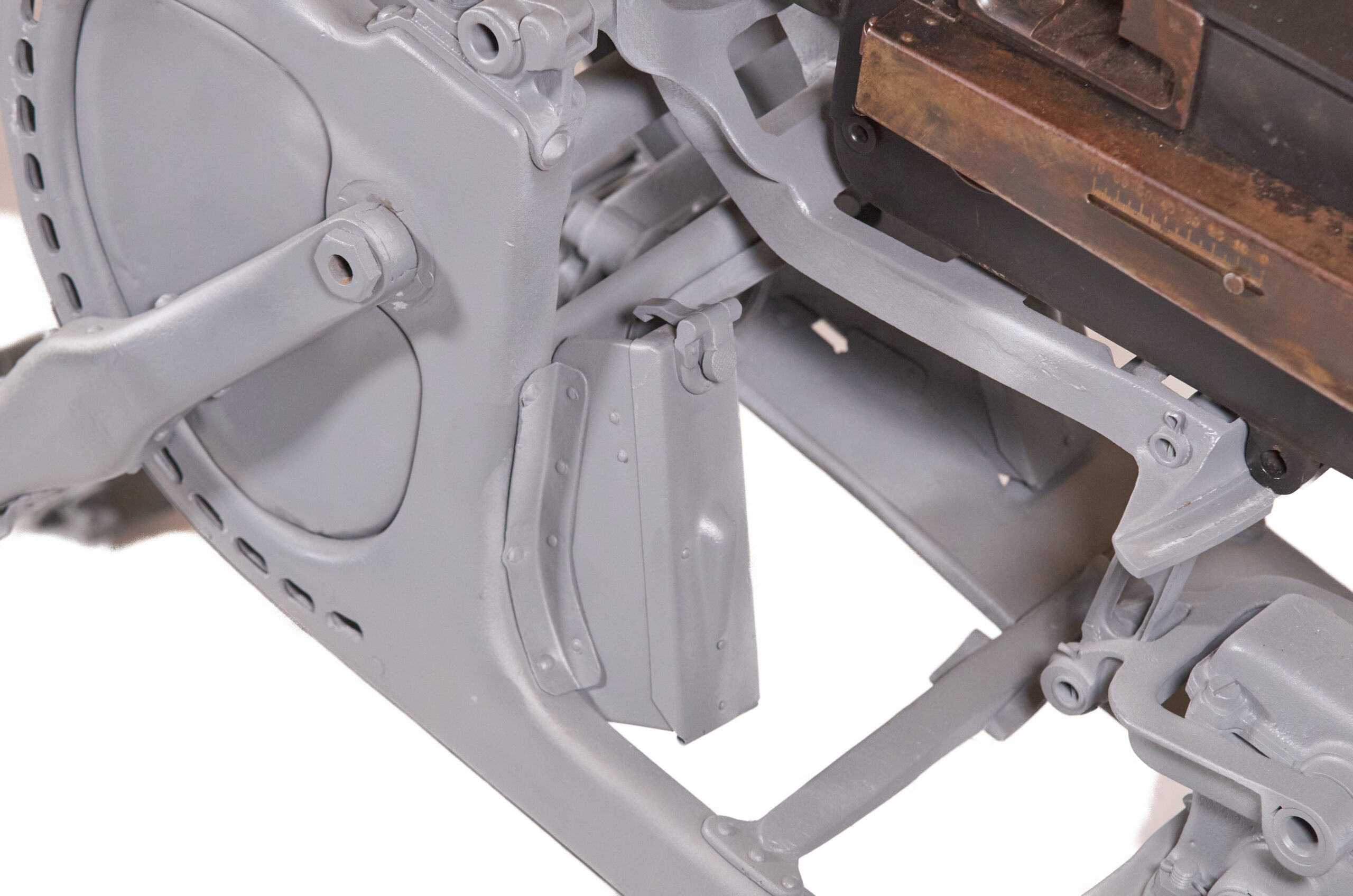
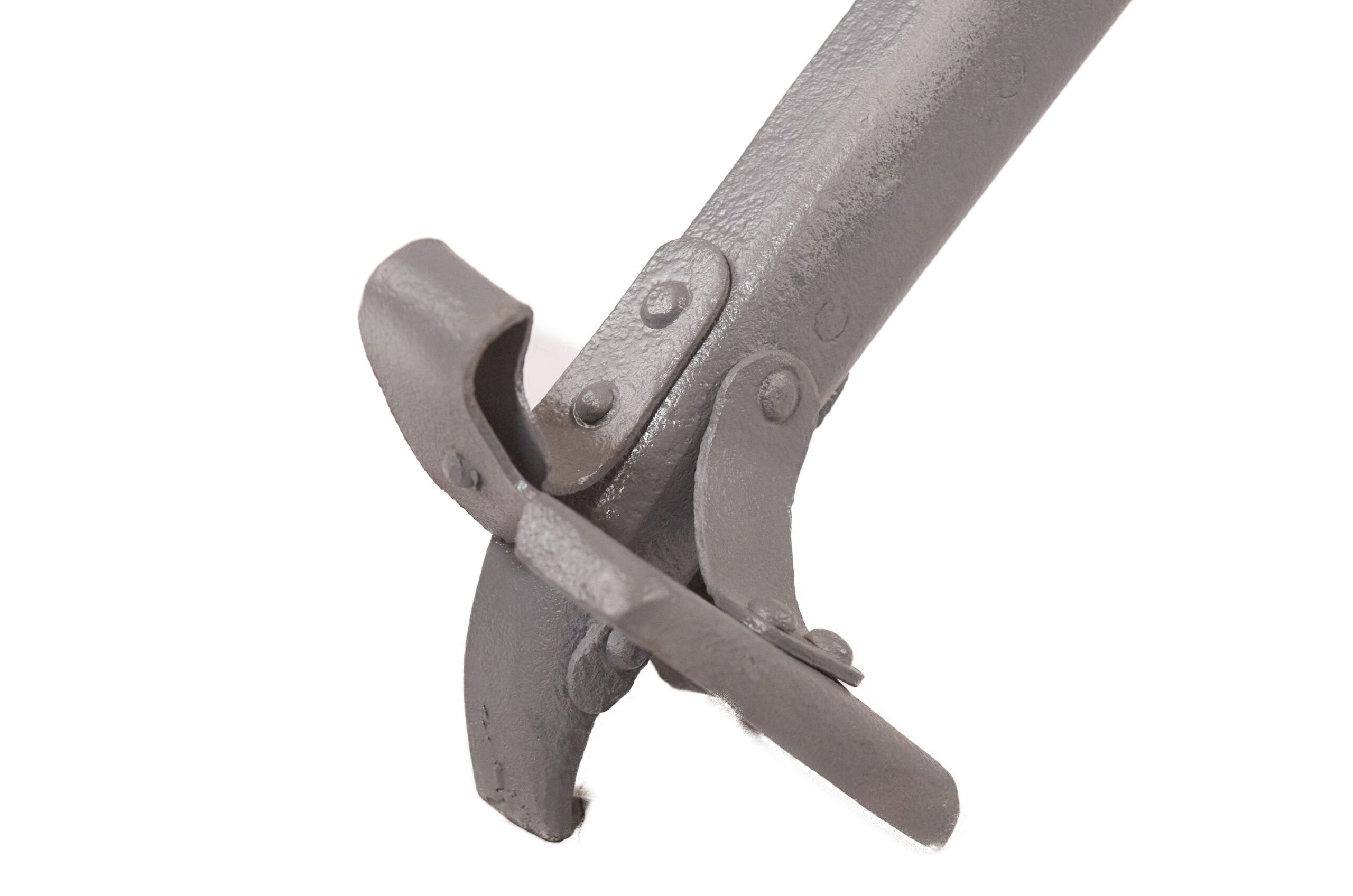
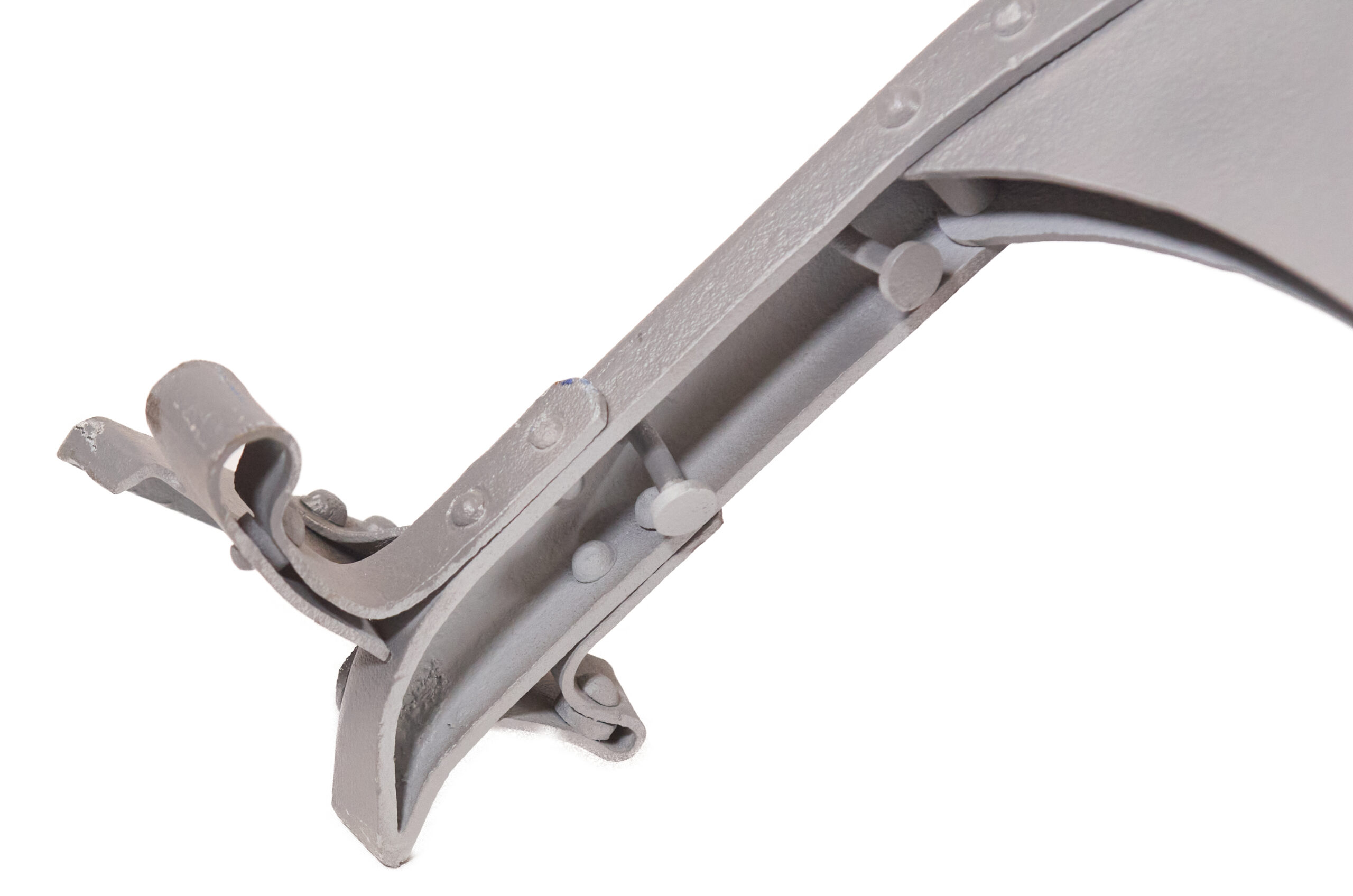
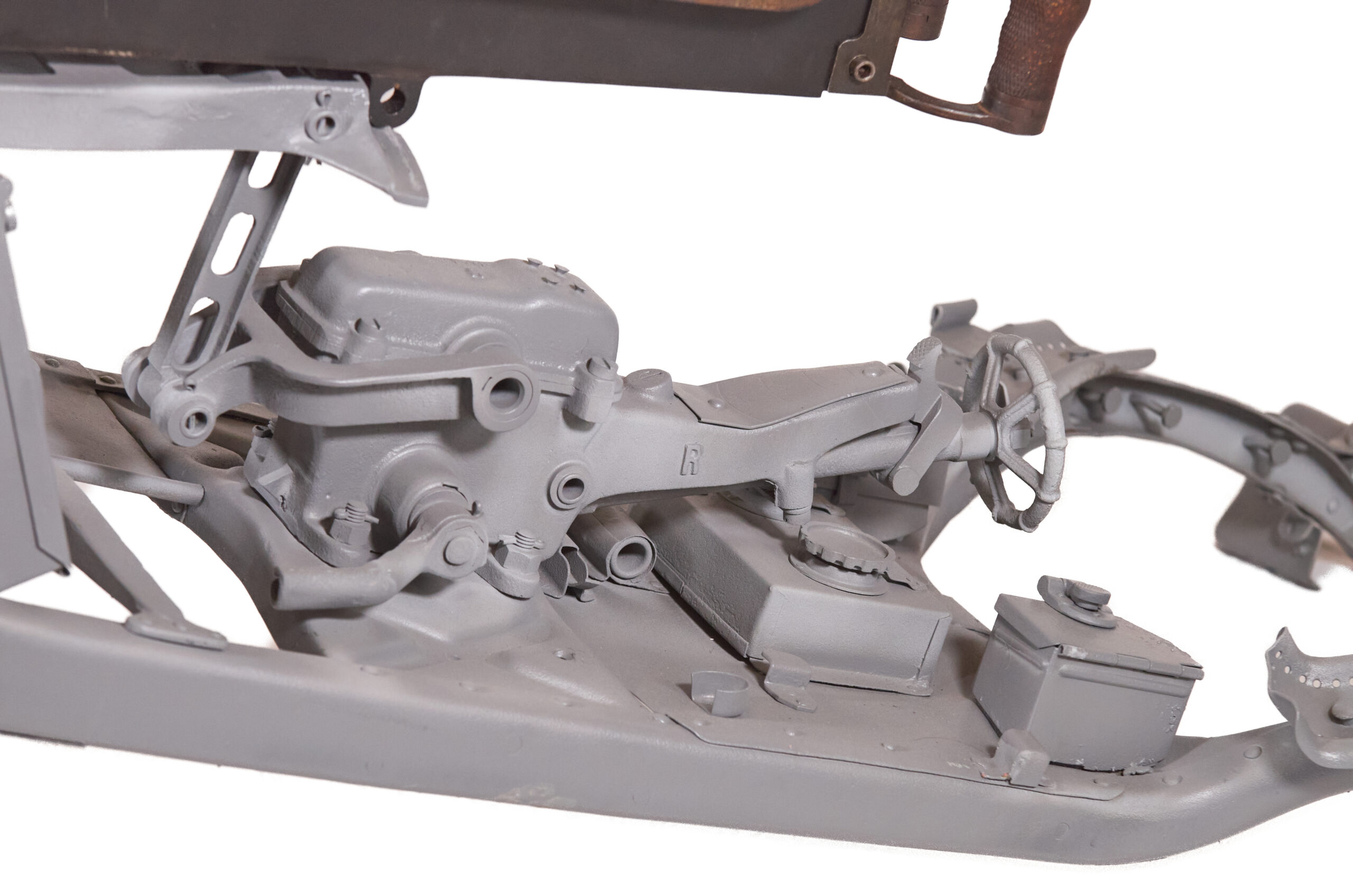
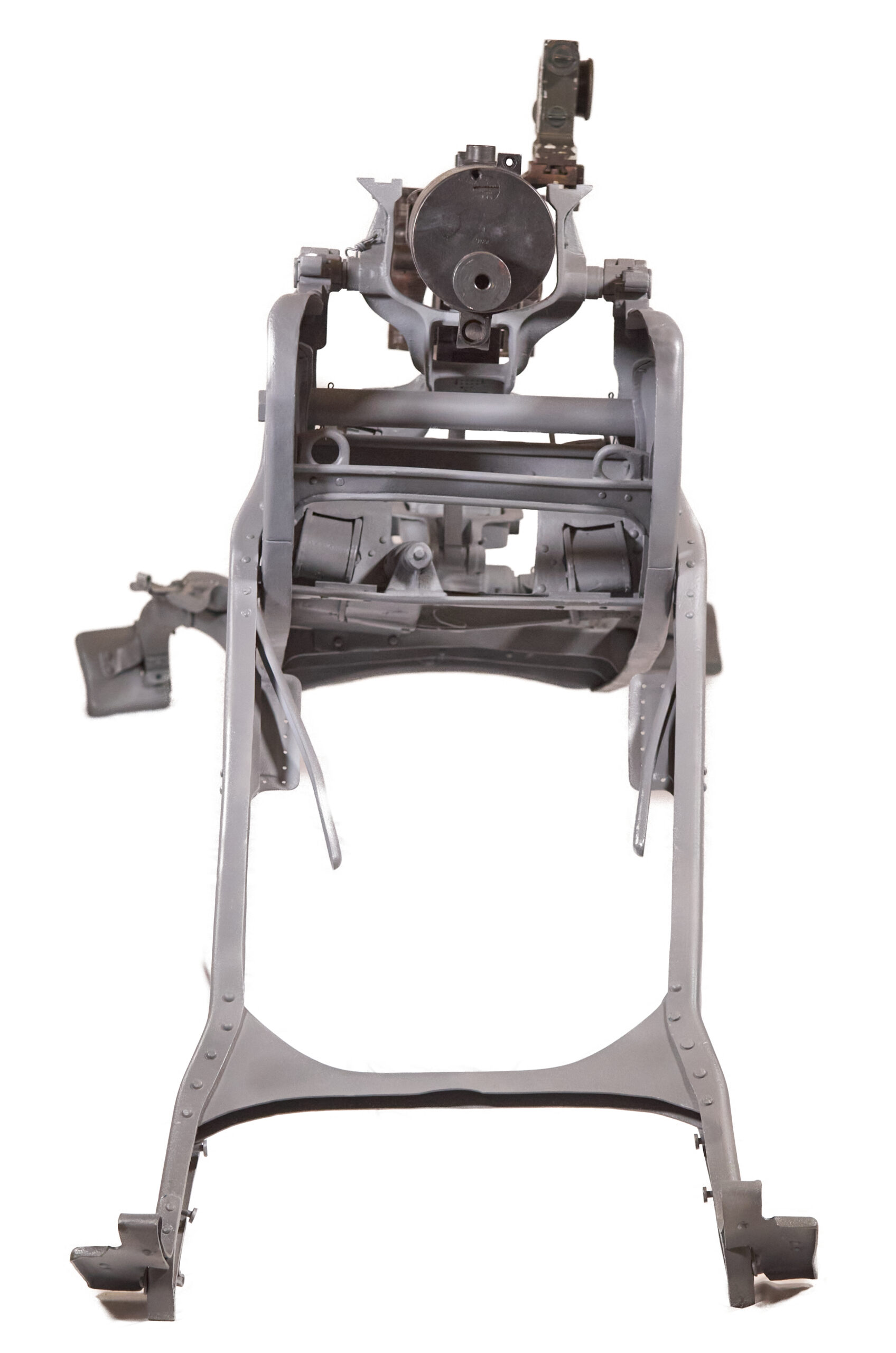
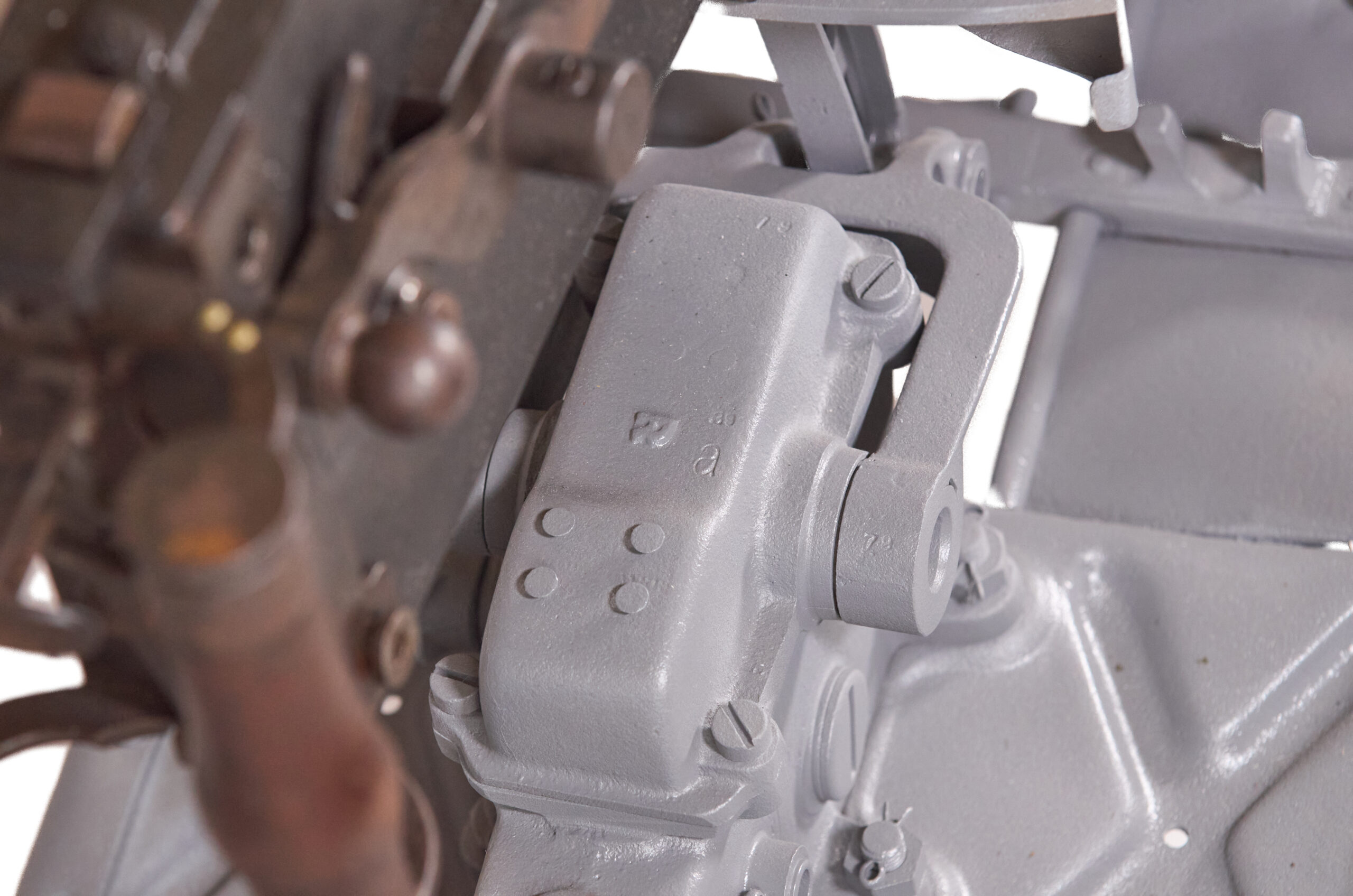
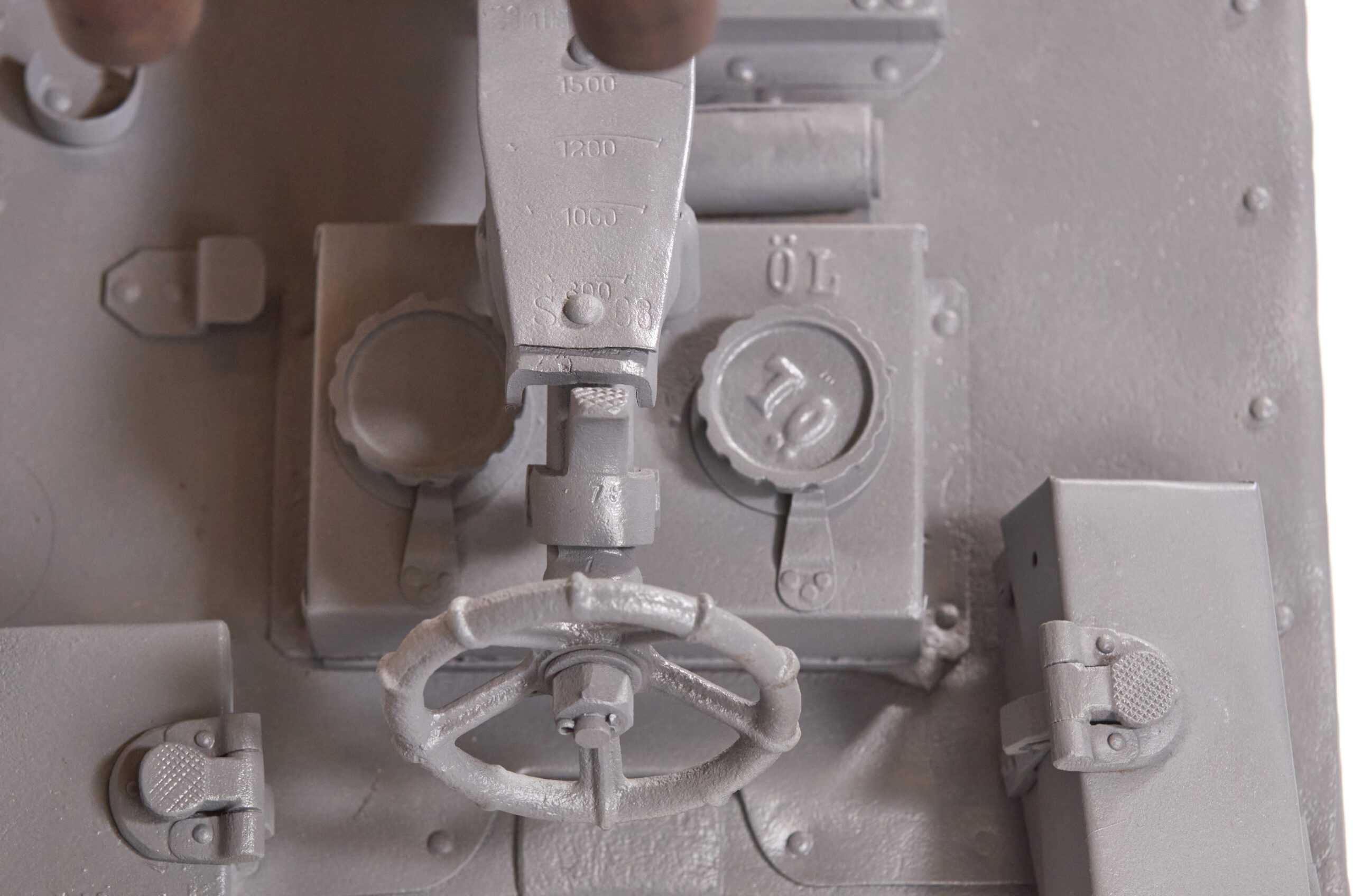
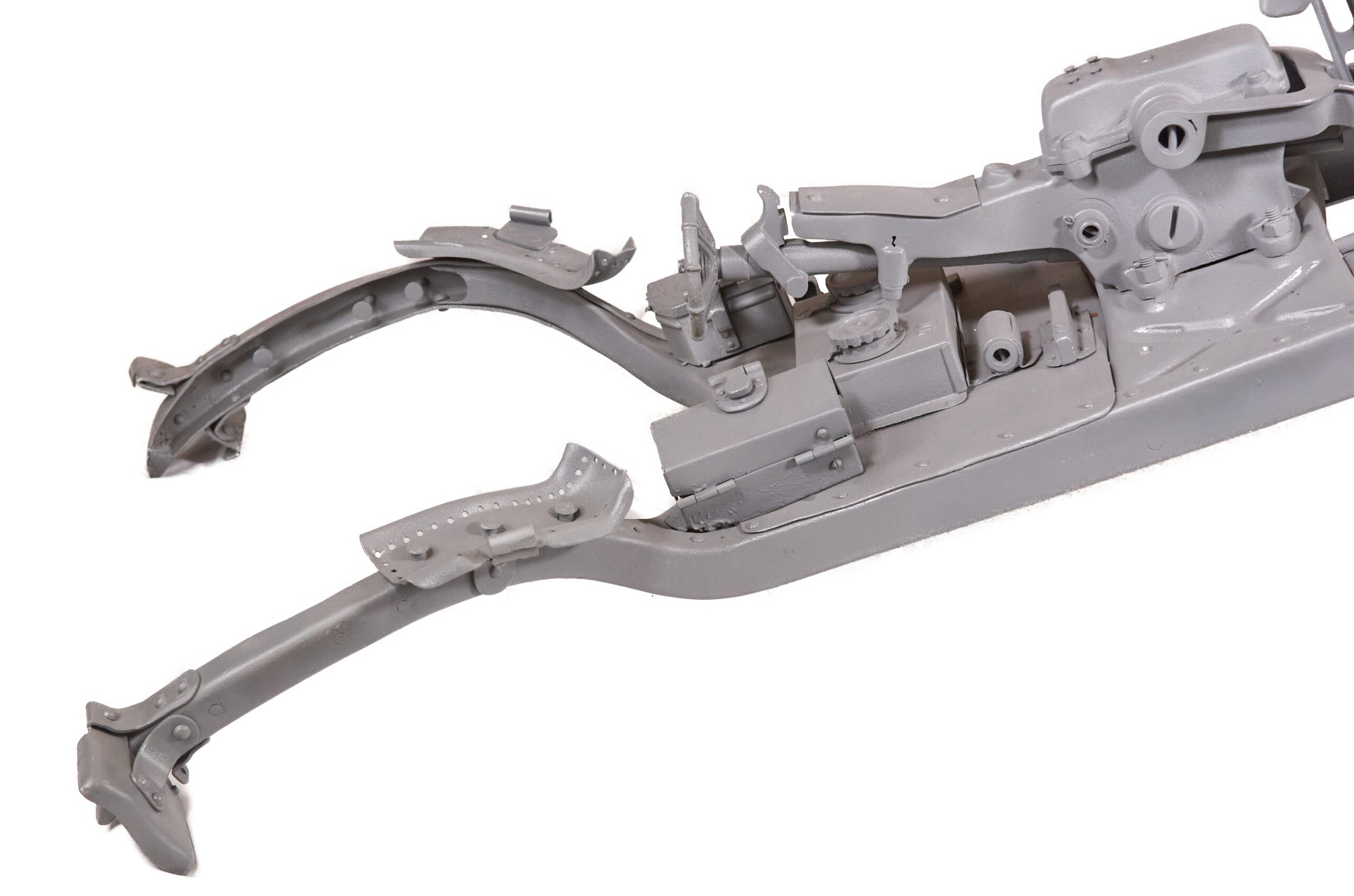
The Schlittenlafette 08 is equally important to the identity of the set. The sled mount used pressed-steel construction with folding supports, curved side plates, geared traverse and elevation controls, and integrated accessory spaces. German manuals treated it as both a firing stand and a transport aid. That dual role helps explain its size and complexity. The sled had to support the gun securely in action, yet it also had to move with the gun team and serve as part of the overall equipment package. The mount’s structure provided the control needed for sustained and carefully laid fire, while the geometry of the mount allowed the crew to work from prone, sitting, or kneeling positions depending on the terrain and task.
Historical Context / Pattern Development
The MG 08 grew out of Germany’s adoption of the Maxim system and became the standard German heavy machine gun of the First World War. By the time this 1918 example was made, the pattern had already become central to German battlefield practice. In early-war and mid-war fighting alike, heavy machine guns were not treated as incidental support arms. They were a specialized arm in their own right, with trained crews, prepared positions, range data, and supporting equipment intended to get the maximum tactical value out of the gun. The MG 08 was the physical expression of that doctrine.
That doctrine is best understood through the sled mount. The Schlittenlafette 08 was far more than a convenient rest. It gave the gun crew a stable platform for sustained bursts, accurate direction of fire, deliberate changes in traverse and elevation, and a much greater degree of control than a simple improvised field rest could provide. In practical terms, that meant the MG 08 on a sled could do more than engage visible targets directly in front of it. It could be employed in fixed lines, deliberate sweeping fire, long-range supporting fire, and other carefully controlled roles that depended on steadiness and repeatability.
The manufacturer also matters here. D.W.M., or Deutsche Waffen- und Munitionsfabriken, was one of the principal arms concerns of Imperial Germany. A 1918 D.W.M. Berlin marking places this gun within the final wartime output of one of the most important names in German military production. Likewise, the sight code matters. The Z.F.12 on this gun is associated with Emil Busch A.G., Rathenow, one of the major German optical firms of the period. That pairing of a late-war DWM gun with an Emil Busch sight gives the set exactly the kind of maker-specific detail that distinguishes a proper historical listing from a generic MG 08 description.
Condition
This example is now a deactivated display MG 08, and it should be understood and presented in that context. The visible receiver marking supports identification as 49385 / M.G.08. / D.W.M. / Berlin / 1918. Smaller visible component marks ending in 85 are consistent with the abbreviated numbering practice commonly encountered on MG 08 parts. The principal strength of the piece is the completeness of the display system itself: gun, sled, and optic presented together in the proper heavy-machine-gun form. That full configuration carries much more historical weight than a separated gun body or a loose sled would carry on its own.
As a display piece, the set presents the MG 08 in the form most closely associated with German First World War service. The sled mount preserves the system’s intended method of employment. The Z.F.12 optic preserves the fire-control side of the weapon. The gun retains the characteristic visual architecture of the pattern, including water jacket, feed cover, spade grips, and optical mount. Taken as a whole, this is a substantial and historically correct late-war MG 08 display set with strong maker identification, proper heavy mount, and a correct period optical sight.
Explore More at Old Steel
Follow us on Instagram:
Old Steel Guns on Instagram