Description
WWI-Era or Interwar U.S. Child’s Doughboy-Style Patriotic Uniform Set
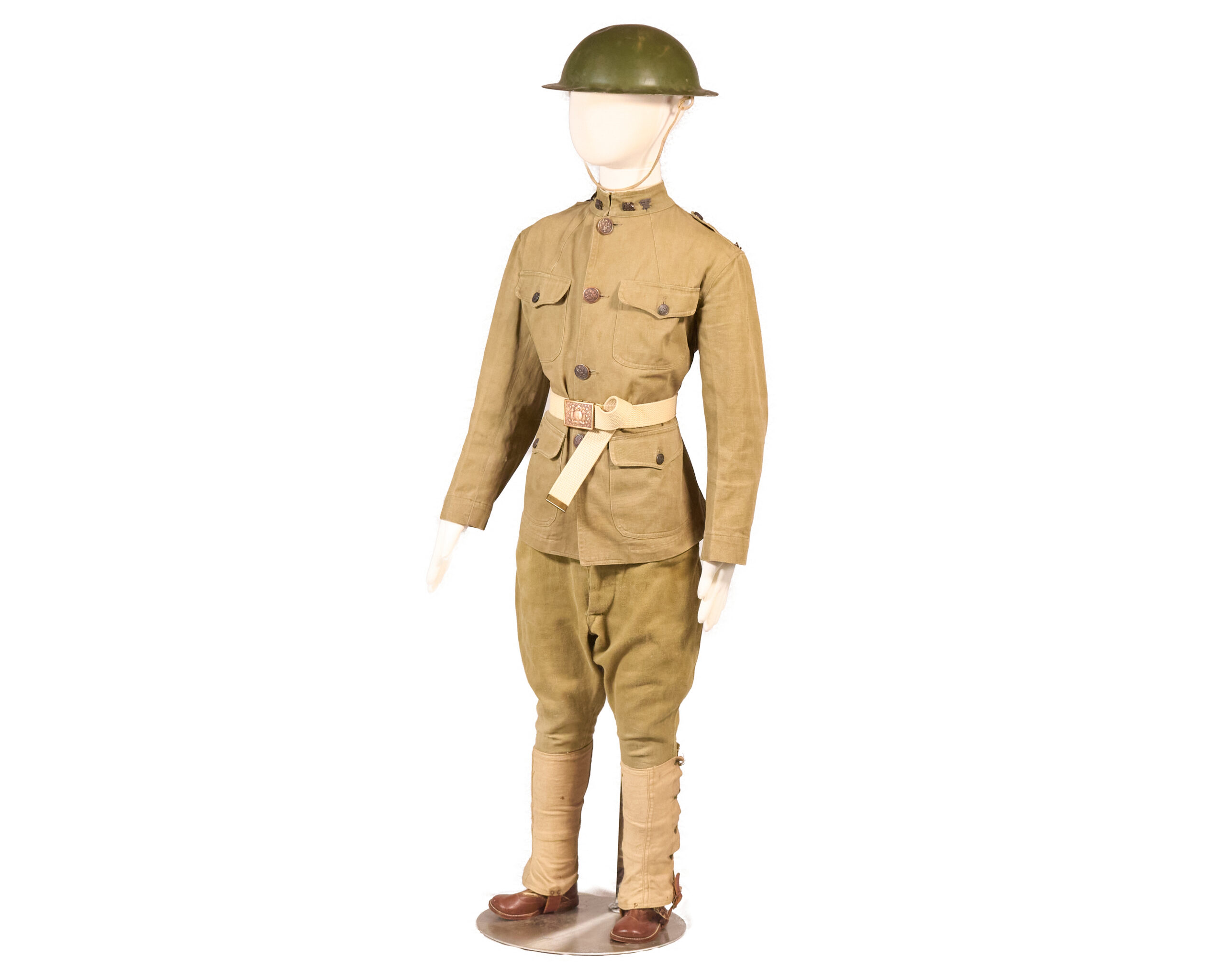
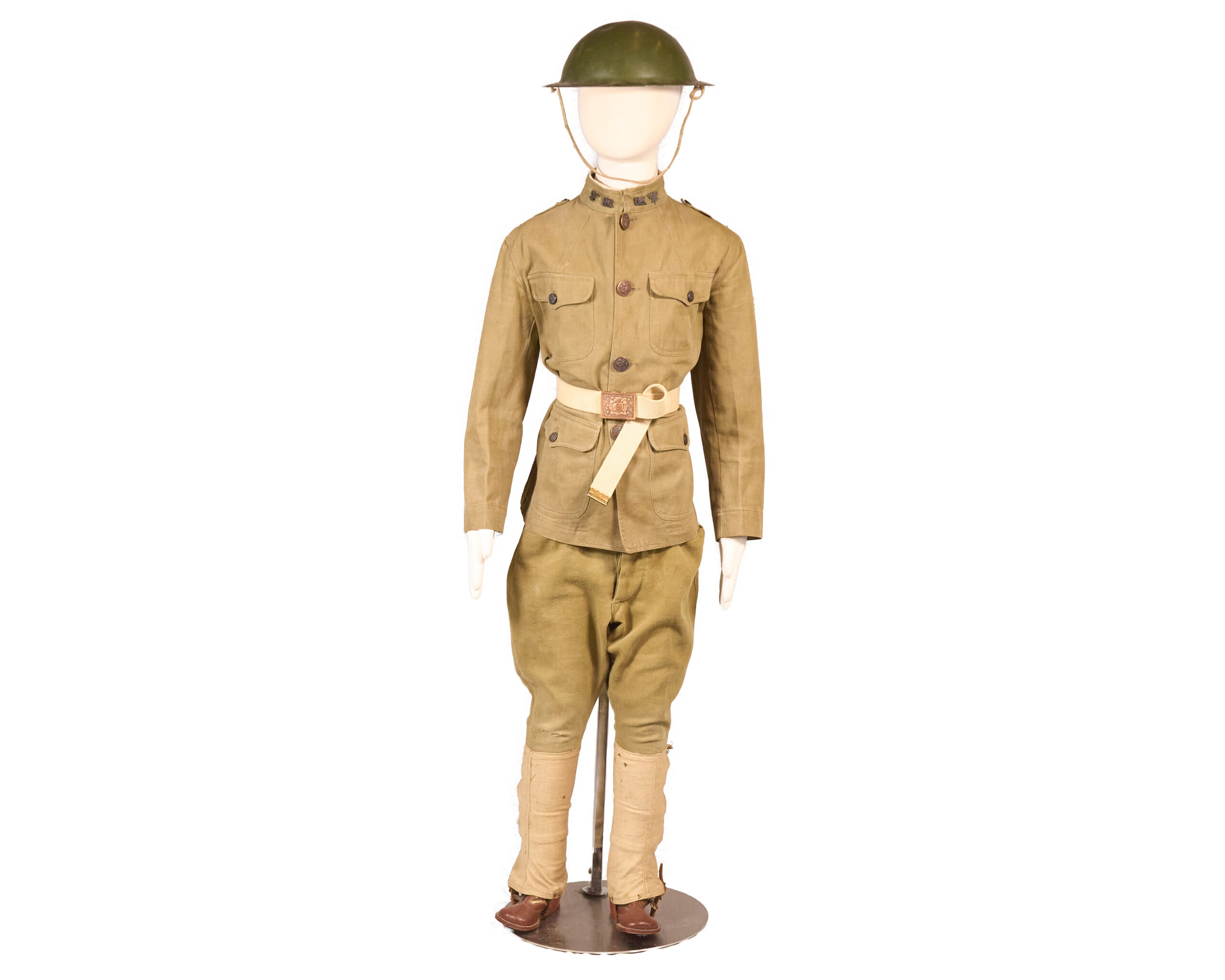
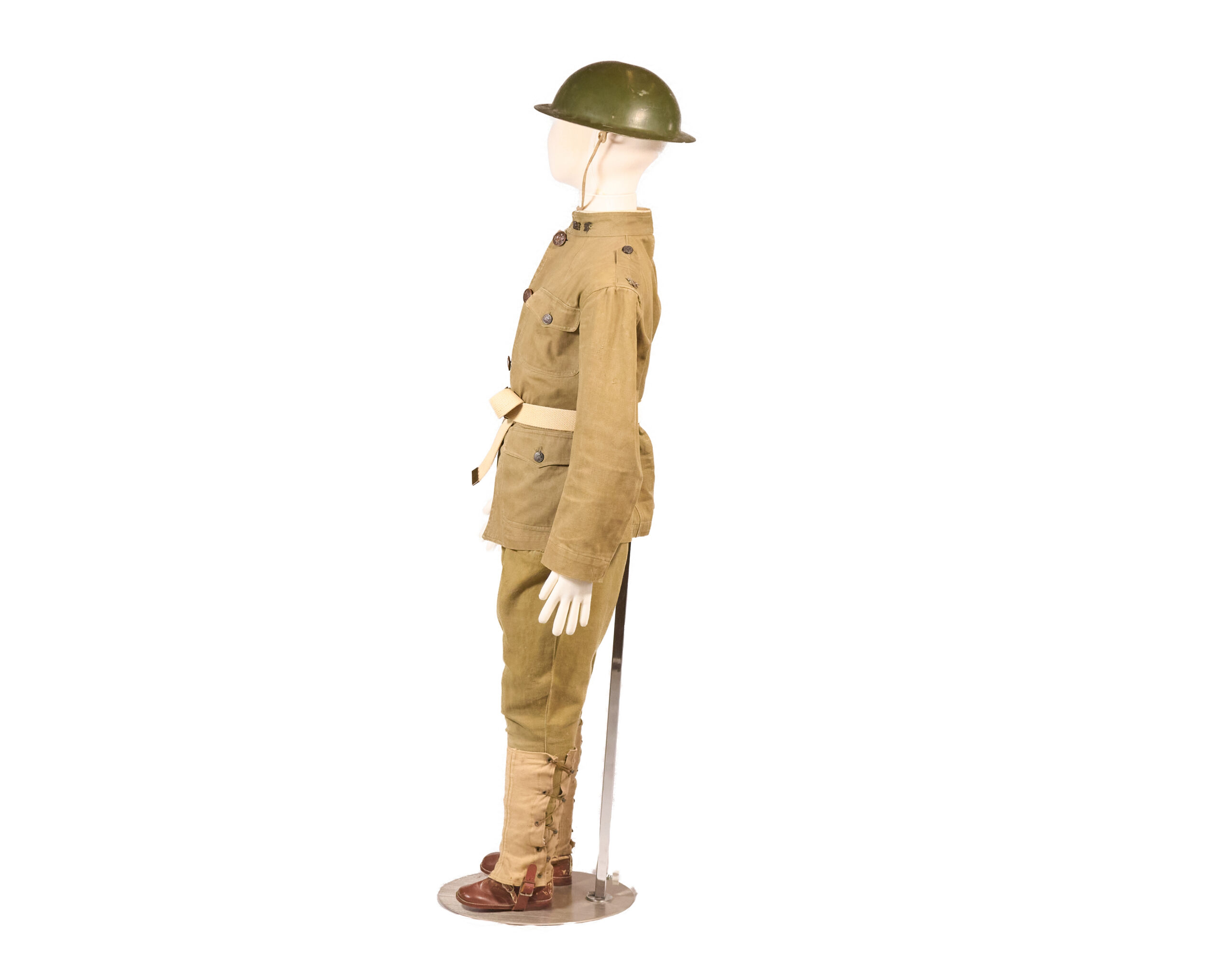
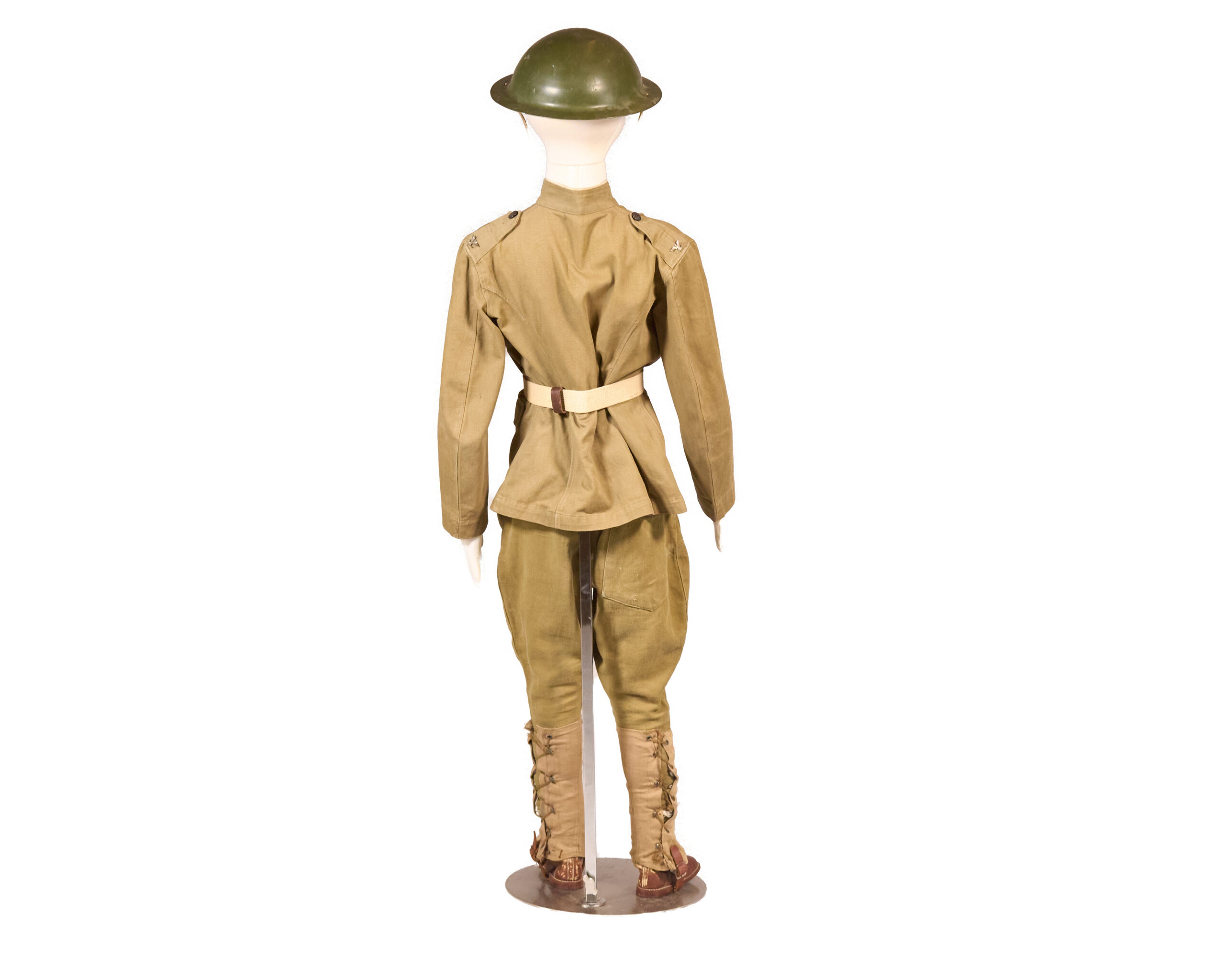
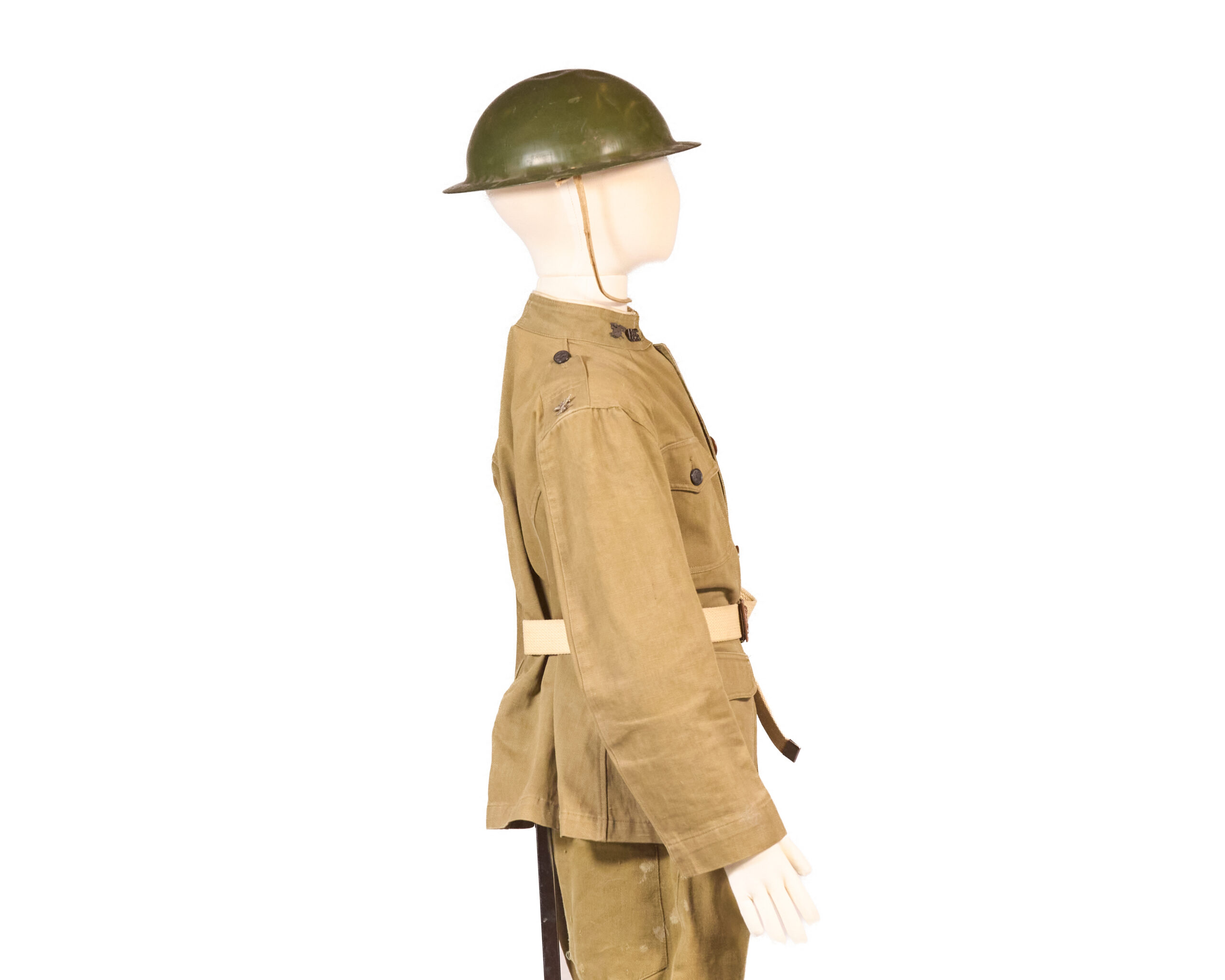
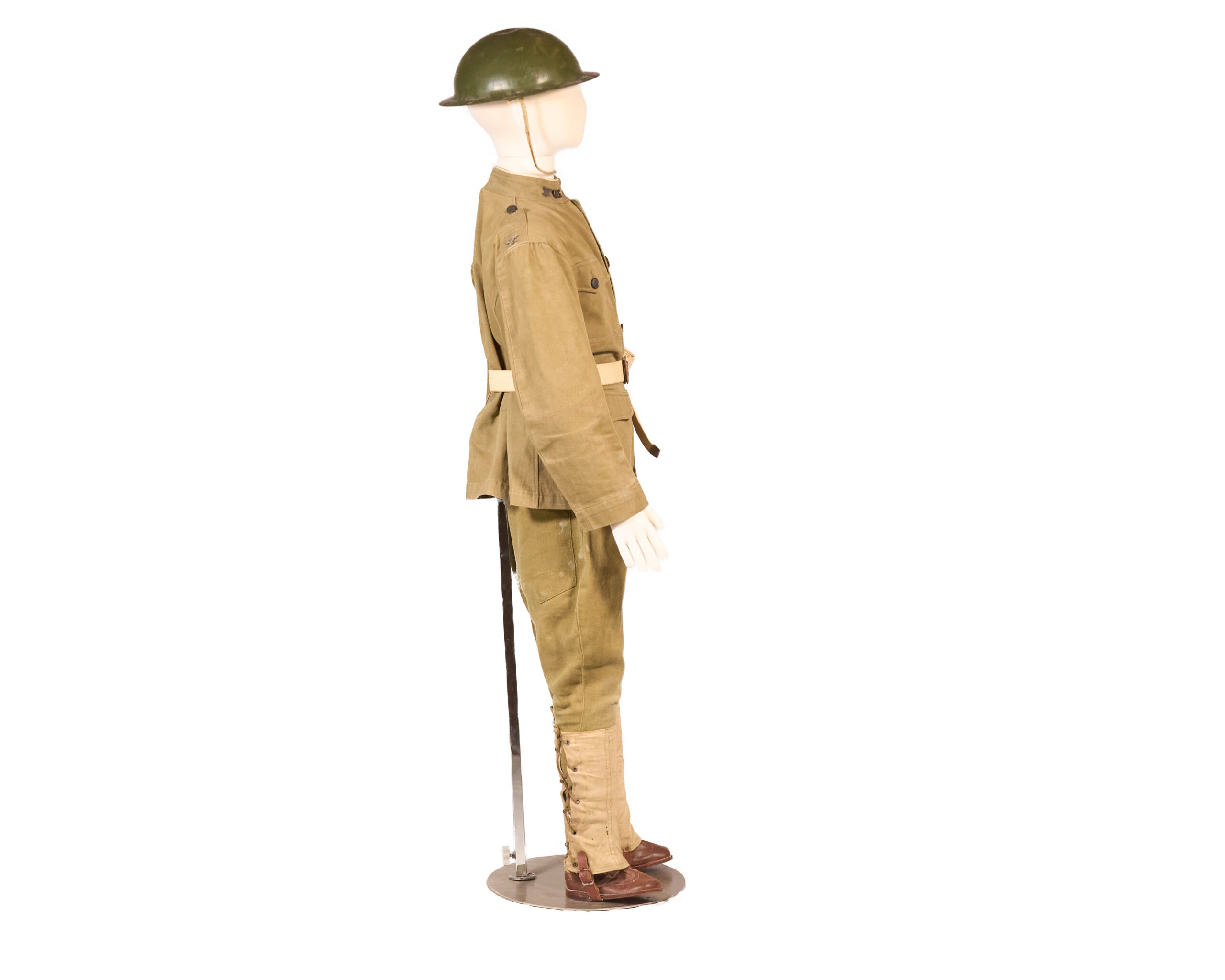
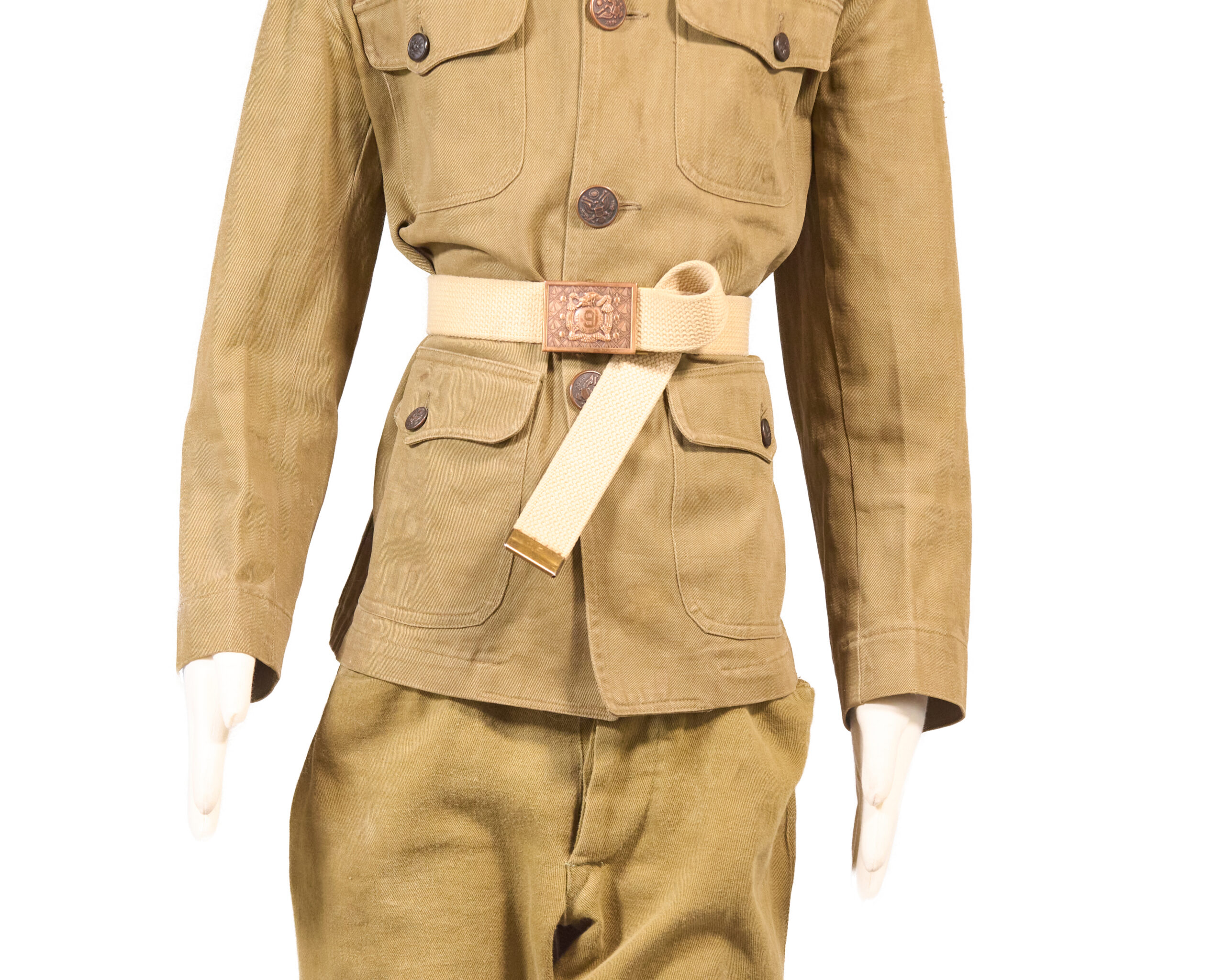
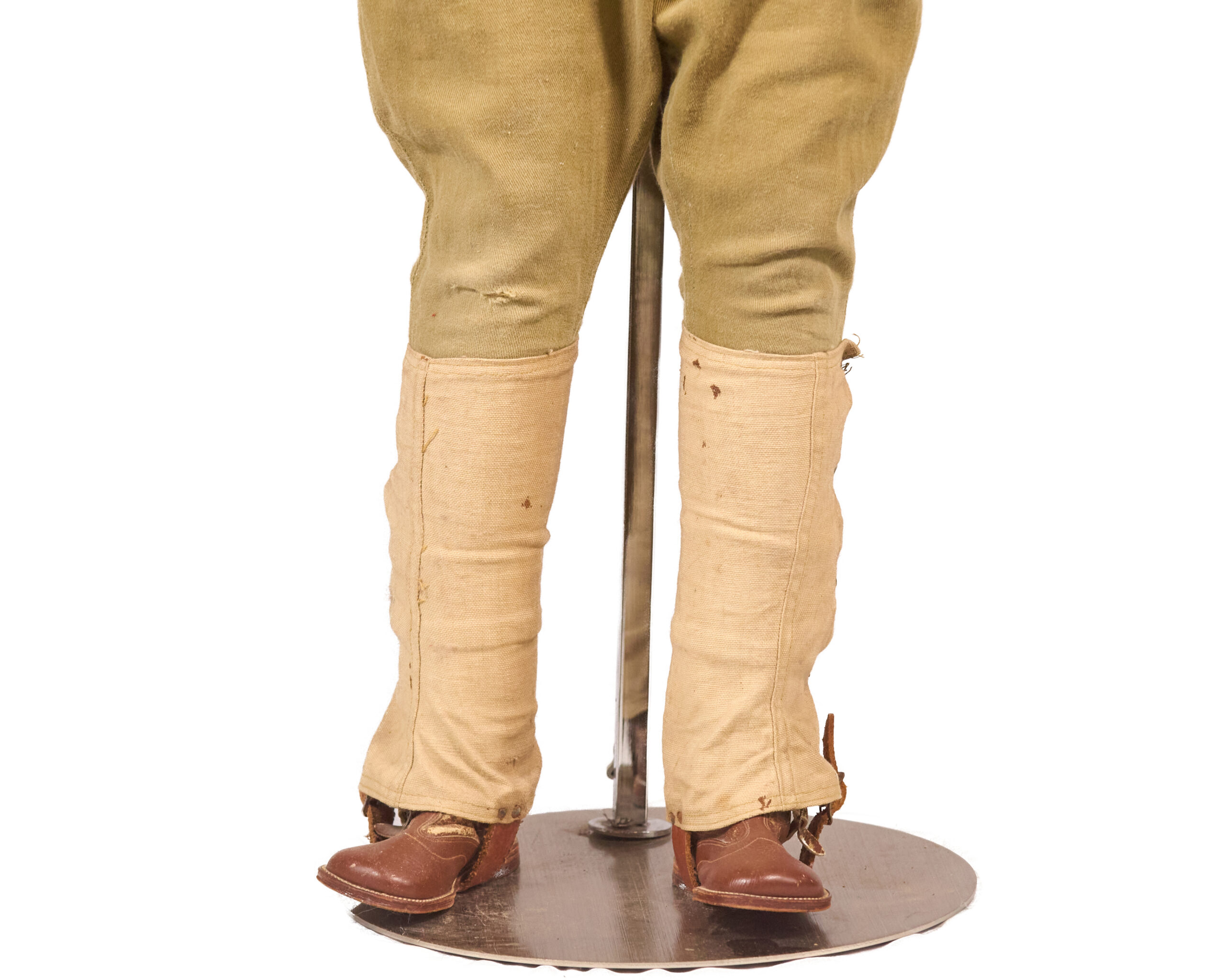
This child doughboy uniform set is a small khaki / olive drab patriotic, cadet, or parade outfit modeled after the WWI U.S. Army soldier’s field dress. The set includes a high-collar tunic, breeches-style trousers, canvas leggings, web belt, M1917-style helmet, and small brown shoes or boots. Its scale and construction point to youth wear rather than adult military issue.
Child Doughboy Uniform Set
This is best described as a WWI-era or interwar child’s patriotic uniform. It follows the American “doughboy” silhouette closely, with a standing-collar service coat, military-style buttons, collar insignia, breeches, and lower-leg wraps. The outfit would fit well in the category of home-front, cadet, school, parade, or family patriotic dress.
The uniform does not present as a regulation adult Army issue set. Instead, it copies the look of the U.S. soldier for a child-sized wearer. That kind of scaled uniform carried strong patriotic meaning during and after the First World War.
Construction / Configuration / Pattern
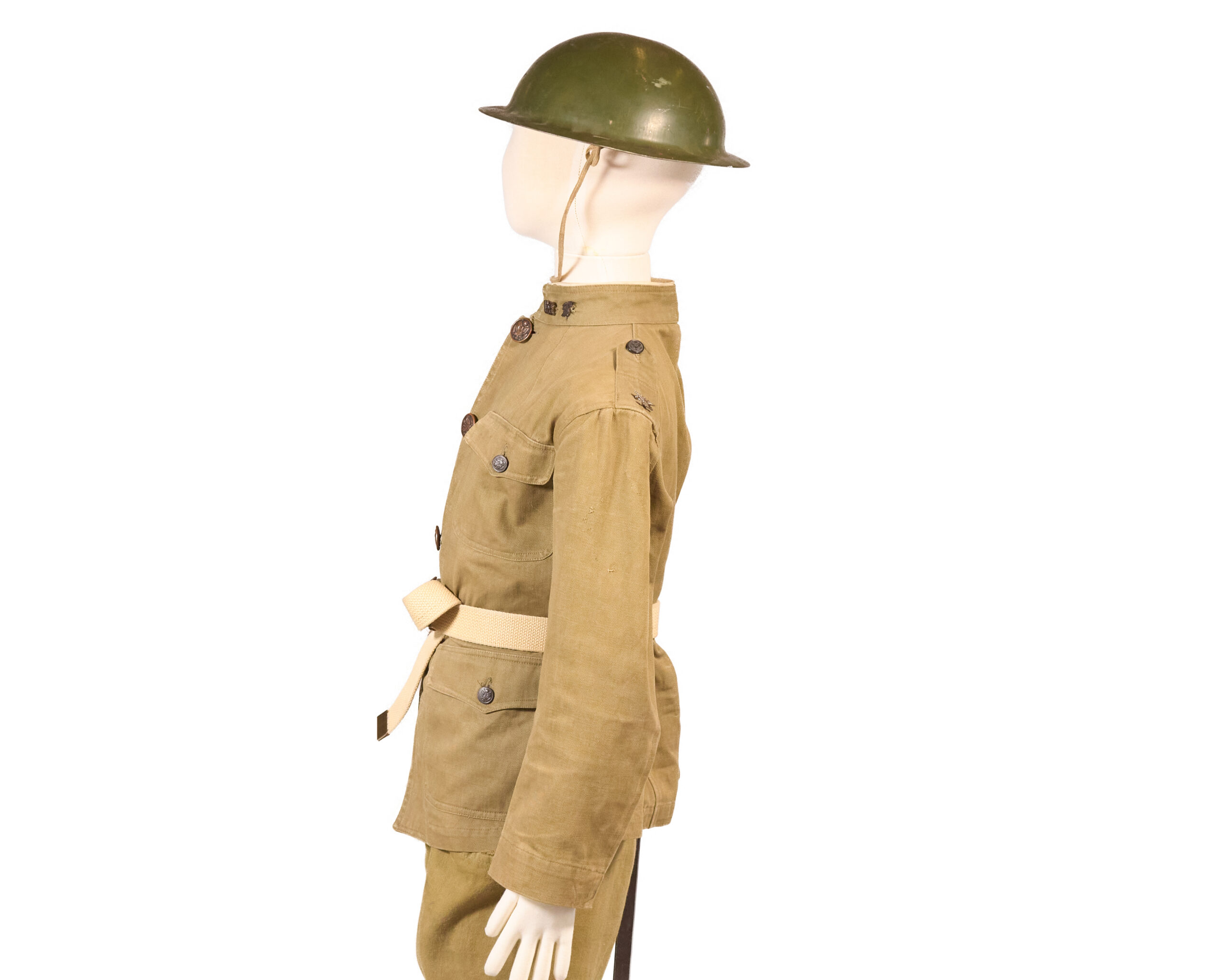
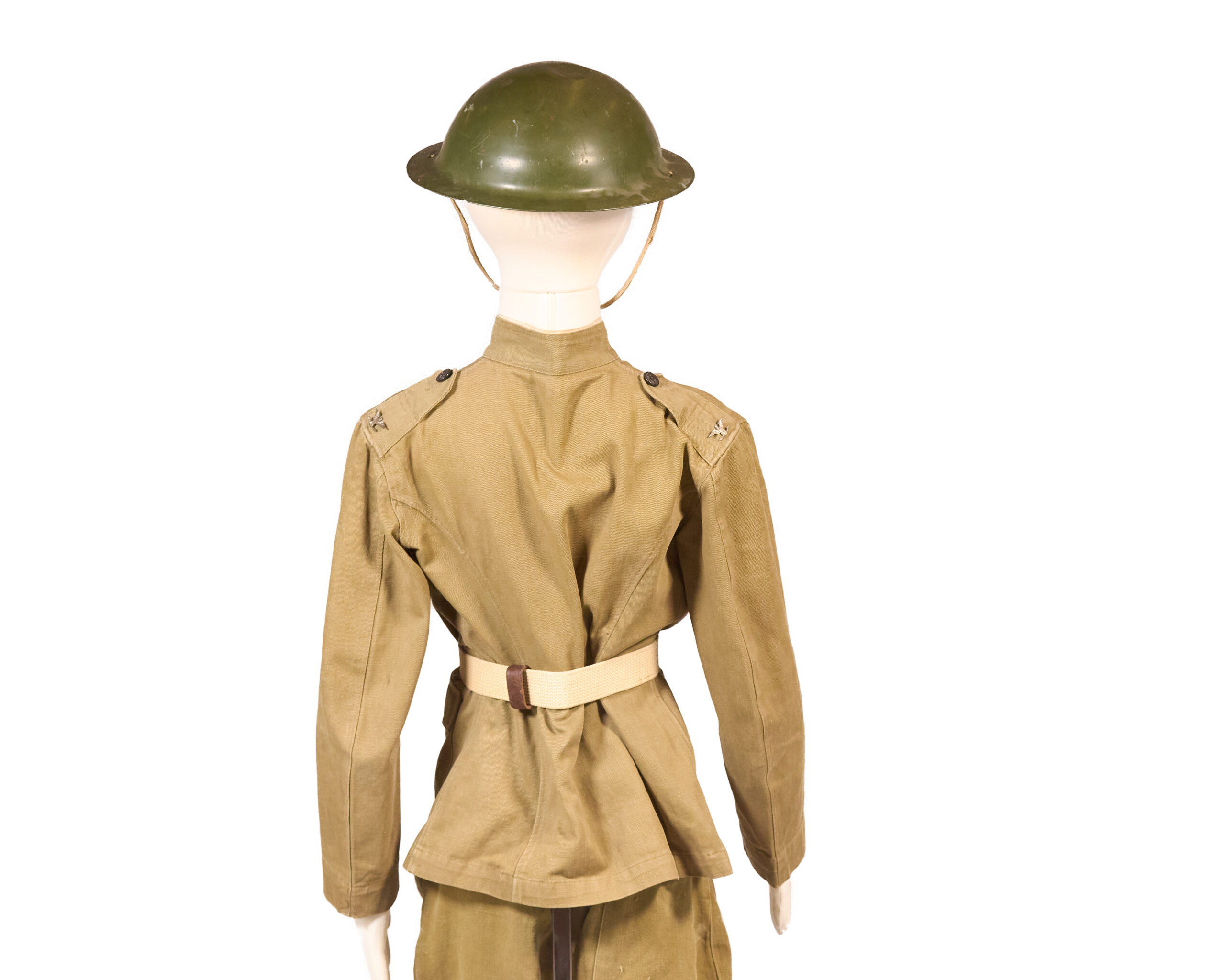
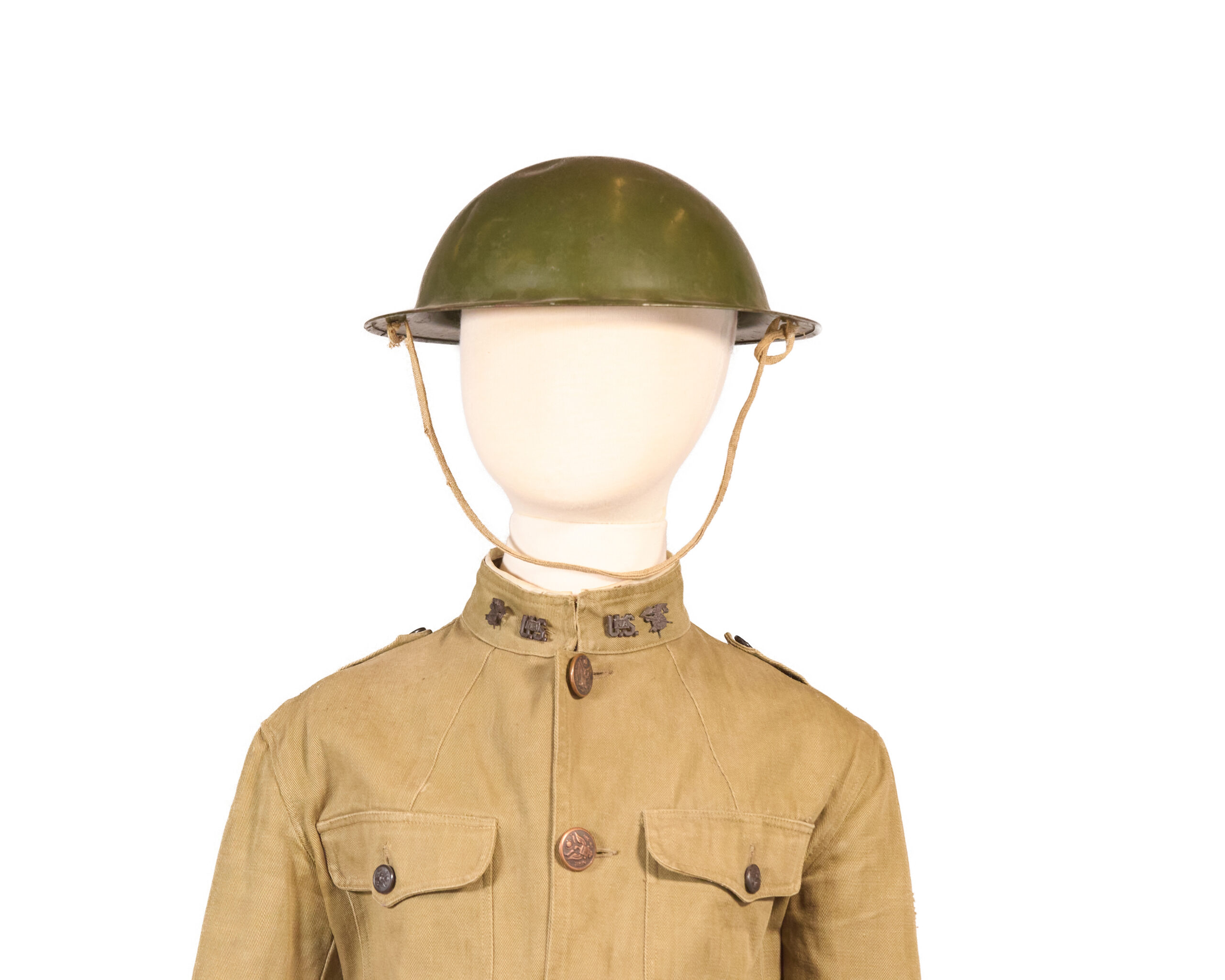
The tunic is made in a small service-coat pattern with a high standing collar, shoulder straps, and four front pockets. The two breast pockets and two lower skirt pockets follow the general layout of early twentieth-century U.S. service coats. Bronze-tone eagle buttons complete the military appearance.
The collar carries a visible “U.S.” insignia on one side. The opposite collar appears to hold a small branch-style insignia, possibly infantry-style. The light web belt has a U.S.-style buckle and gives the coat the belted form seen in period military dress.
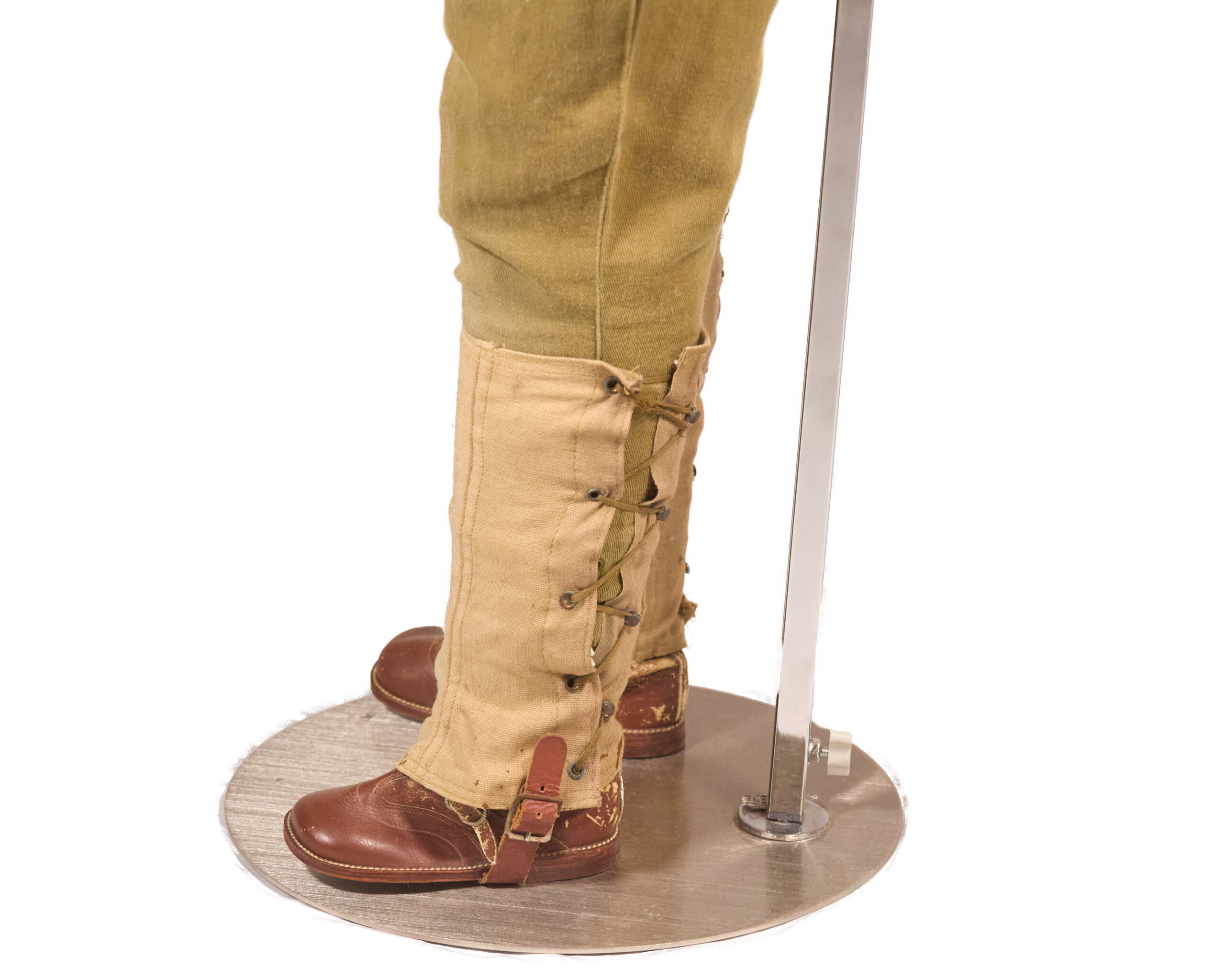
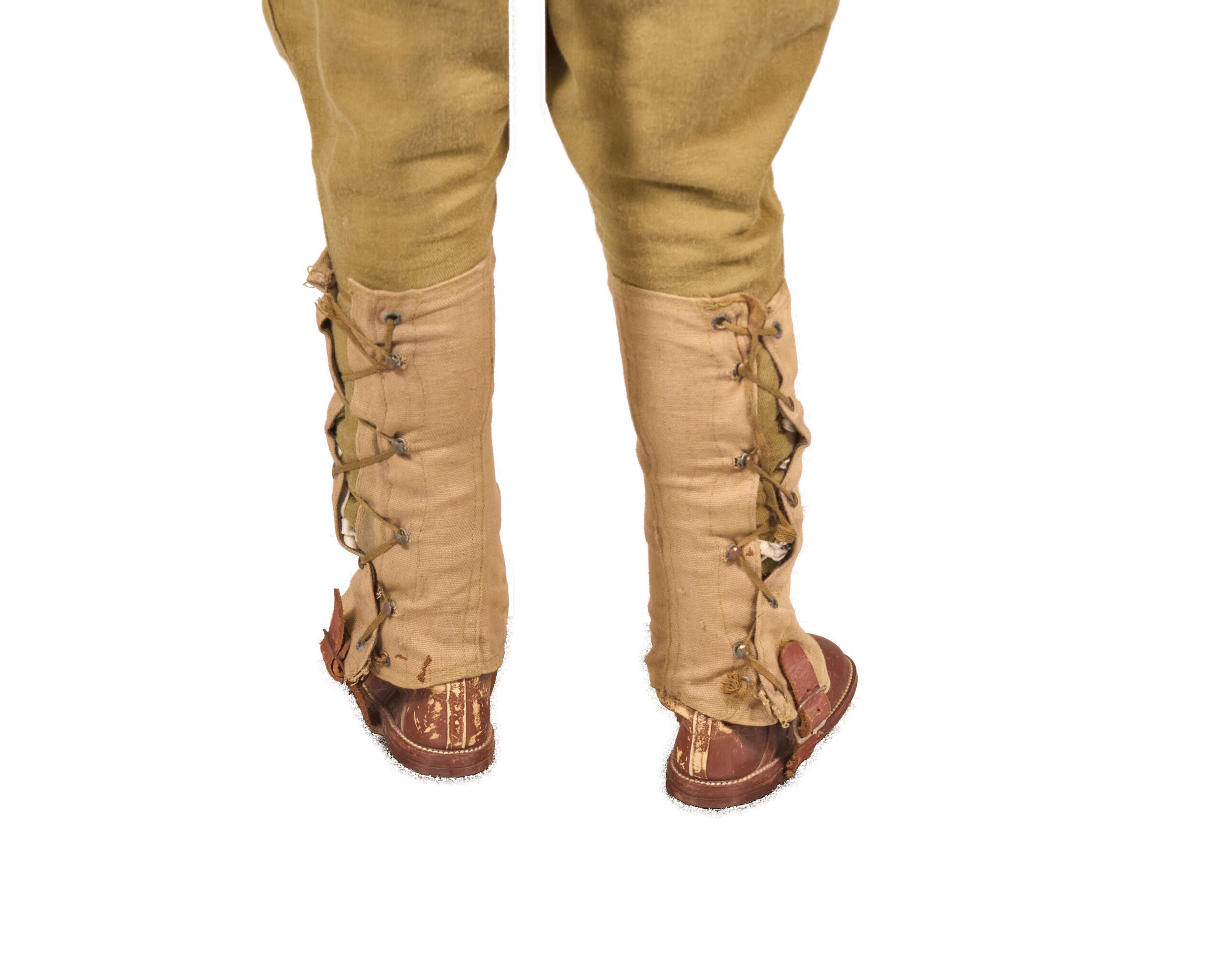
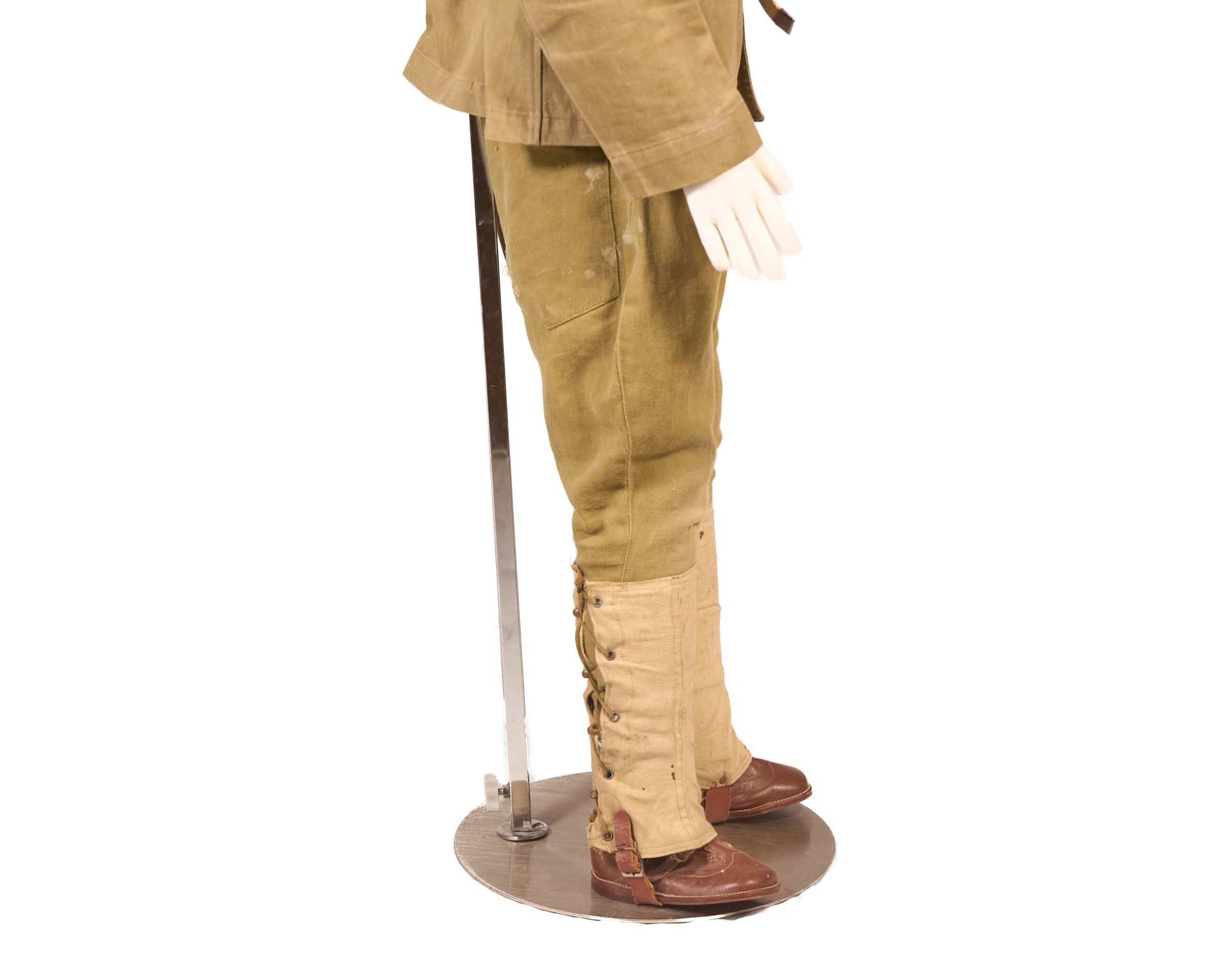
The trousers follow the breeches pattern associated with the WWI field silhouette. Canvas lace-up leggings cover the lower legs. The brown leather shoes or small boots complete the display, although they should be treated as civilian or costume footwear unless further markings prove otherwise.
The green helmet is an M1917-style youth or display helmet. It has the broad shallow form associated with the American doughboy helmet. The set is shown on a child-sized mannequin for display.
Historical Context / Pattern Development
The American doughboy image became one of the strongest visual symbols of U.S. service in the First World War. The high-collar coat, breeches, leggings, web belt, and broad steel helmet formed a profile that remained recognizable long after 1918.
Child-sized military uniforms appeared in several settings during this period. Families dressed boys in scaled versions of Army uniforms. Schools and cadet groups used military-style clothing for drill and ceremony. Patriotic events, parades, war-relief activities, and public commemorations also encouraged military dress for children.
This set belongs to that wider culture of patriotic display. It reflects the appearance of a U.S. soldier without being an enlisted man’s service uniform. The small size, youth proportions, and display helmet all support that reading.
Condition
The set shows age, handling, and display wear throughout. The tunic has visible toning, light staining, and surface soiling. The collar insignia, eagle buttons, shoulder straps, and pocket layout remain in place. The trousers show wrinkles and age wear consistent with long storage and display.
The canvas leggings show heavier staining and use, especially around the lower legs. The web belt and buckle are present. The small brown shoes or boots show wear but complete the presentation. The helmet retains its green finish and chinstrap, giving the display its full doughboy-style profile.