Description
German MG34 Display Machine Gun – Anti-Aircraft Sight Set
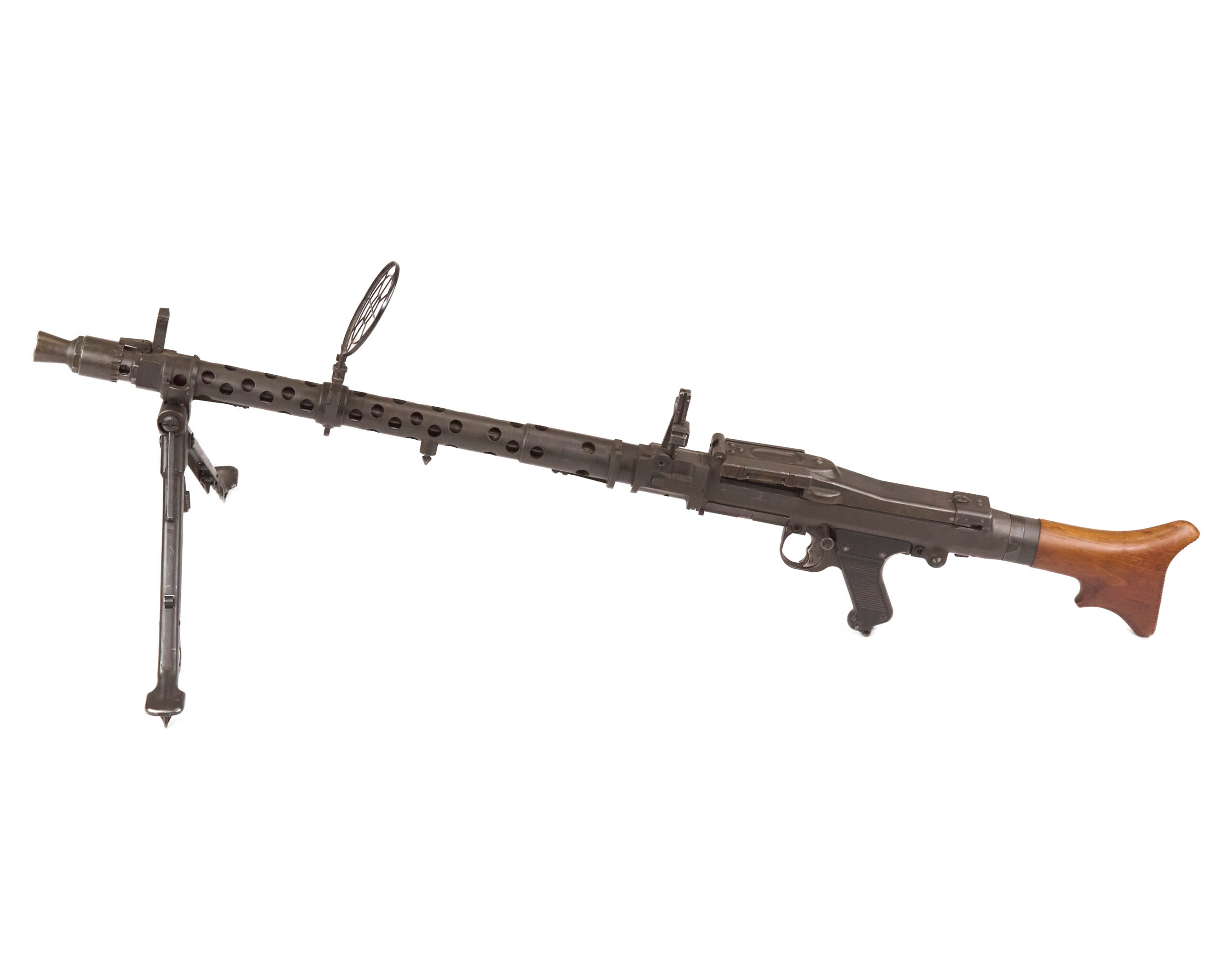
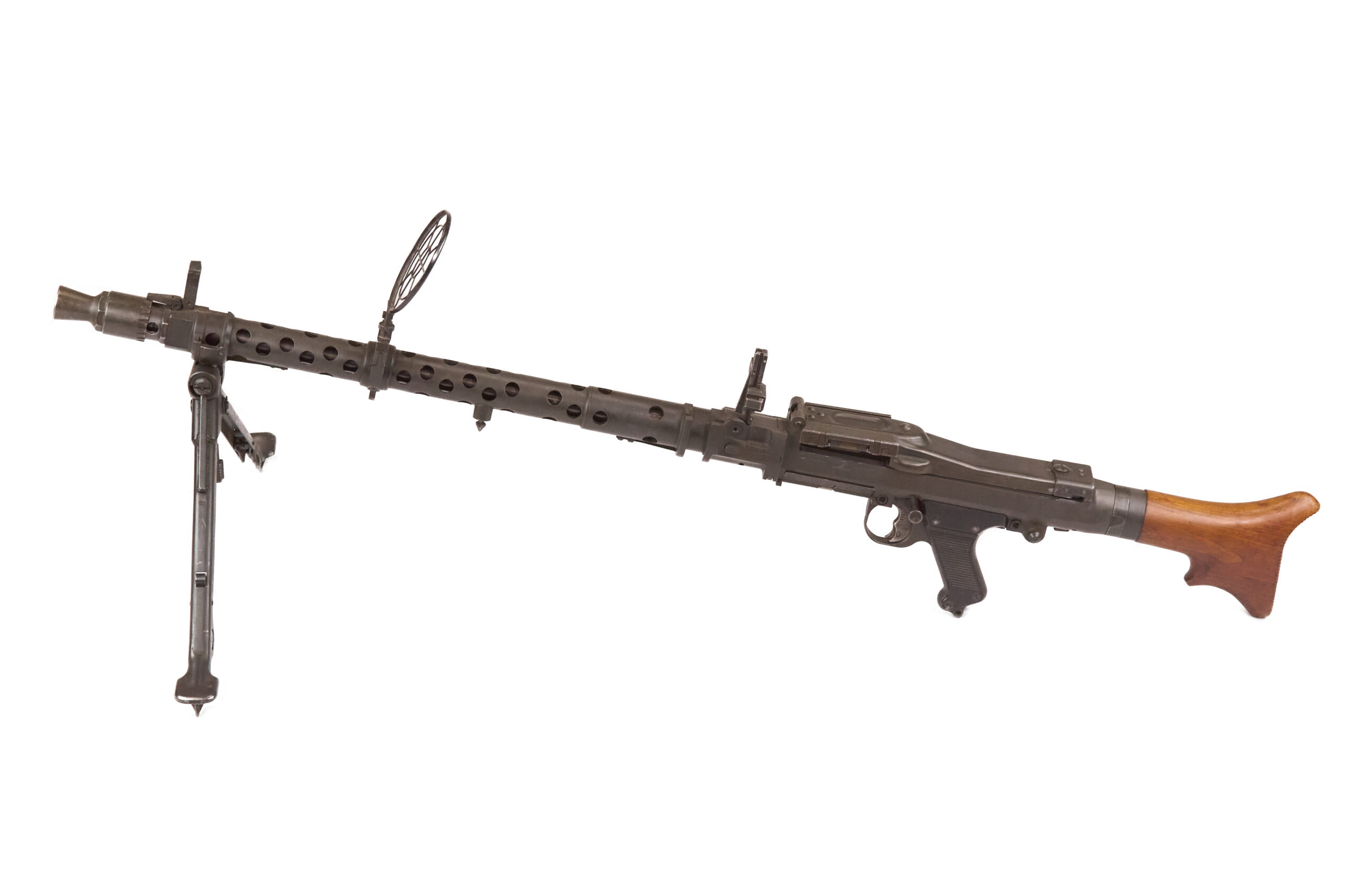
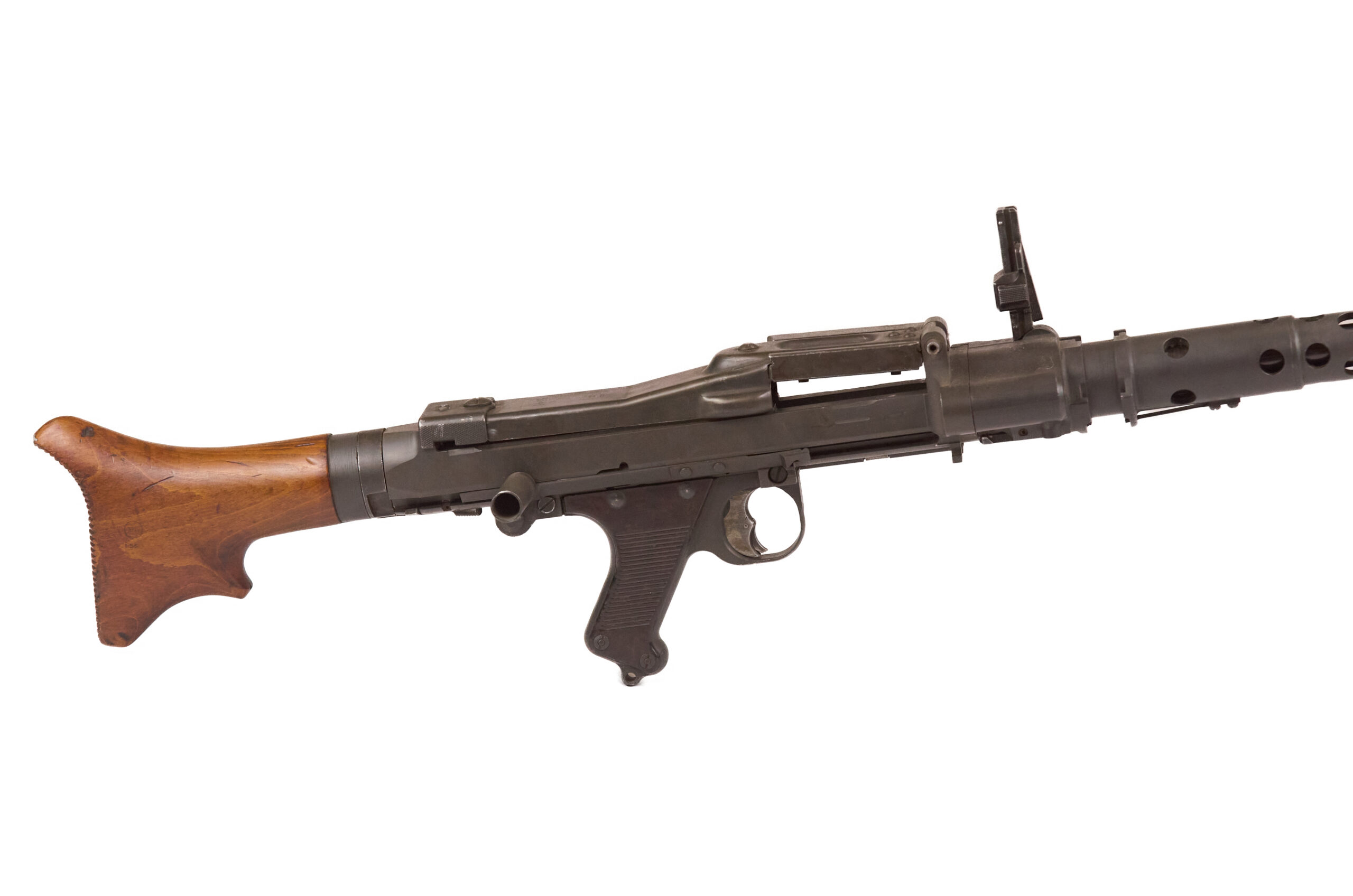
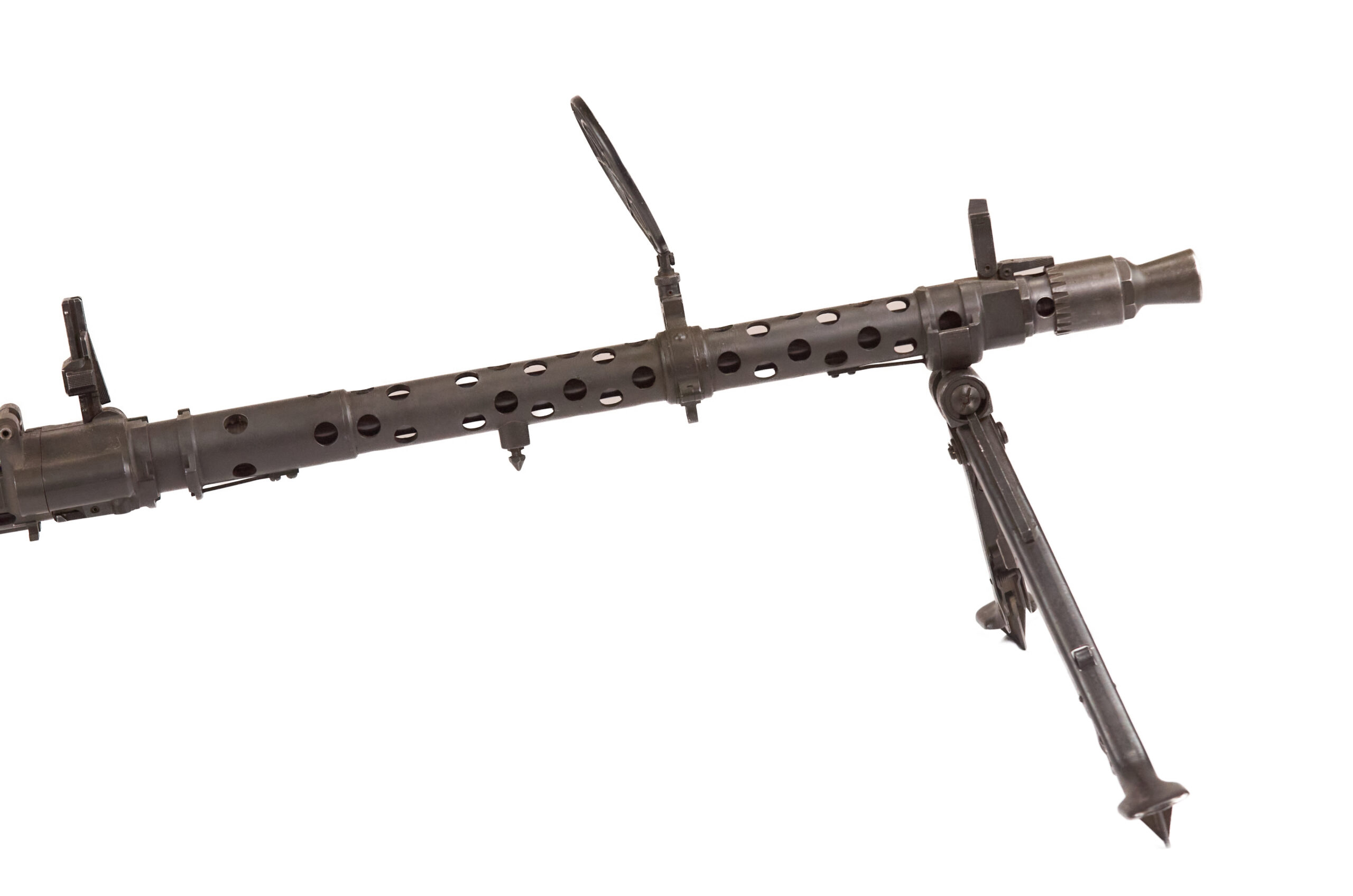
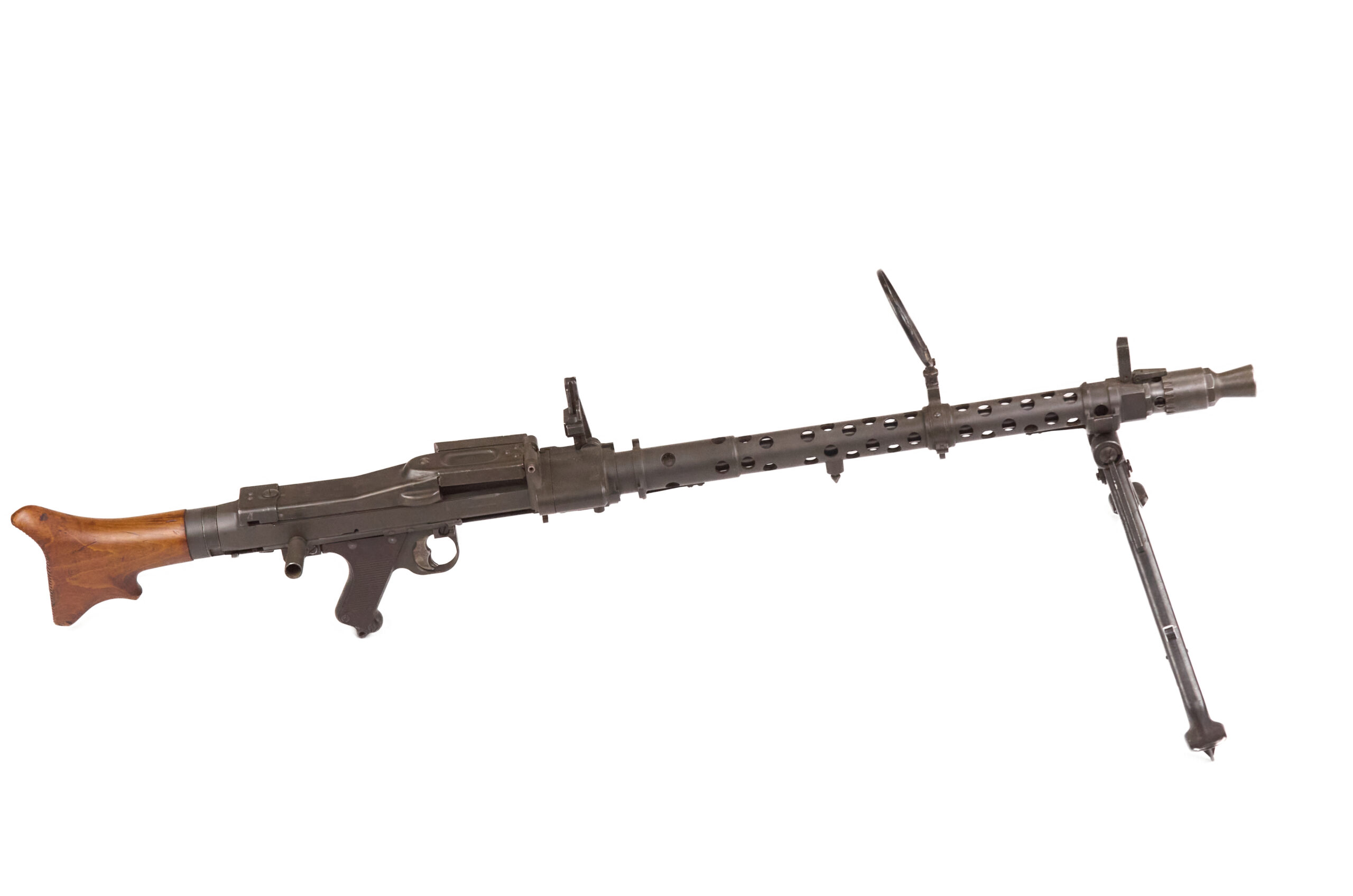
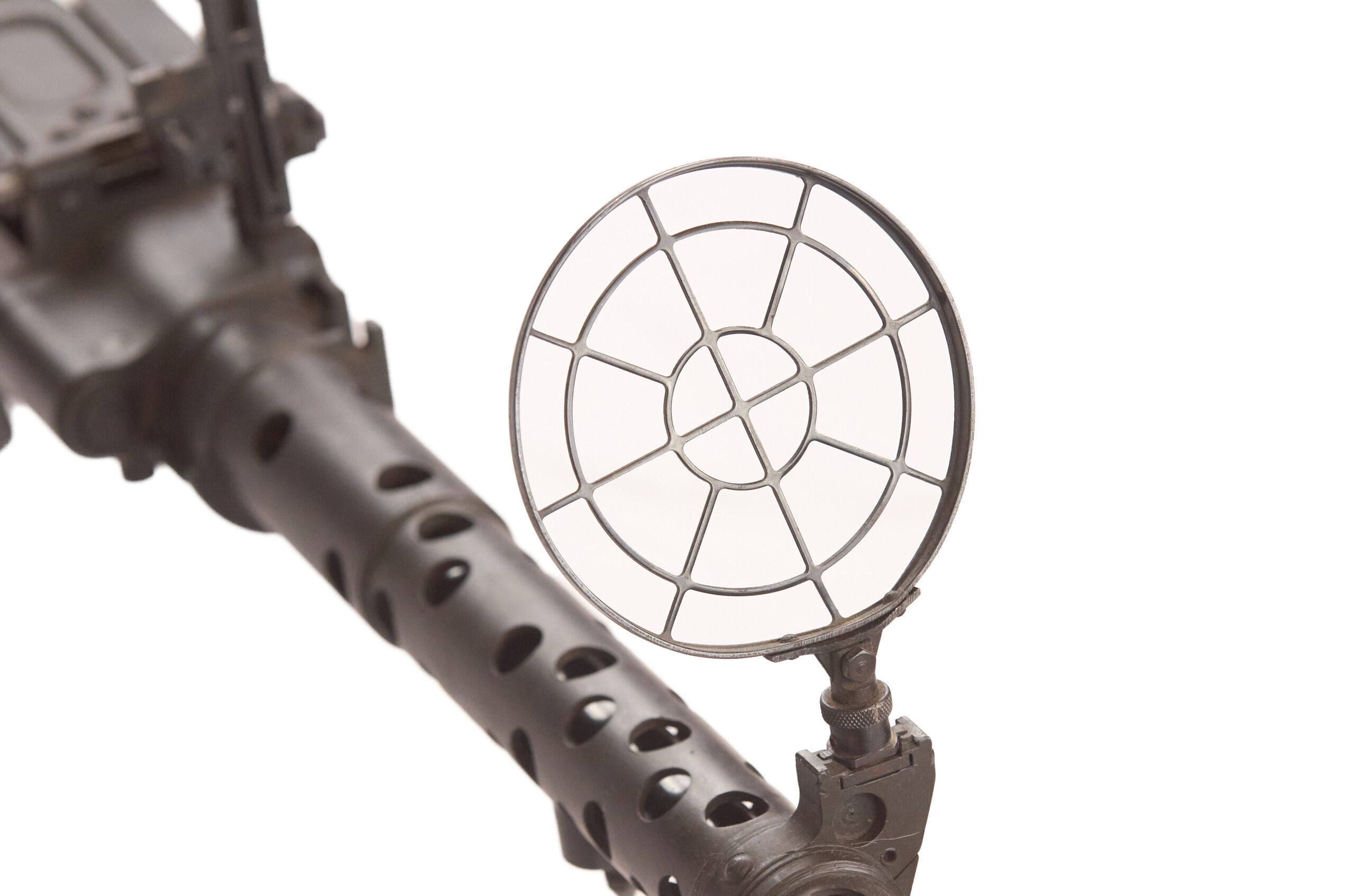
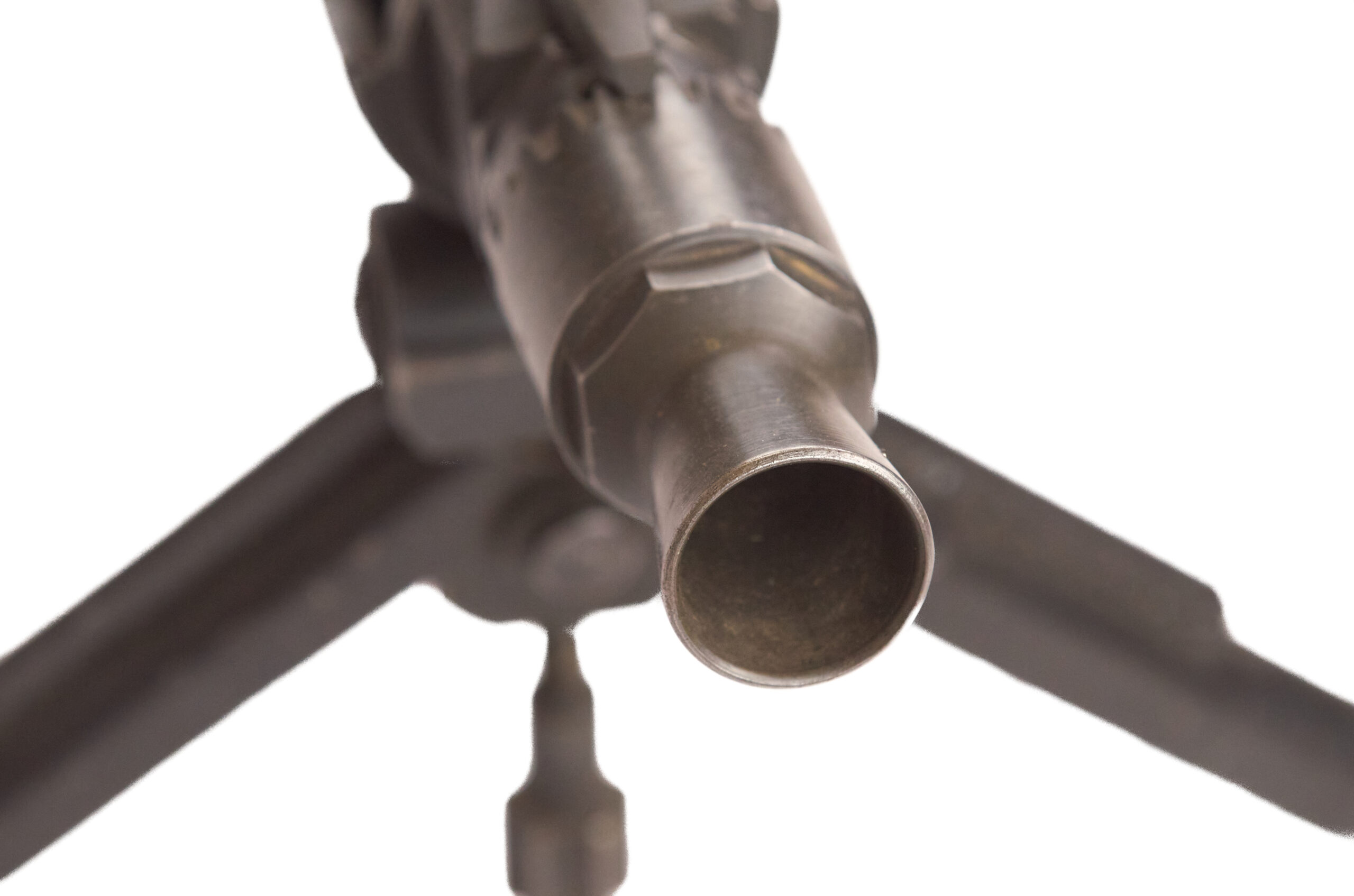
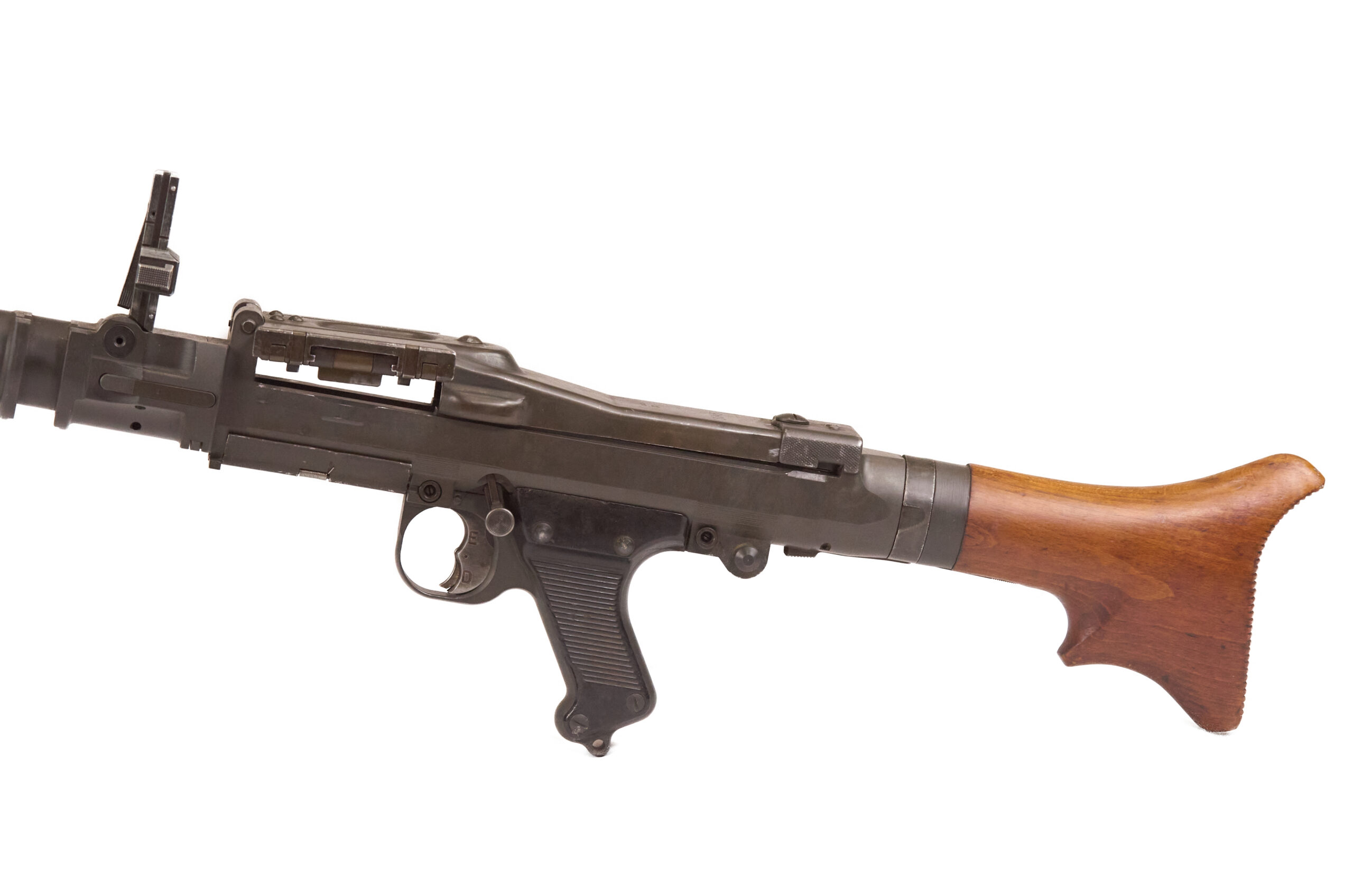
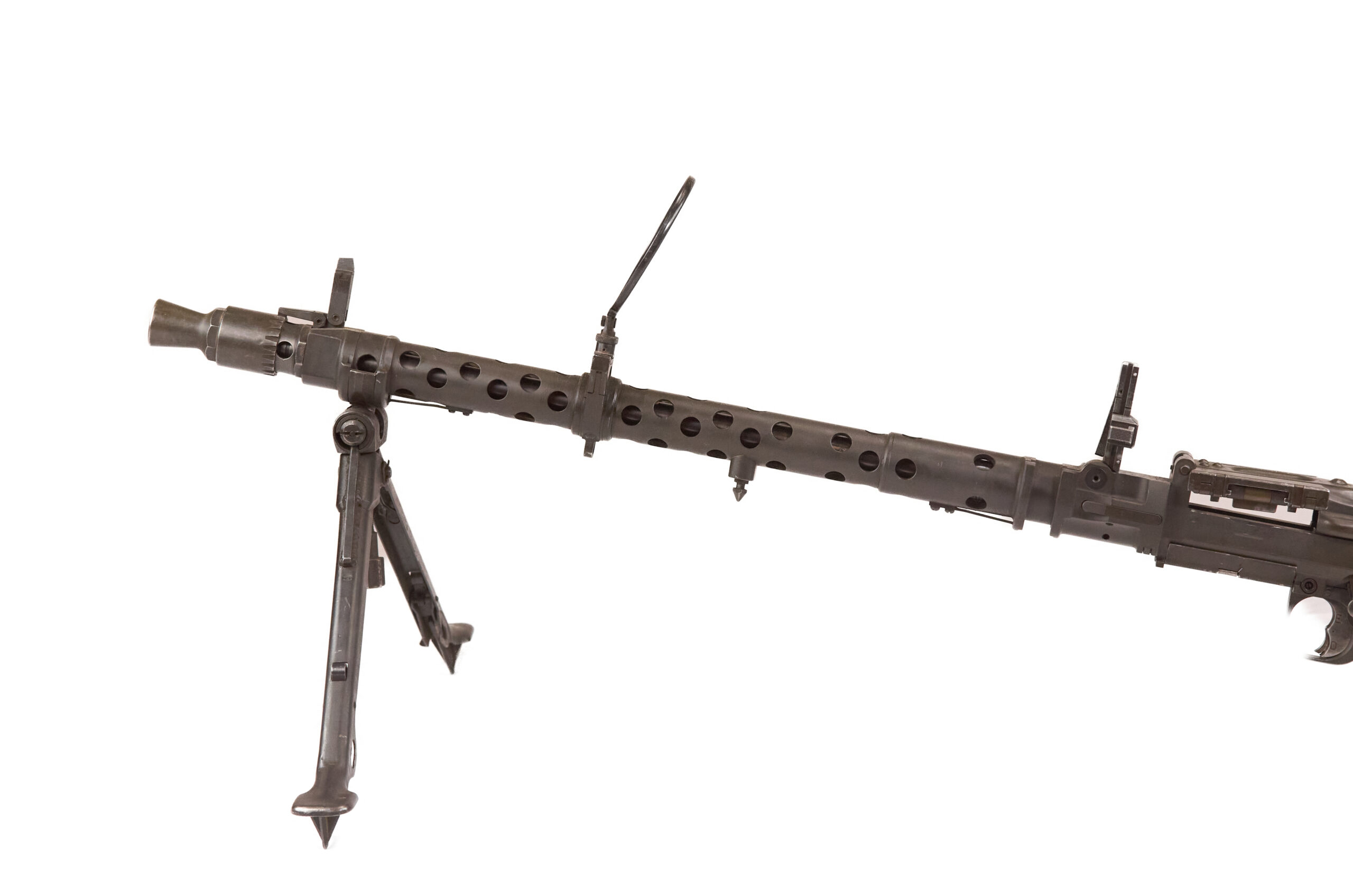
This German MG34 display machine gun is fitted with its folding bipod, wooden buttstock, black pistol grip, perforated barrel jacket, muzzle booster, and anti-aircraft sighting equipment. The display retains the tall rear anti-aircraft sight and the circular front spider sight, giving the gun a strong Luftschutz / field anti-aircraft profile.
German MG34 Display Machine Gun
The MG34 served as Germany’s principal early general-purpose machine gun of the Second World War. It could be used from the bipod, from a sustained-fire Lafette mount, from vehicles, and in anti-aircraft roles. This example presents in the light ground-gun arrangement, with the added anti-aircraft sight set mounted for elevated target work.
The circular front sight is the style often called a spider or ring sight. It paired with the raised rear anti-aircraft sight for tracking aircraft or fast-moving elevated targets. This is anti-aircraft sighting equipment, not an aircraft-mounted sight.
Construction / Configuration / Pattern
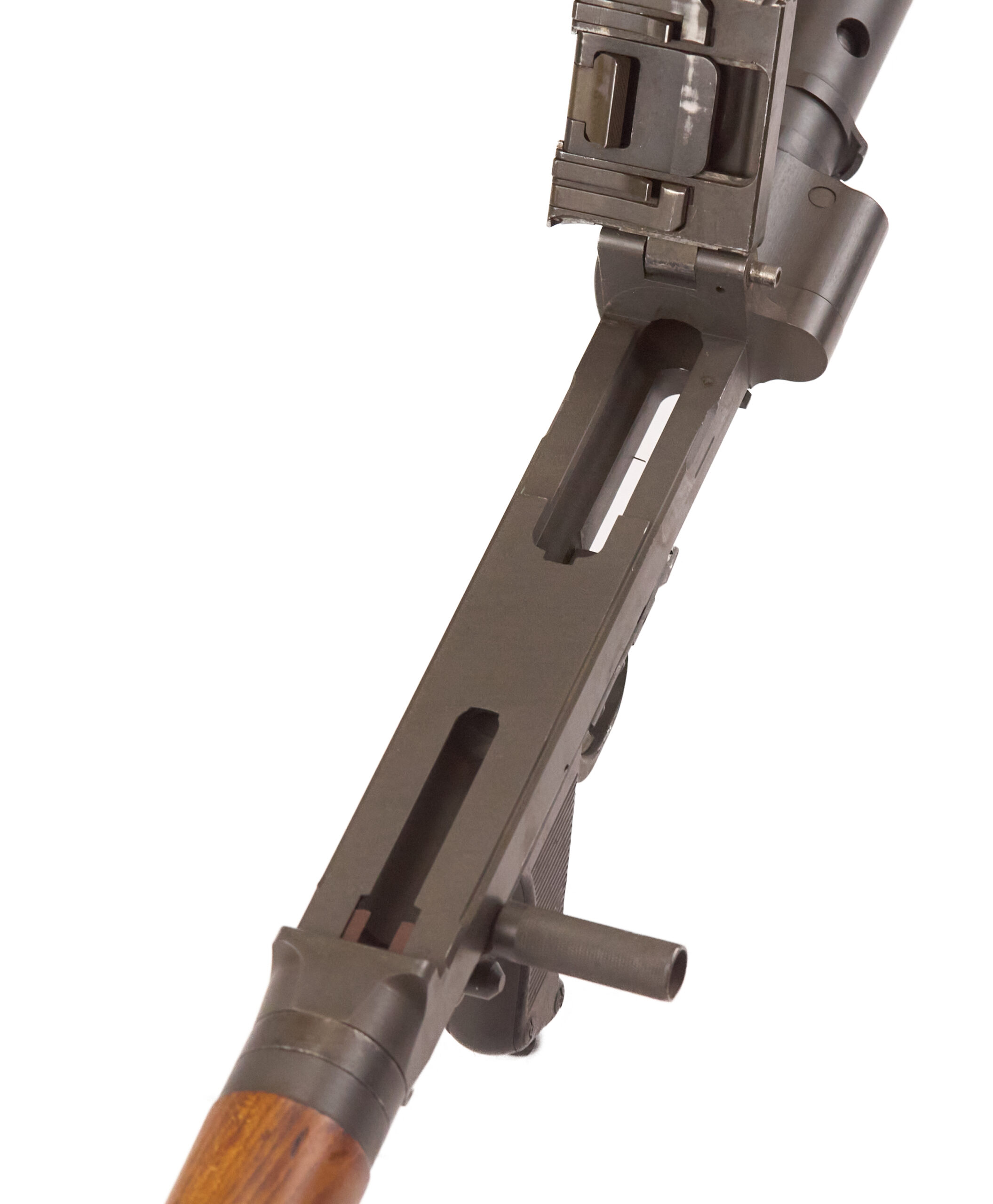
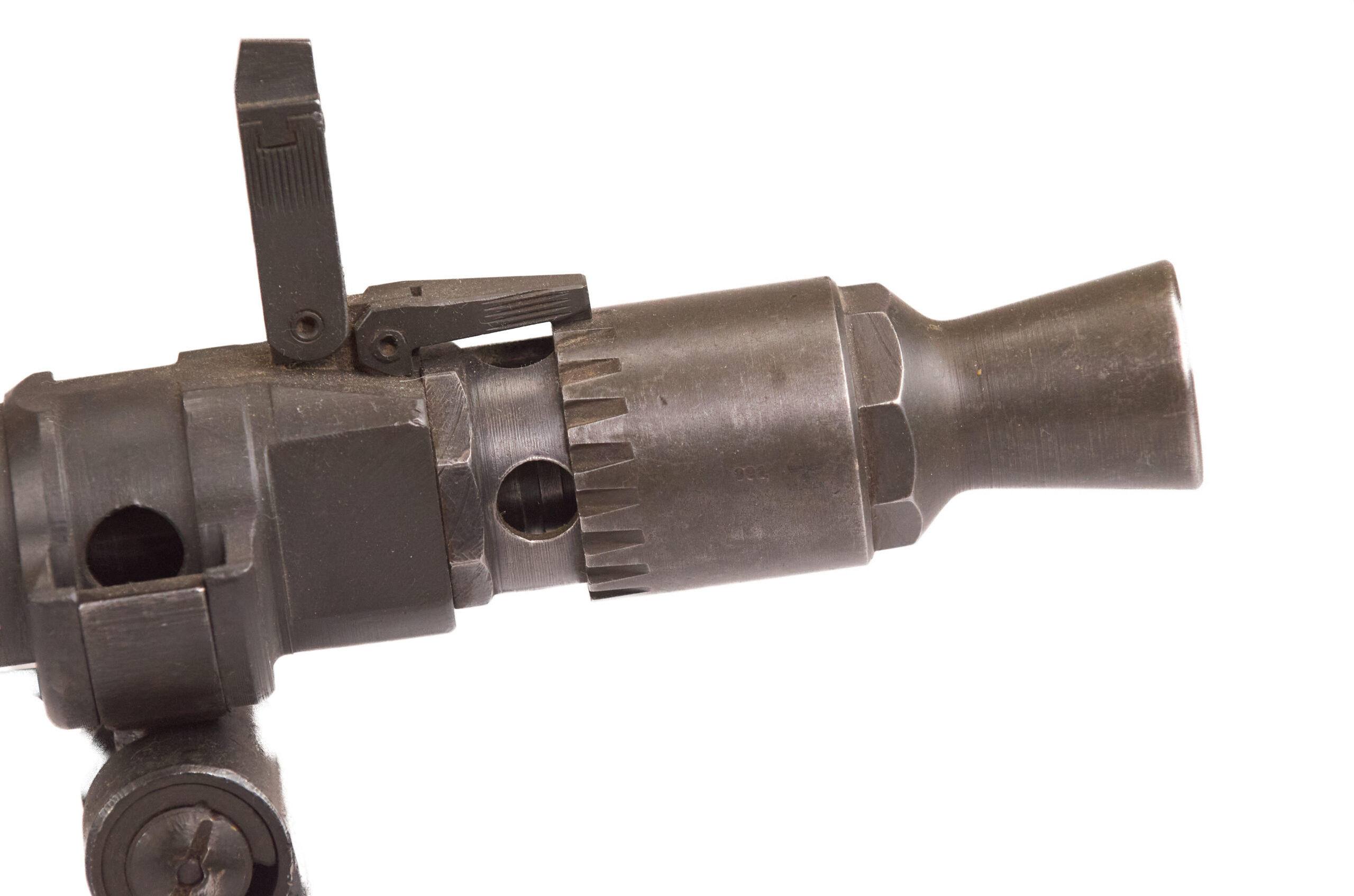
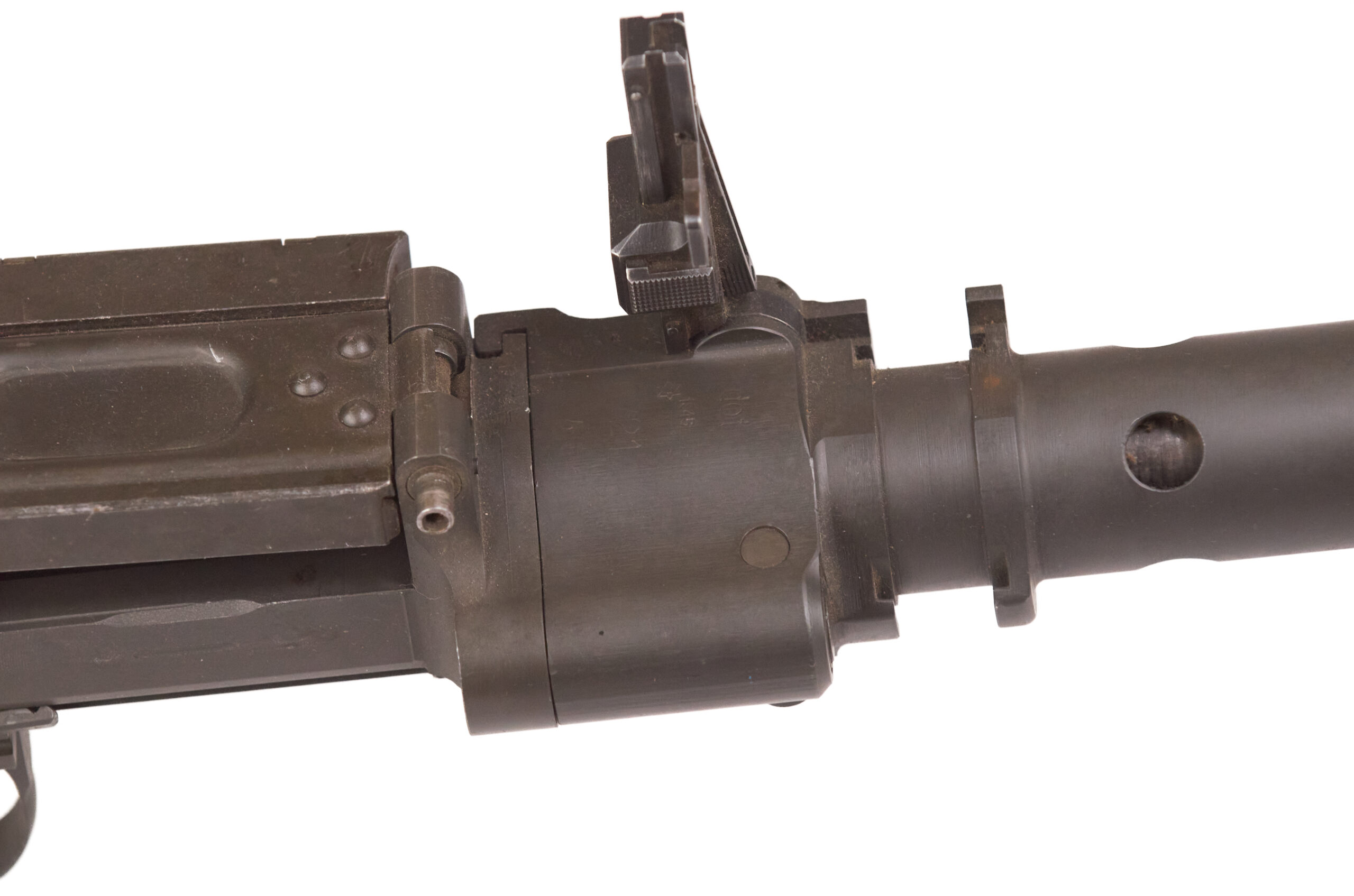
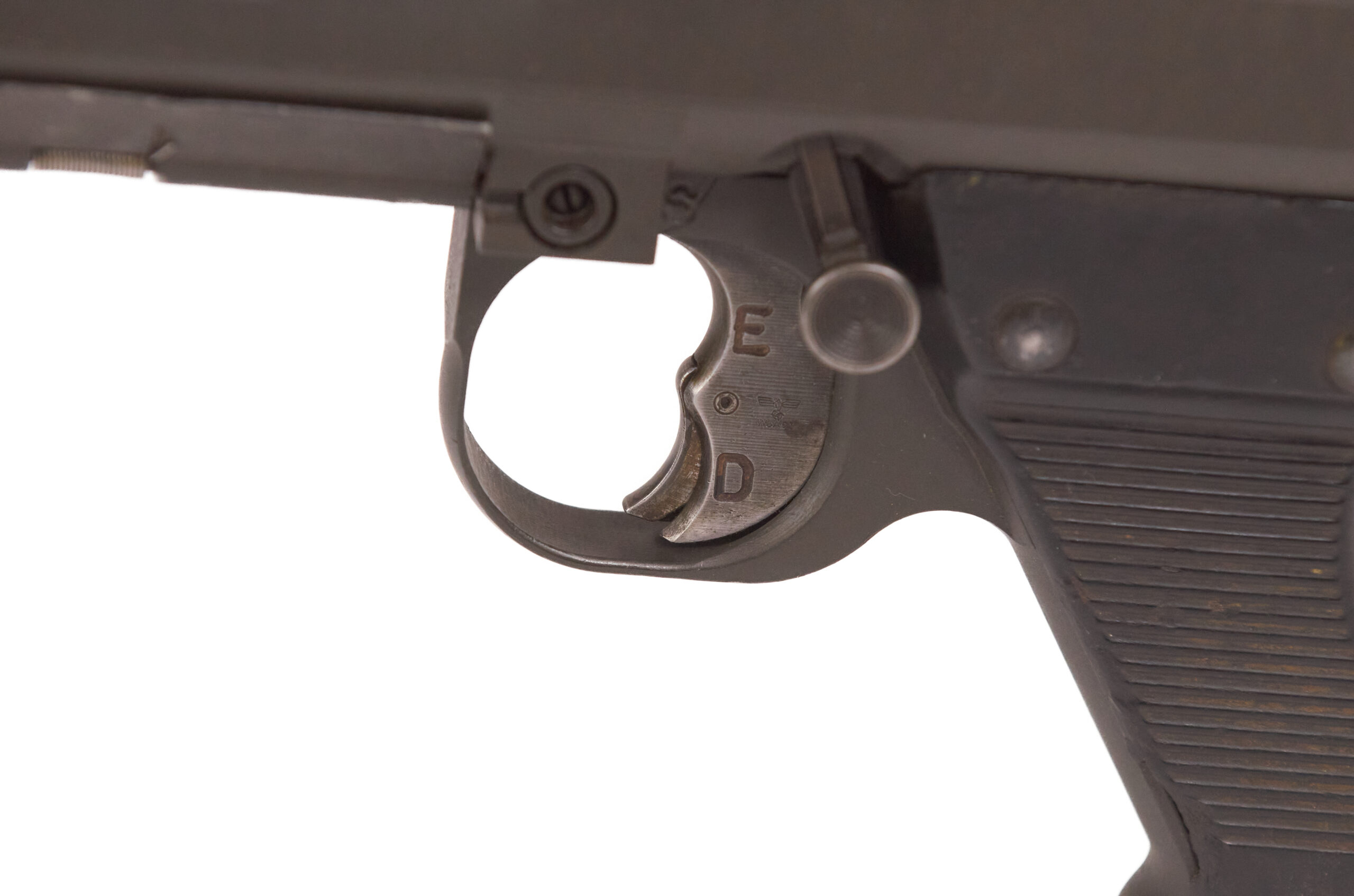
The gun shows the classic MG34 layout with a long perforated barrel jacket, conical muzzle booster, rectangular receiver, top-cover feed system, and folding front bipod. The feed cover and rear sight assembly remain in place. The black pistol grip and trigger group sit below the receiver, while the wood buttstock mounts at the rear.
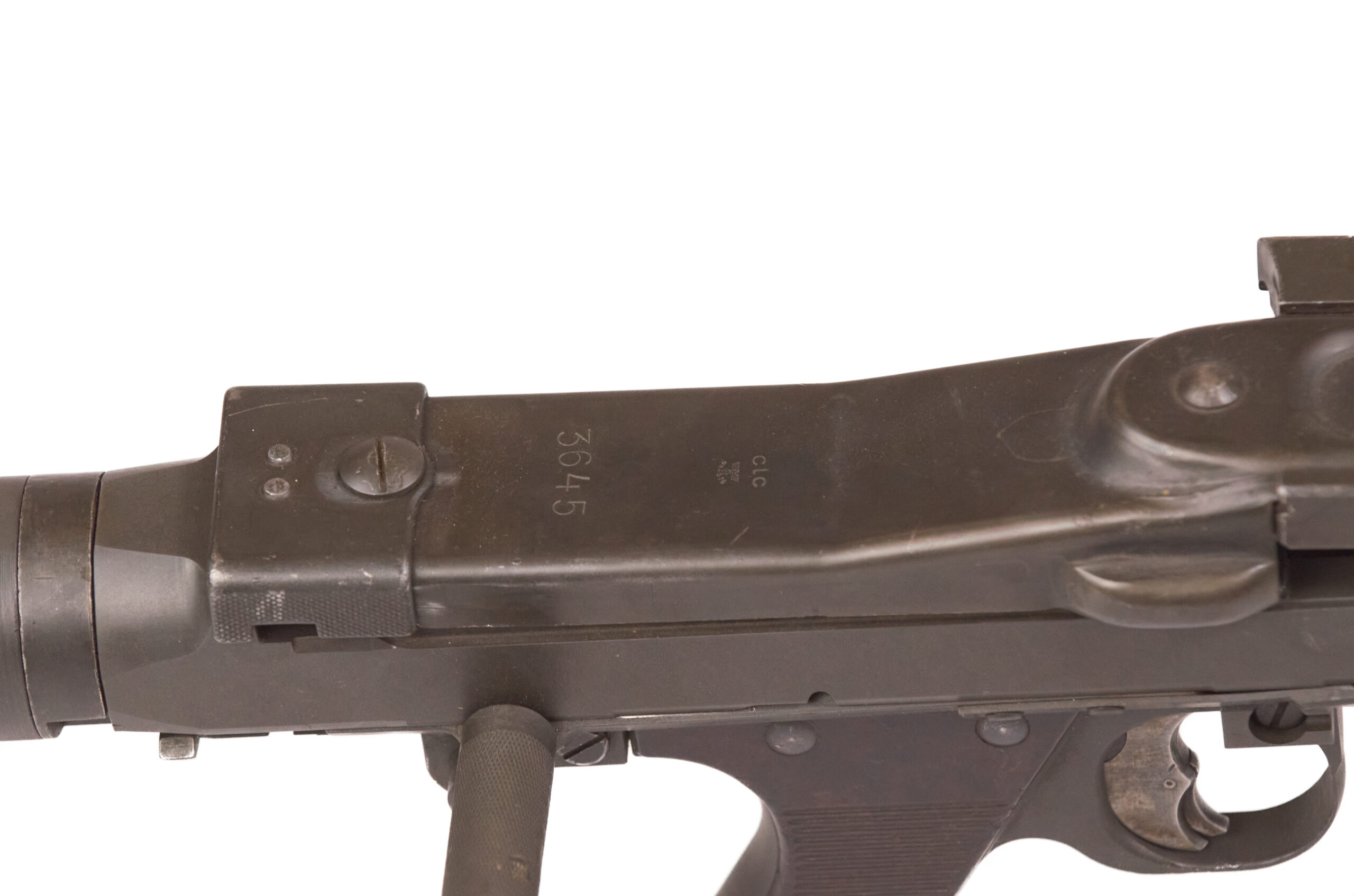
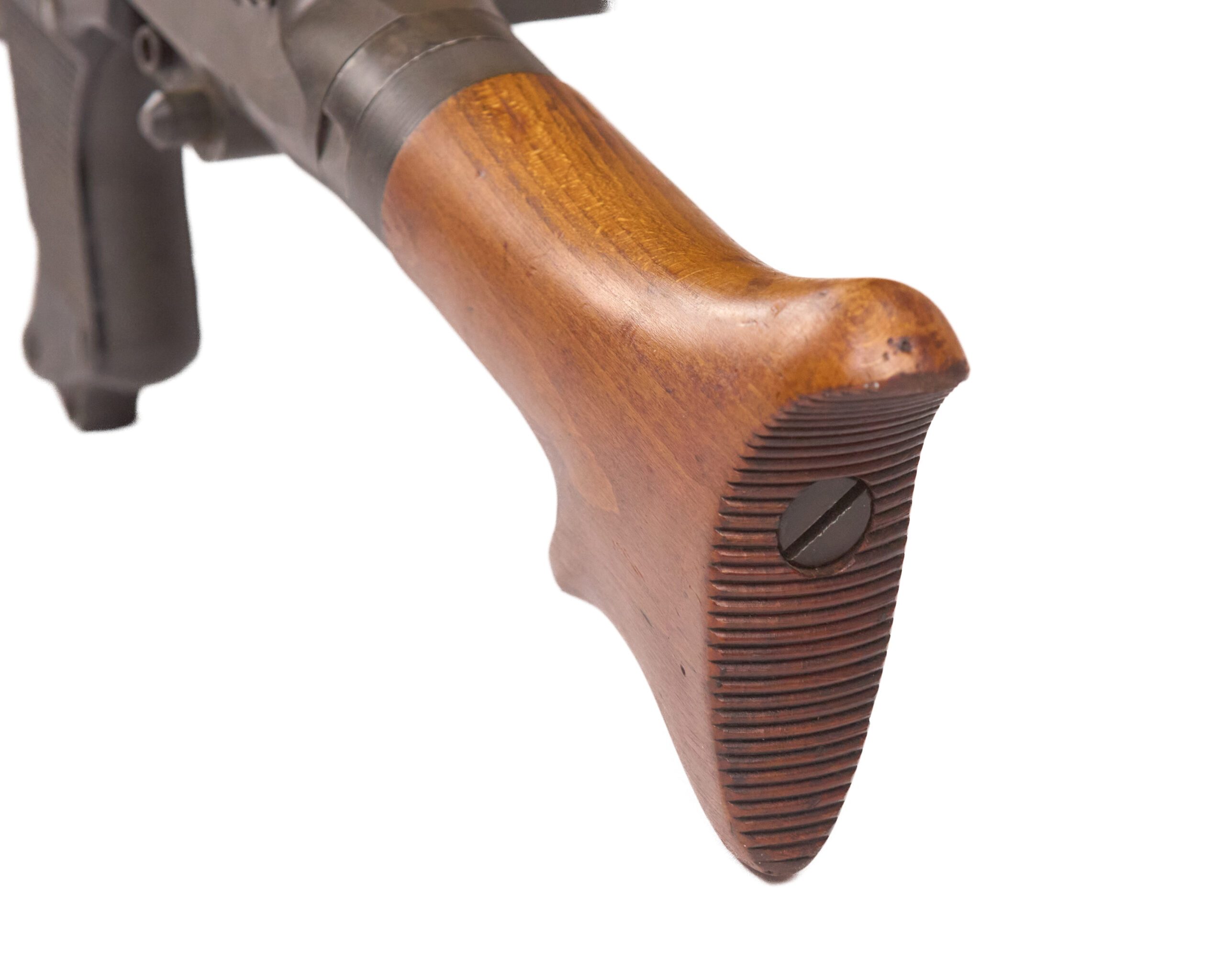
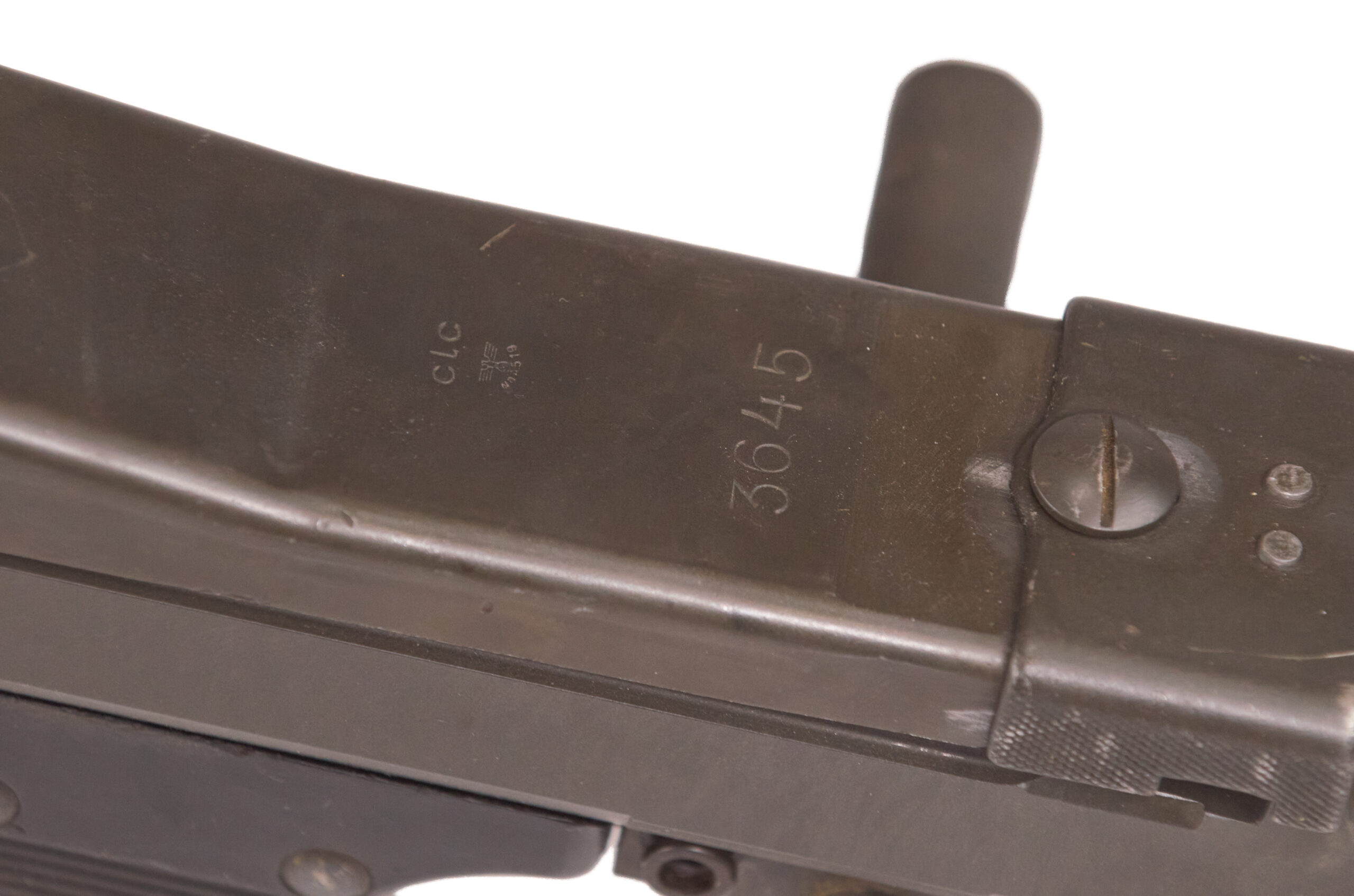
The buttstock has the correct curved MG34 form with a wide, serrated rear face. The stock wood shows a warm brown finish and visible handling wear. A number, 5720, appears on the rear stock collar. Additional receiver and cover markings are visible in the photographs, including a wartime date or code mark on the top cover area, but they are not clear enough to read with certainty.
The sight arrangement is the most distinctive feature. A raised rear anti-aircraft sight sits behind the feed cover. A circular front spider sight mounts near the barrel jacket. Together, these parts give the piece the proper visual character of an MG34 set up for anti-aircraft fire.
Historical Context / Pattern Development
The MG34 marked a major change in German machine-gun doctrine. Earlier armies often separated light and heavy machine-gun roles by using different weapons. The MG34 helped unify those roles around one gun. A crew could use it from the bipod as a mobile light machine gun, or mount it on a tripod for controlled sustained fire.
German forces adopted the MG34 before the war and used it widely through the early campaigns of the Second World War. It chambered the standard 7.92×57mm Mauser cartridge. Its high rate of fire, quick-change barrel system, and flexible mounting options made it one of the most advanced machine guns of its period.
The design also demanded careful machining. That made production slower and more expensive than later wartime designs. The MG42 eventually supplemented and then overshadowed it in many infantry roles. Even so, the MG34 remained in service throughout the war, especially where its compact receiver and mounting flexibility suited vehicle, armor, and specialist installations.
The anti-aircraft sight set reflects that flexibility. German machine-gun crews used special sights and mounts when engaging aircraft or high-angle targets. The circular ring sight gave the gunner a broad lead reference, while the raised rear sight gave a corresponding rear aiming point. On a display gun, those components add important visual and technical context.
Condition
This MG34 is configured as a display machine gun. It shows age, handling wear, and finish variation throughout. The metal has a dark finish with scratches, rub marks, edge wear, and scattered patina. The receiver, barrel jacket, muzzle booster, sights, bipod, and trigger group all present well.
The perforated barrel jacket remains straight and visually strong. The muzzle booster is present. The bipod is fitted and folded forward. The anti-aircraft rear sight and front spider sight are both present, which gives the display a more complete and specialized appearance.
The wood buttstock is in good condition overall. It shows scratches, small dents, finish wear, and wear at the serrated butt face. The black pistol grip remains intact and shows normal surface wear. No belt drum, sling, transit chest, or accessory pouch is shown in the photographs.