Description
WWII German Kriegsweihnachten 1939 Ceramic Beer Stein – Original Luftwaffe Commemorative
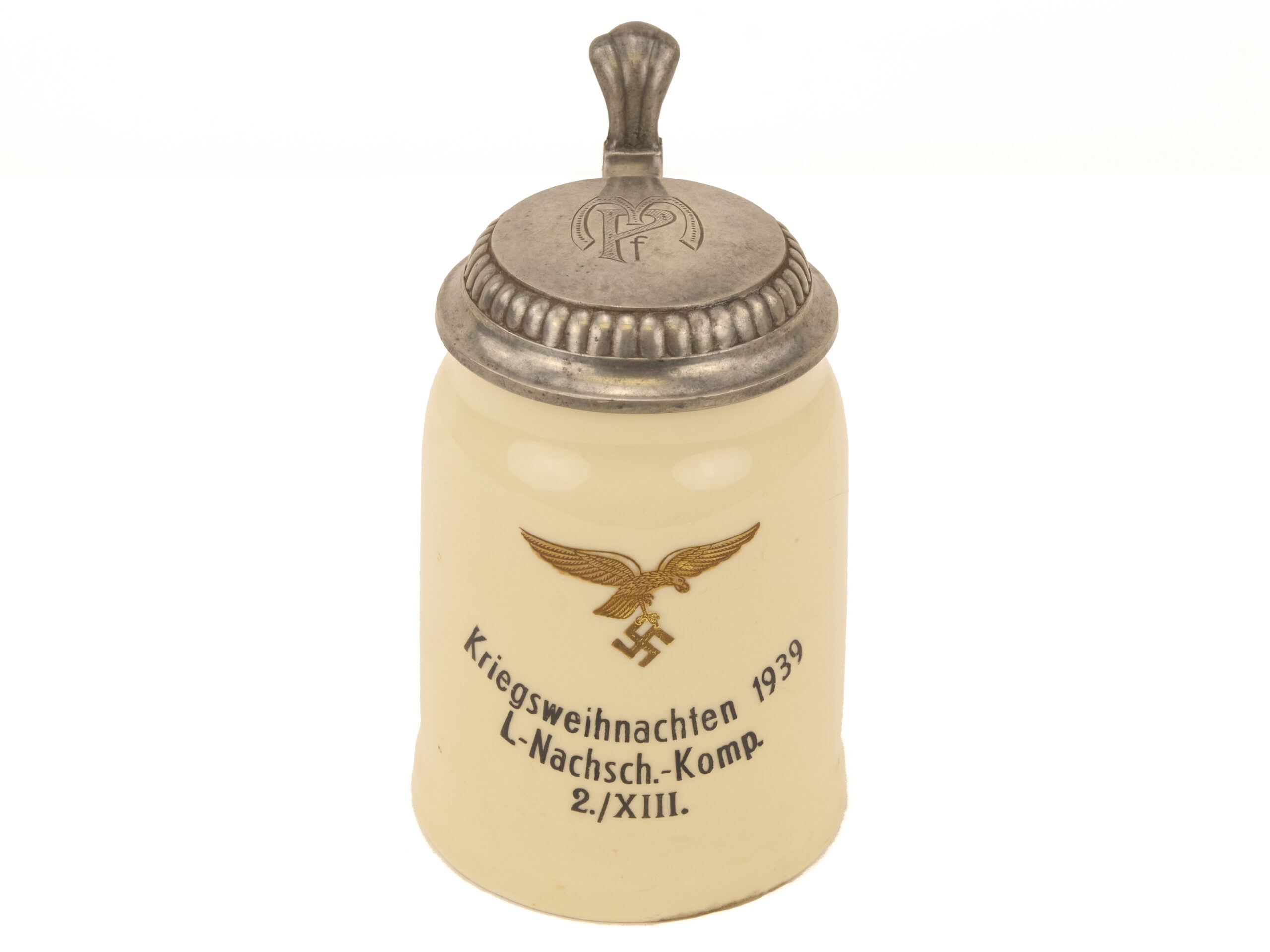
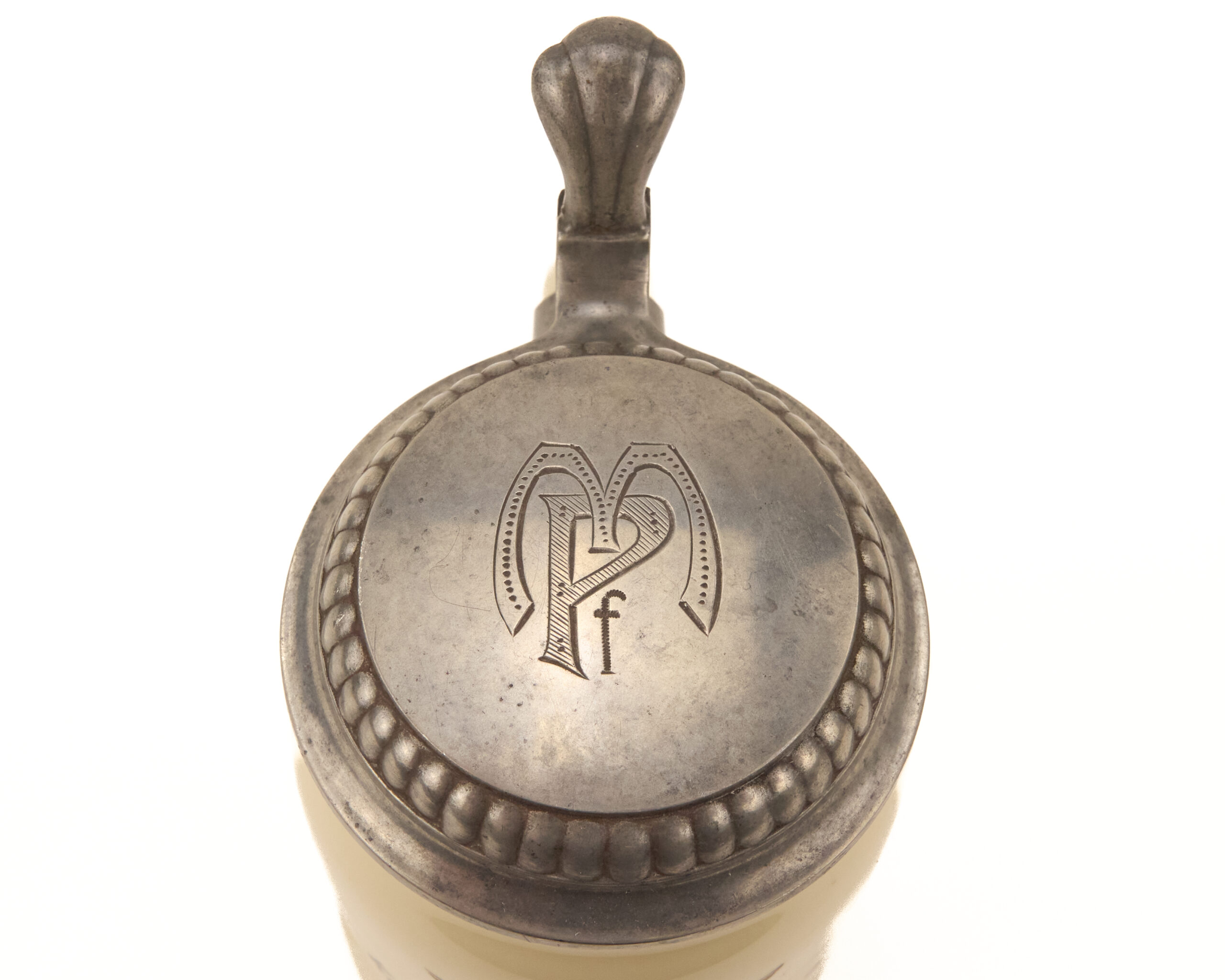
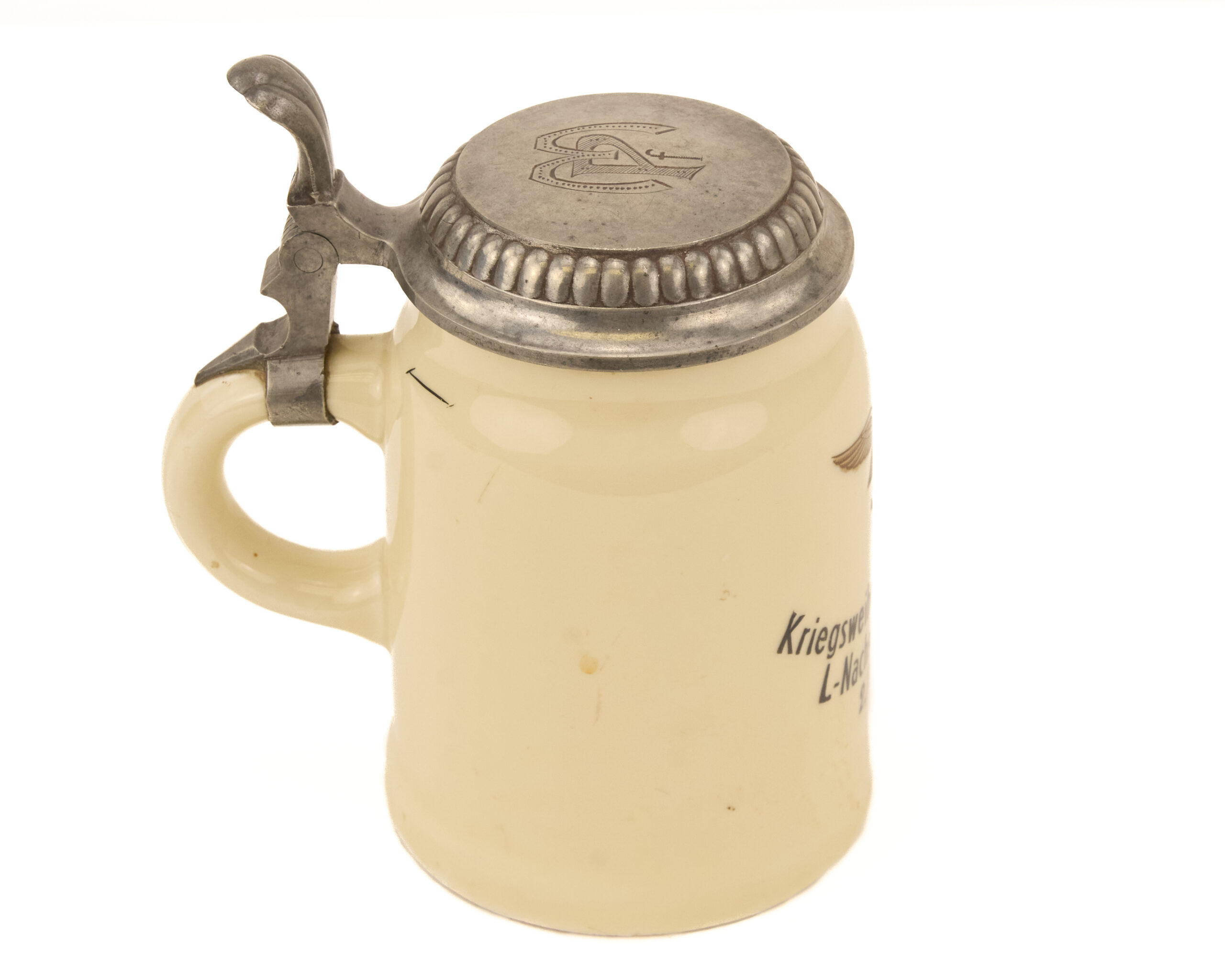
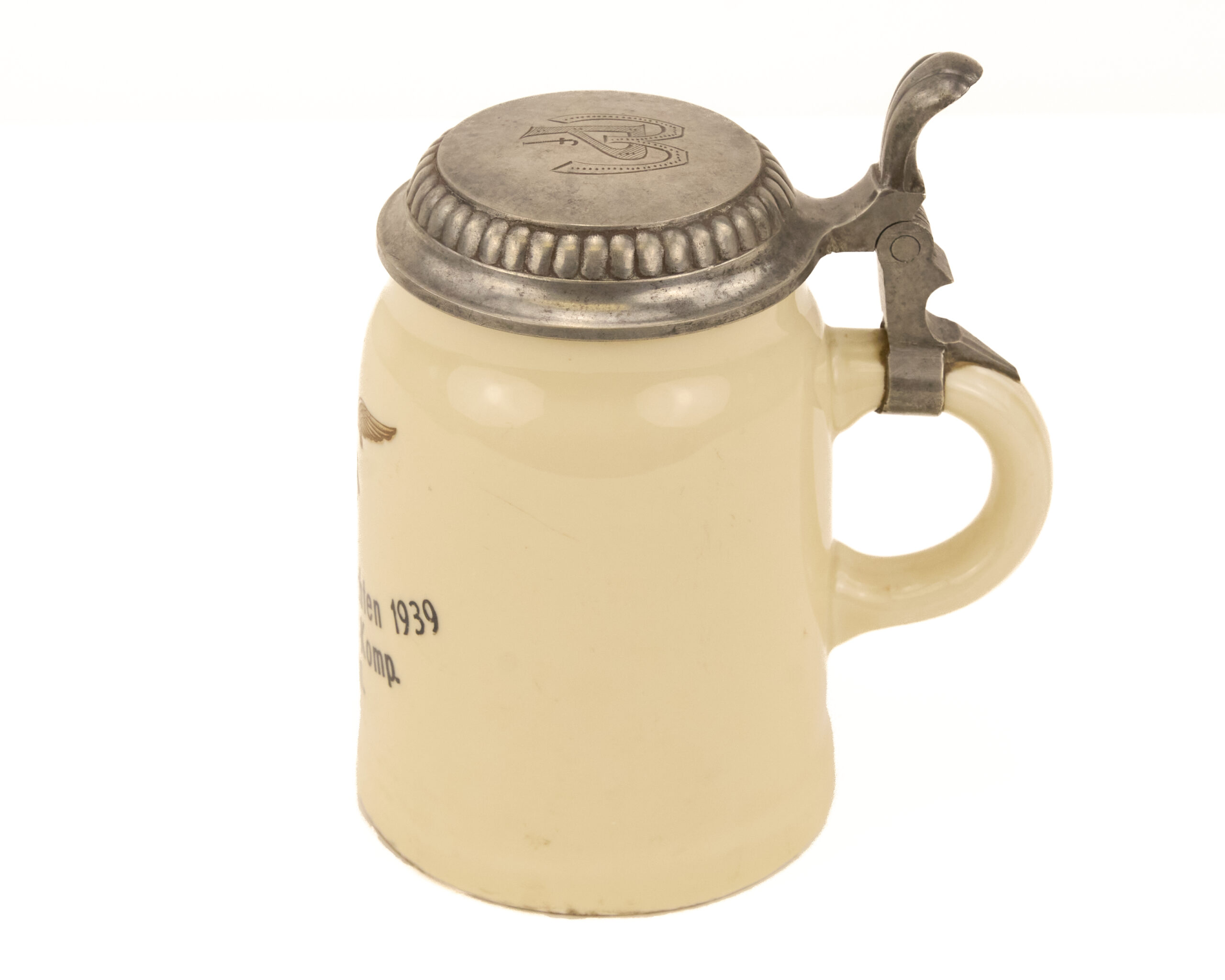
This WWII German Kriegsweihnachten 1939 ceramic beer stein is a personalized Luftwaffe commemorative piece from the first Christmas of the Second World War. The ceramic body bears a gilt Luftwaffe eagle and the inscription Kriegsweihnachten 1939 L.-Nachsch.-Komp. 2./XIII., while the pewter lid is engraved MPf. Taken together, those details turn the stein from a simple period vessel into a named wartime remembrance tied to a specific Luftwaffe supply formation and to a very specific moment in early-war Germany.
WWII German Kriegsweihnachten 1939 Ceramic Beer Stein
The inscription translates to War Christmas 1939 for a Luftwaffe supply company, identified here as 2./XIII. In practical terms, this was not a flying unit or a front-line fighter squadron. It belonged to the Luftwaffe’s ground and logistics structure, the large administrative system that kept airfields supplied, installations running, and the broader air arm functioning. That distinction is what gives the piece much of its character. Rather than commemorating glory in the air, it reflects the quieter but essential world of transport, provisioning, and support that underpinned Luftwaffe operations from the start of the war.
Construction / Configuration / Pattern
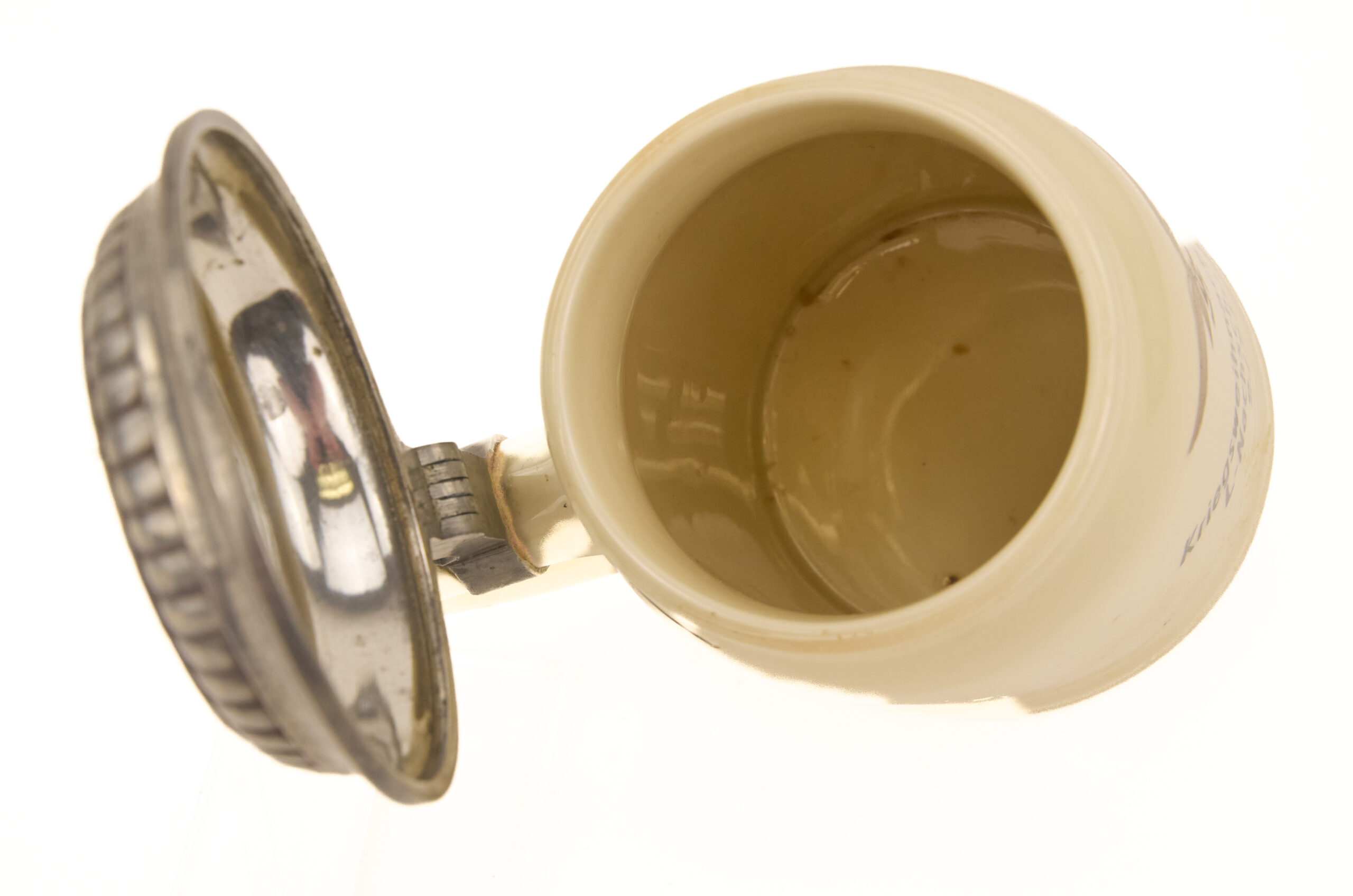
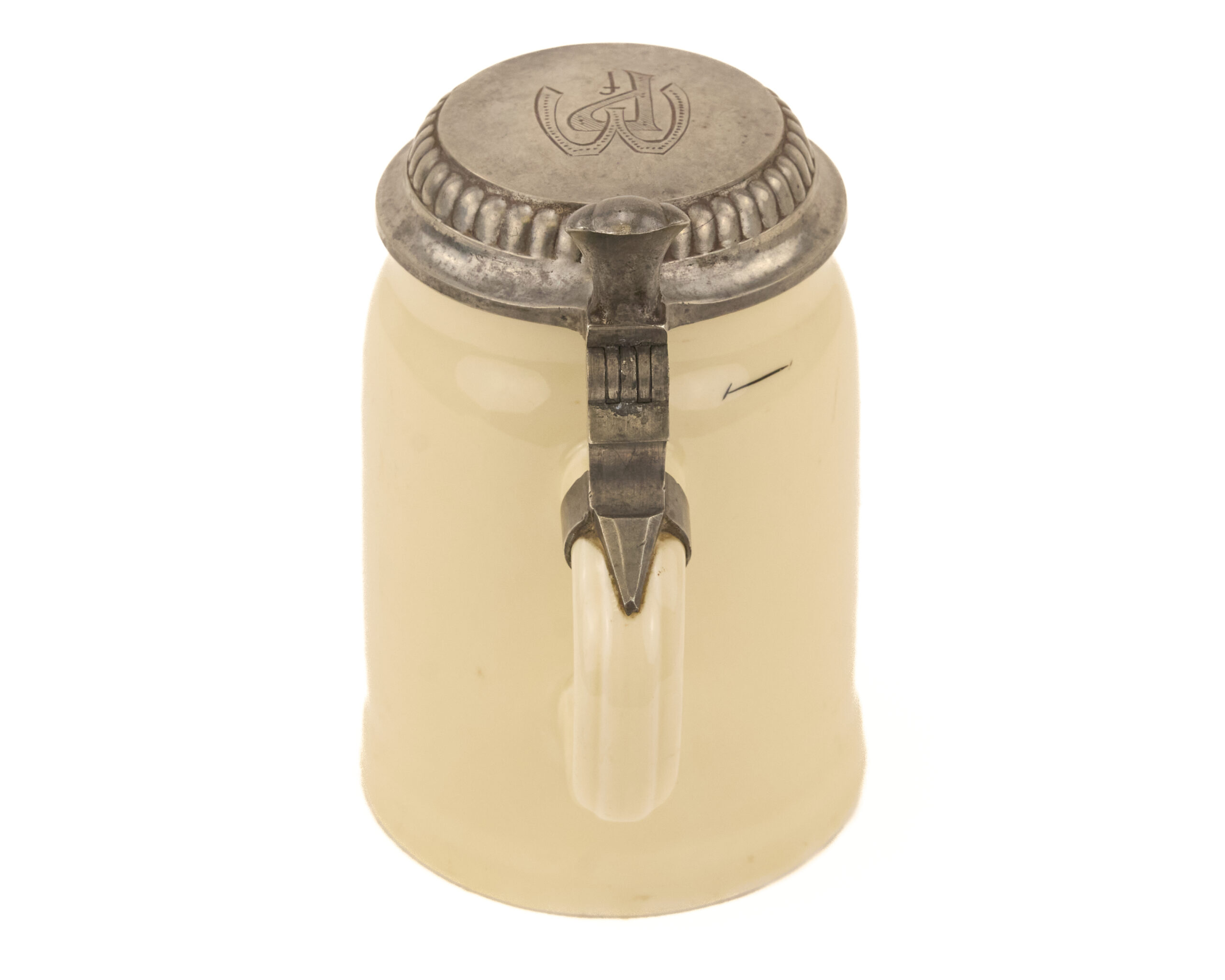
The stein has a ceramic body with a pewter lid and thumb lift in a classic German commemorative format. The lid shows mild embellishment around the rim, and the engraved initials MPf appear on the top. On the body, the gilt Luftwaffe eagle sits on the presentation side, opposite the handle, with the inscription placed neatly beneath it. That layout gives the piece a strong display face and makes the dedication easy to read. The overall design follows the familiar private-purchase and presentation stein tradition seen in German military and veterans’ culture, but the military inscription gives it a sharper wartime identity.
Historical Context / Provenance / Development
The most compelling part of this stein is the story behind the unit named on it. The abbreviation L.-Nachsch.-Komp. points to a Luftwaffe supply company. The suffix XIII almost certainly places it within Luftgau XIII, the Luftwaffe administrative district centered on Nürnberg. Luftgaue were territorial commands that handled training, administration, maintenance, supply, and the support network behind operational flying units. In other words, this company formed part of the machinery that kept the Luftwaffe functioning on the ground.
That regional context matters. Luftgau XIII covered a Nürnberg-centered district and supervised a broad support structure tied to airfields and Luftwaffe installations in that area. A company of this type would have handled transport, stores, and general supply duties rather than combat flying. It would have served the needs of bases, depots, and ground organizations that allowed the Luftwaffe to operate efficiently during the opening stage of the war. Because of that, the stein speaks to a side of military history that collectors often overlook: not the dramatic front-line image, but the administrative and logistical backbone without which the front line could not function.
The date is equally important. Kriegsweihnachten 1939 marks the first wartime Christmas after the outbreak of the conflict in September 1939. That gives the piece a very specific emotional and historical setting. By December 1939, the war was still in its opening phase. For men serving in Luftwaffe support formations, a stein like this would have carried the weight of separation, routine, unit identity, and early-war uncertainty. It is easy to imagine such an object being presented or acquired during a holiday gathering meant to preserve morale and comradeship under wartime conditions. That human connection is what lifts the piece beyond decoration. It is a surviving reminder of how servicemen marked time, place, and belonging during the first wartime winter.
Condition
This example presents well overall. The ceramic body appears clean and displays strongly, while the gilt Luftwaffe eagle remains visible on the front. The inscription is legible and retains good contrast. The pewter lid shows mild age and handling wear consistent with an original period piece, and the engraved initials remain clear. As a whole, the stein has the look of an authentic service-era commemorative object that has survived with solid display presence and honest age.
Explore more at Old Steel
Follow us on Instagram:
Old Steel Guns on Instagram