Description
Deutscher Kleinempfänger DKE 38 Radio – WWII German “People’s Radio”
Deutscher Kleinempfänger DKE 38
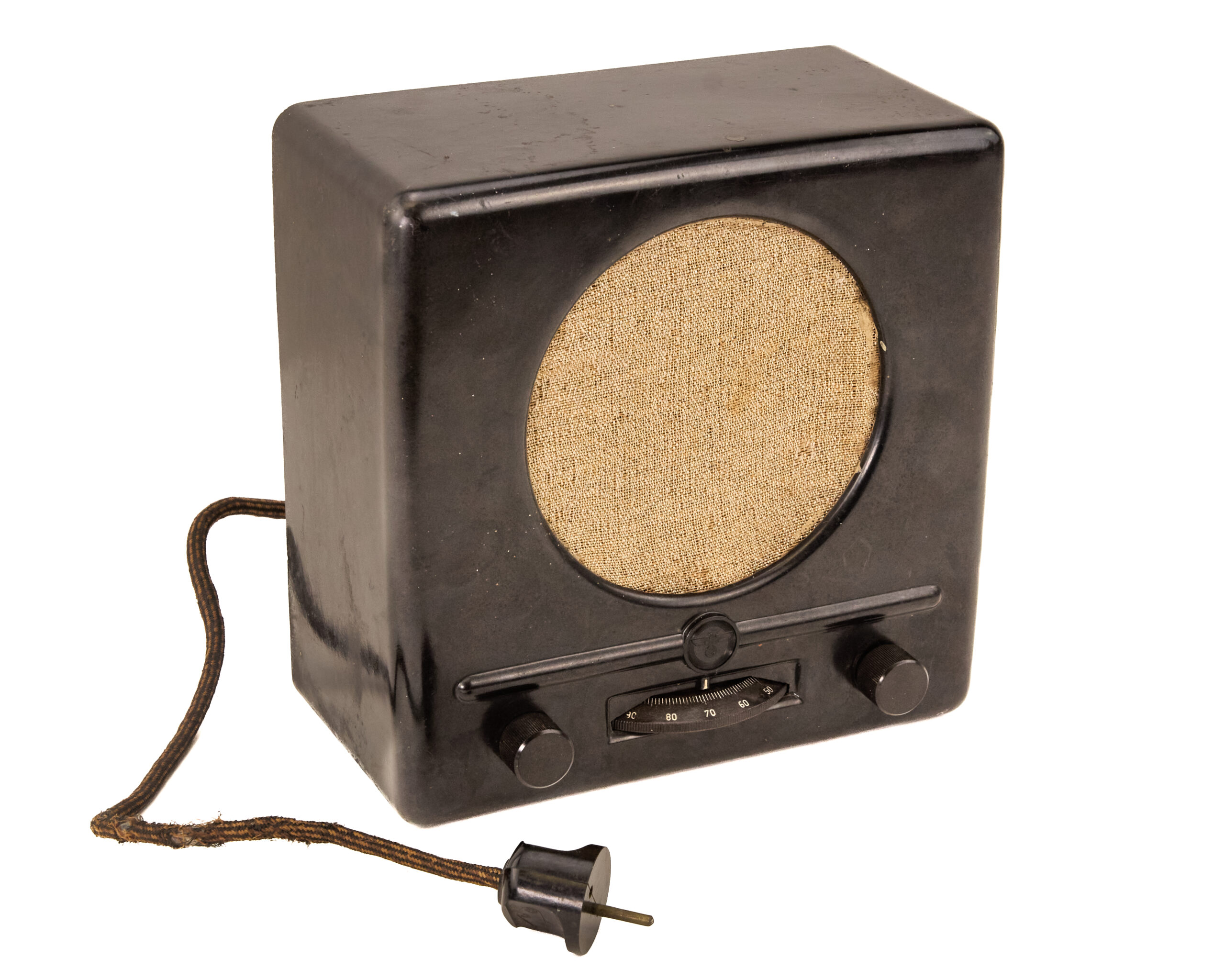
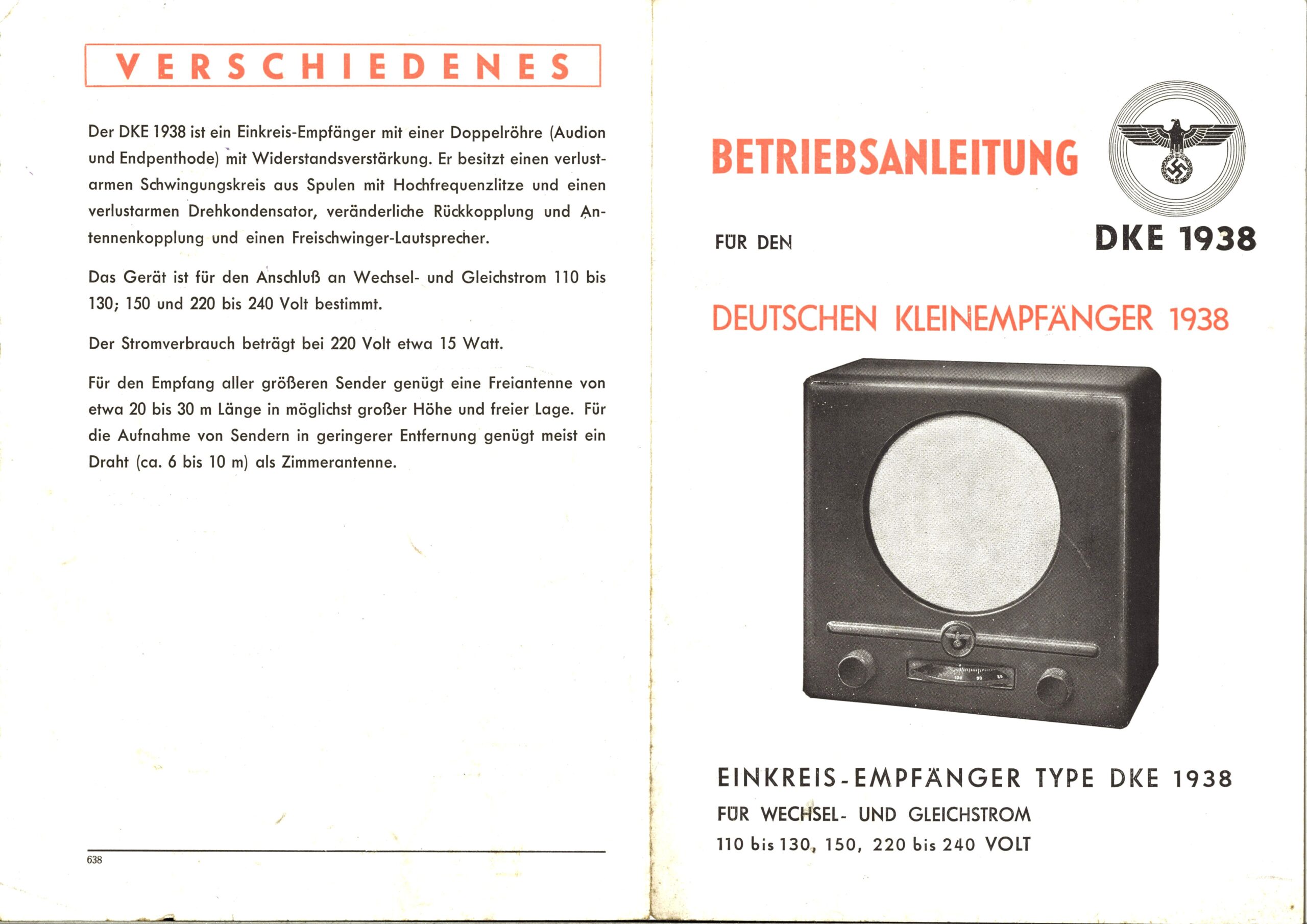
This original Deutscher Kleinempfänger (DKE 38) is a German World War II civilian radio receiver, commonly referred to as a “People’s Radio.” The name Deutscher Kleinempfänger translates directly to “German small receiver.” These radios were developed as inexpensive mass-produced sets intended to place a radio in as many German households as possible.
In practice, the radio served an important propaganda function within Nazi Germany. Because of its widespread distribution and the frequent broadcast speeches of Joseph Goebbels, Germans often nicknamed the set “Goebbels’ Schnauze” (“Goebbels’ snout”). The nickname reflected how commonly his voice was heard over the airwaves through these receivers.
Design and Appearance of the Deutscher Kleinempfänger DKE 38
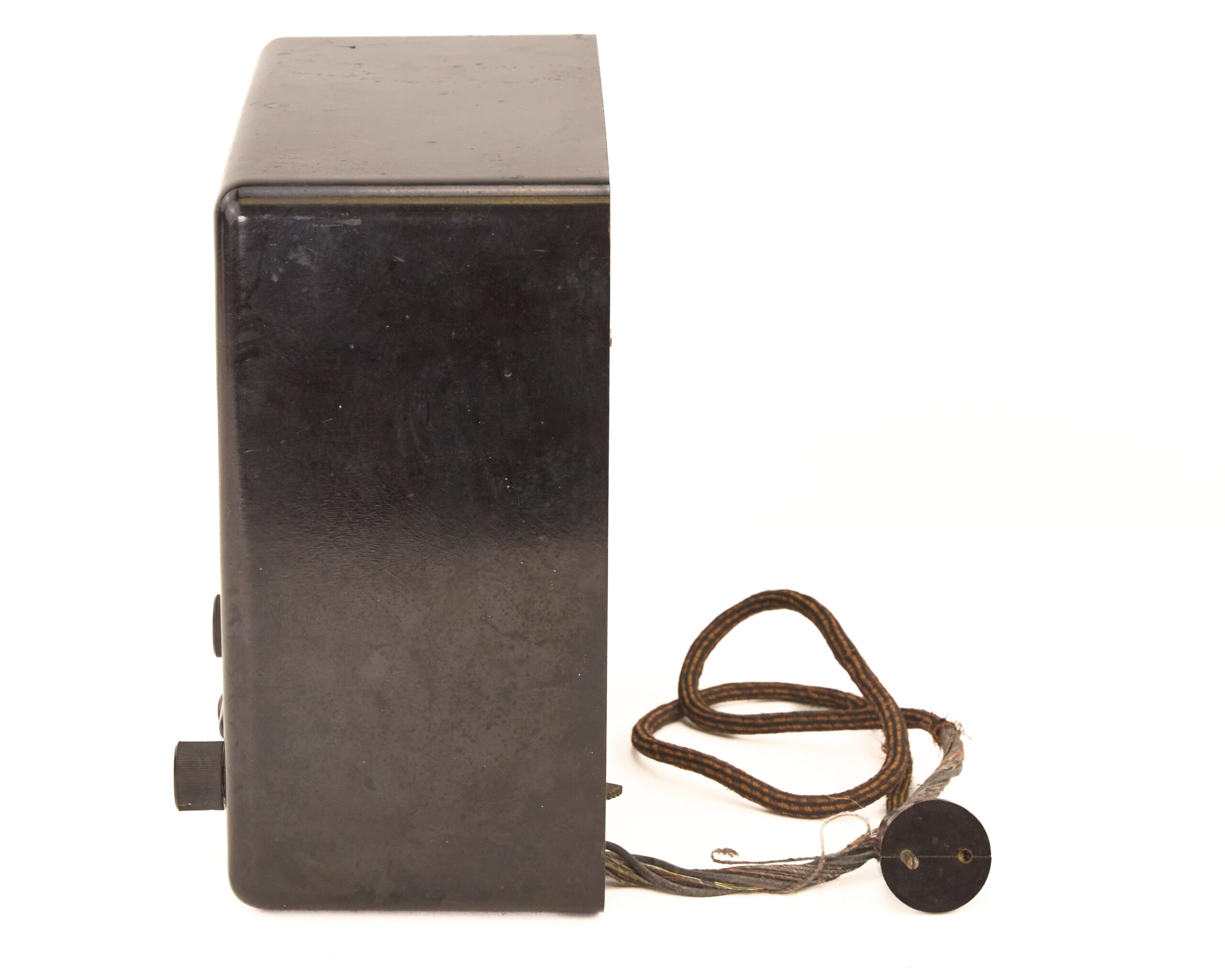
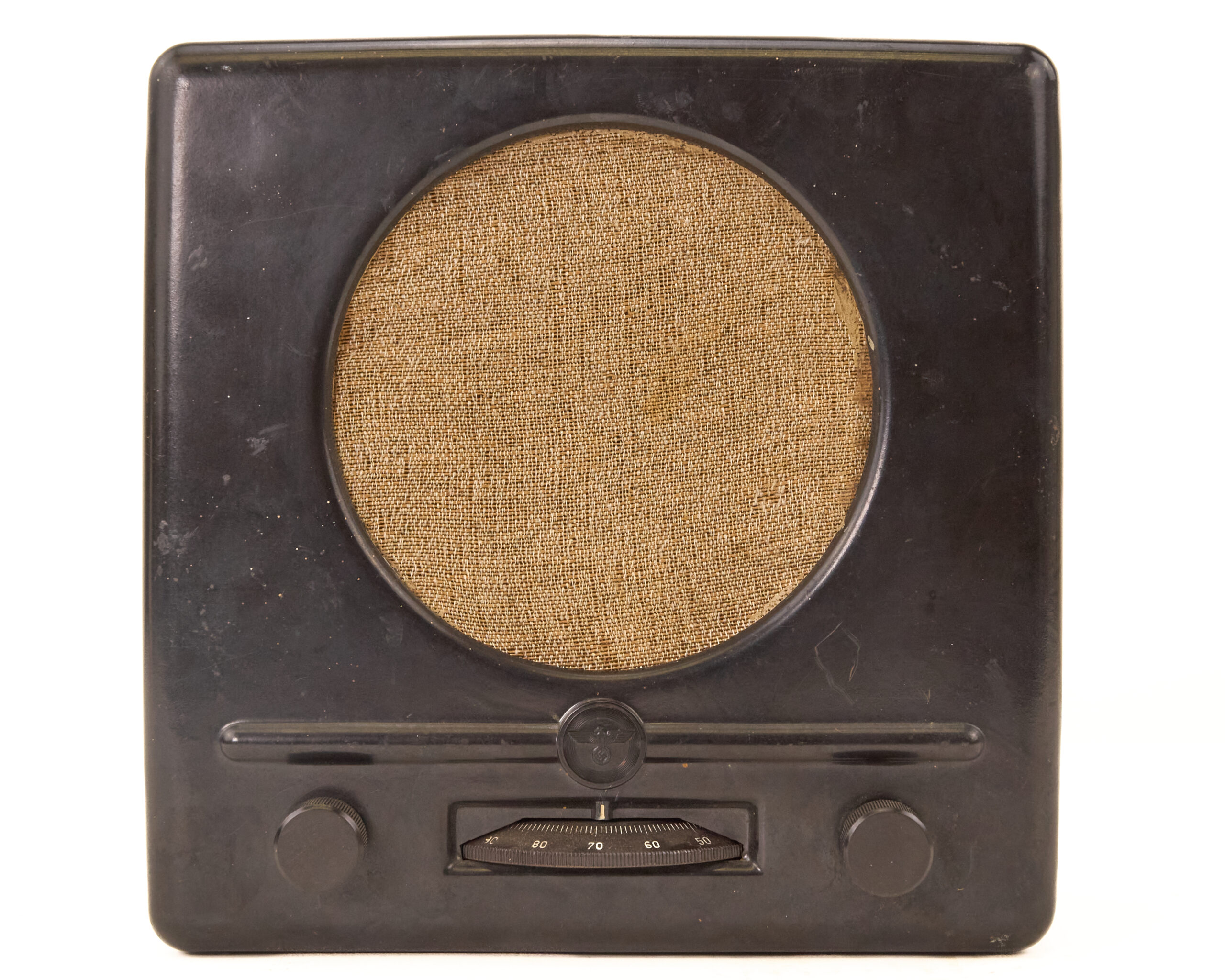
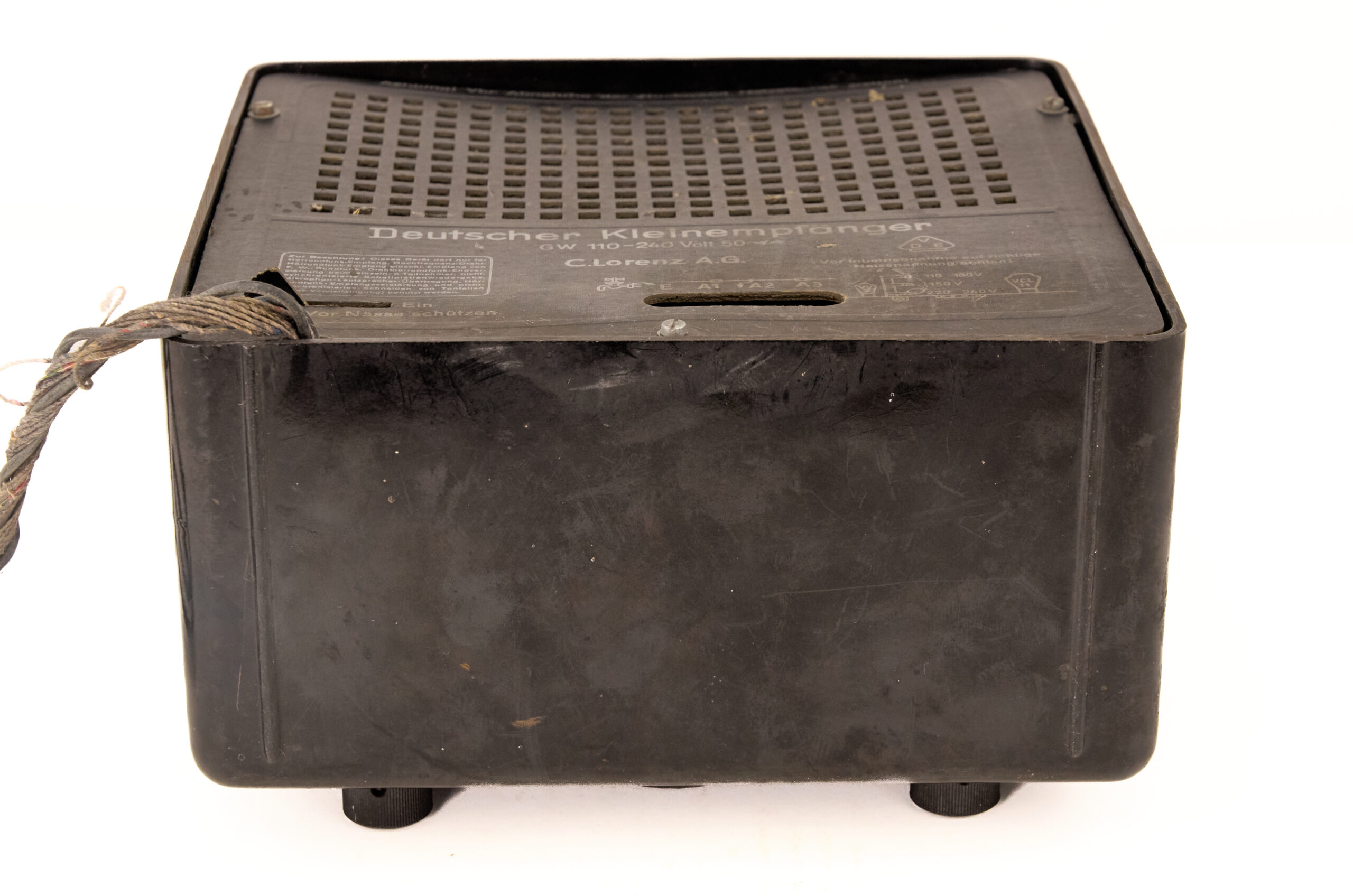
The DKE 38 is instantly recognizable for its simple and compact design. The cabinet is formed from molded Bakelite and features a square front dominated by a large circular speaker grille.
Dimensions are approximately:
-
9.5 inches square across the front
-
4.5 inches deep
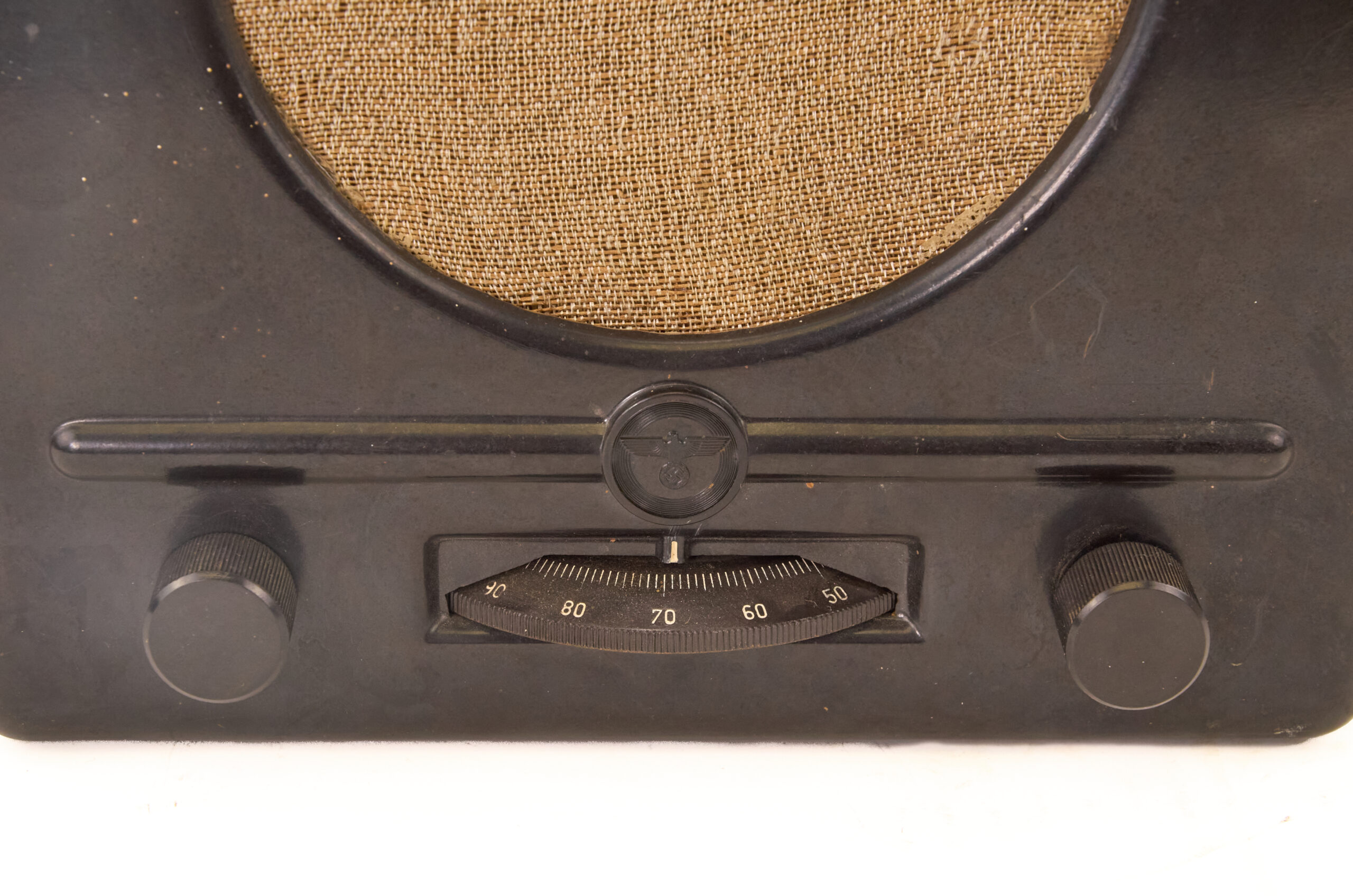
Controls are intentionally minimal. The radio uses two control knobs and a tuning dial marked with numeric scales running from 0–100 in opposite directions. Positioned above the dial is a small German eagle over swastika emblem, reflecting the official insignia used during the period.
The overall design emphasizes affordability and simplicity while still maintaining the clean industrial appearance typical of German consumer electronics from the late 1930s.
Receiver Limitations of the Deutscher Kleinempfänger DKE 38
The DKE 38 was intentionally limited in capability. Most notably, it lacked shortwave reception, which made it difficult for users to receive foreign radio broadcasts. By restricting reception primarily to domestic stations, the government effectively ensured that the majority of information heard through these radios originated from controlled German broadcasting networks.
Internal Construction
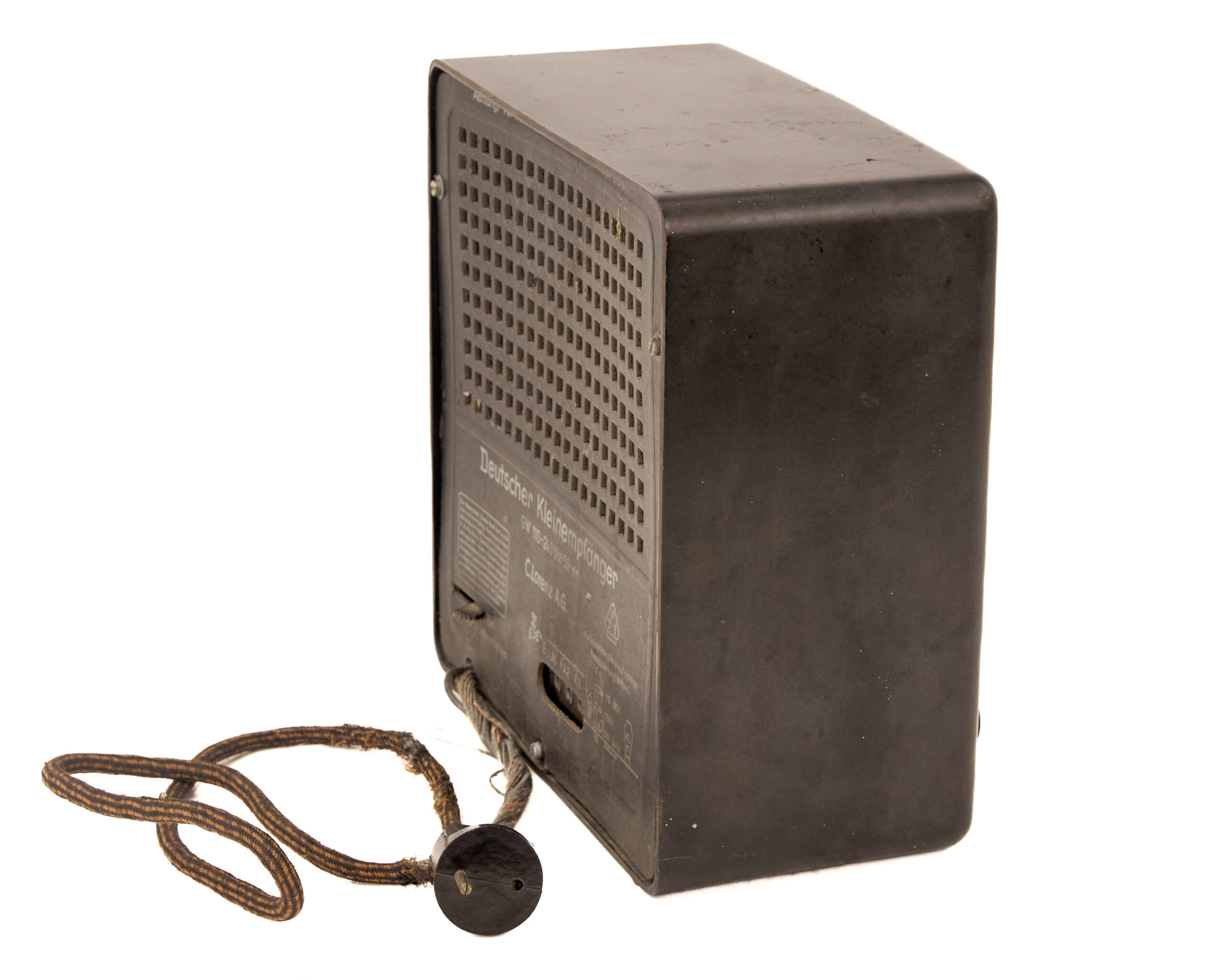
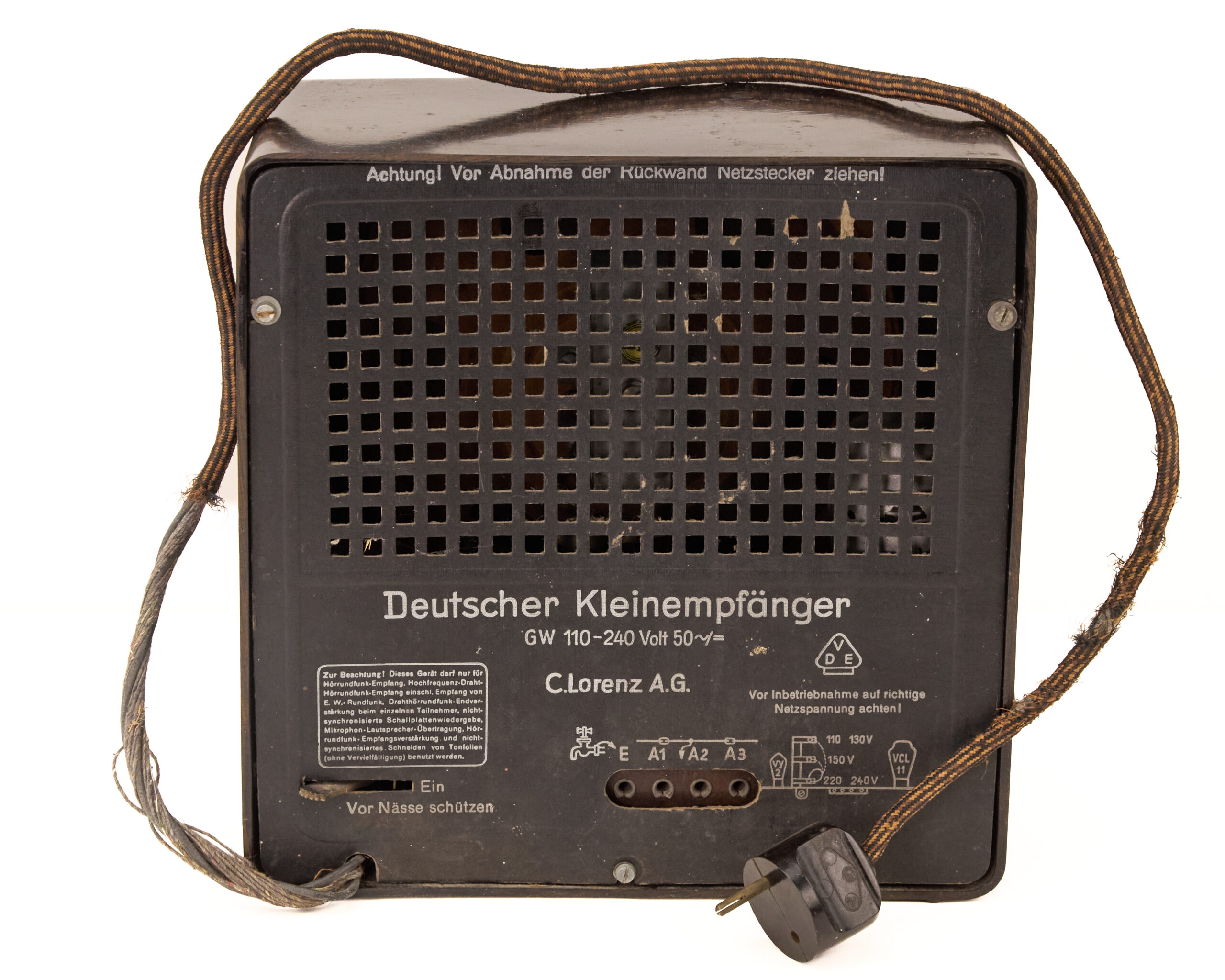
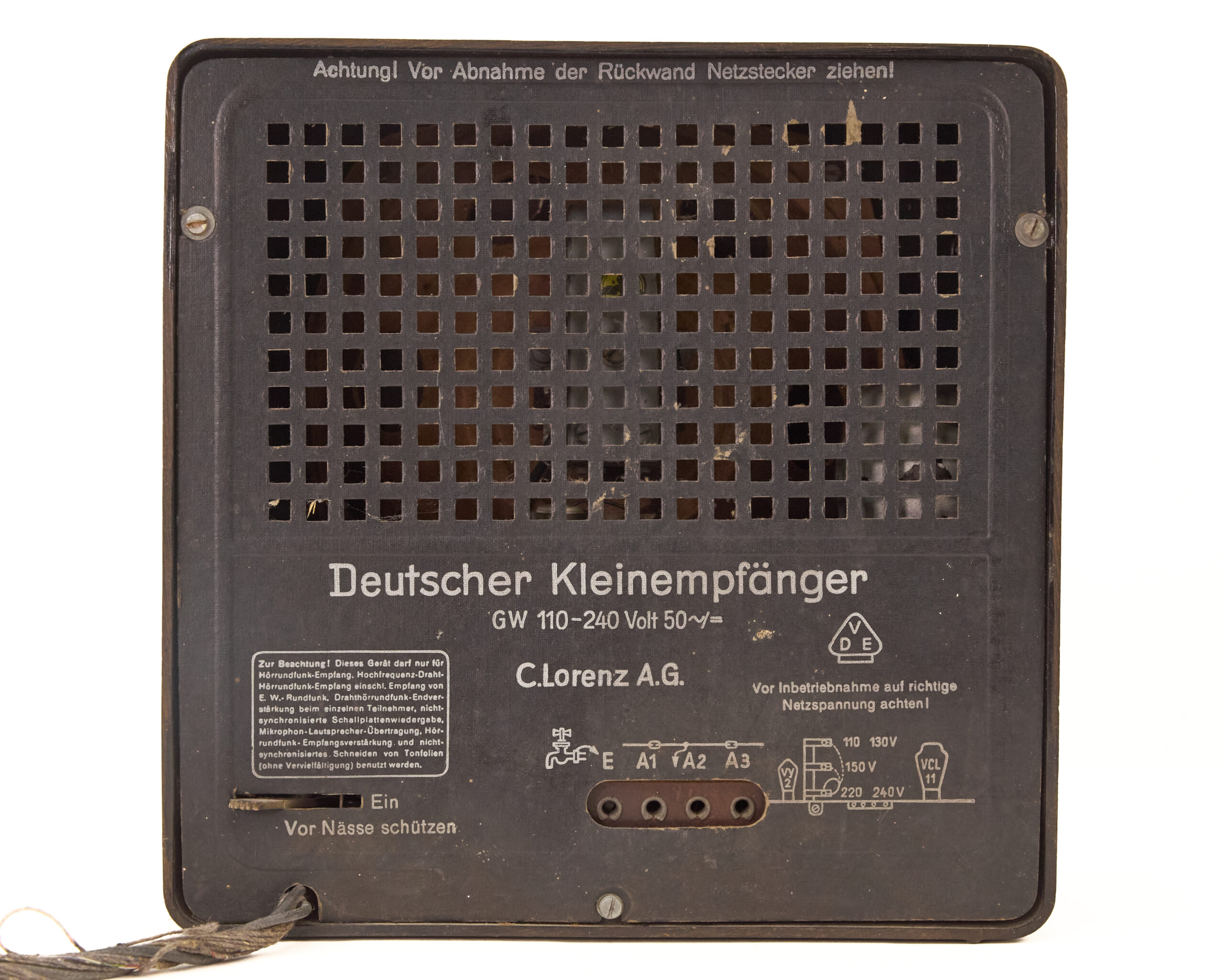
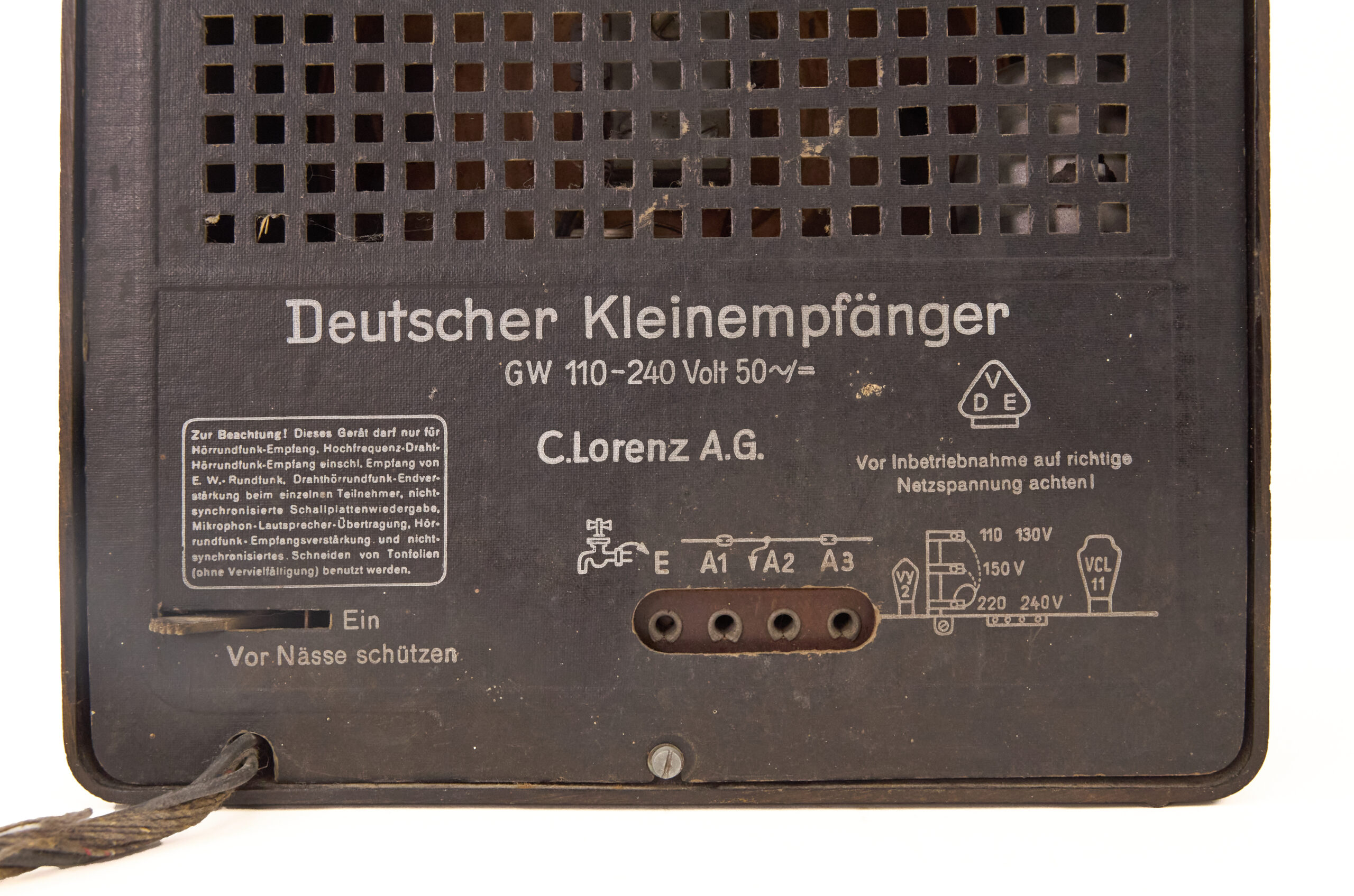
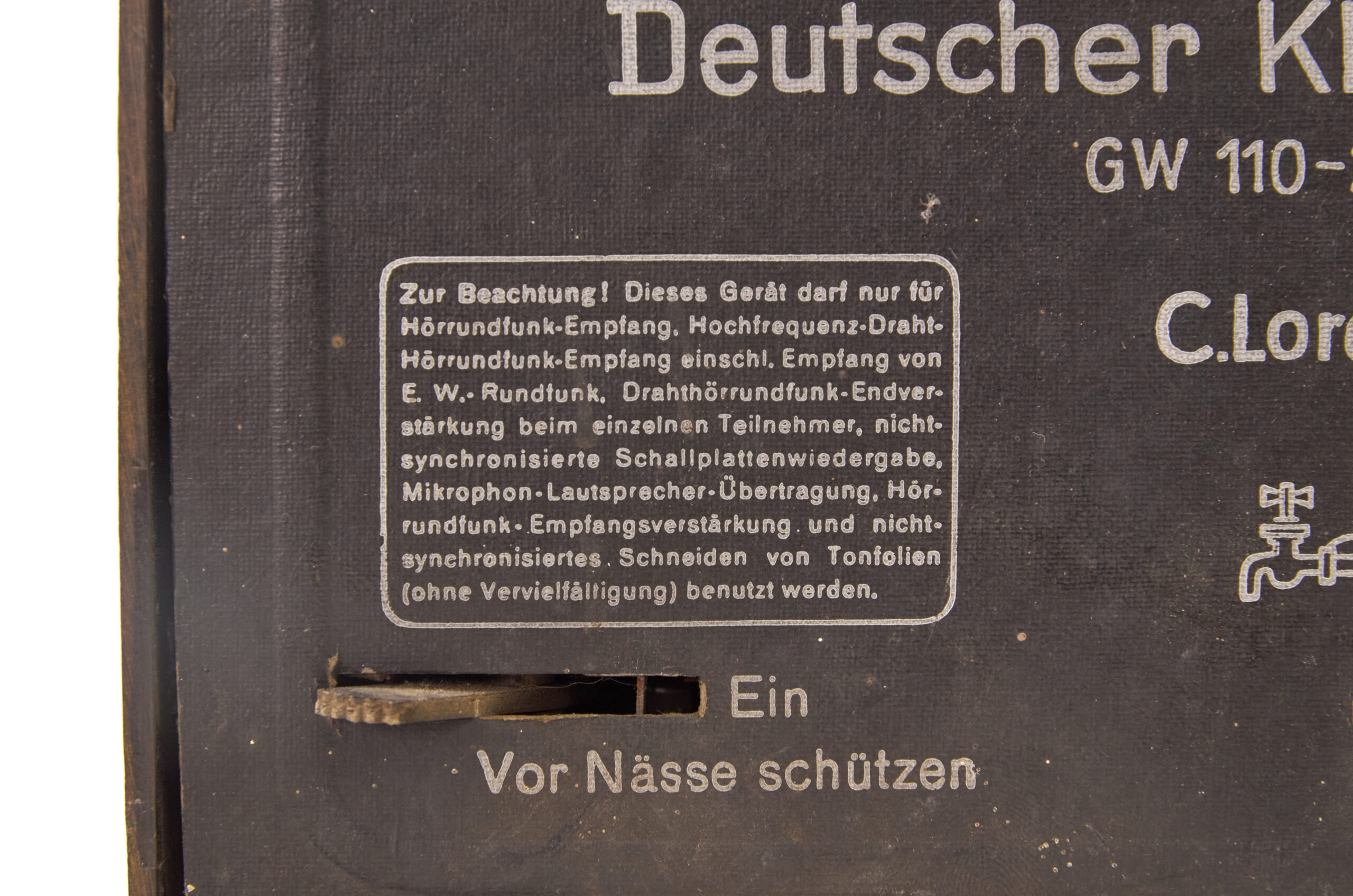
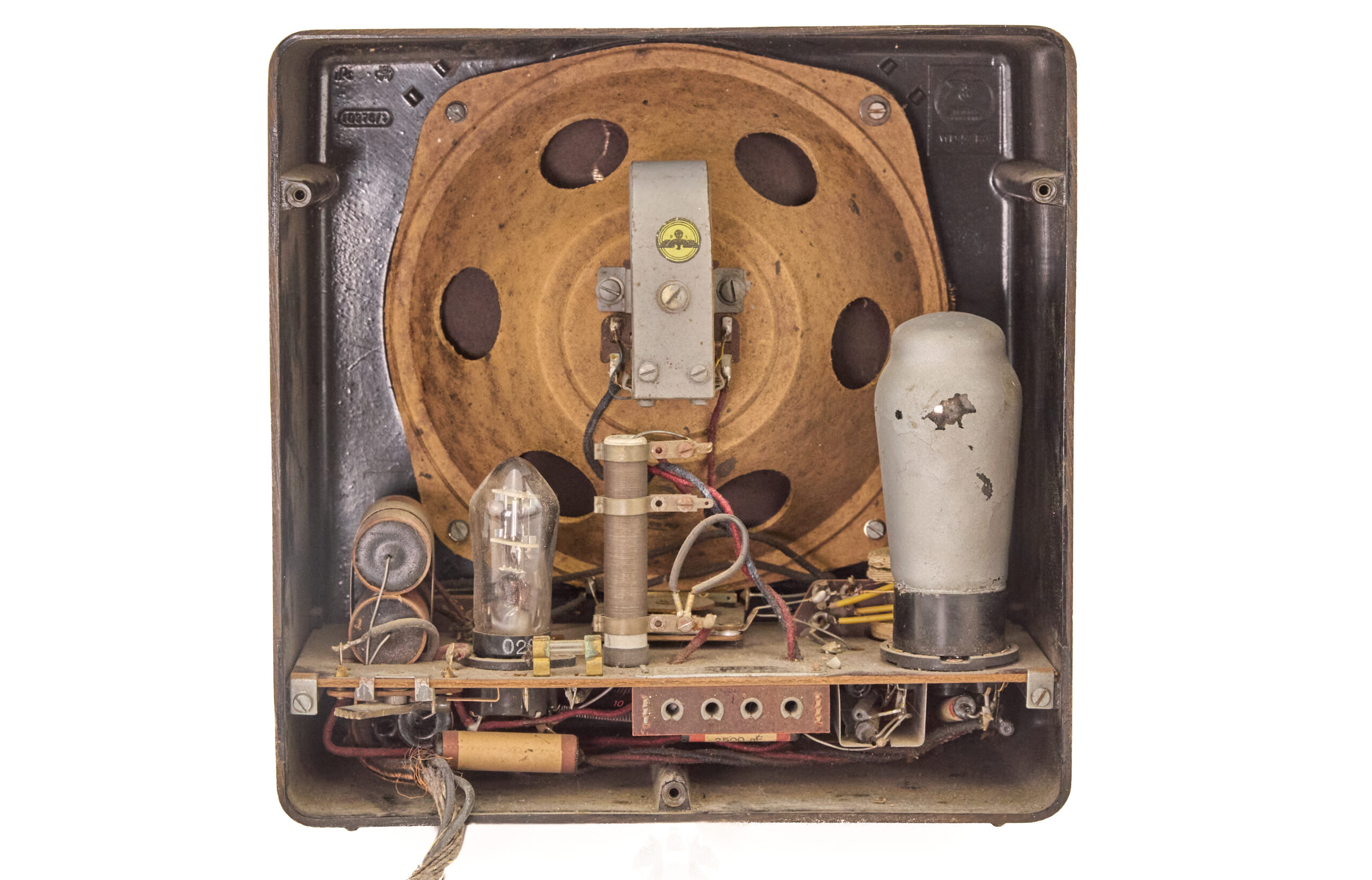
When viewed from the rear, the radio’s internal chassis reflects the same cost-conscious engineering seen in its external design.
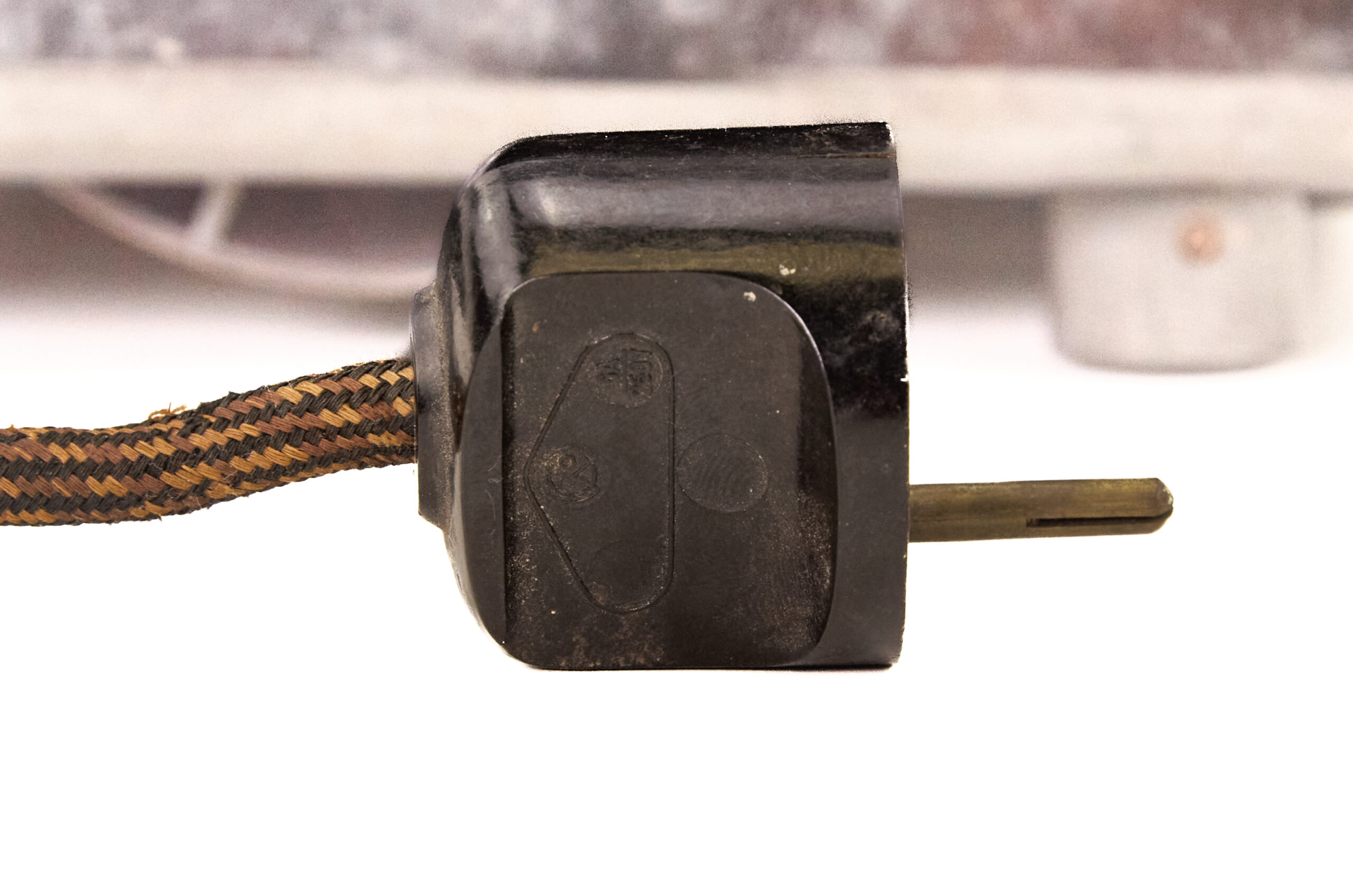
One of the most recognizable components is the VCL11 vacuum tube, visible as the larger silver-colored tube on the right side of the chassis. The metallic coating on the tube functions as an integrated electromagnetic shield. This approach was cheaper than manufacturing a separate metal shield enclosure.
The radio also employs a reed-type speaker, which was another cost-saving measure. Unlike traditional dynamic speakers, this design does not require an audio transformer, reducing both material cost and manufacturing complexity.
Manufacturer
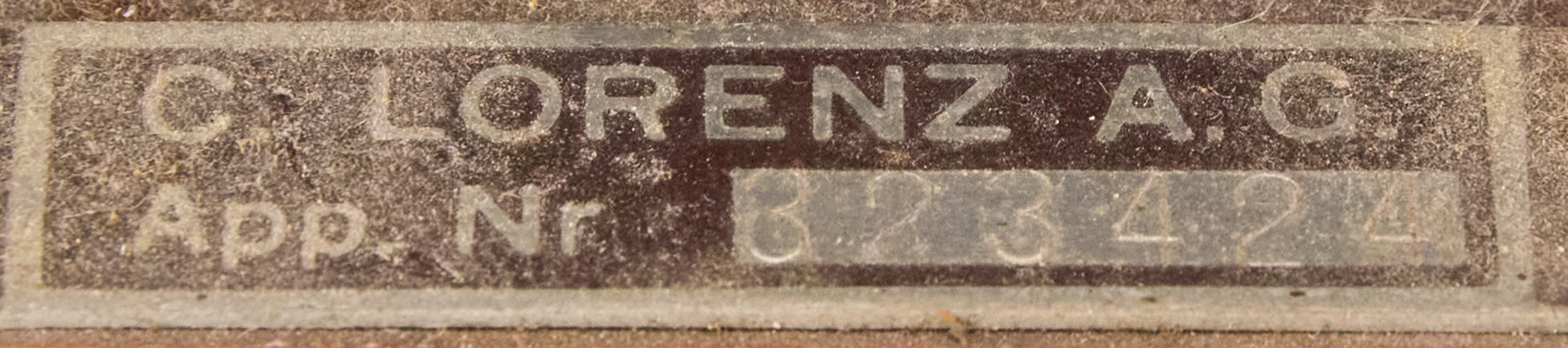
This example was produced by H. R. Schuchhardt Fernmeldetechnik, a Berlin-based manufacturer specializing in telecommunications equipment.
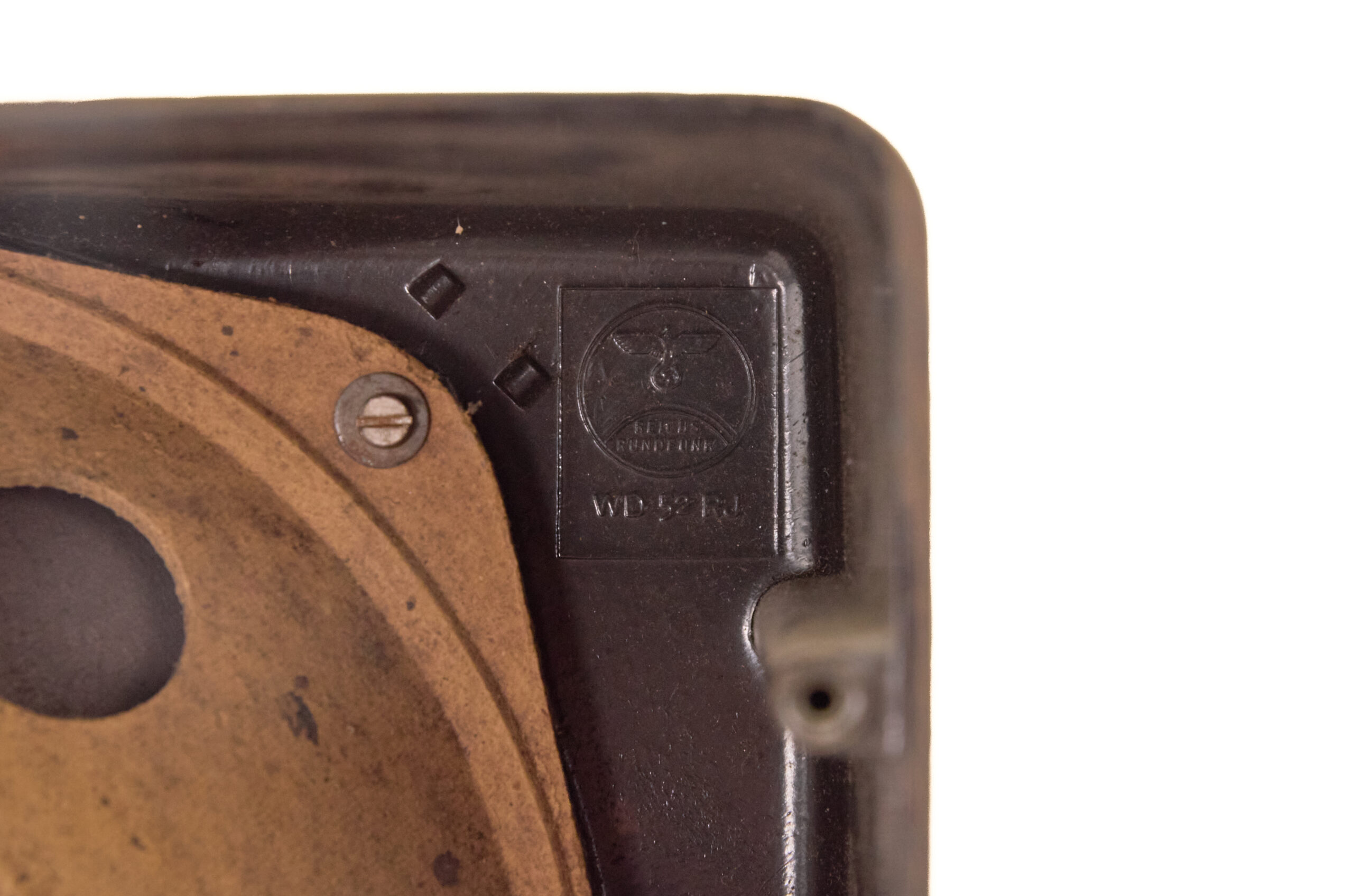
Although not one of the largest German electronics companies such as Siemens or Telefunken, Schuchhardt was among the 28 licensed manufacturers authorized to produce standardized People’s Radio models such as the DKE 38 radio and the VE 301 radio under government specifications.
Beyond consumer radios, Schuchhardt’s specialization in Fernmeldetechnik (telecommunications technology) included production of:
-
Telegraph equipment
-
Field telephones
-
Radio communication components for civilian and military applications
Bakelite Cabinet Markings
The cabinet markings provide insight into the manufacturing process.
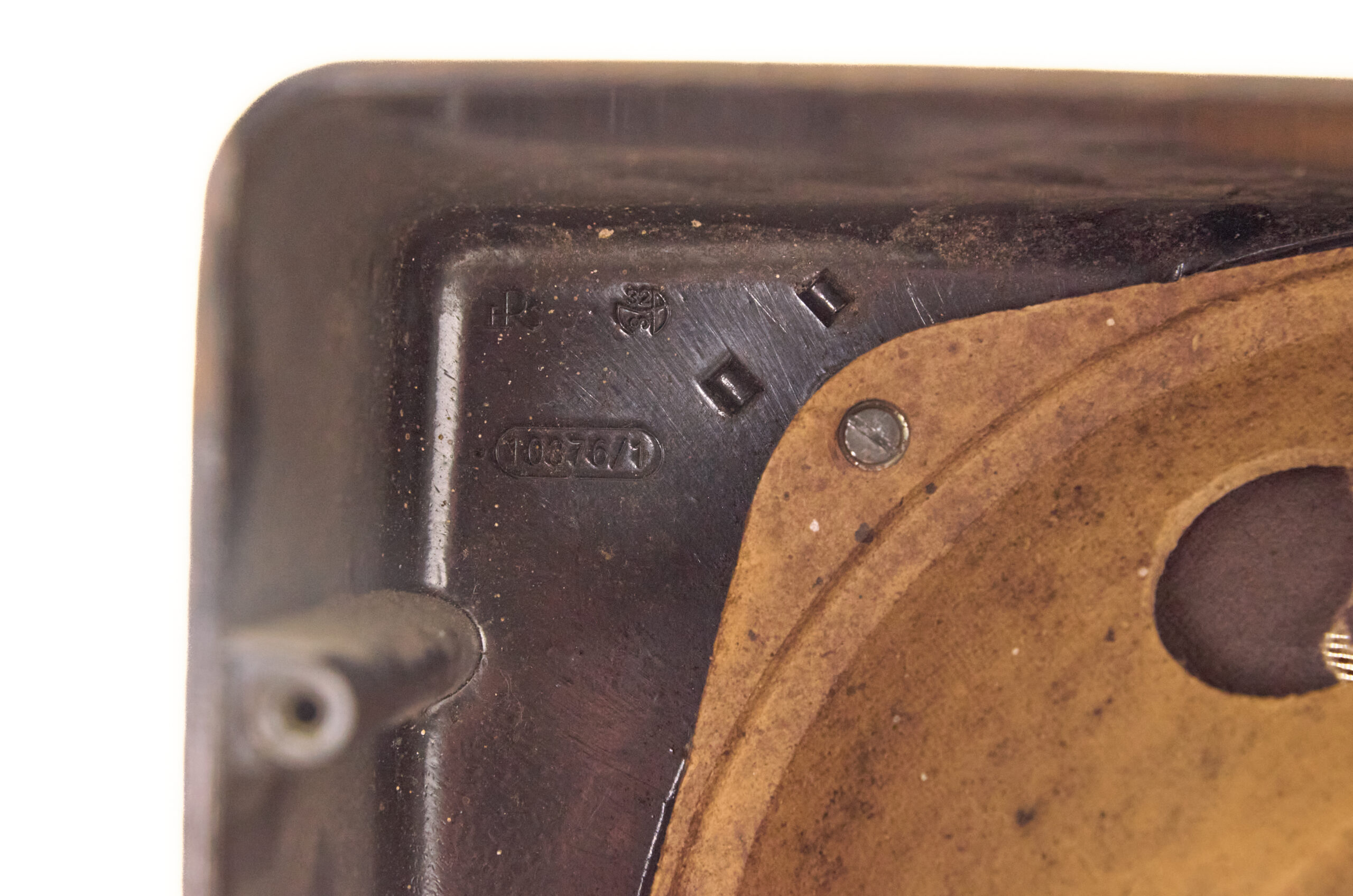
“S” Marking:
The letter S refers to Typ S phenolic molding compound, a Bakelite material filled with wood flour. This was the standard and most economical formulation used for radio cabinets due to its durability and ease of production.
“32” Marking:
The number 32 represents the Presswerk-Kennummer, or molding factory identification code. Although radios were assembled by authorized manufacturers, large Bakelite cabinets were frequently produced by specialized third-party plastics factories.
Condition
This radio remains in excellent overall condition.
-
The Bakelite cabinet shows no cracks or chips
-
The grille cloth remains intact and in good condition
-
The internal chassis components appear complete
-
Exterior surfaces retain strong structure and original form
Because many surviving DKE 38 radios exhibit damage to the brittle Bakelite housings, examples without cracks or repairs are increasingly desirable to collectors.
Historical Significance
The Deutscher Kleinempfänger is one of the most recognizable technological artifacts of the WWII German home front. Designed for affordability, produced by multiple manufacturers, and distributed widely throughout the country, the radio became a central tool of mass communication and propaganda during the era.
Today, surviving examples represent an important intersection of industrial design, communications technology, and wartime history.
Explore More from Old Steel Guns
Militaria
Field Gear
Miscellaneous Equipment
Follow us on Instagram:
Old Steel Guns on Instagram