Description
WWII P.08 Luger Holster – Original Wartime Service Example
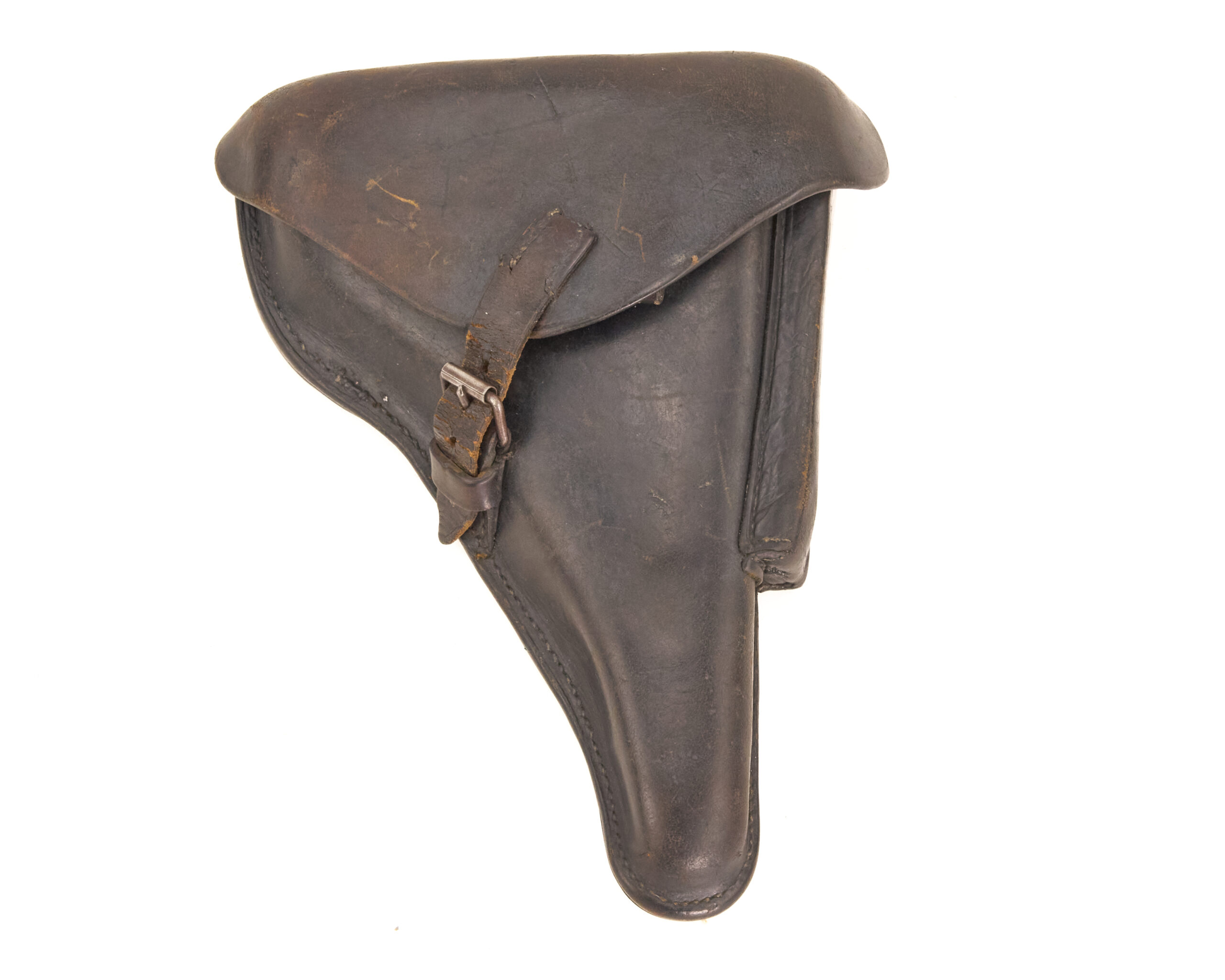
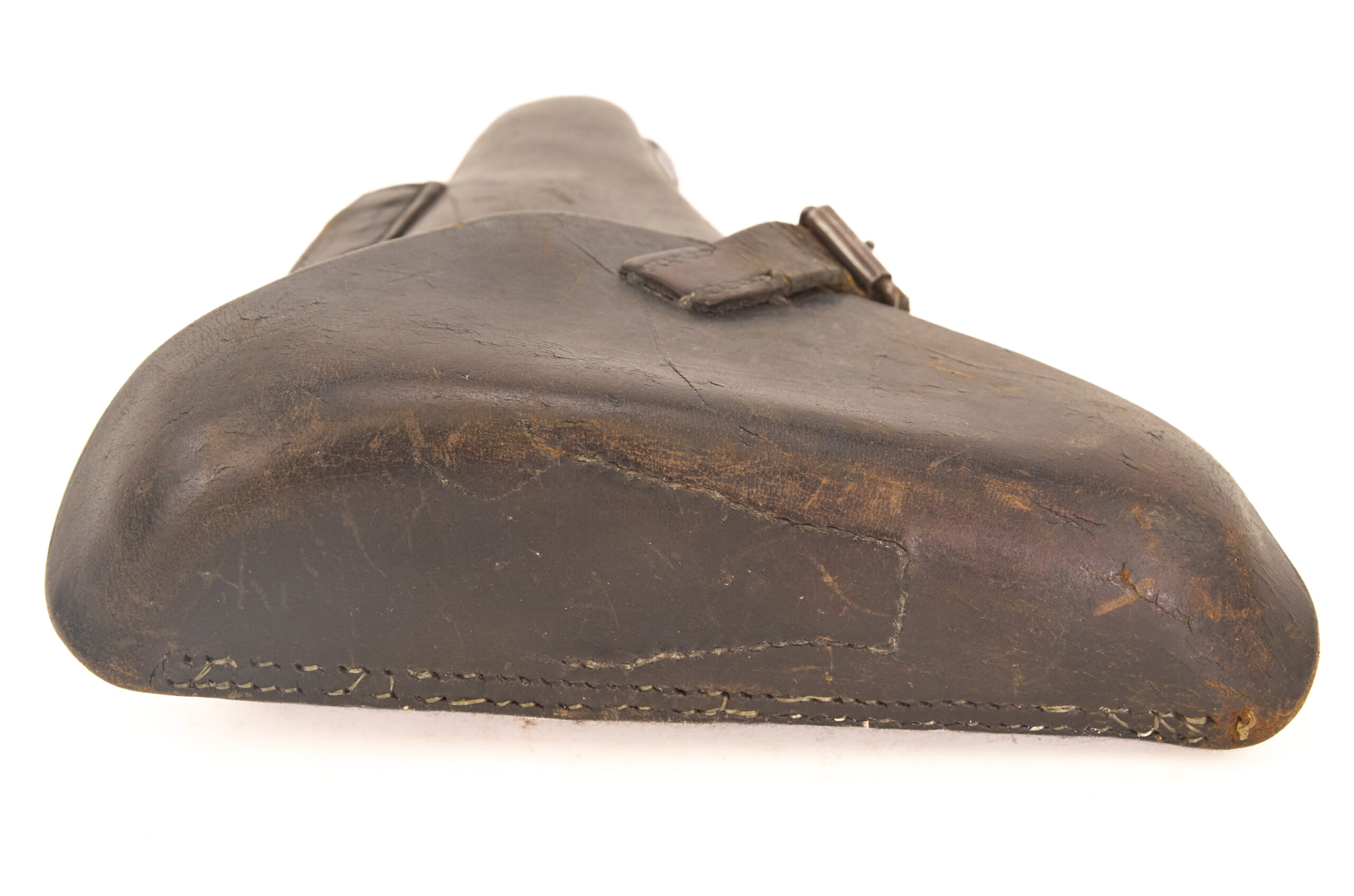
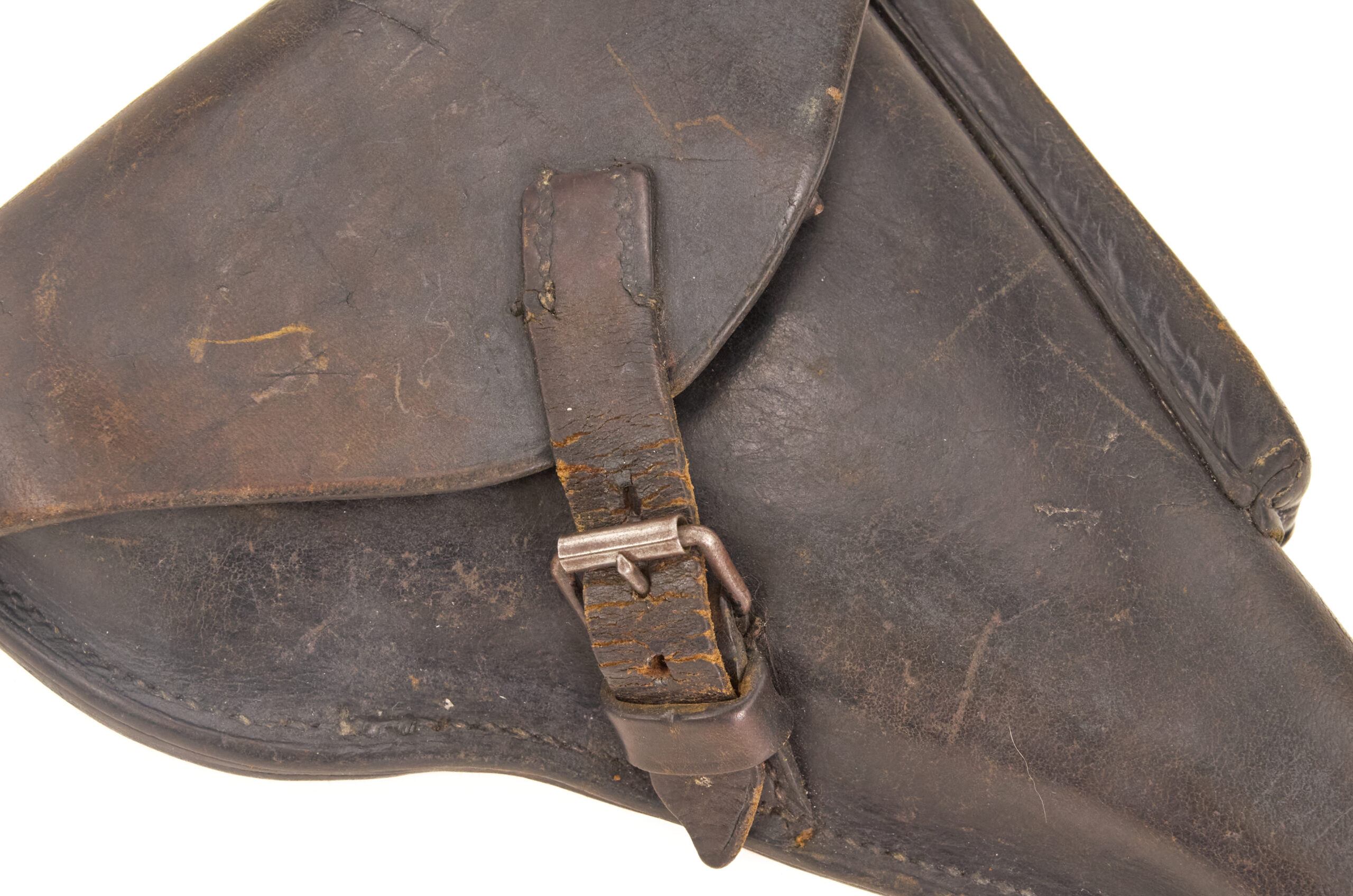
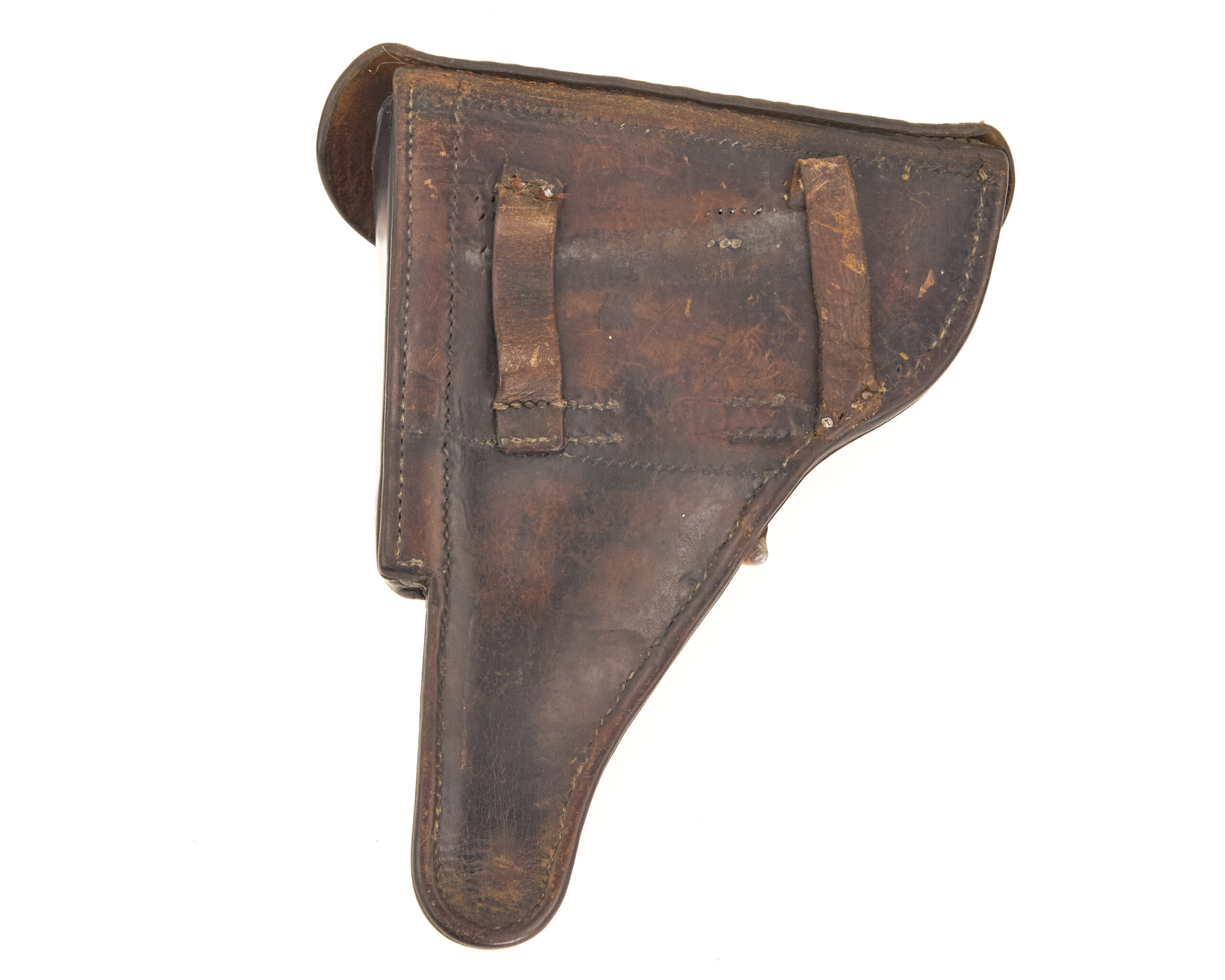
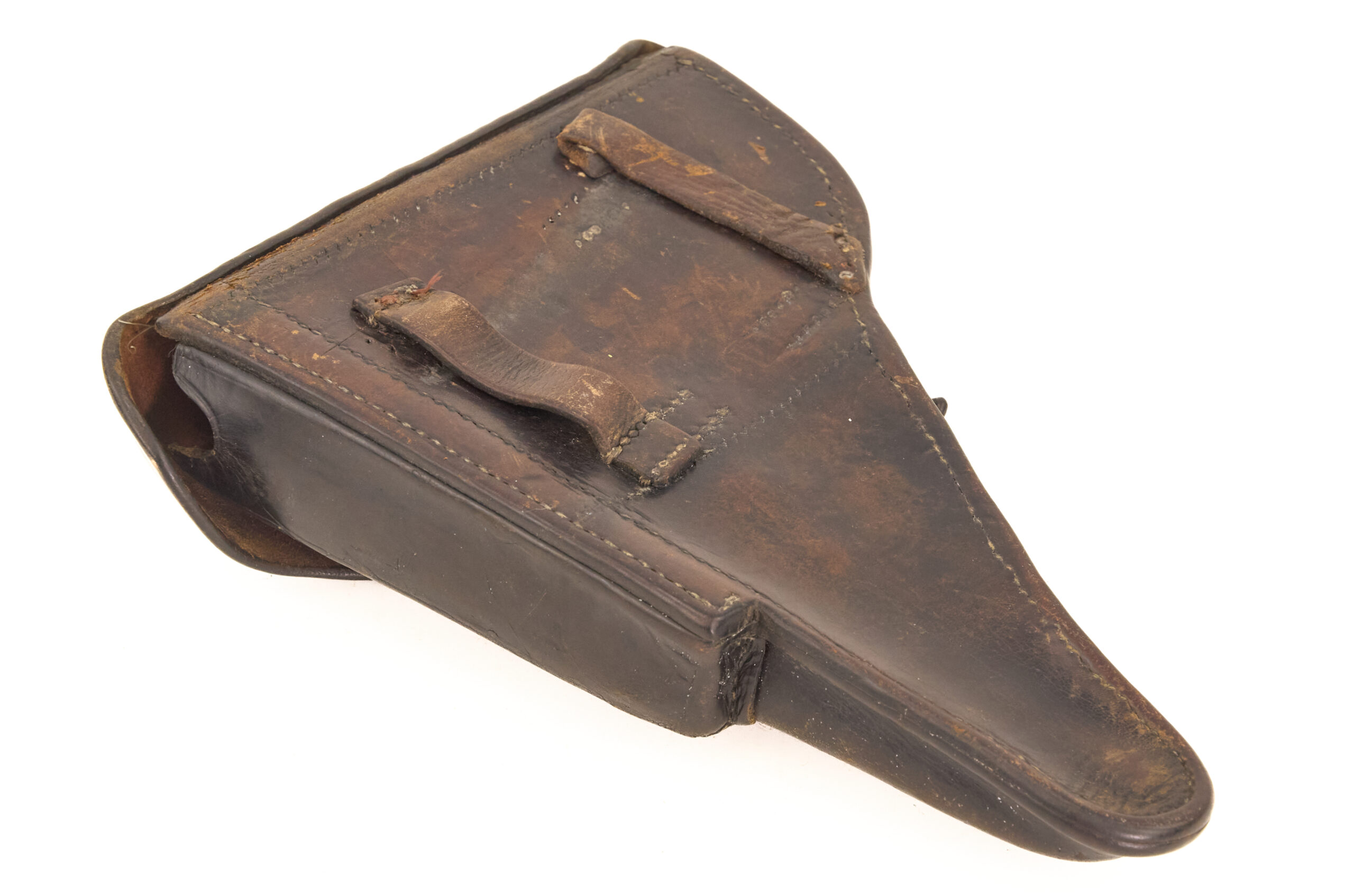
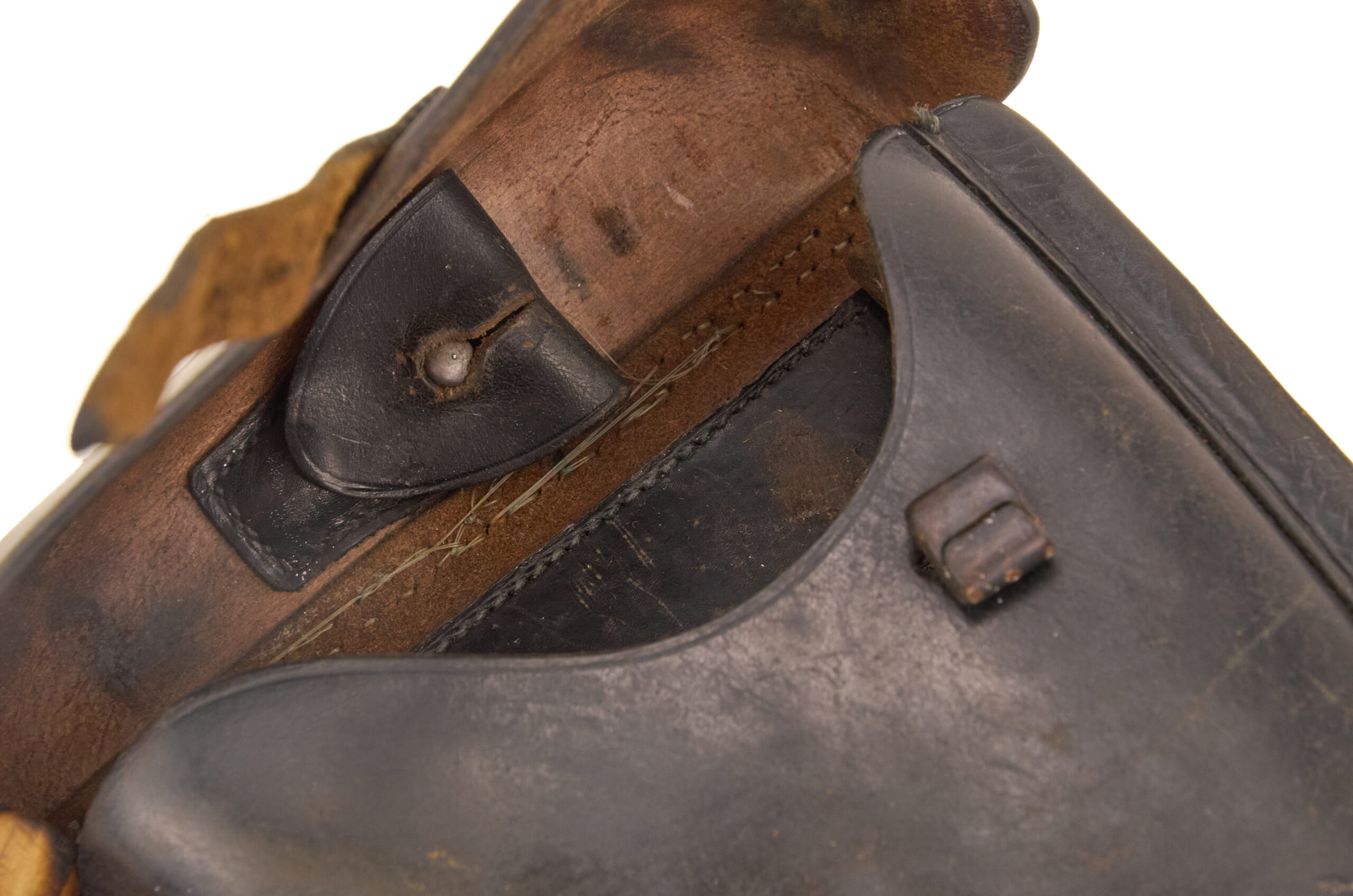
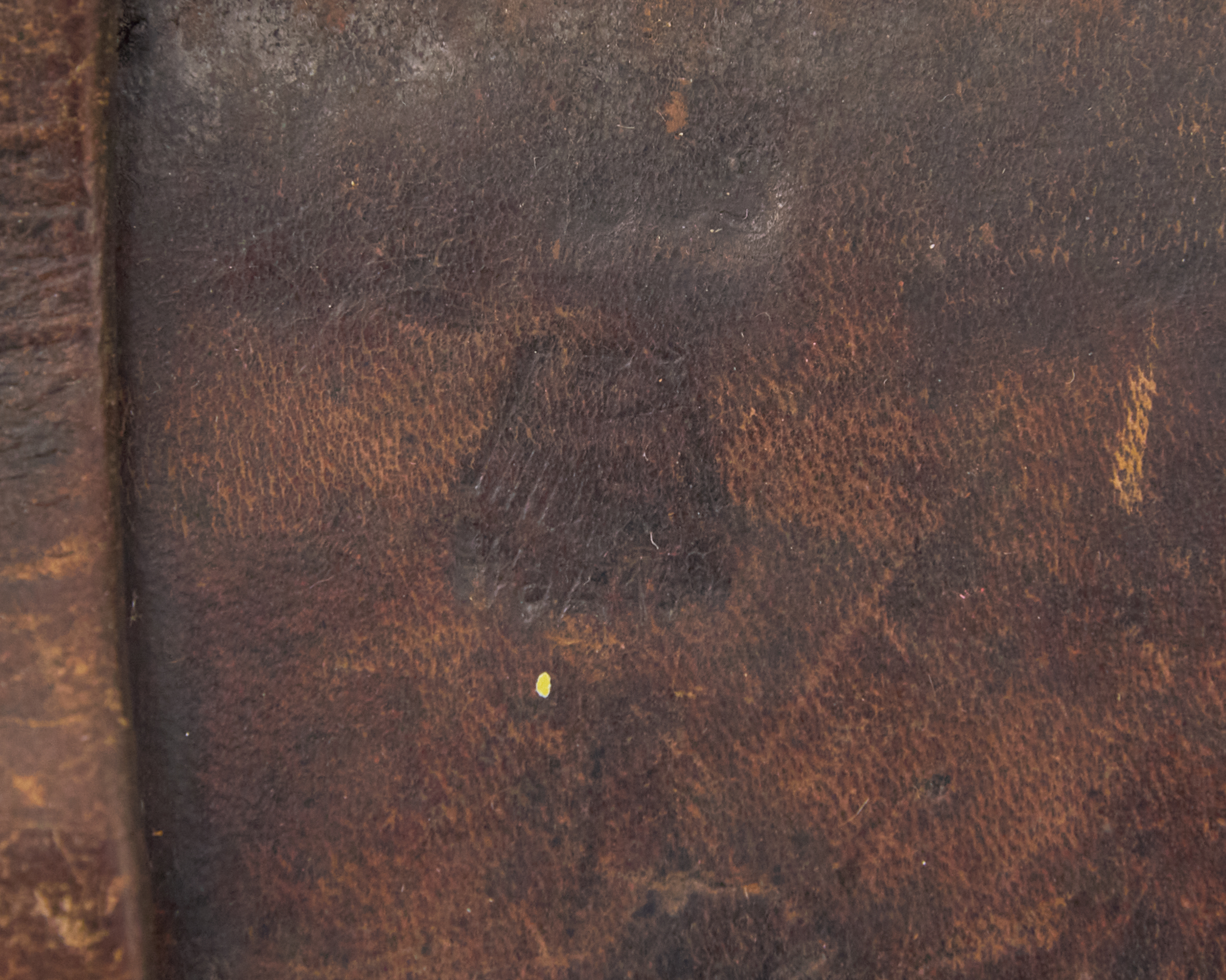
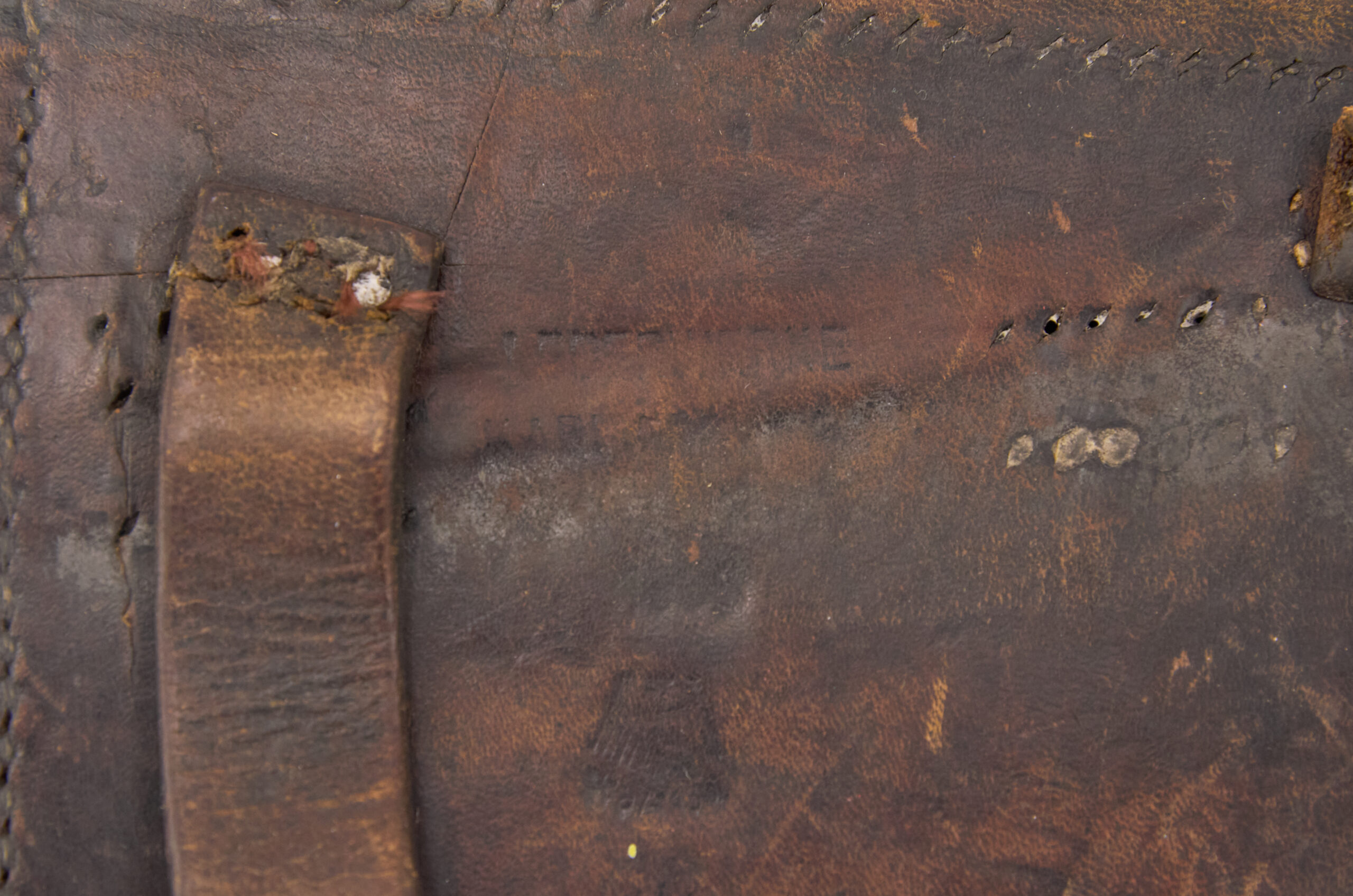
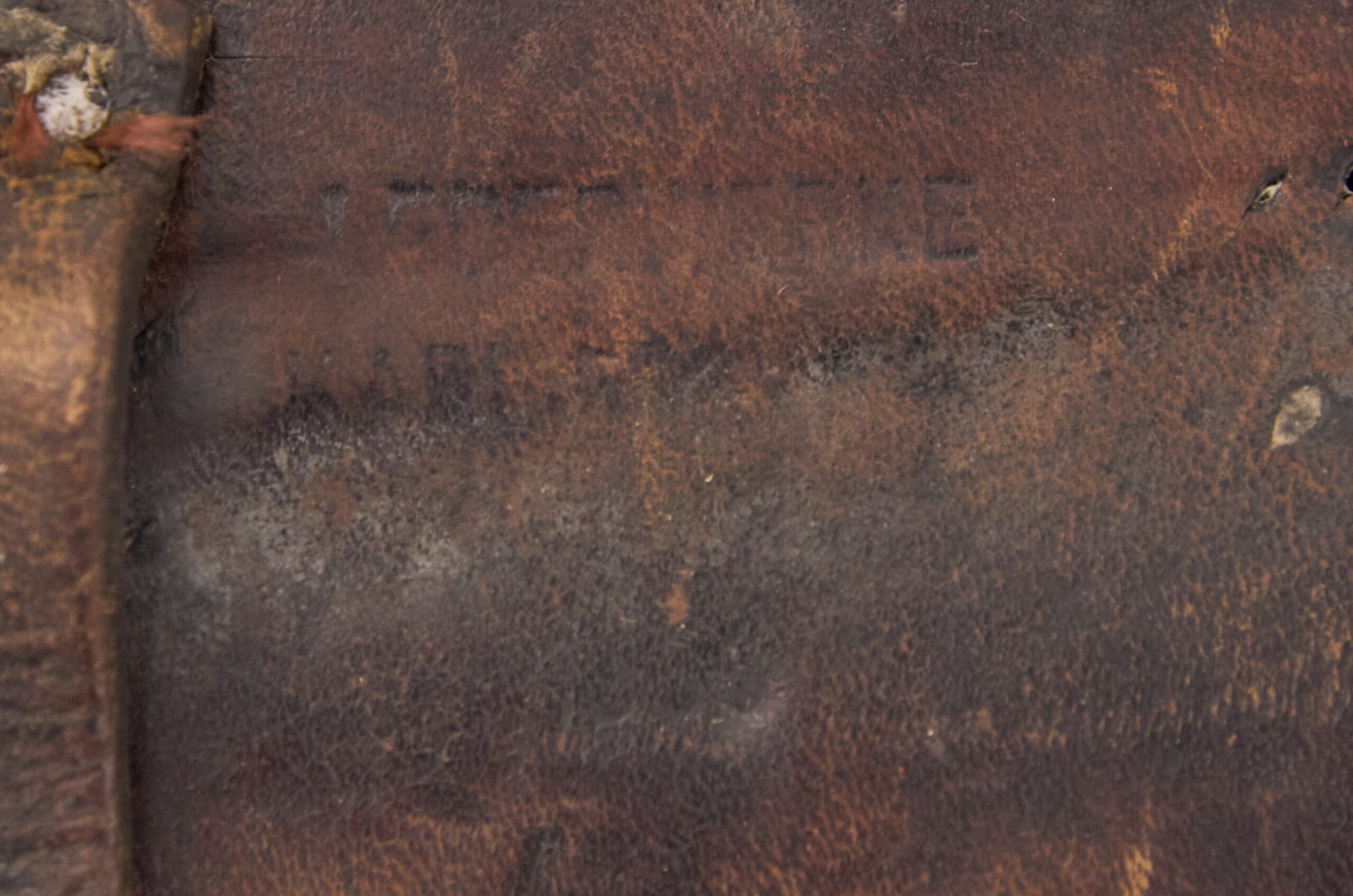
This WWII P.08 Luger holster is an original wartime service holster showing heavy field use, period field repair, and later postwar repair. It retains its maker mark, Waffenamt WaA156 acceptance stamp, and the classic P.08 hard-shell form with spare magazine pocket. The belt loops appear to have been replaced in a period manner, if not at arsenal level, which adds to the strong service character of the piece.
WWII P.08 Luger Holster
This is the kind of Luger holster that tells a longer story than a clean untouched example. The heavy wear, layered repairs, and altered rear loops all suggest a holster that remained useful enough to keep in service rather than discard. That matters because German leather gear often passed through field repair, depot attention, and later reuse. In that sense, this holster reflects real service life rather than simple preservation.
Construction / Configuration / Pattern
This holster follows the standard P.08 Luger hard-shell pattern with a full protective flap and external spare magazine pocket. The rear is stamped with WaA156, and the maker mark remains visible as LE___ WERKE KARL H. The belt loops appear to have been replaced in a period manner, possibly as an arsenal or organized service repair rather than a modern addition. The lid has also seen a later postwar repair. Even with those changes, the holster still presents clearly as an original wartime German service piece.
Historical Context / Provenance / Development
The P.08 holster is one of the most recognizable pieces of German pistol leather from the first half of the 20th century. By the Second World War, these holsters had already seen years of development from earlier Imperial patterns, yet the core hard-shell form remained. That design protected the pistol well, carried a spare magazine externally, and kept the sidearm part of a compact field system.
What makes this example especially interesting is not pristine condition but accumulated history. German holsters often stayed in service through hard use, especially when leather shortages, field conditions, and long wartime wear made replacement less certain. Repairs to loops, flaps, and stitching are part of that story. A holster like this shows how equipment was kept going through necessity. The replaced loops and repaired lid fit that reality well. Instead of representing a single frozen moment, the holster reflects repeated effort to preserve a useful military item.
The Waffenamt stamp is an important part of that story. It ties the holster directly to wartime German military inspection and acceptance practice. For collectors, those small marks matter because they place the piece within the formal production system rather than leaving it as an anonymous leather holster. Combined with the maker marking and visible repairs, the result is a piece with much more narrative weight than a generic P.08 carrier.
Condition
This holster shows heavy field use throughout. It also shows both period field repair and postwar repair. The belt loops appear to have been replaced in a period manner, and the lid has had a later repair. Even so, the holster retains its strong wartime character, clear WaA156 mark, maker stamp, and overall recognizable P.08 form. It presents as an honest, service-used example rather than a cleaned-up collector piece.
Explore More at Old Steel
Follow us on Instagram:
Old Steel Guns on Instagram