Description
WWII Japanese Type 14 Nambu Pistol Holster – Late-War Mixed Material Example
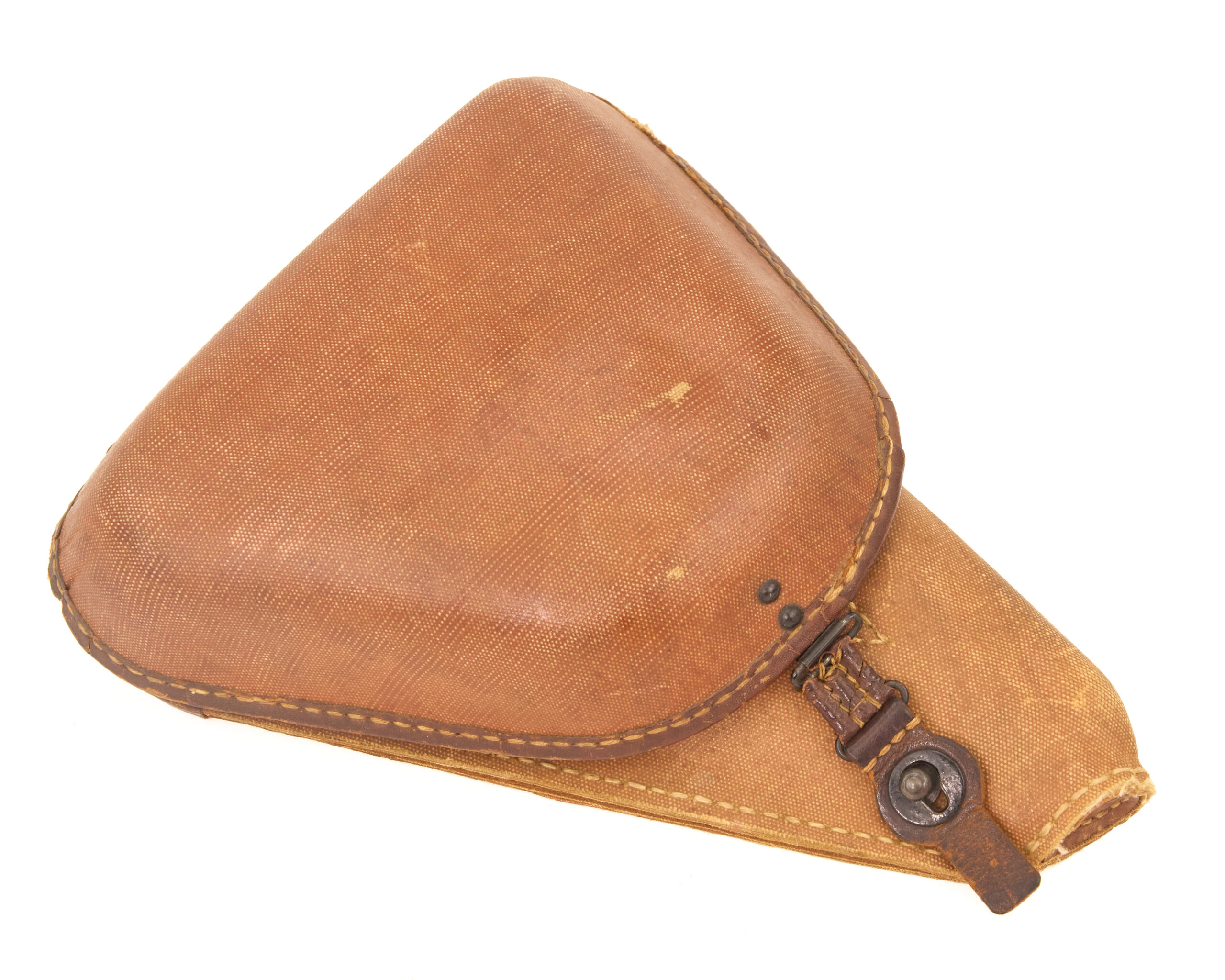
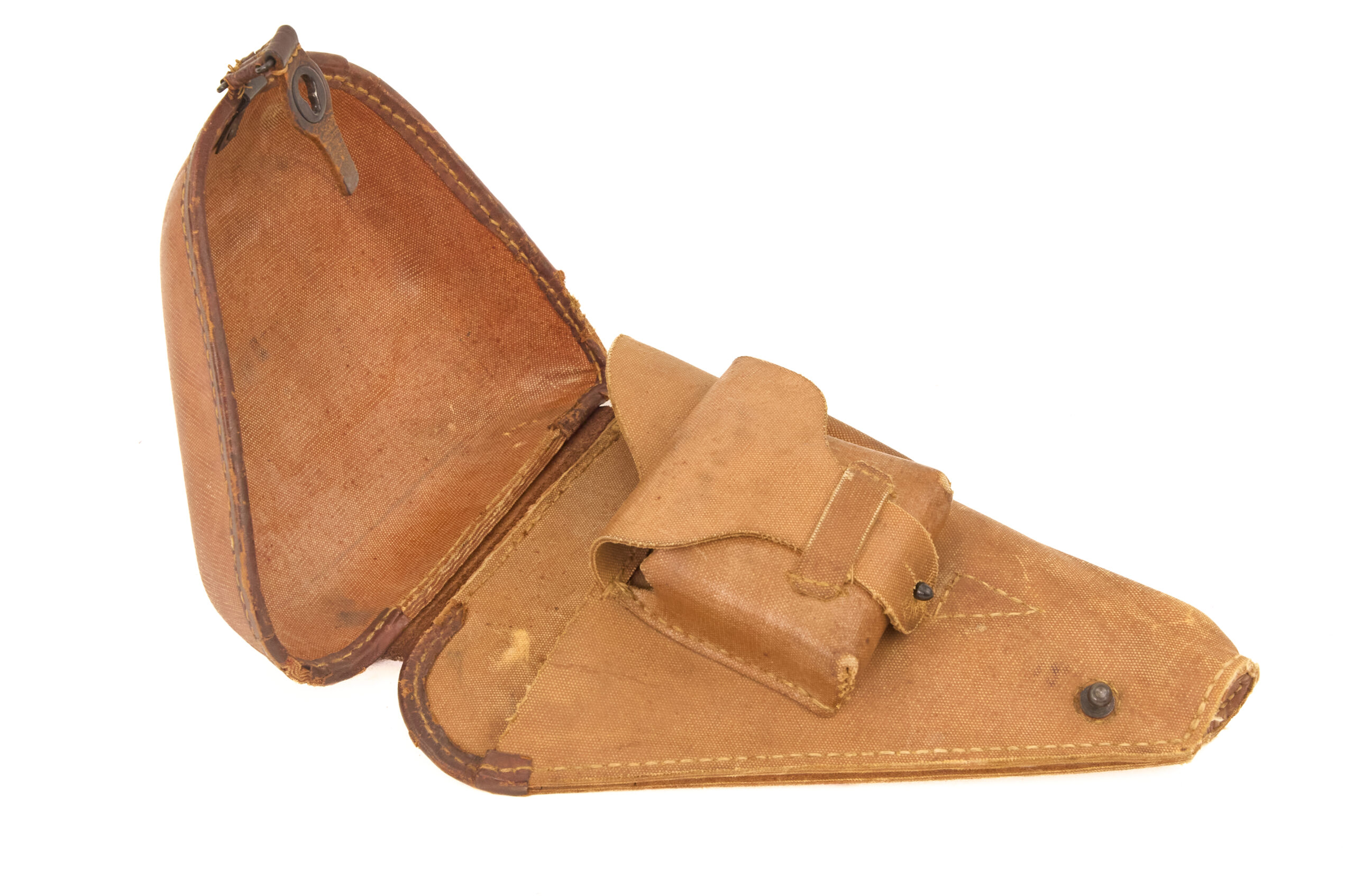
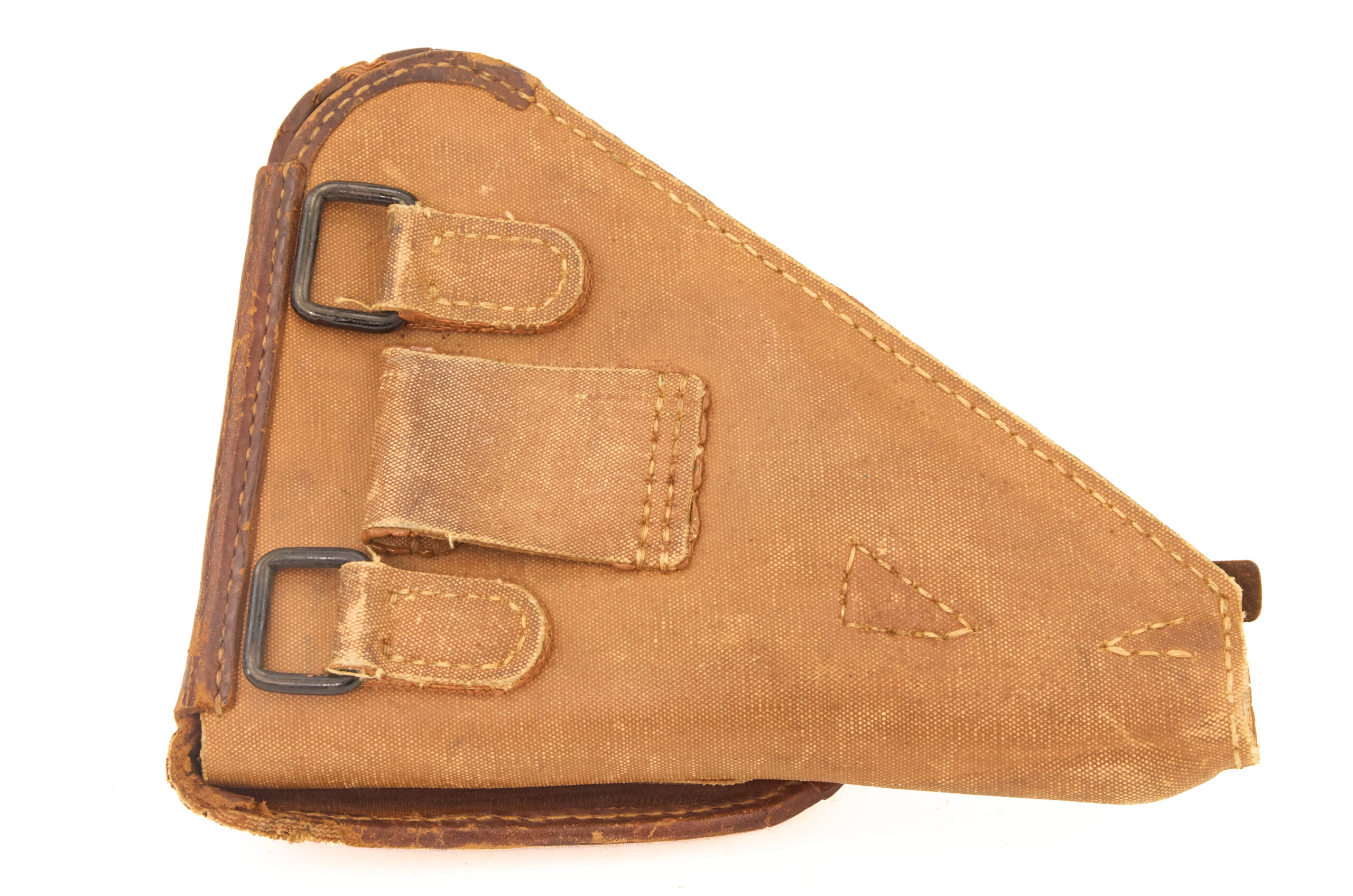
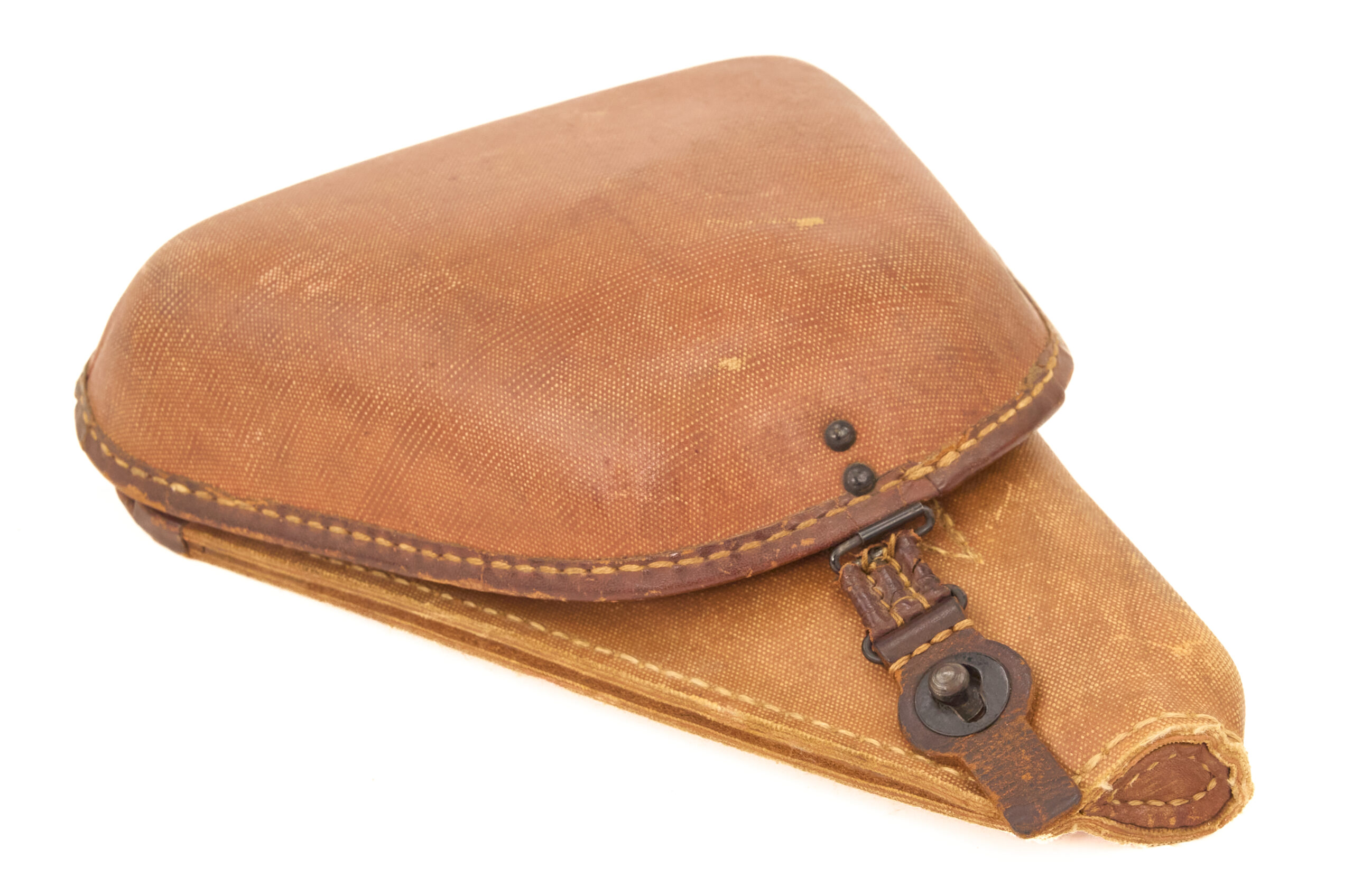
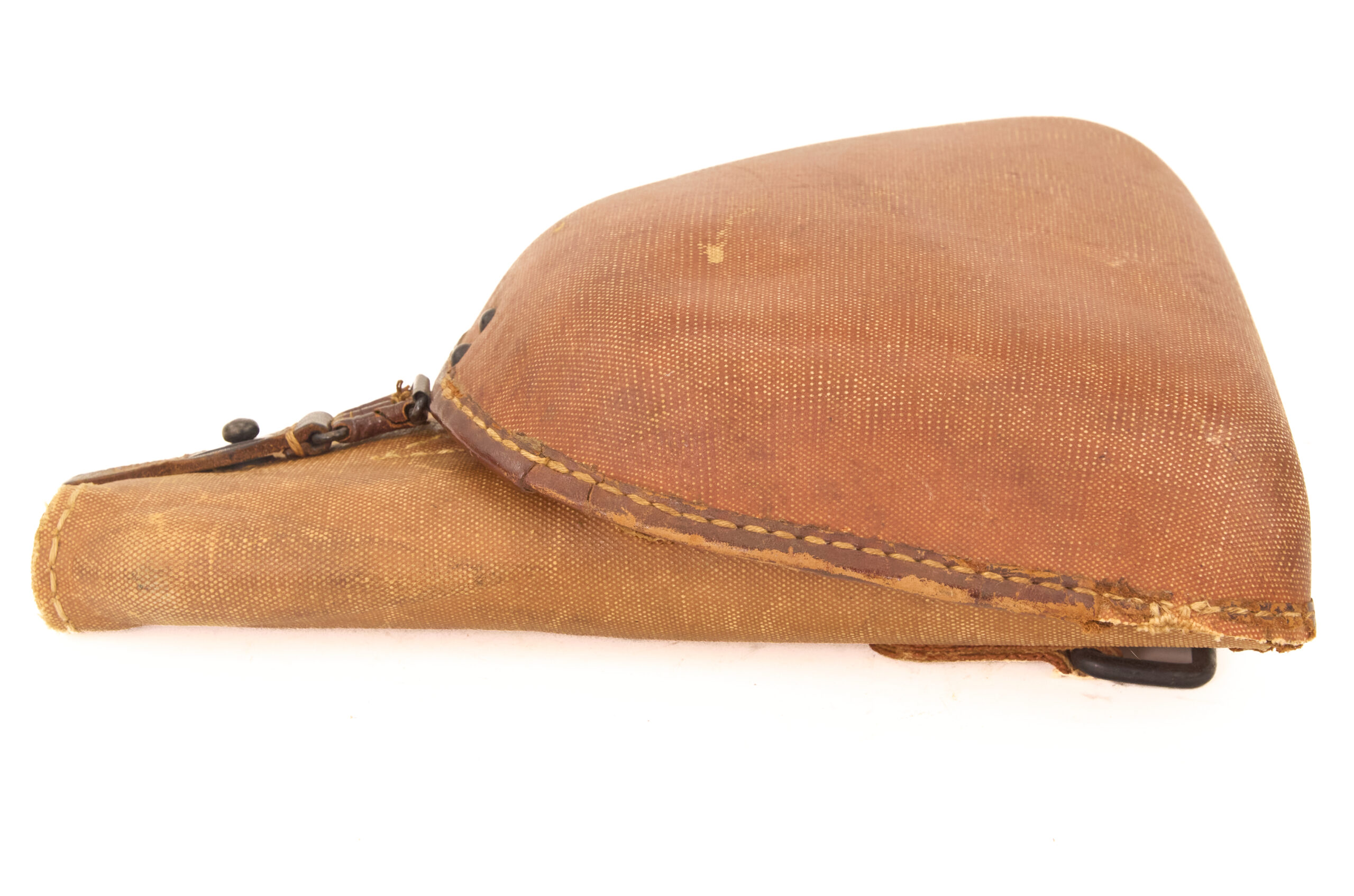
This WWII Japanese Type 14 Nambu pistol holster is a late-war mixed-material example with a canvas shell, body, and belt loop, paired with leather edging, hinge, and base. It shows signs of issue and use, yet it remains very clean overall. The holster also retains the characteristic pocket under the shell, which adds to its identity as a service accessory for the Type 14 Nambu pistol.
WWII Japanese Type 14 Nambu Pistol Holster
The mixed construction is the feature that defines this piece. Earlier holsters are more often encountered in full leather, while late-war examples increasingly reflect material substitution and simplified wartime production. That makes this holster more than a standard pistol carrier. It is also a visible example of how Japanese equipment changed as wartime pressures affected materials and manufacture.
Construction / Configuration / Pattern
This holster uses a canvas shell, main body, and belt loop, with leather retained at the edging, hinge, and base. That combination creates the familiar late-war mixed-material pattern associated with the Type 14 Nambu. The form remains practical and distinctly Japanese, with a flap cover to protect the pistol and a pocket under the shell for a spare magazine or accessory. The canvas body gives the holster a different character from earlier full-leather examples, while the leather reinforcement at stress points preserves structure where it mattered most.
Historical Context / Provenance / Development
The Type 14 Nambu was the principal Japanese service pistol of the Second World War, and its holsters evolved along with wartime production realities. Early equipment often showed more traditional leather construction and stronger finish standards. Later in the war, however, Japan increasingly turned to substitute materials and simplified methods as supply conditions worsened. Mixed canvas and leather holsters belong to that later phase.
That matters because these late-war pieces tell a broader story than a standard holster alone. They show the pressure that prolonged war placed on Japanese manufacturing and supply. A mixed-material holster like this reflects economy, adaptation, and the practical need to conserve leather while still producing serviceable field gear. For collectors, that gives it real historical interest. It is not just an accessory for a Nambu pistol. It is also a material record of late-war production change.
The pocket under the shell adds further appeal because it keeps the holster tied to the complete field system rather than to the pistol by itself. Supporting equipment like this helps place the sidearm back into actual service use. Without the holster, the pistol can feel isolated. With a correct late-war holster, especially one in mixed materials, the story becomes much more complete.
Condition
This example shows signs of issue and use, which is consistent with service gear of this type. Even so, it remains very clean overall. The canvas body presents well, and the leather edging, hinge, and base remain an important strength of the piece. The form is still clear, and the pocket under the shell is present. Overall, it keeps strong display value while retaining honest service character.
Explore More at Old Steel
Follow us on Instagram:
Old Steel Guns on Instagram