Description
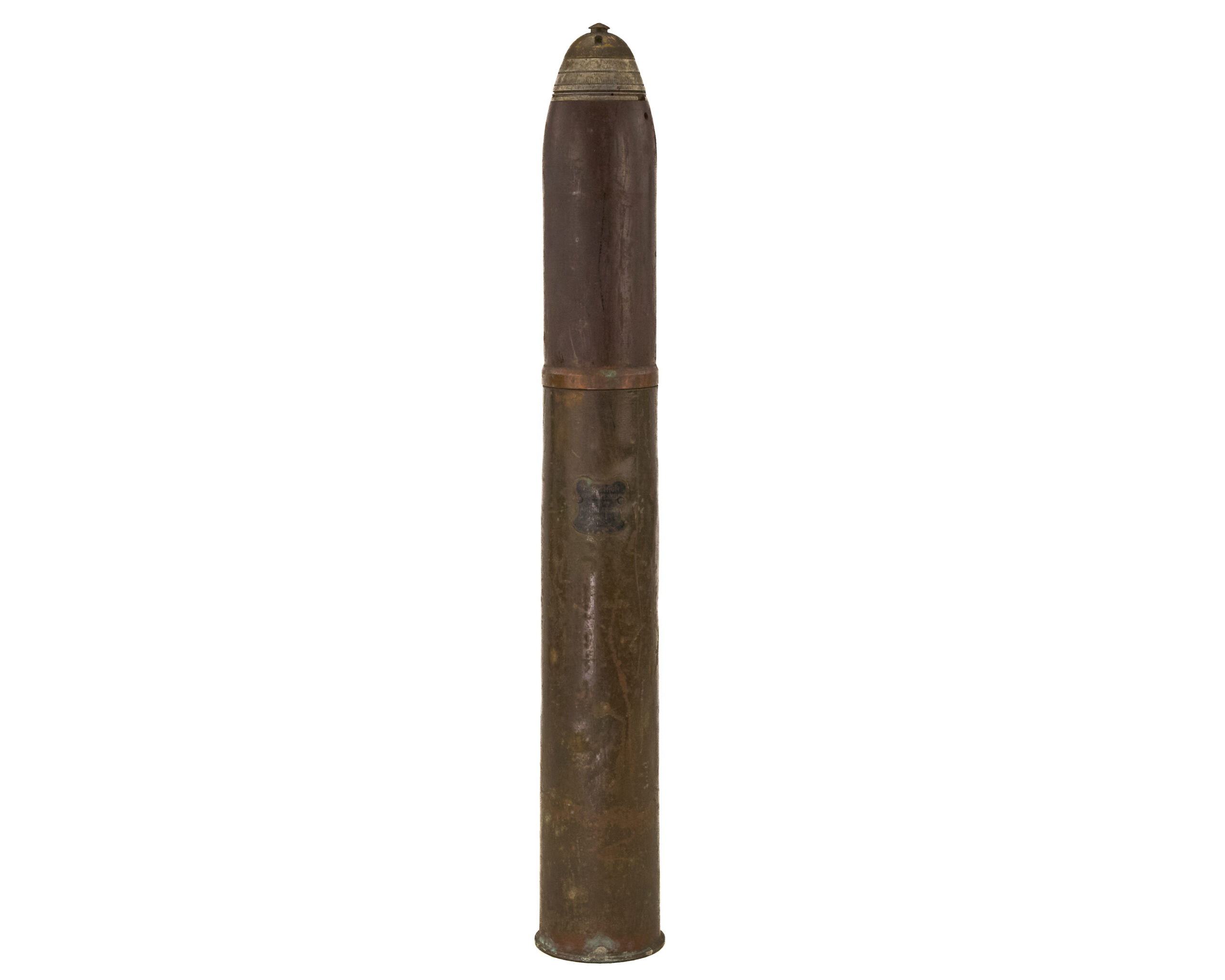
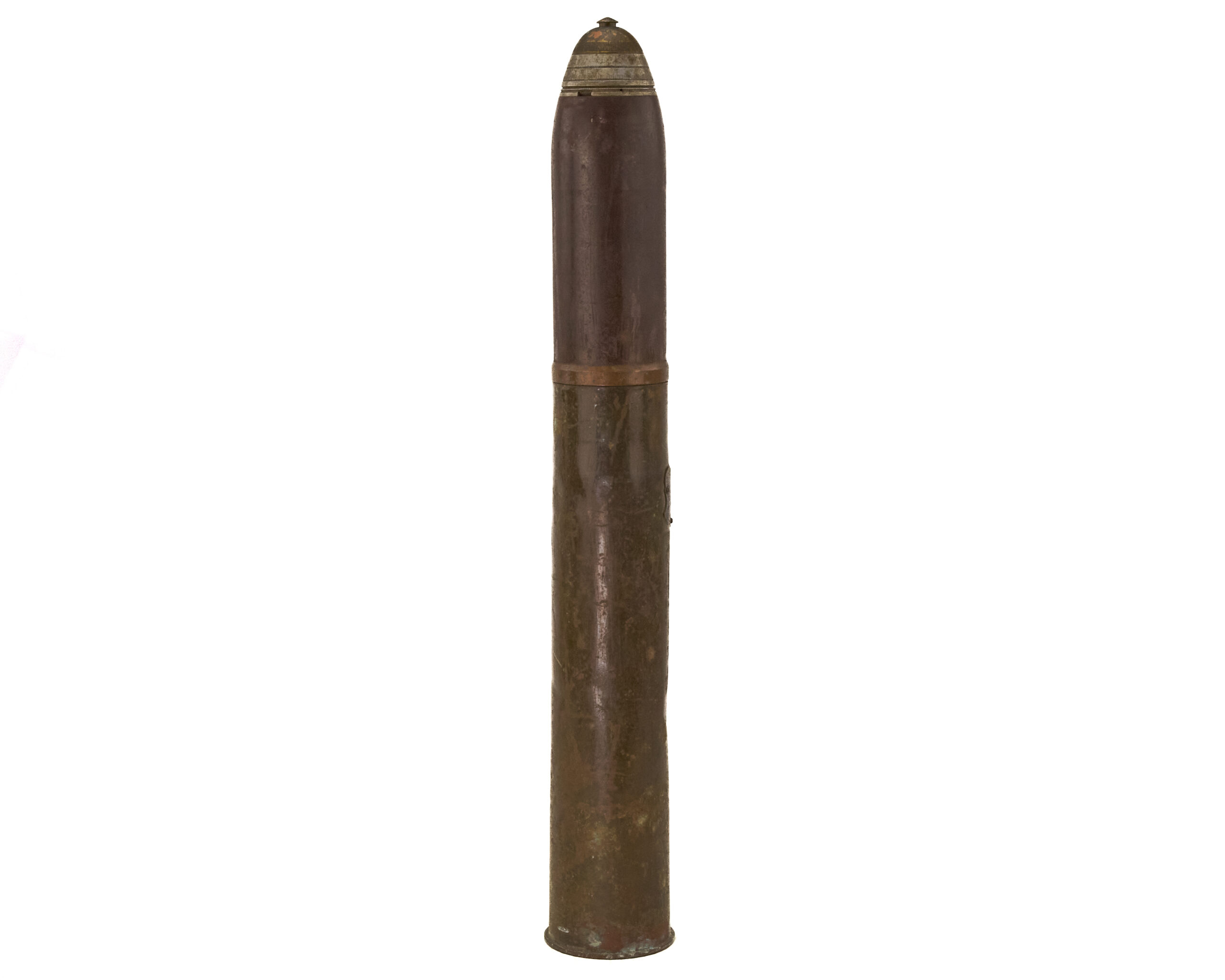
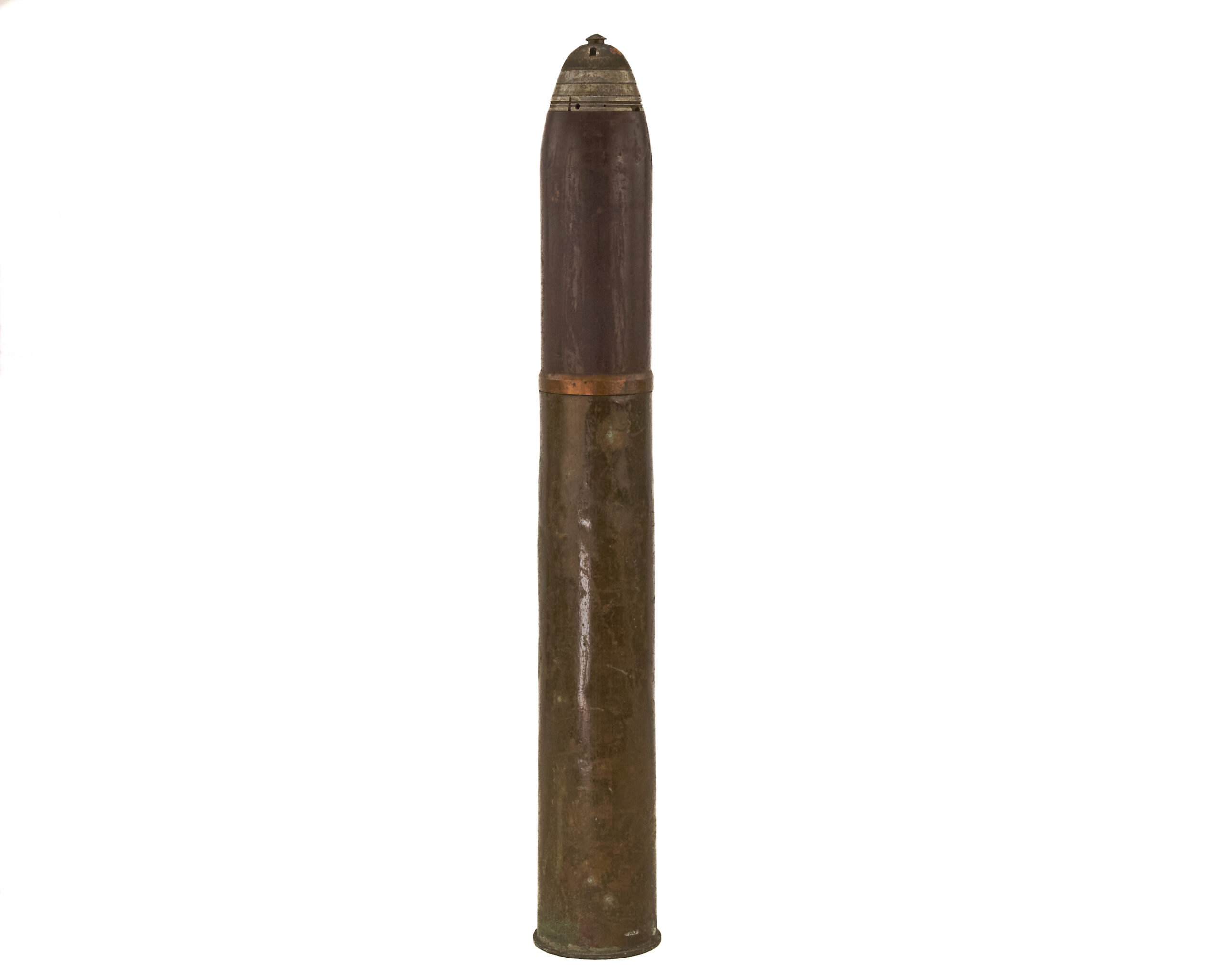
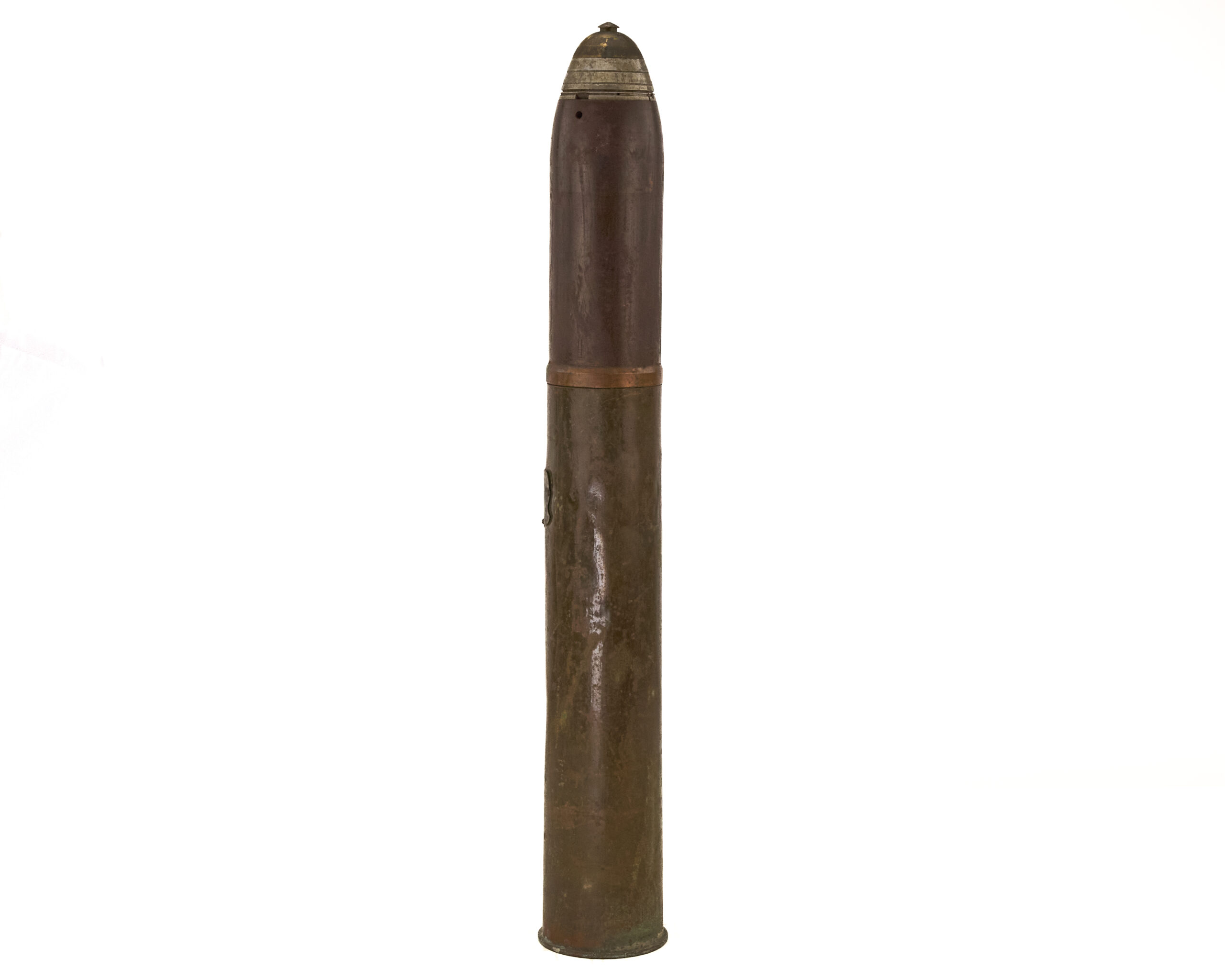
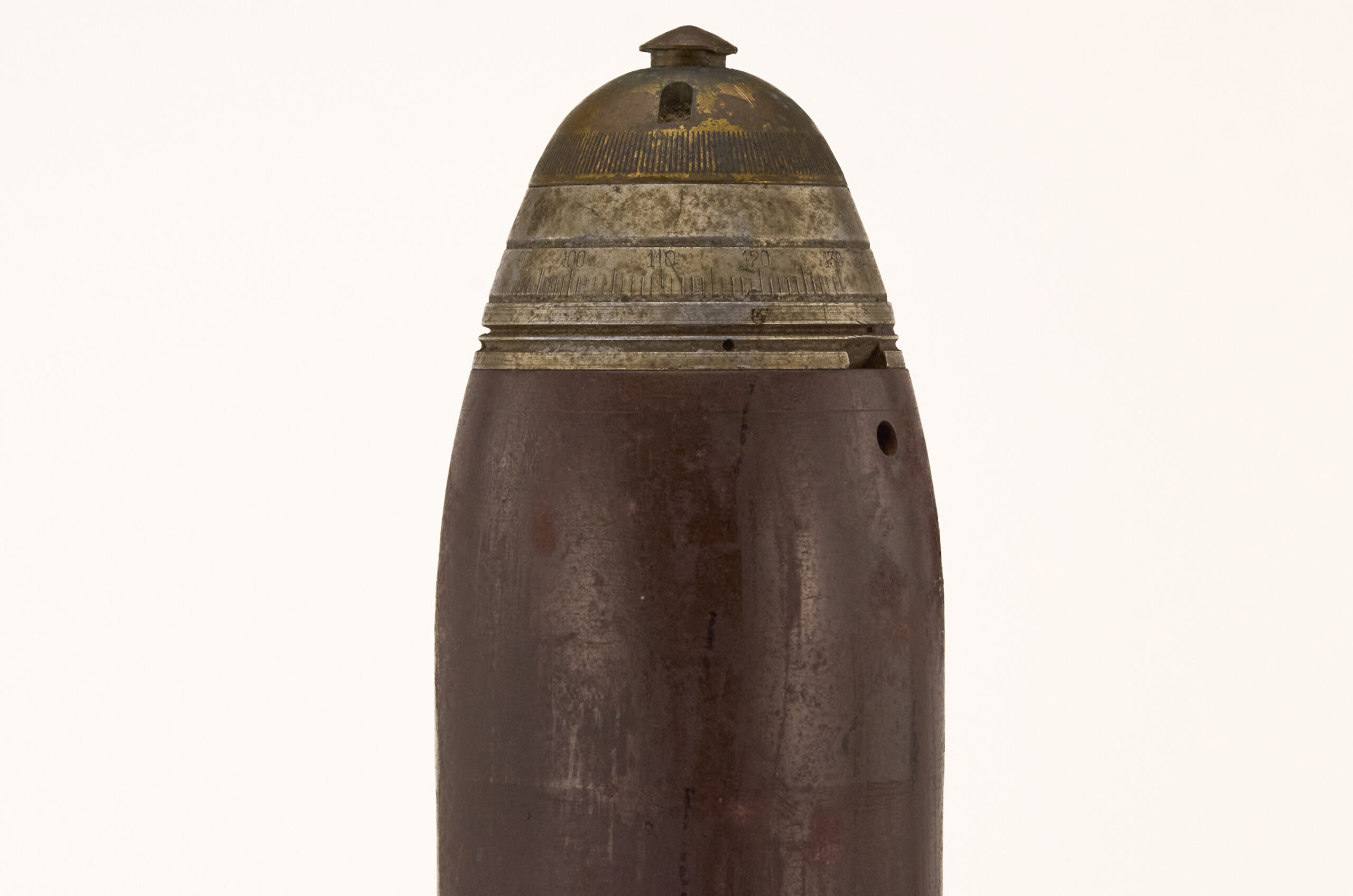
This 75mm shell, now permanently inert and repurposed as a commemorative display piece, represents a caliber that played a significant role in twentieth-century warfare. During the Second World War, Allied and Axis forces widely deployed 75mm ammunition across multiple theaters. In the United States, crews mounted 75mm guns on early variants of the M4 Sherman, making the system one of the most recognizable artillery platforms of the conflict. Gunners relied on high-explosive rounds to support advancing infantry, destroy fortified positions, and disable light armored vehicles and field emplacements.
American forces also fielded adapted versions of the M1897, derived from the renowned French “French 75,” which continued to provide mobile artillery support. German forces deployed their own 75mm weapons, including the KwK 40 tank gun and the PaK 40 anti-tank gun, both of which shaped armored engagements during the middle years of the war. Military planners valued the 75mm caliber for its balance of manageable recoil, mobility, and effective explosive payload, allowing crews to adapt it to tanks, field guns, and anti-tank platforms.
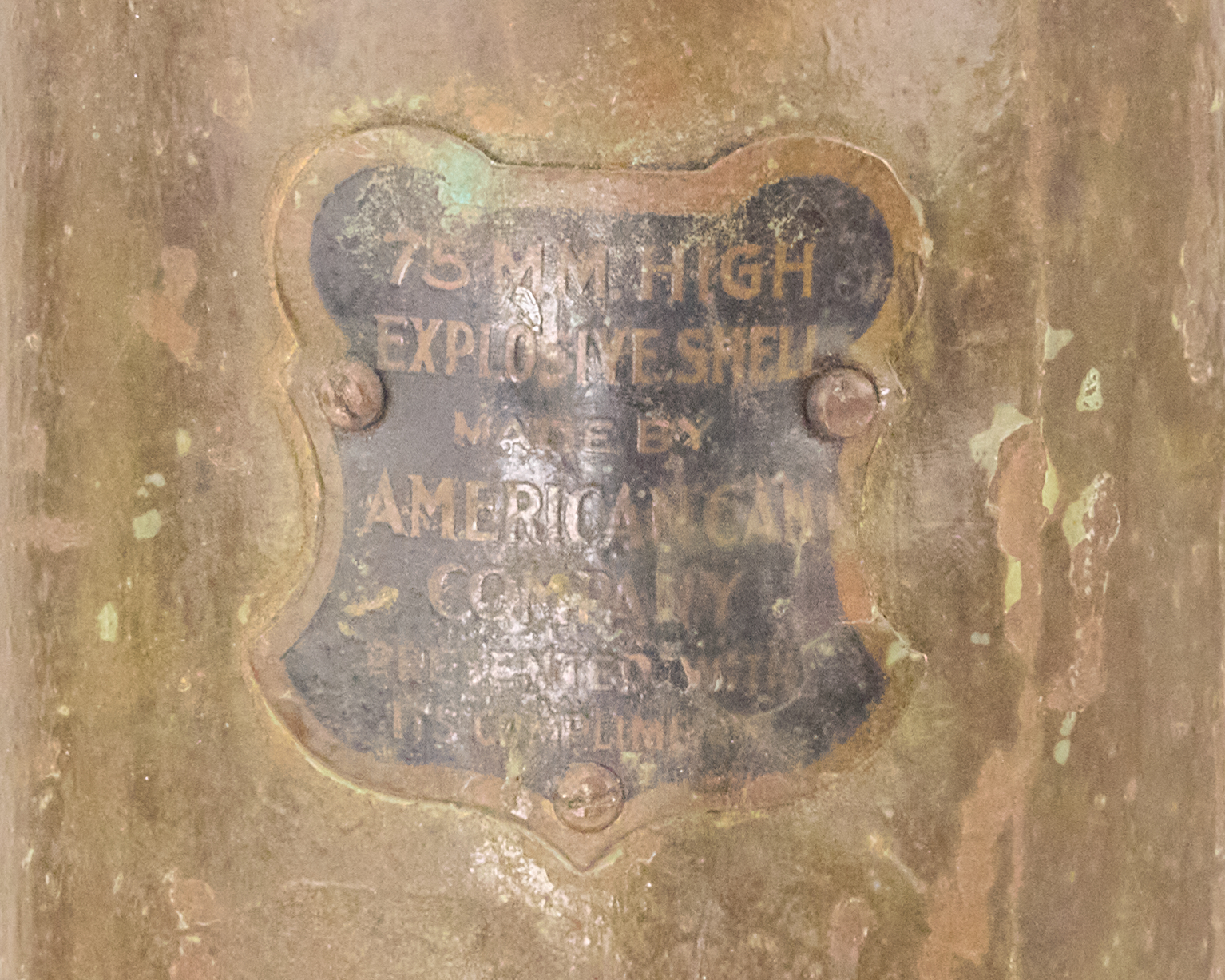
Soldiers and civilians frequently transformed expended artillery casings into trench art during and after WWII. Craftsmen engraved, polished, and inscribed spent brass to create vases, plaques, and commemorative presentation pieces that marked unit service, campaigns, or industrial achievement. The affixed plaque on this example follows that tradition, converting a former instrument of war into a symbolic artifact of remembrance and corporate recognition.
American manufacturers produced vast quantities of 75mm ammunition under government contracts to sustain the wartime logistical effort. Companies sometimes presented decommissioned shells to executives, military officials, or partner organizations to commemorate production milestones and patriotic contributions.
Today, collectors and educators use fully deactivated examples strictly as historical display pieces. When professionals deactivate such items in accordance with federal standards and ATF guidance, they remove all explosive materials and functional components, ensuring the shell serves only educational, commemorative, and preservation purposes.