Description
Romanian Makarov Leather Holster – Original Military Issue Example
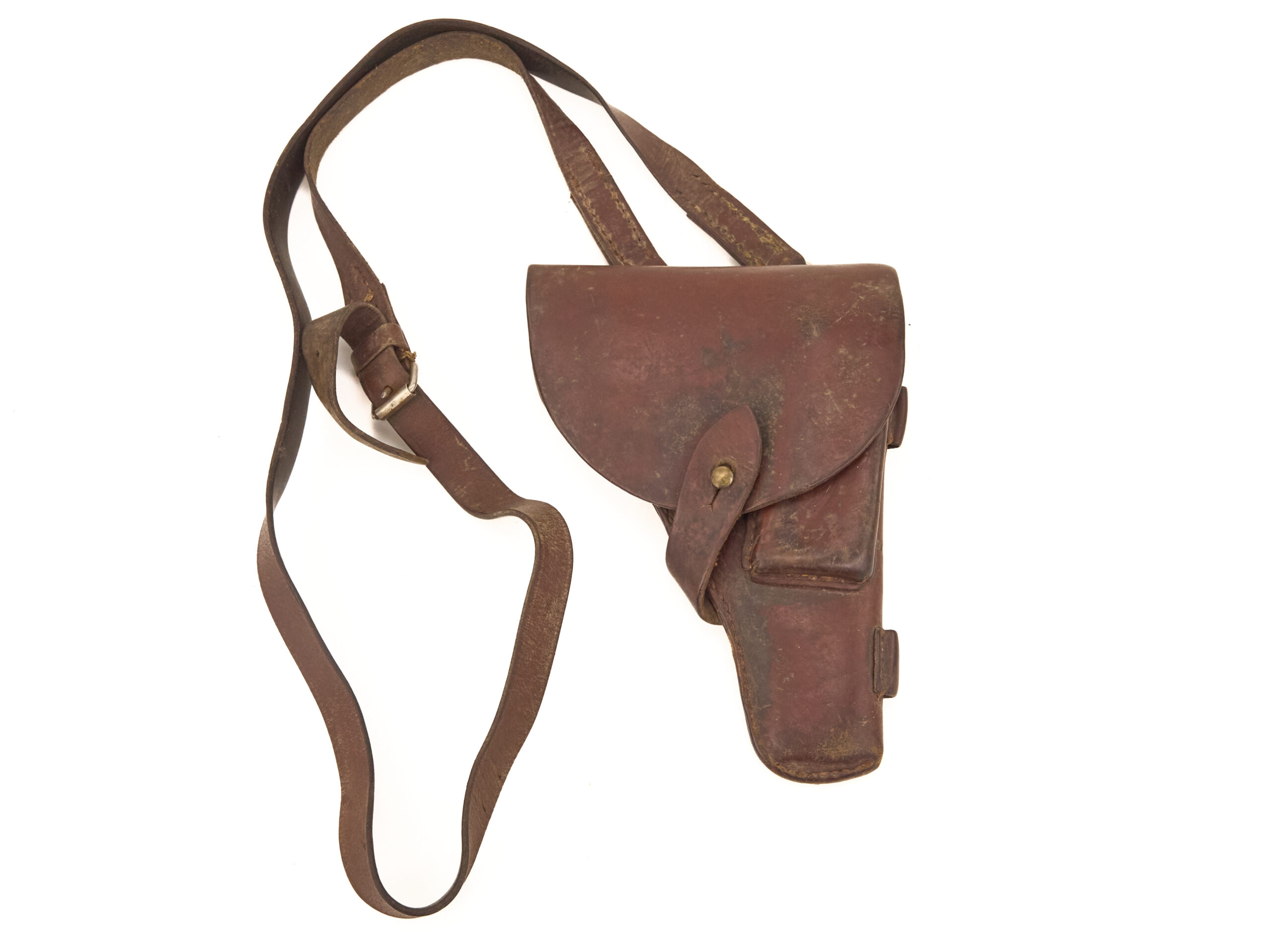
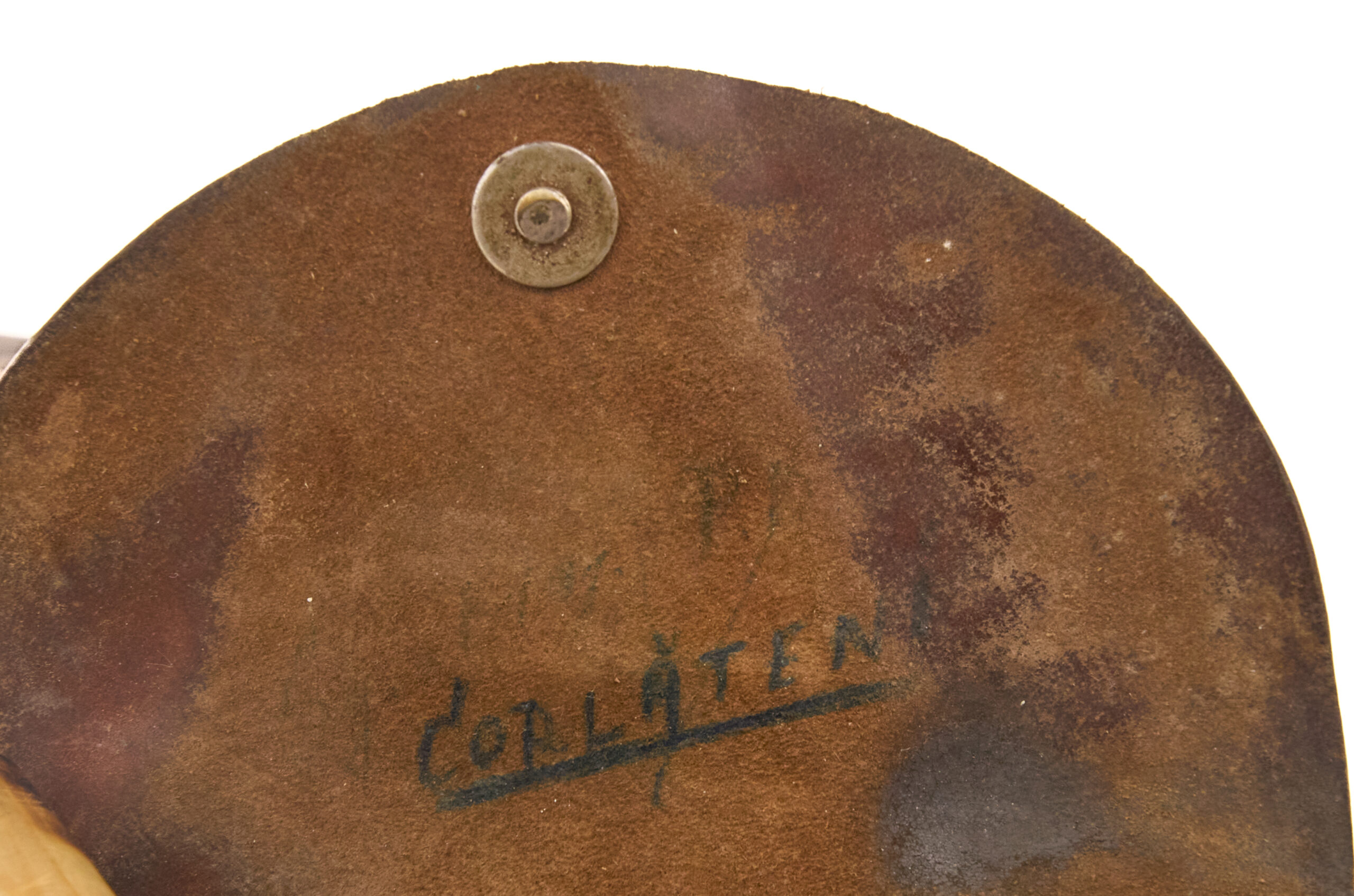
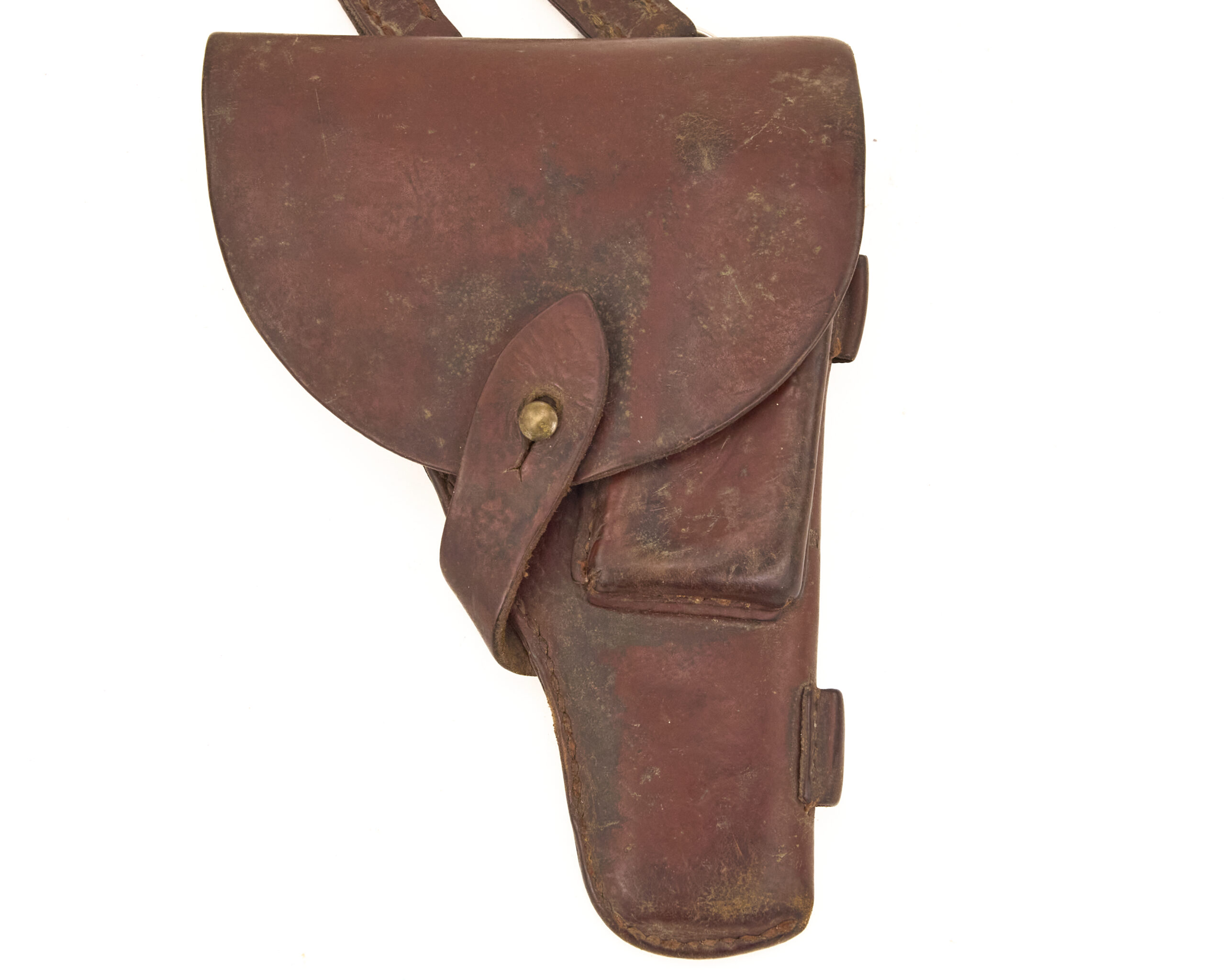
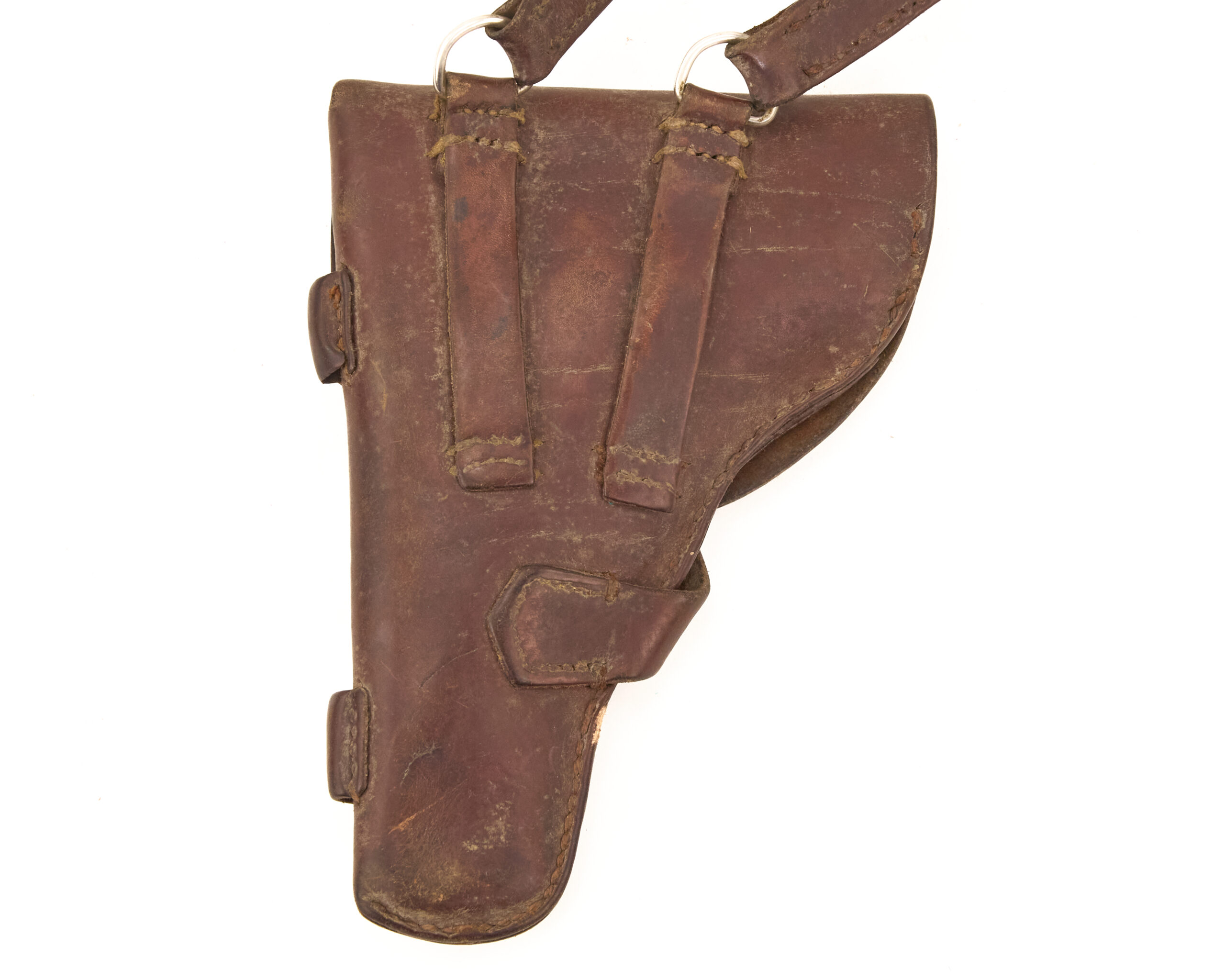
This Romanian Makarov leather holster is an original military issue leather holster with its shoulder strap included, spare magazine pocket, and cleaning rod provision. It shows honest signs of issue and field use, yet it remains in good condition overall. The inside flap also carries soldier-applied trench art reading CORL ÂTENI, which gives the piece added personality and a stronger sense of individual service history.
Romanian Makarov Leather Holster
The holster follows the familiar Eastern Bloc pattern made for the Makarov pistol, with a full flap body, leather tab and brass button closure, and integrated storage for supporting equipment. In addition to its practical military layout, this example stands out because of the hand-marked inscription inside the flap. That small detail changes the feel of the piece. It is no longer just a standard issue holster. It becomes a service item that passed through the hands of a specific soldier.
Construction / Configuration / Pattern
This holster is made in light to medium brown leather and uses a traditional full-flap military pattern. The closure consists of a leather tab and brass button. Inside, it has the expected pocket for a spare magazine and provision for a cleaning rod, which reflects the compact field system built around the Makarov pistol. The holster also retains its shoulder strap, allowing it to be worn in the intended service manner rather than only on a belt. Belt support loops and stitched construction give the piece its proper military layout, while the overall form remains distinctly Eastern Bloc in style and function.
Historical Context / Provenance / Development
Holsters like this were made as working equipment for service pistols, not as decorative accessories. That matters because the Makarov system was built around simplicity, durability, and easy field use. The pistol itself became one of the defining sidearms of the Soviet bloc, and countries such as Romania used their own supporting leather gear within that broader military tradition. A holster of this type was designed to do several jobs at once. It protected the pistol, carried a spare magazine, held a cleaning rod, and gave the soldier a practical way to keep the sidearm close at hand in routine service.
That background helps explain why surviving holsters often carry more character than the pistols they once held. The firearm might remain standardized, but the leather gear absorbed the daily life of service. It picked up wear from handling, weather, storage, movement, and repair. In this case, the trench art inscription inside the flap adds a further human element. Soldier markings like that are often what give a common military item a more compelling story. They suggest ownership, familiarity, and the small ways servicemen personalized government-issued equipment that otherwise looked identical from one man to the next.
For collectors, that is where much of the value lies. Without those details, a Makarov holster is simply a correct period accessory. With them, it becomes a more personal object tied to actual service use. The shoulder strap, spare magazine pocket, and cleaning rod provision show the holster as part of a complete field system. The trench art then adds the individual layer that many issued items never retain.
Condition
This example is in good condition overall. The leather remains supple, which is an important point for a military holster of this type. The stitching is tight throughout, and the structure appears sound. It shows signs of issue and field use, but the wear is consistent with service rather than neglect. The brass button and leather tab closure are present, the spare magazine pocket remains intact, and the shoulder strap is included. The inside flap inscription CORL ÂTENI is a notable feature and remains part of the holster’s character.
Follow us on Instagram:
Old Steel Guns on Instagram