

Description
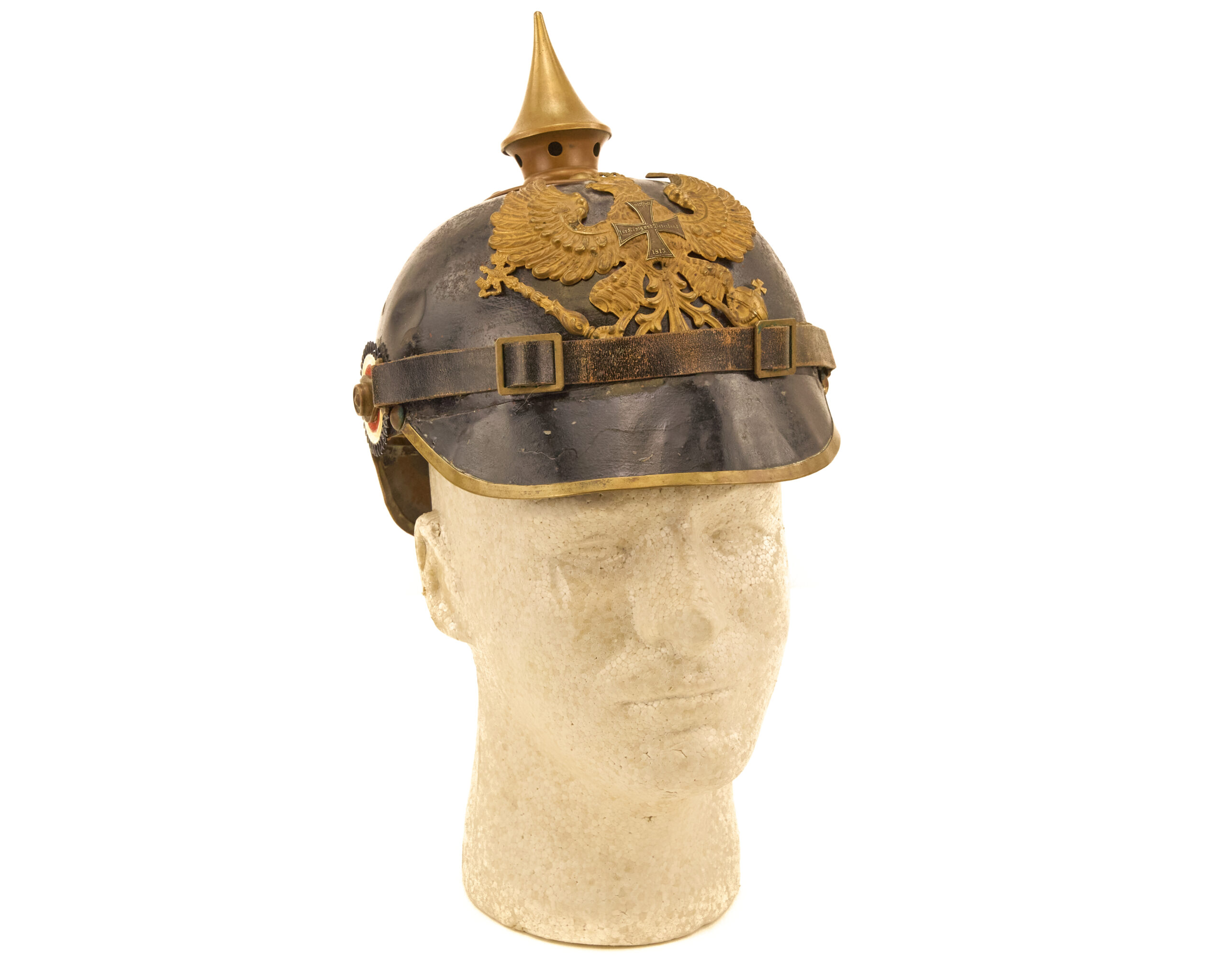
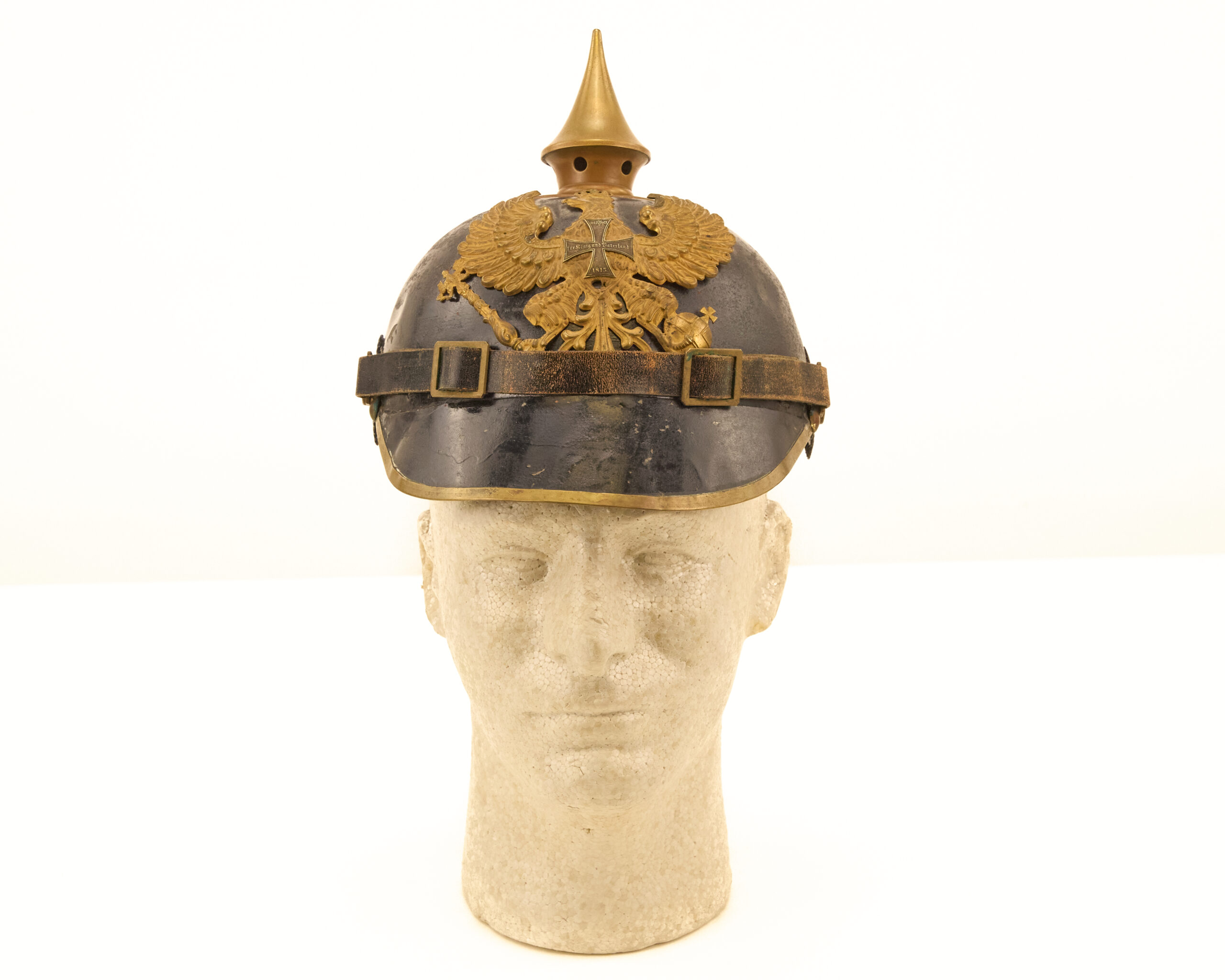
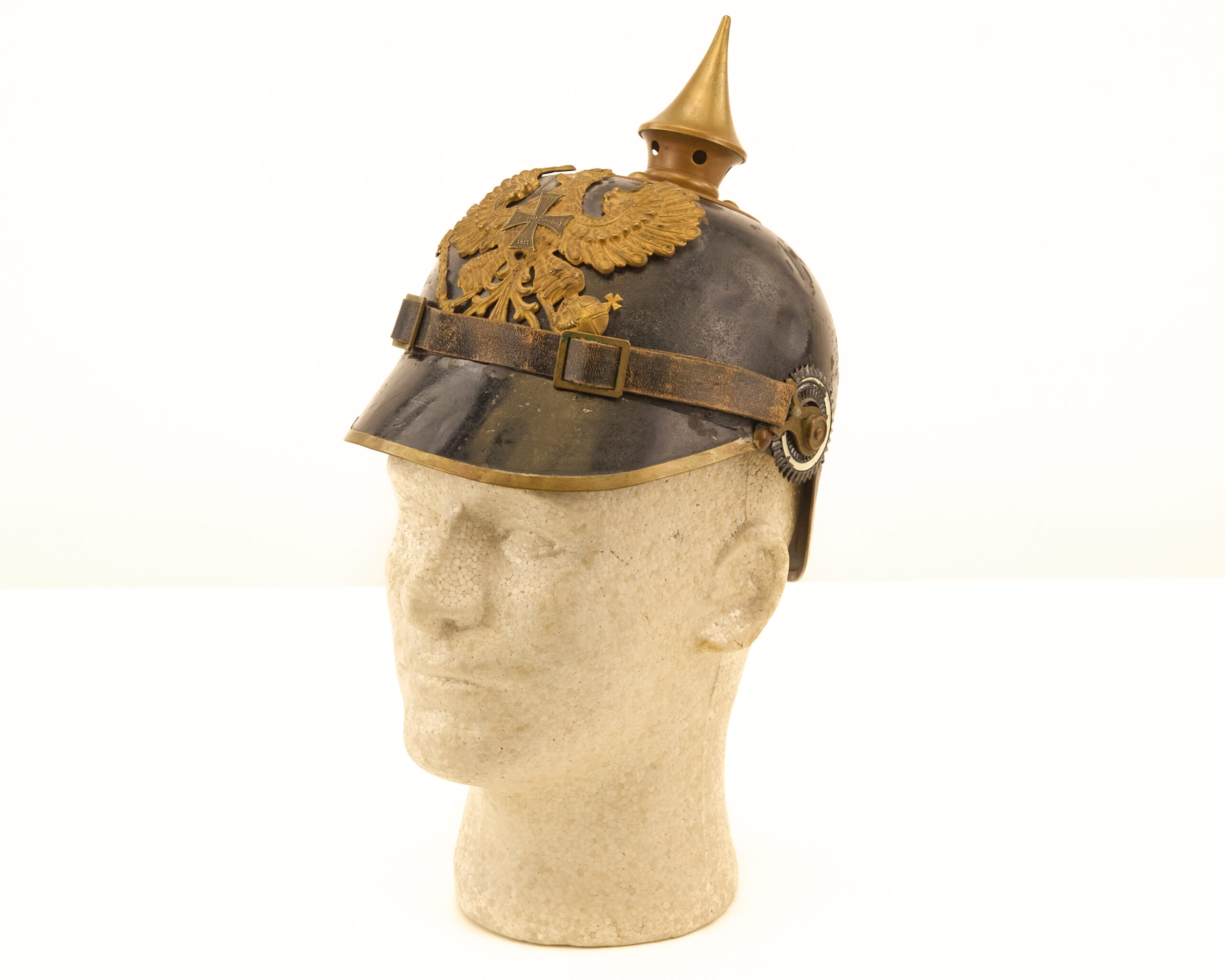
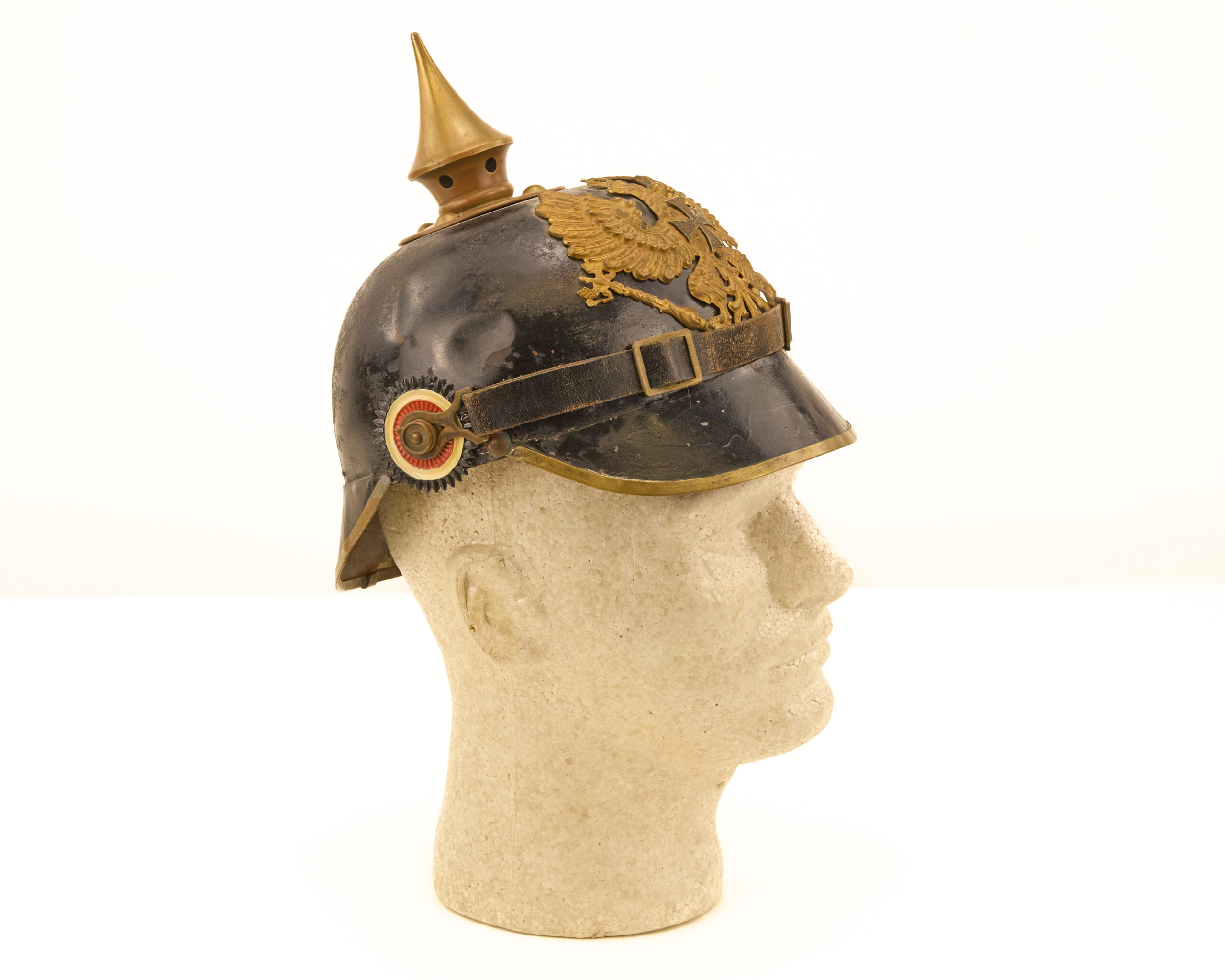
This Prussian Landwehr enlisted man’s Pickelhaube is an example of the Model 1915 pattern, the final standardized version of Germany’s spiked helmet before the adoption of the steel M1916 Stahlhelm. As with all helmets produced under the 1915 regulations, fittings were intended to be manufactured from grey-oxidized steel rather than the earlier brass, silver, or Tombak used on the M1895 pattern. In practice, however, wartime production inconsistencies and the use of existing stocks often resulted in mixed components. This example reflects that reality, retaining a brass Prussian Landwehr Wappen, featuring the crowned eagle clasping scepter and orb with the Landwehr cross at center.
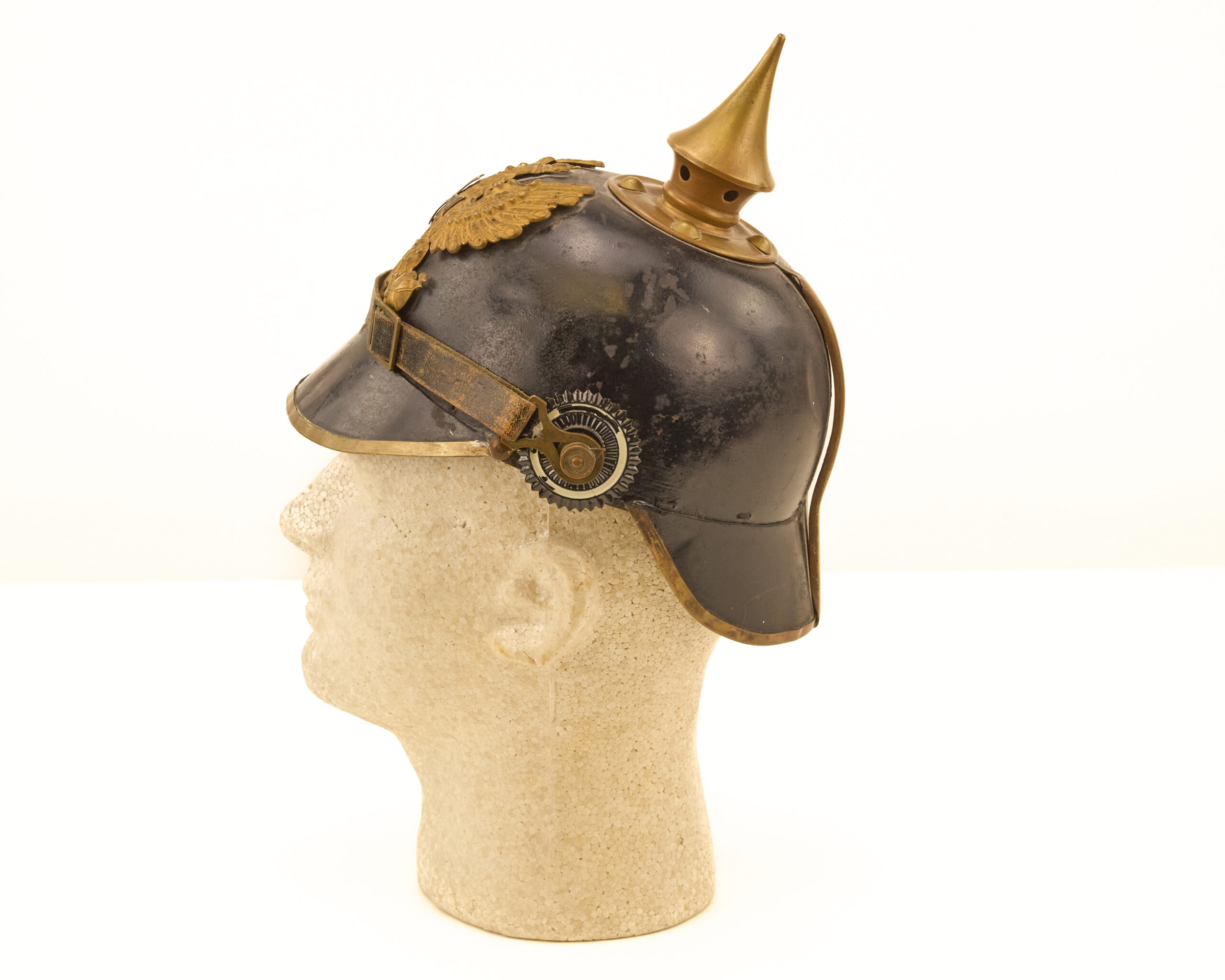
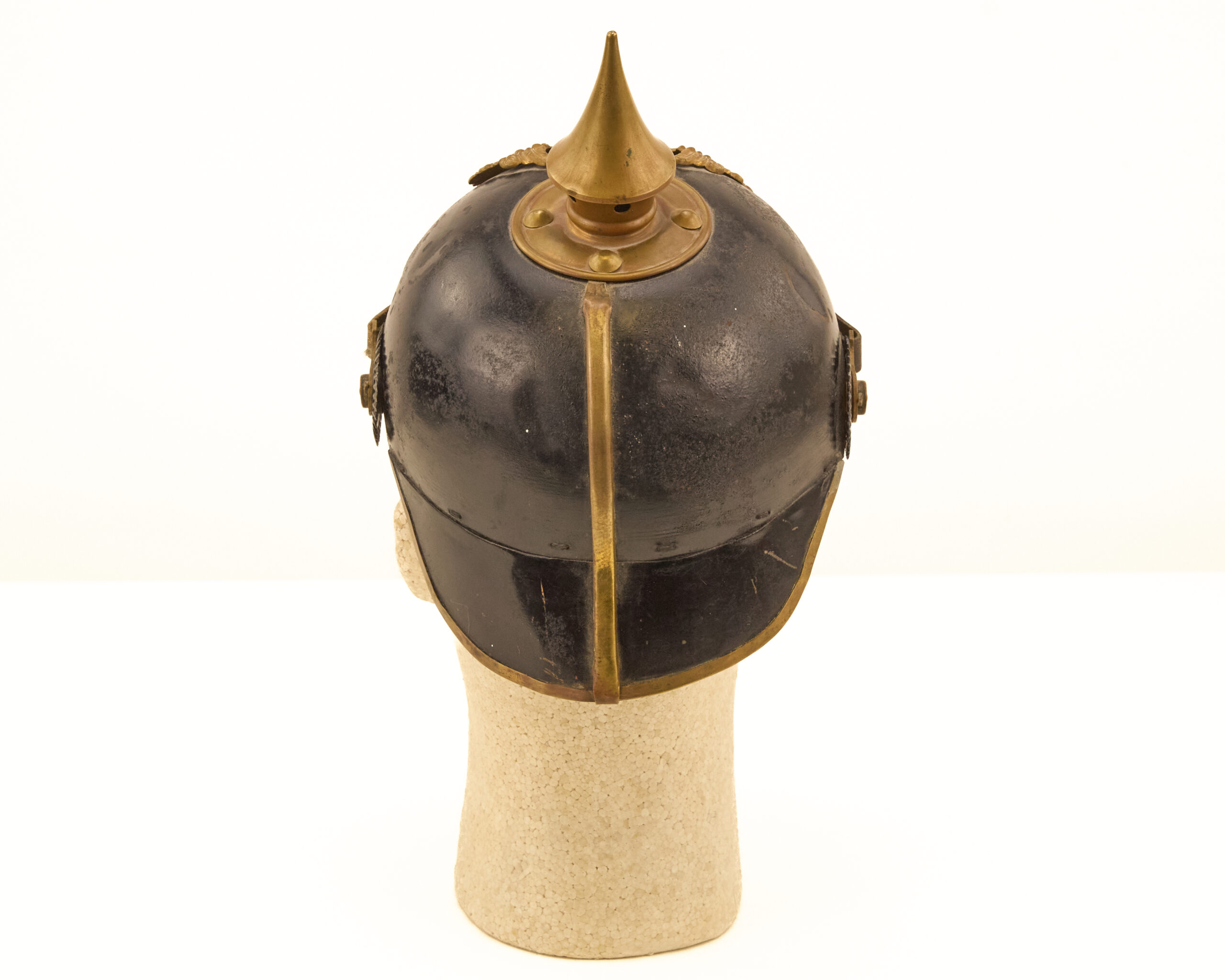
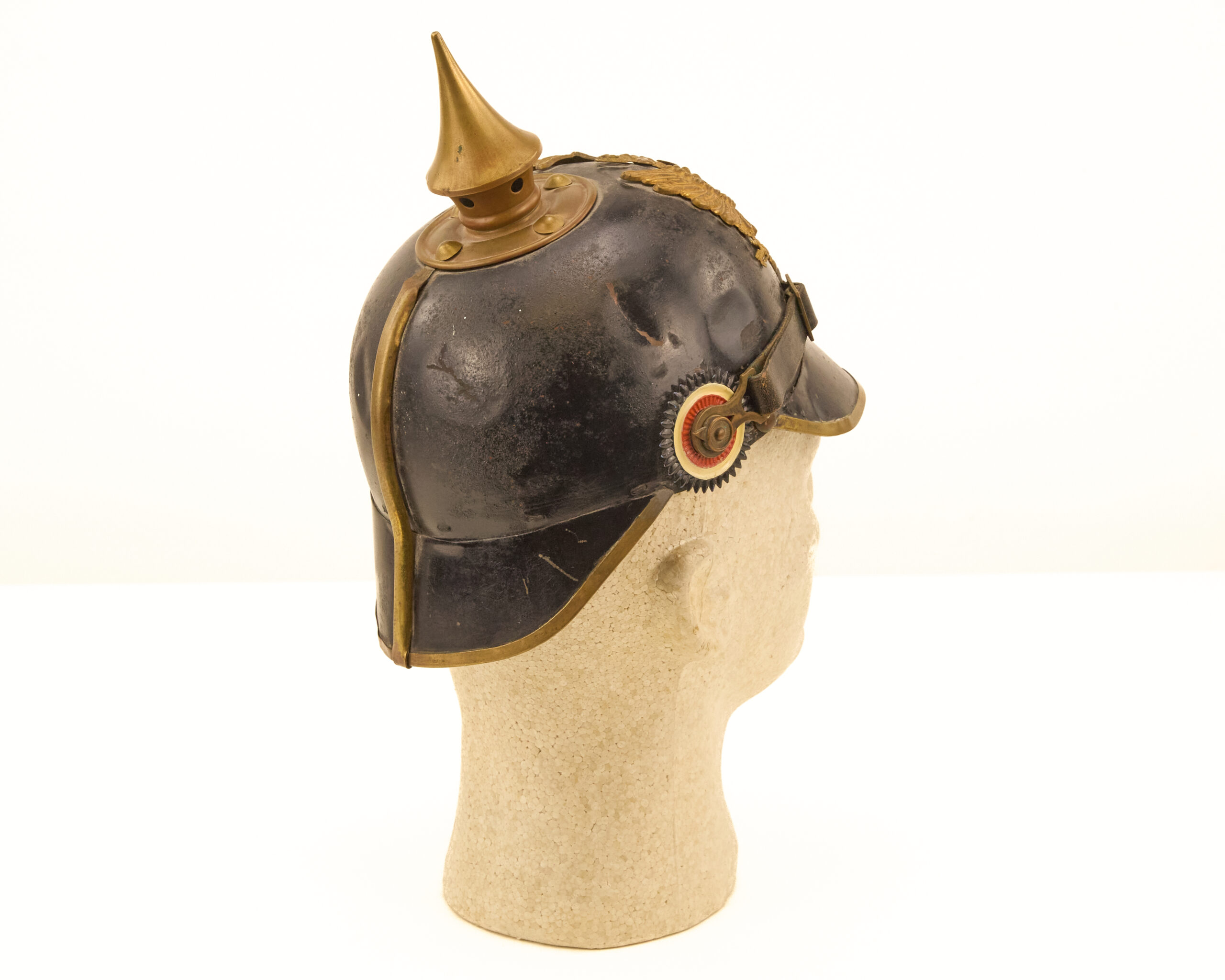
Constructed of metal rather than leather, this Pickelhaube represents one of the material-saving wartime variations introduced as the conflict prolonged. The helmet displays a vented enlisted spike mounted on a brass baseplate, fully removable as prescribed by regulations. The chinstrap is secured by two side posts, one bearing the national kokarde and the other the Prussian black-and-white kokarde, both showing age-consistent coloration.
The exterior finish retains its lacquered coating, now showing moderate wear from more than a century of handling. The shell itself has become slightly misshapen over time, a common occurrence with thin-gauge wartime metal bodies. Internally, the cloth liner remains intact and complete, including the original drawstring—an uncommon survival on helmets of this age.
As an authentic wartime Landwehr enlisted Pickelhaube, this piece offers an important view into late-war German production practices. Its mixed fittings, metal body, original kokarden, and complete liner make it a valuable study artifact for collectors, historians, and institutions documenting the evolution and eventual obsolescence of the Pickelhaube during the First World War.