Description
Original Interwar German made Finish contract panoramic artillery sight (Rundblickfernrohr)
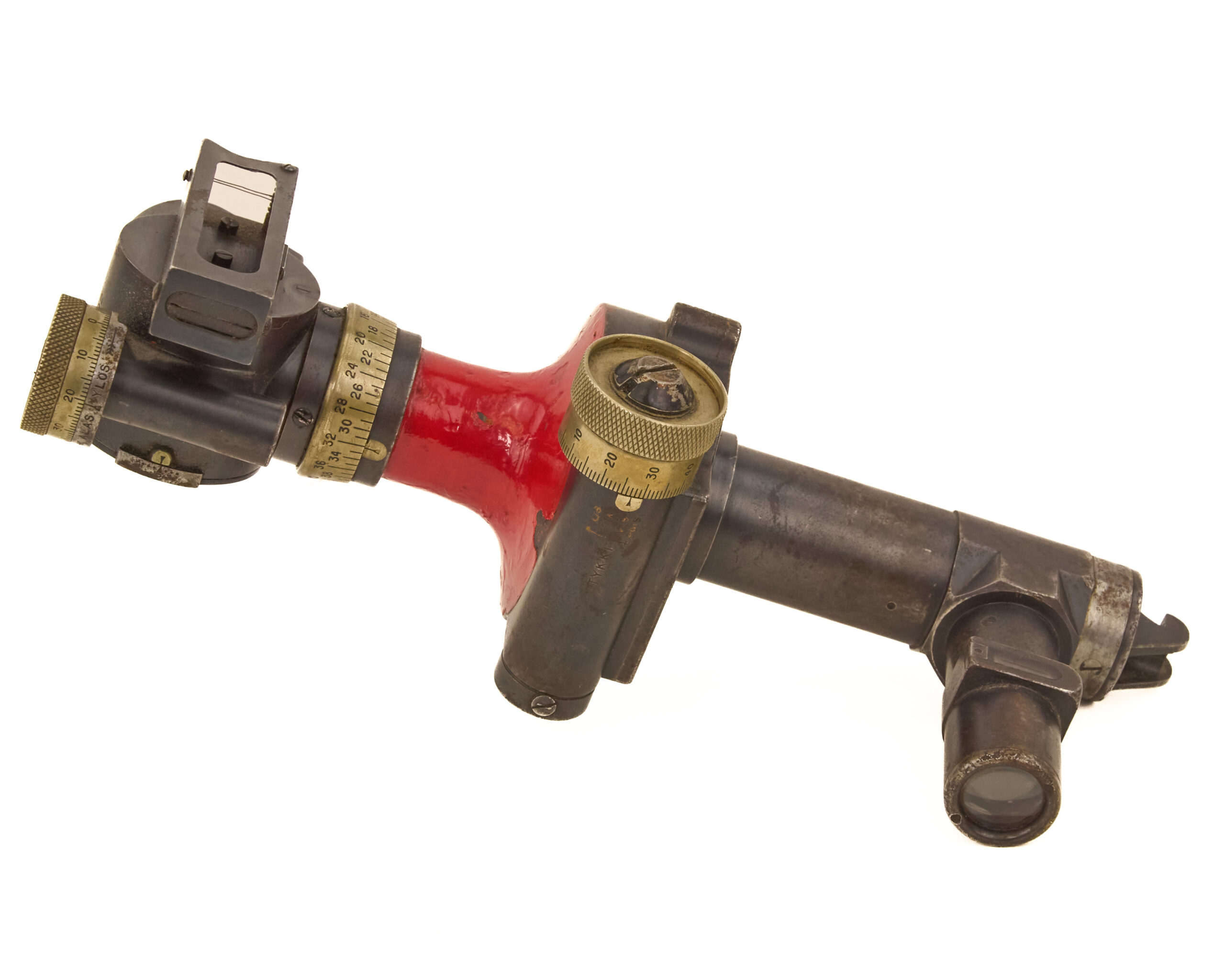
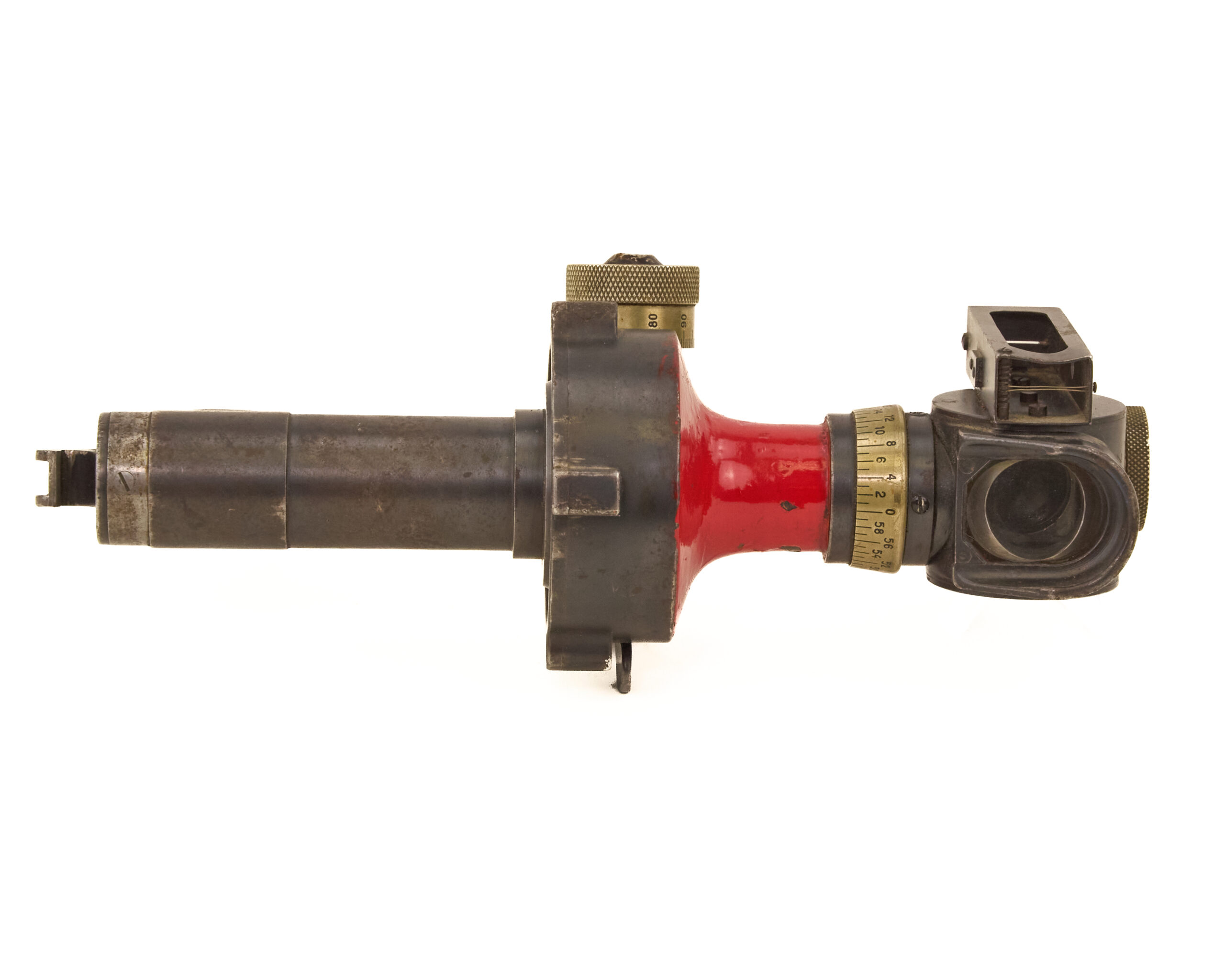
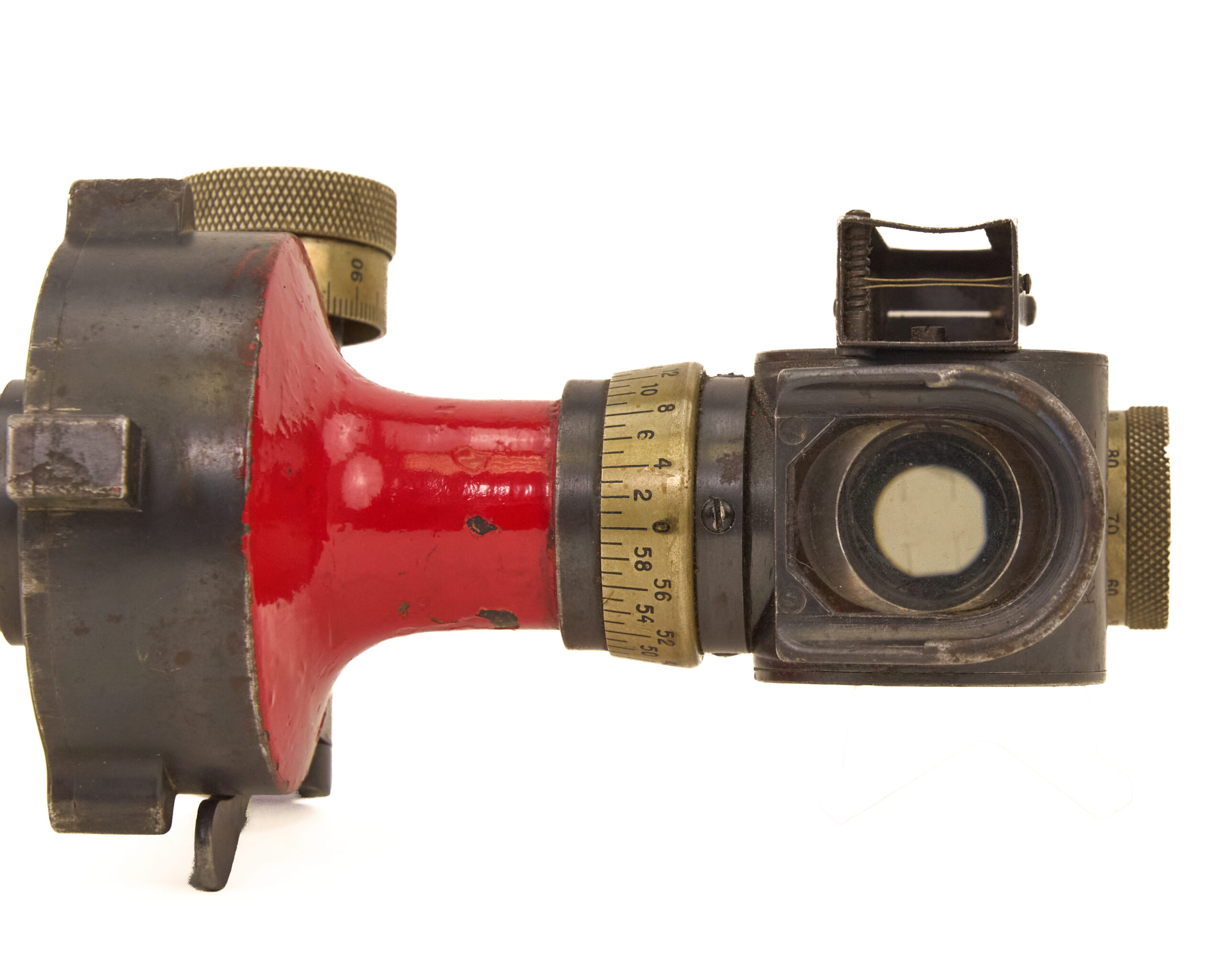
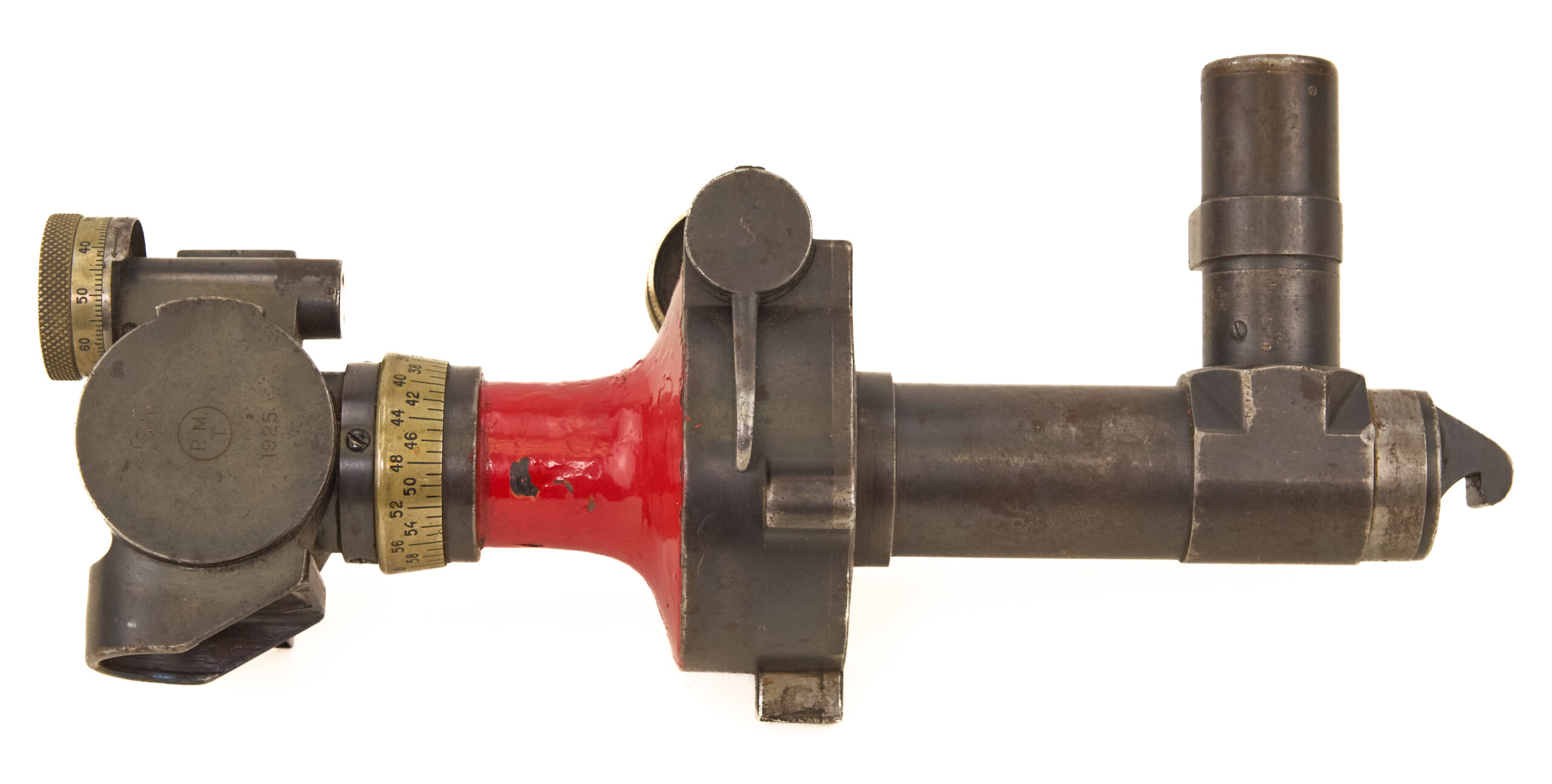
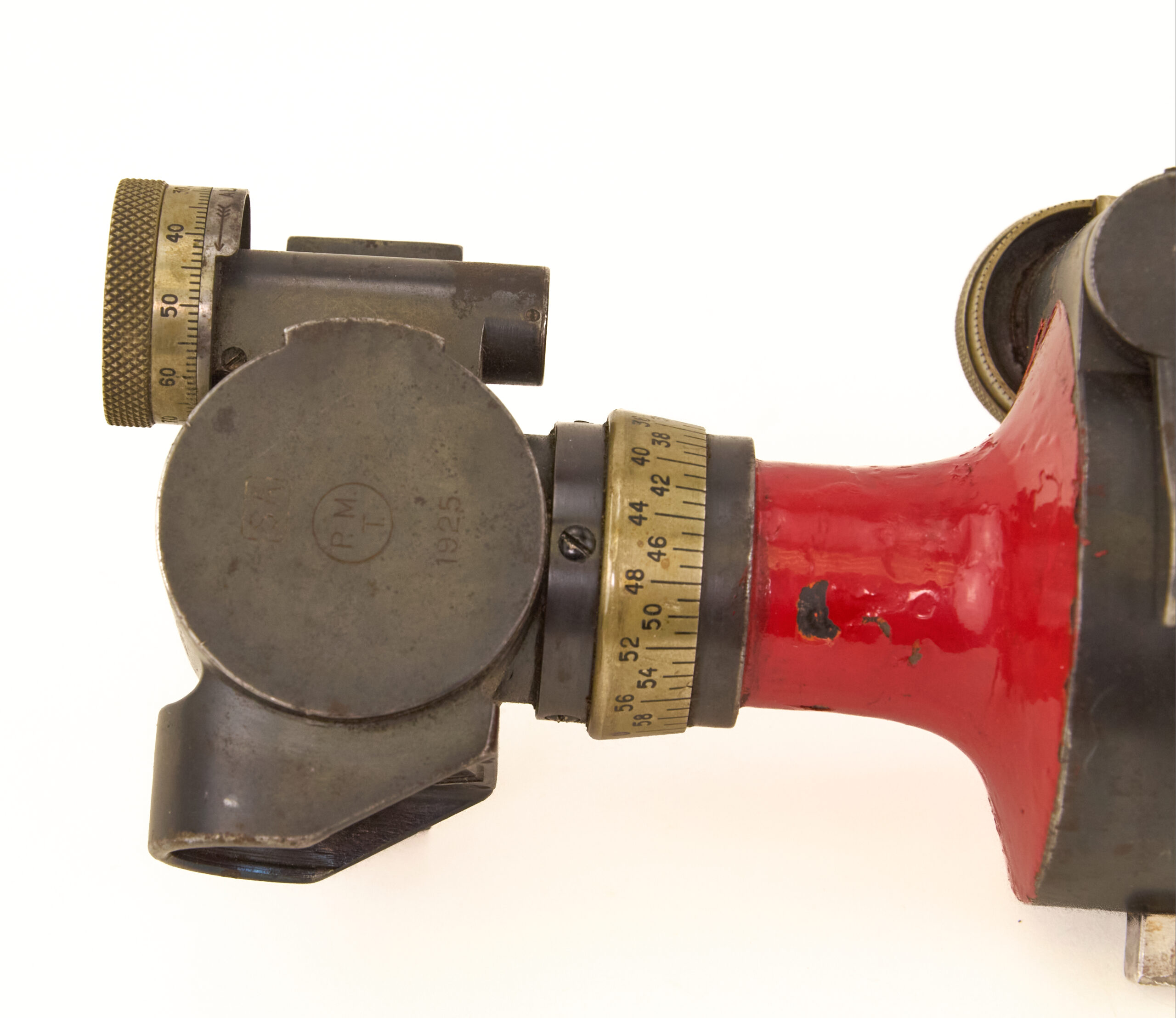
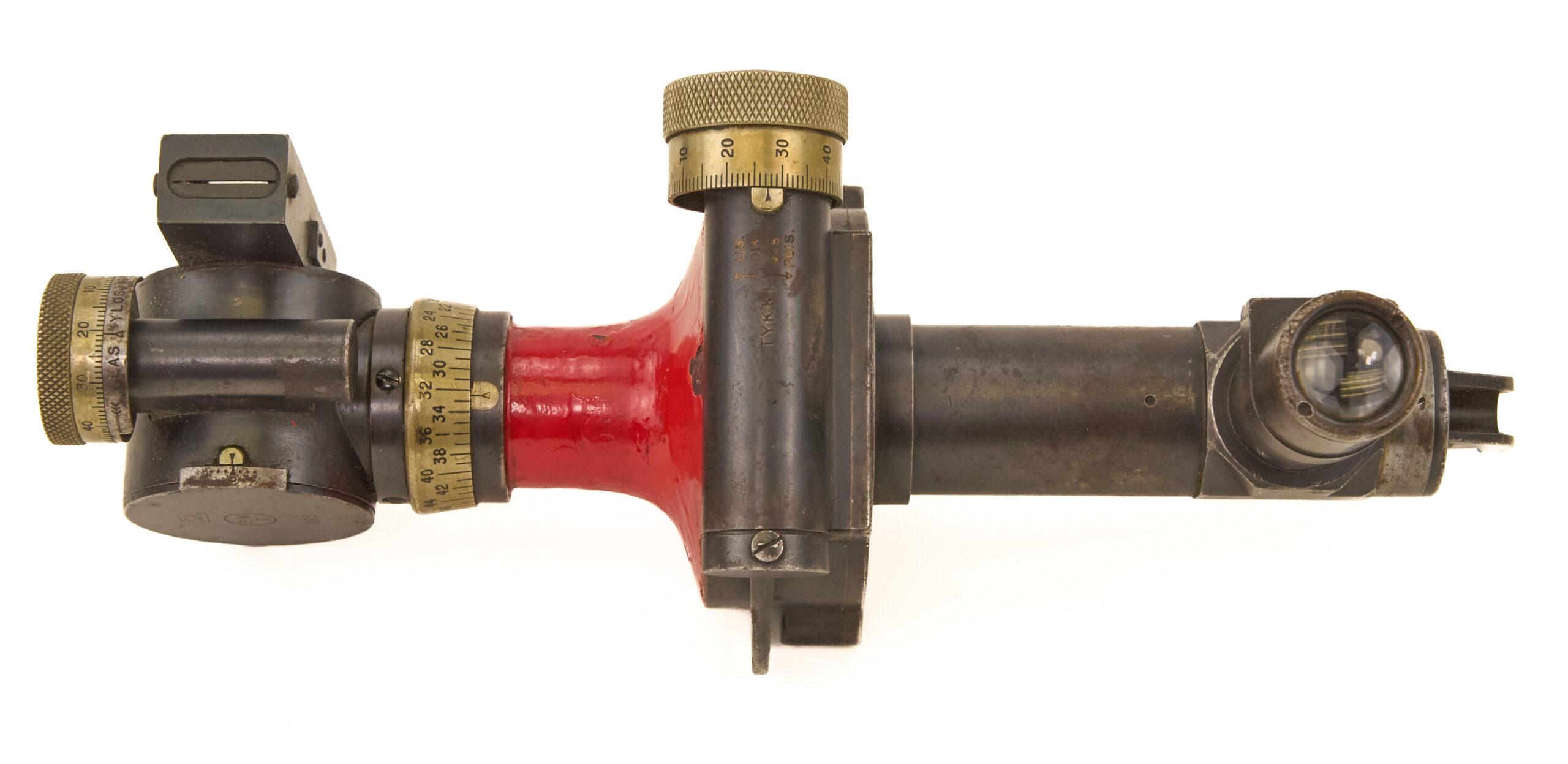
This is an Interwar German panoramic artillery sight (Rundblickfernrohr) manufactured by C.P. Goerz, Berlin, one of Germany’s premier optical firms. The sight is dated 1925, placing its production firmly in the post–First World War, interwar rearmament and export period, when German optical engineering remained among the finest in the world.
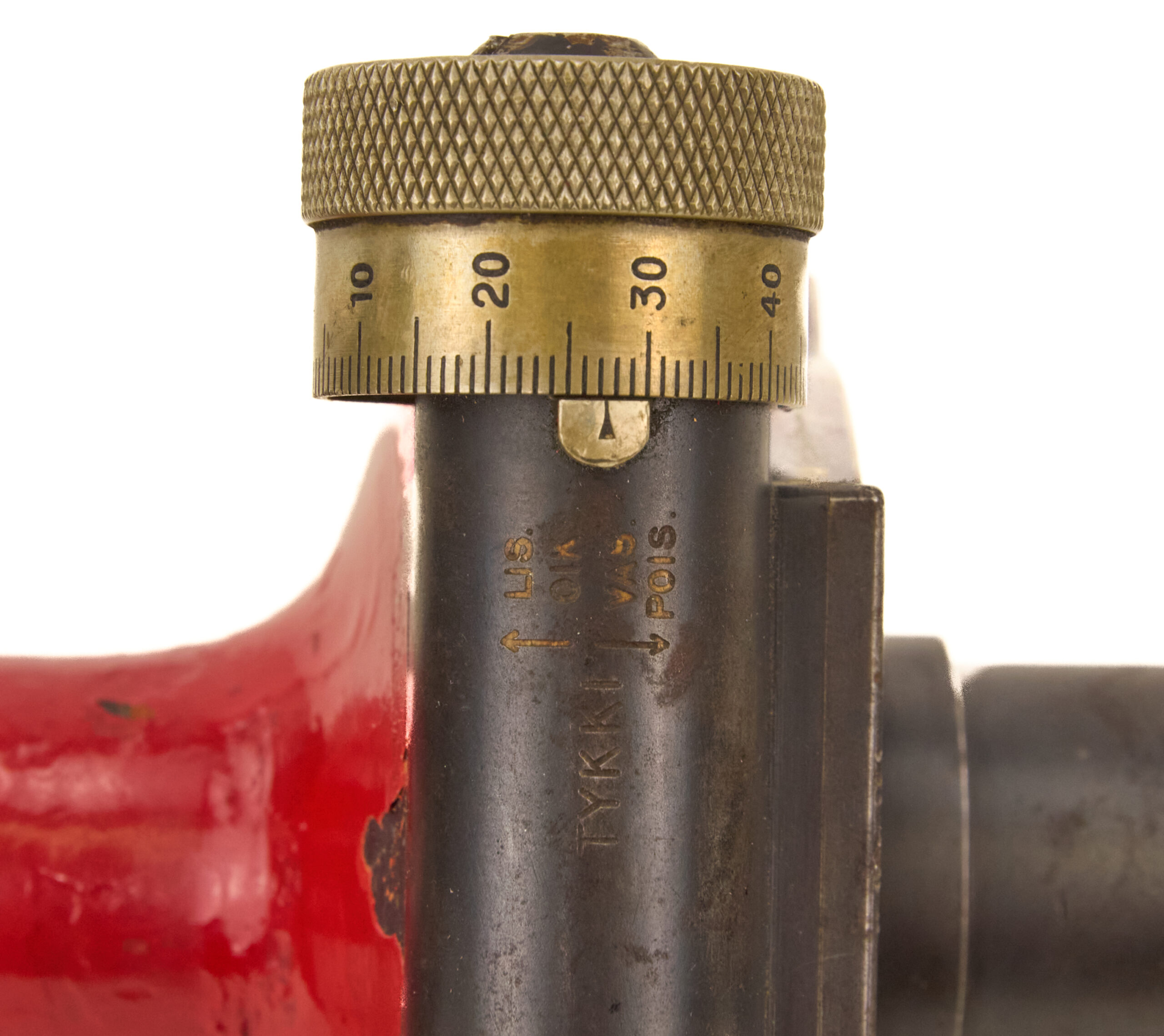
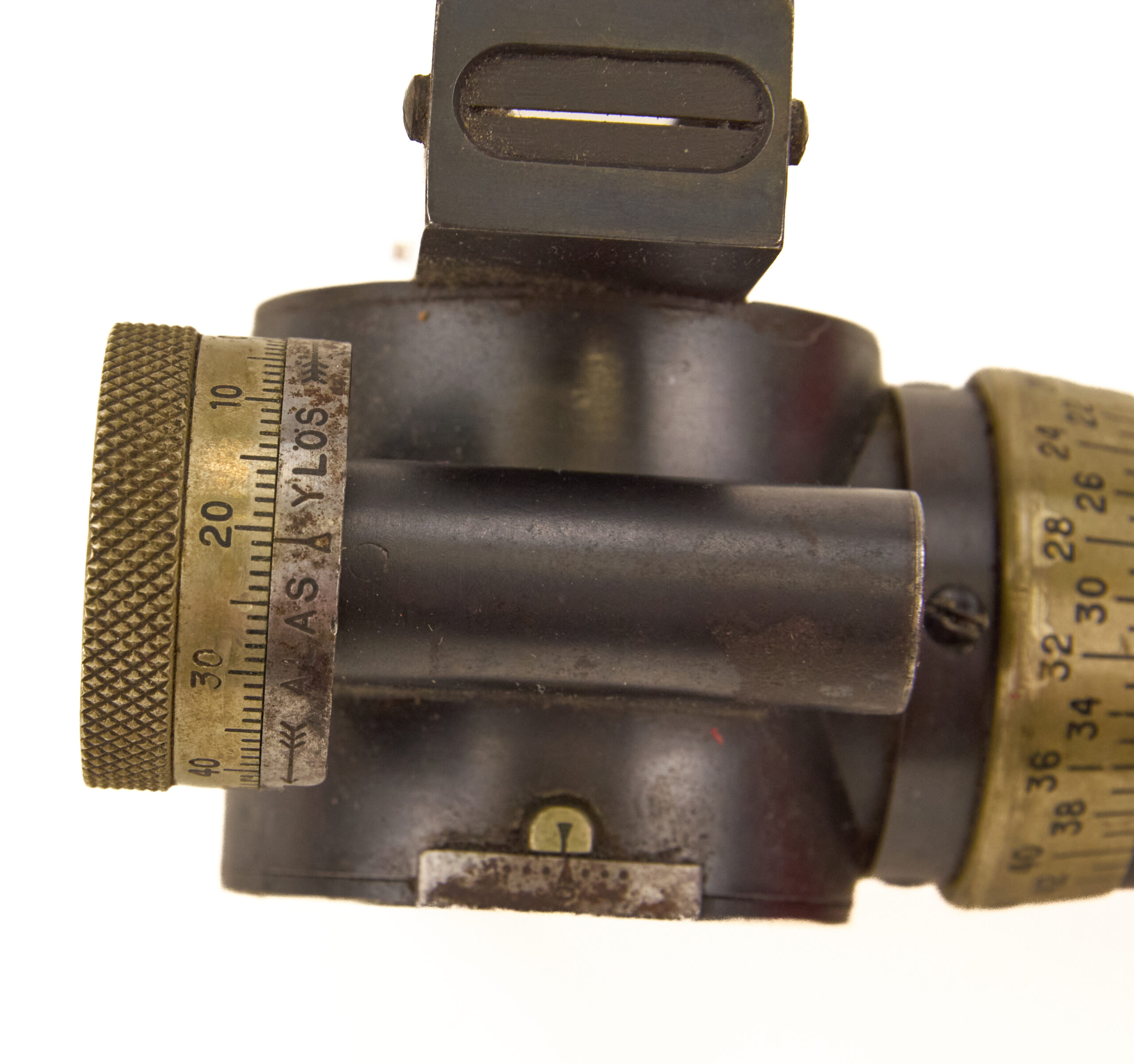
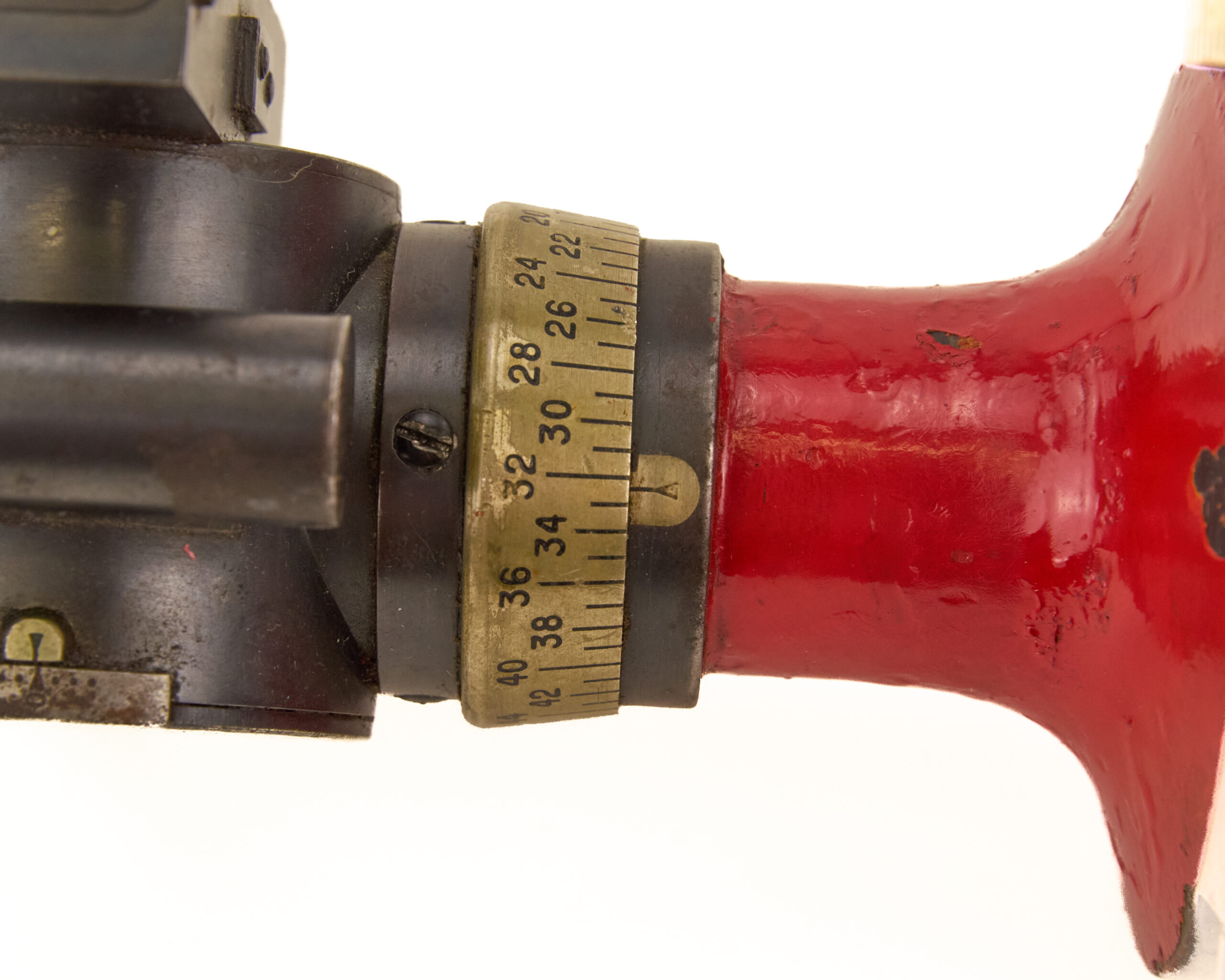
The instrument is a panoramic telescopic gun sight, designed for indirect artillery fire and precision laying. Rundblickfernrohre allowed gunners to engage targets outside the direct line of sight by referencing calibrated bearings and elevation settings. This example features dual adjustment knobs for both traverse and elevation, enabling precise “dialing in” of artillery fire. A slit collimator mounted on the upper right aids in alignment and verification of the sight’s orientation, a critical feature for accurate battery-level fire control.
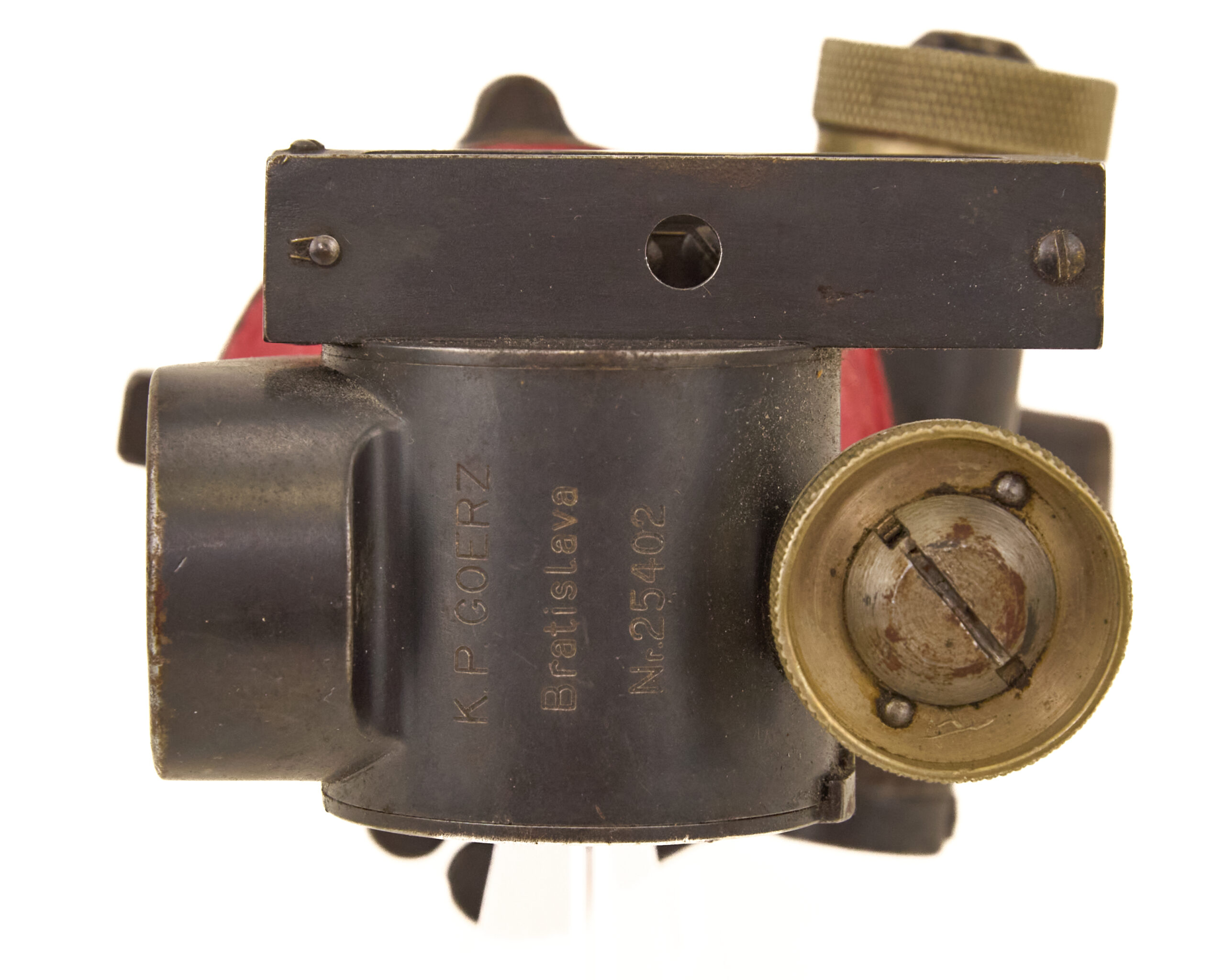
Markings are clear and historically significant. The body is stamped “KP GOERZ Bratislava Nr. 25402”, reflecting Goerz production associated with its Central European facilities and export network. Of particular interest is the “SA” marking within a rectangle, which denotes Suomen Armeija (Finnish Army) acceptance or ownership. This strongly suggests the sight was supplied to Finland, either as military aid or purchased materiel during the Winter War (1939–1940) or Continuation War (1941–1944), or alternatively sold to Finland in the immediate postwar period, when large quantities of German equipment were transferred to Finnish service.
Panoramic artillery sights bearing Finnish Army markings are notably scarce and add a distinct layer of historical provenance, linking German optical manufacture with Finland’s artillery forces during one of the most intense and technically demanding conflicts of the Second World War era.
This sight represents an excellent example of German interwar artillery optics, combining precision engineering, export history, and documented Scandinavian military use—an outstanding artifact for collectors of artillery instruments, Finnish military equipment, or early 20th-century European optical technology.