Description
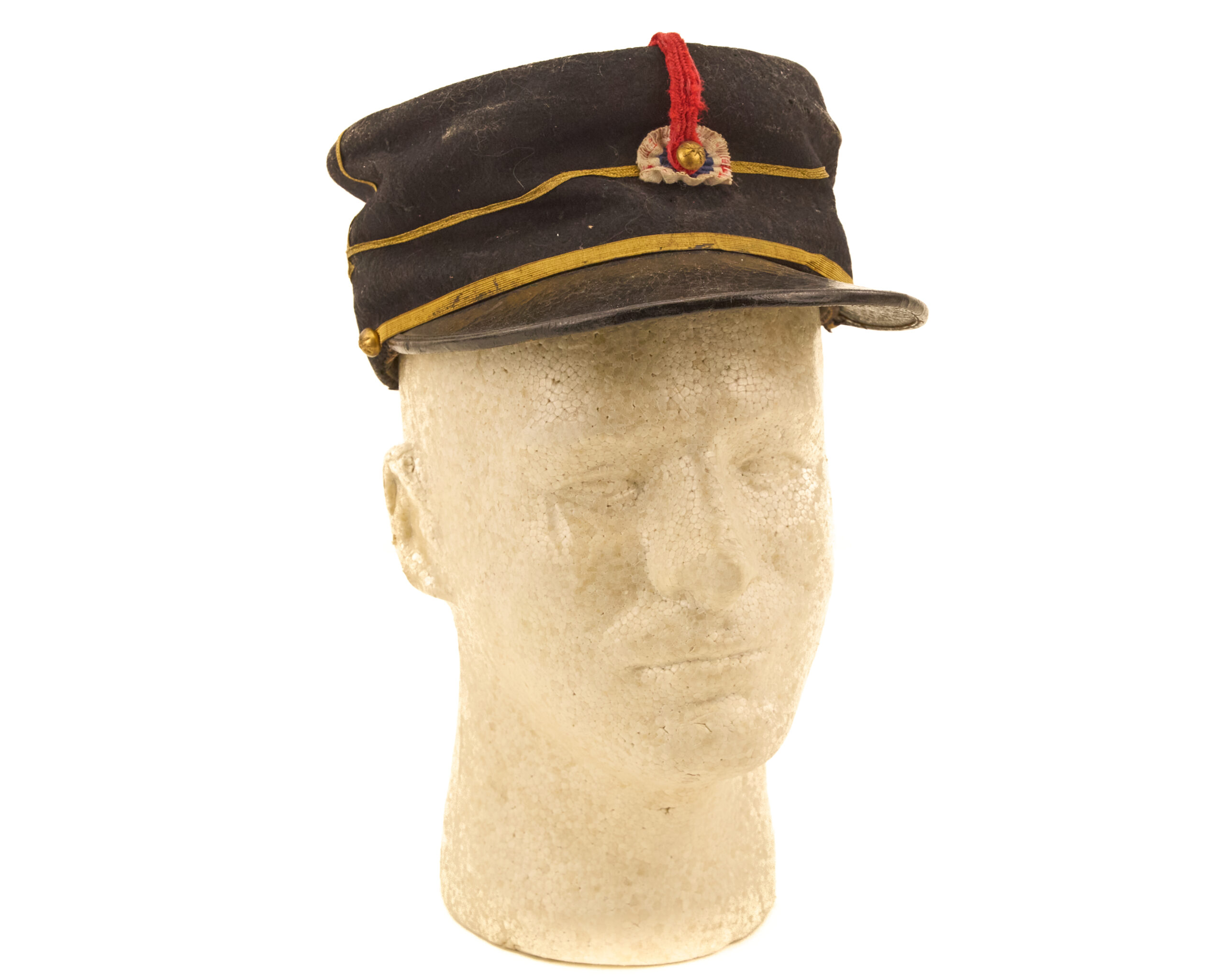
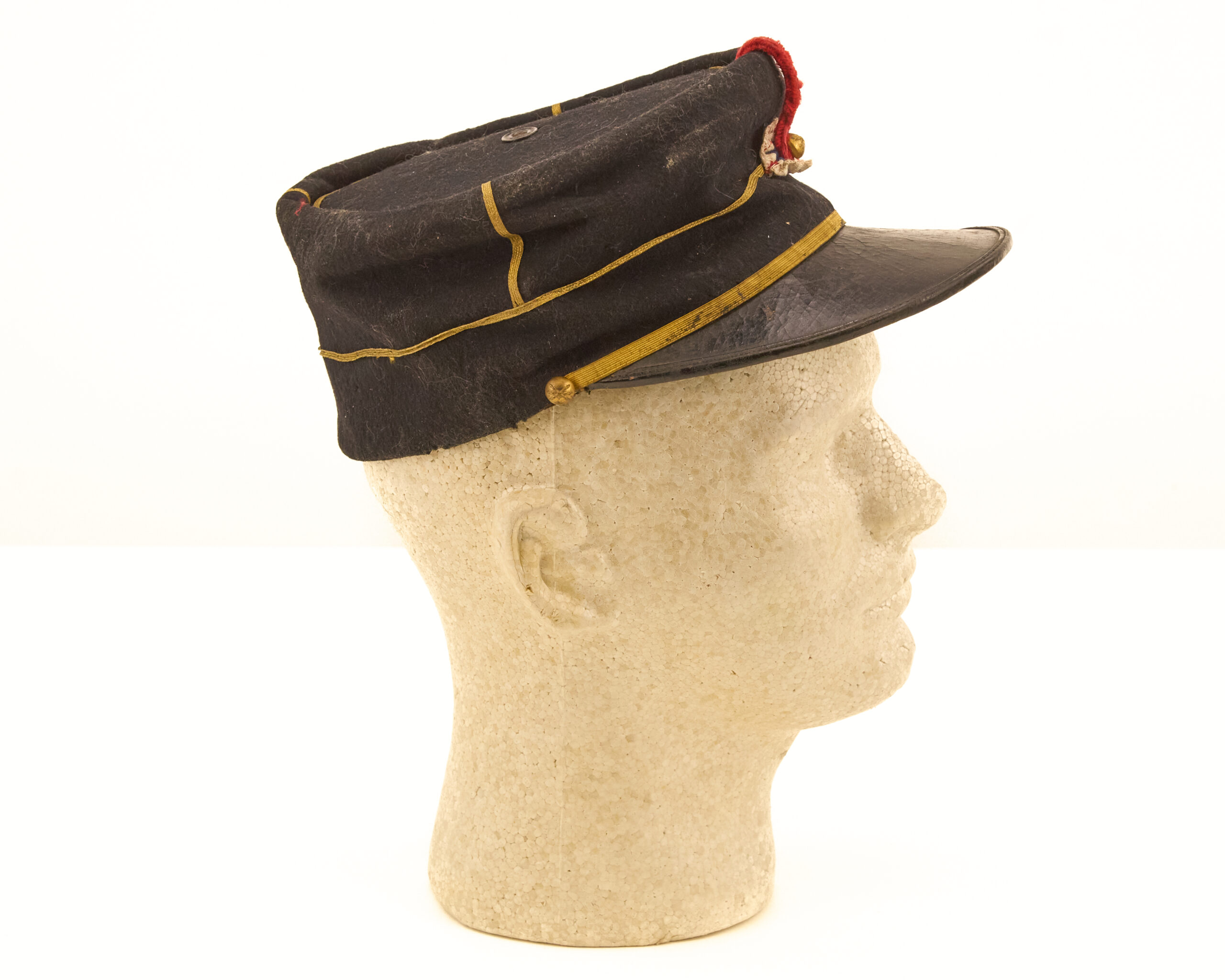
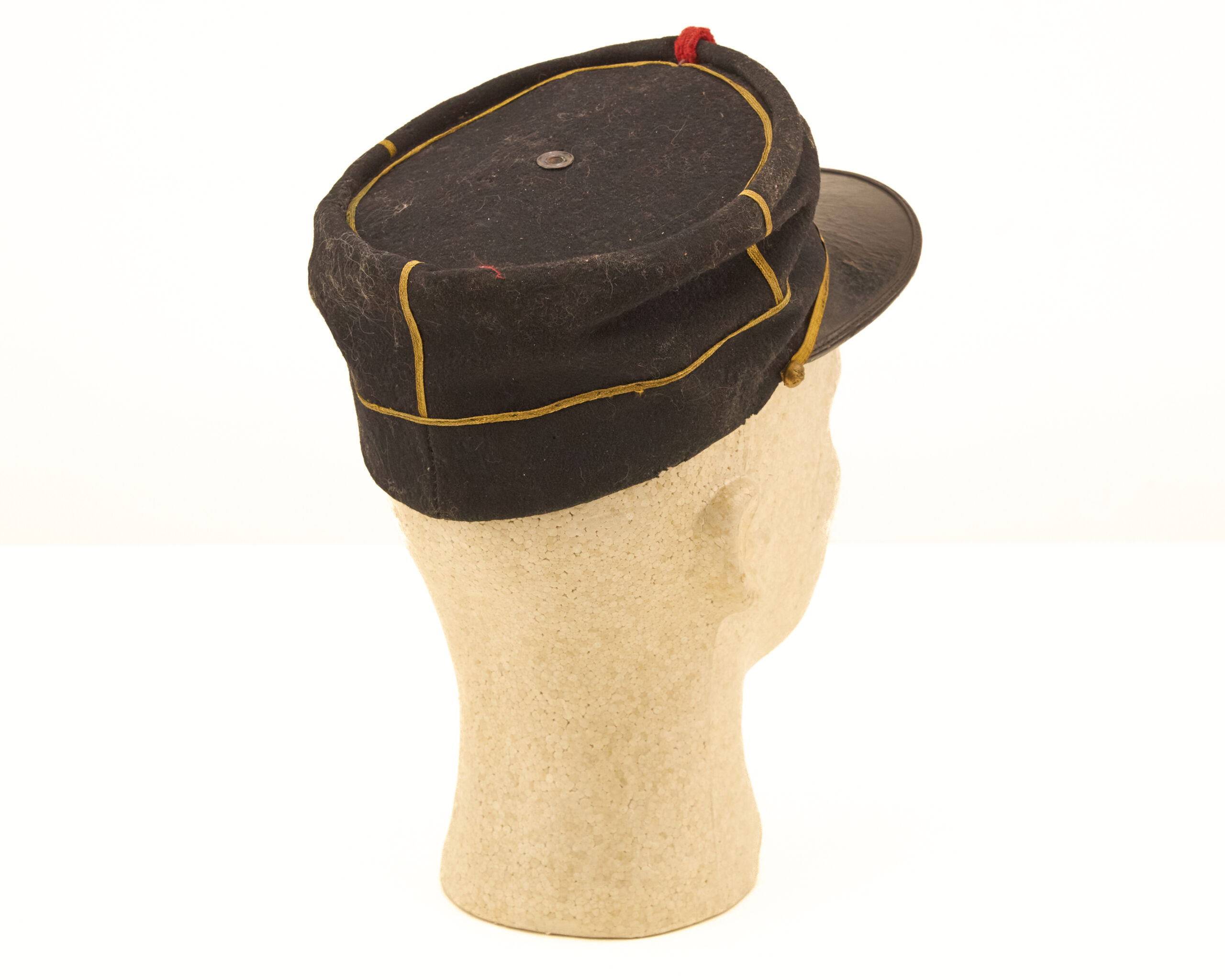
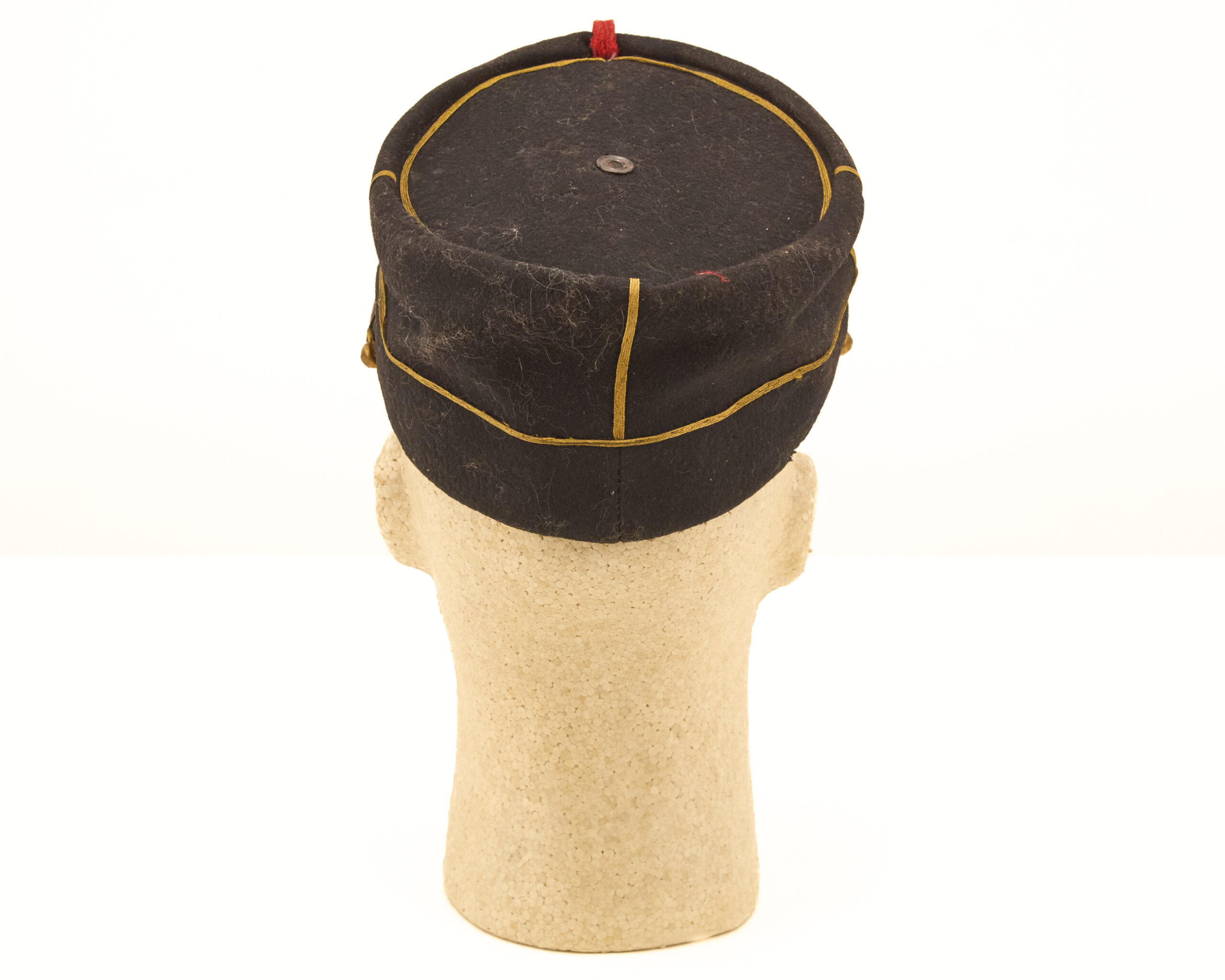
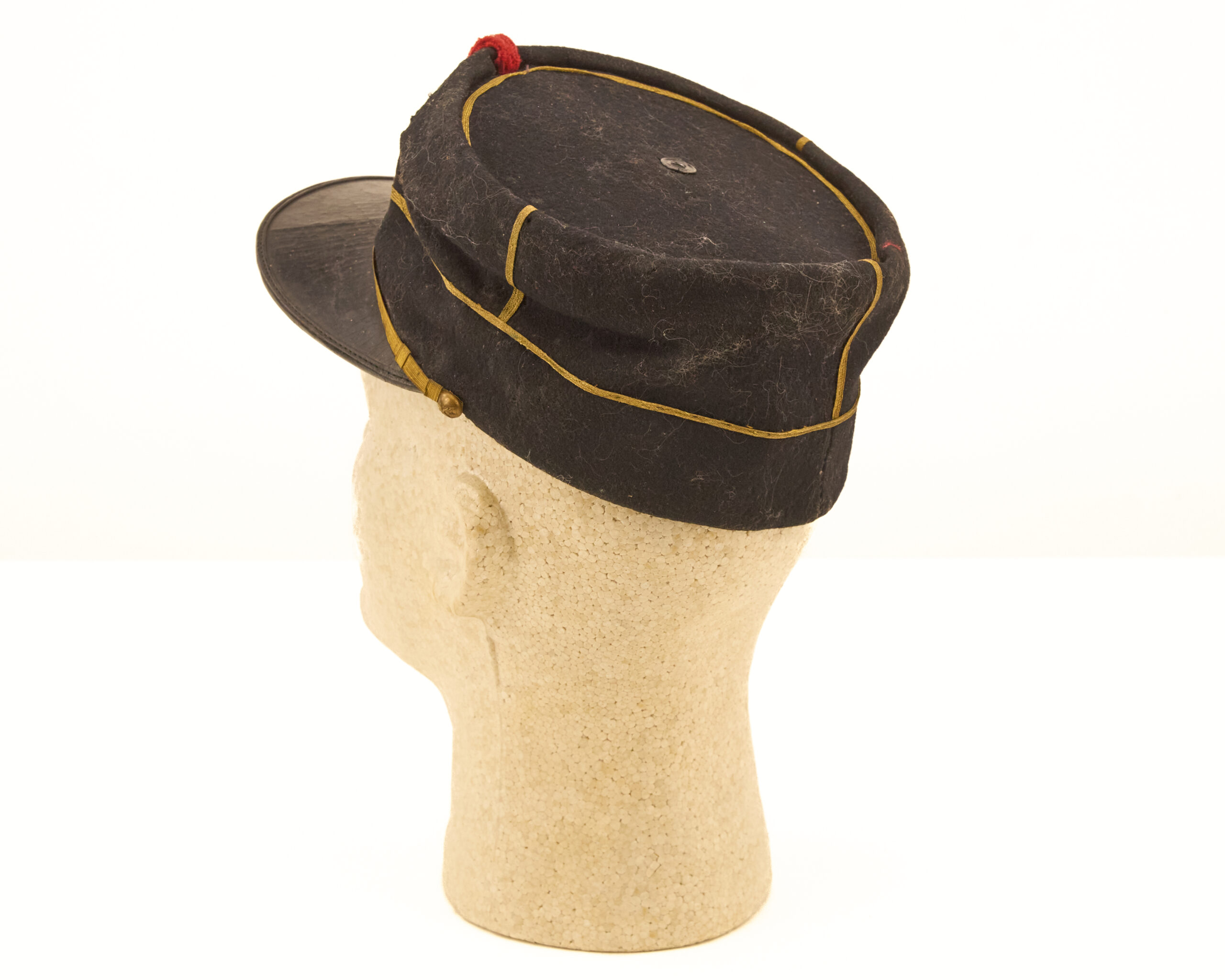
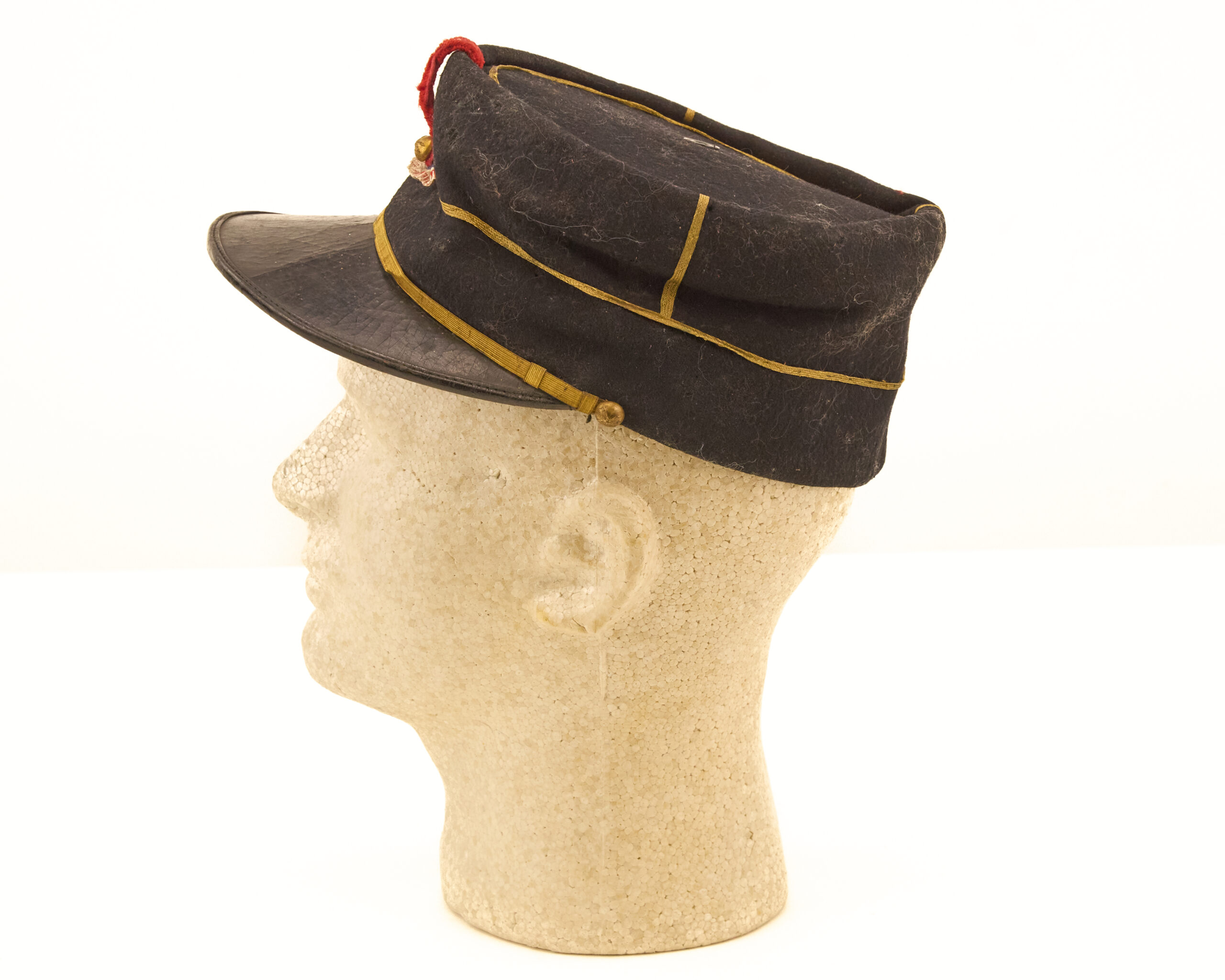
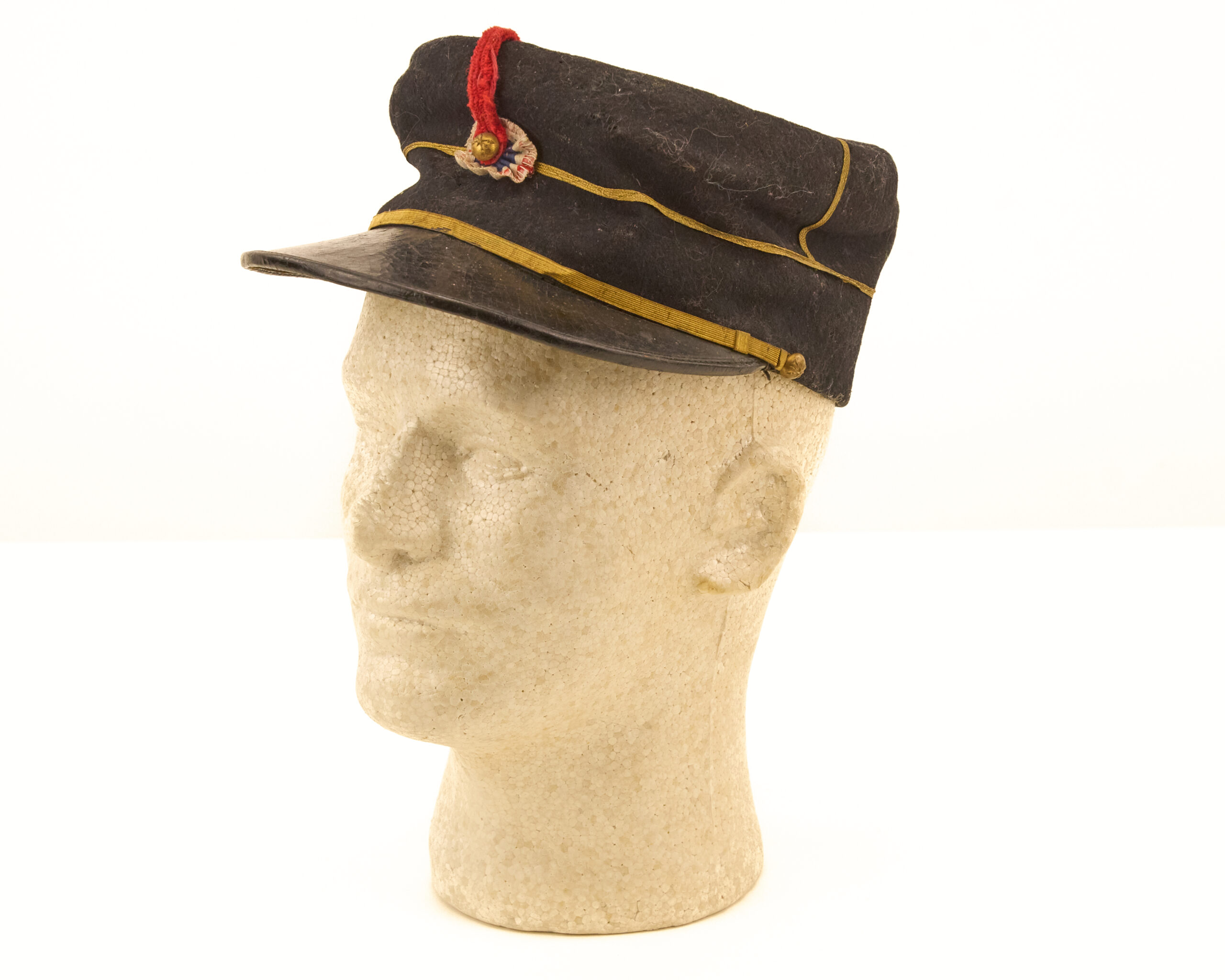
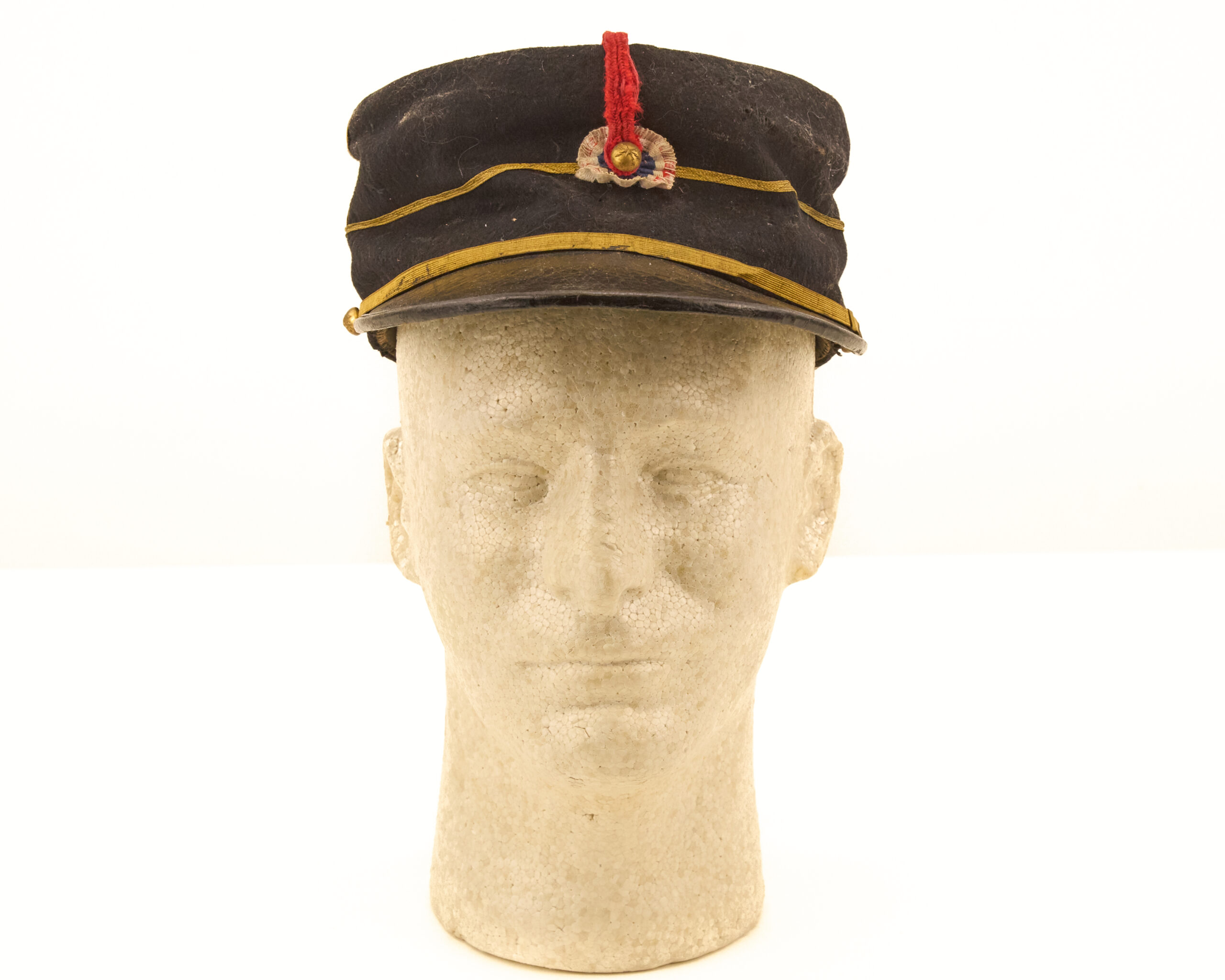
This original French Model 1910 enlisted man’s kepi represents the final pre-war pattern of the French infantry headdress and one of the most recognizable symbols of the early First World War. Introduced to modernize the earlier M1884 kepi while maintaining traditional French line infantry aesthetics, the M-1910 retained the classic sharply angled body, leather visor, and bold branch-color banding that had defined French uniforms for generations.
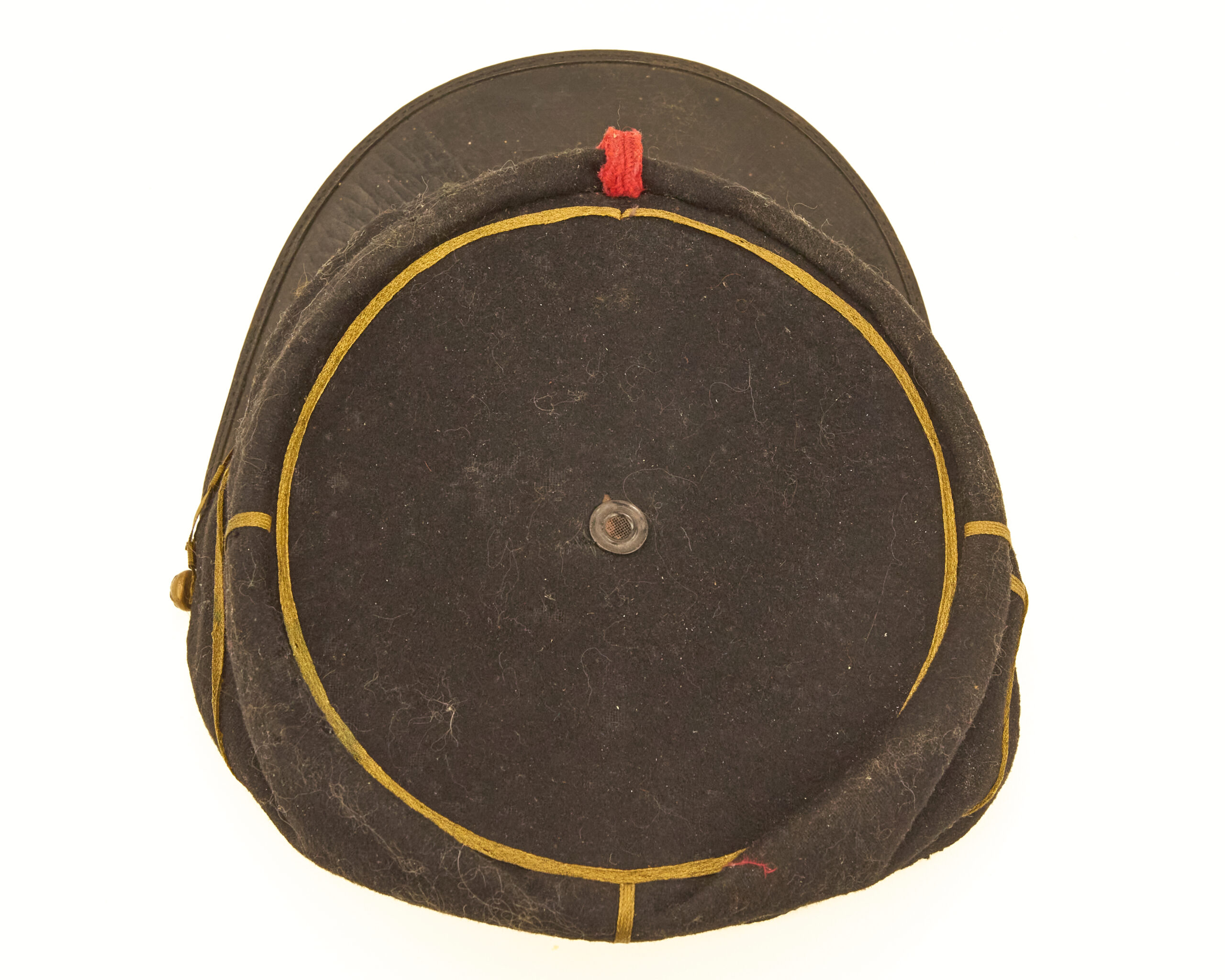
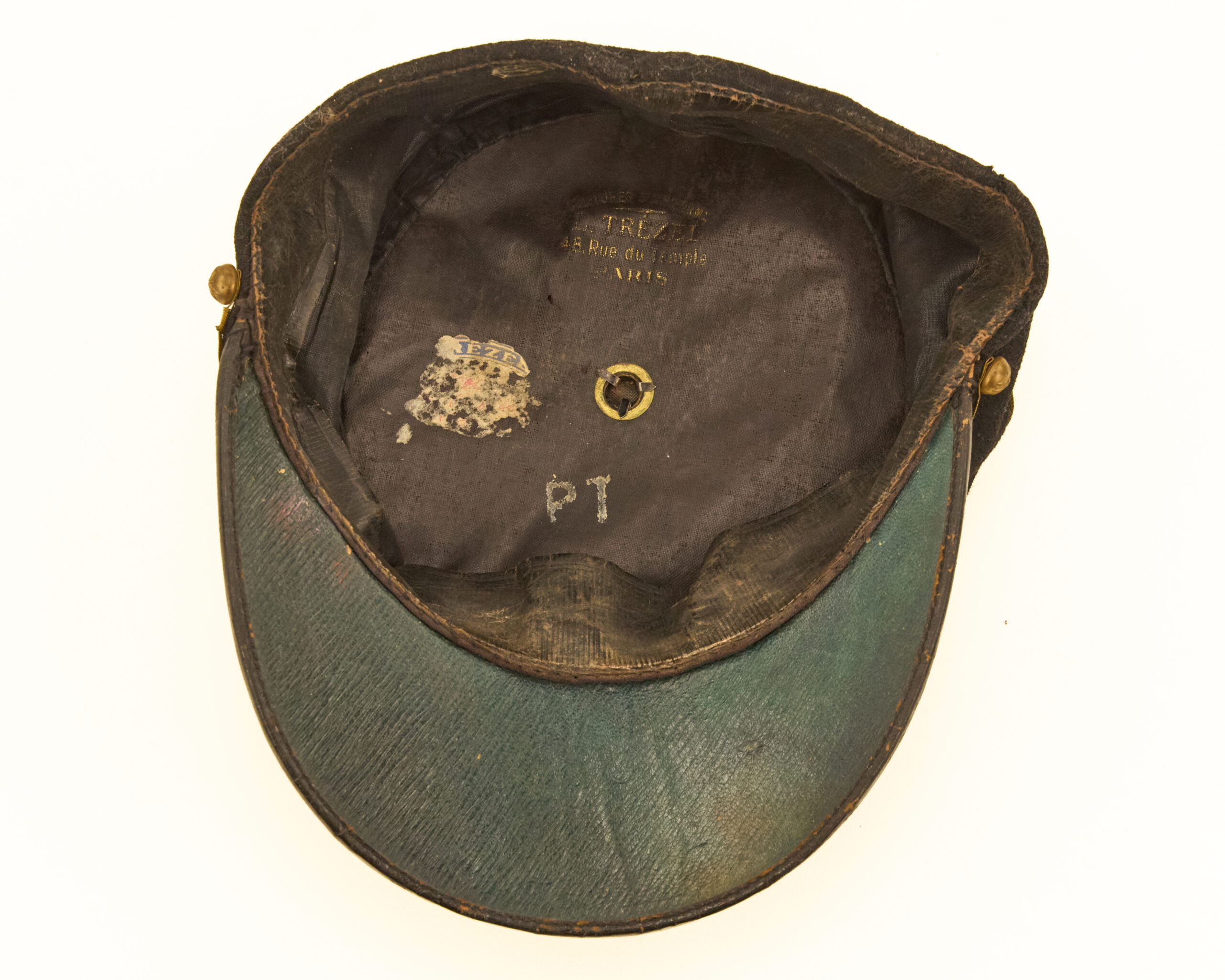
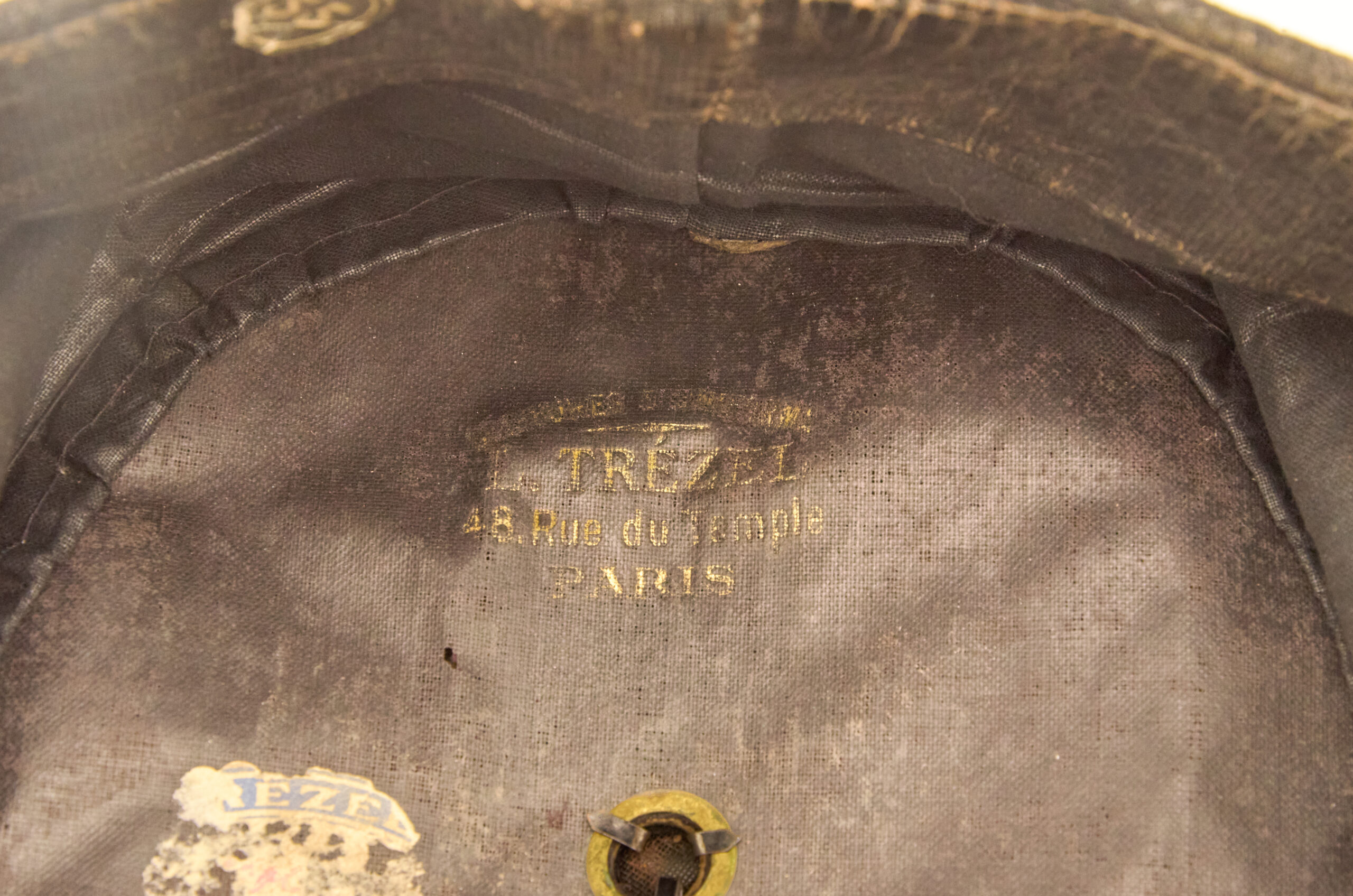
Constructed with a cloth-covered cylindrical body transitioning to a gently sloped front, this kepi features the characteristic dark wool top with contrasting colored piping and band appropriate to enlisted infantry. Size 55, the original sticker can be found in the liner. The visor exhibits the squared wartime profile typical of the pattern, showing wear consistent with long service life. The original interior lining and sweatband remain present, displaying age-darkened fabric and evidence of field use. The initials PT can be found on the inside of the cap. Additionally an “L. Trezel” Makers mark embossed in gold as well as a paper sticker with the remnants of the makers logo in blue still visible. The grate for the mesh vent remains present and intact, firmly affixed to its brass grommet.
The Model 1910 kepi gained iconic status during the opening campaigns of 1914, when French troops marched into battle wearing the vivid uniforms that soon proved unsuitable for industrial warfare. Although quickly overshadowed by the adoption of horizon blue and simplified caps, surviving M-1910 enlisted examples remain comparatively scarce, having been heavily used and often discarded during the rapid transitions of wartime re-equipment.
This kepi stands as a significant artifact of the French Army at the cusp of the Great War, illustrating both the enduring traditions of the Third Republic’s military dress and the profound changes brought by modern conflict. Its preserved condition, original components, and evocative early-war profile make it a compelling acquisition for collectors, historians, or institutions documenting the evolution of First World War French uniforms.