Description
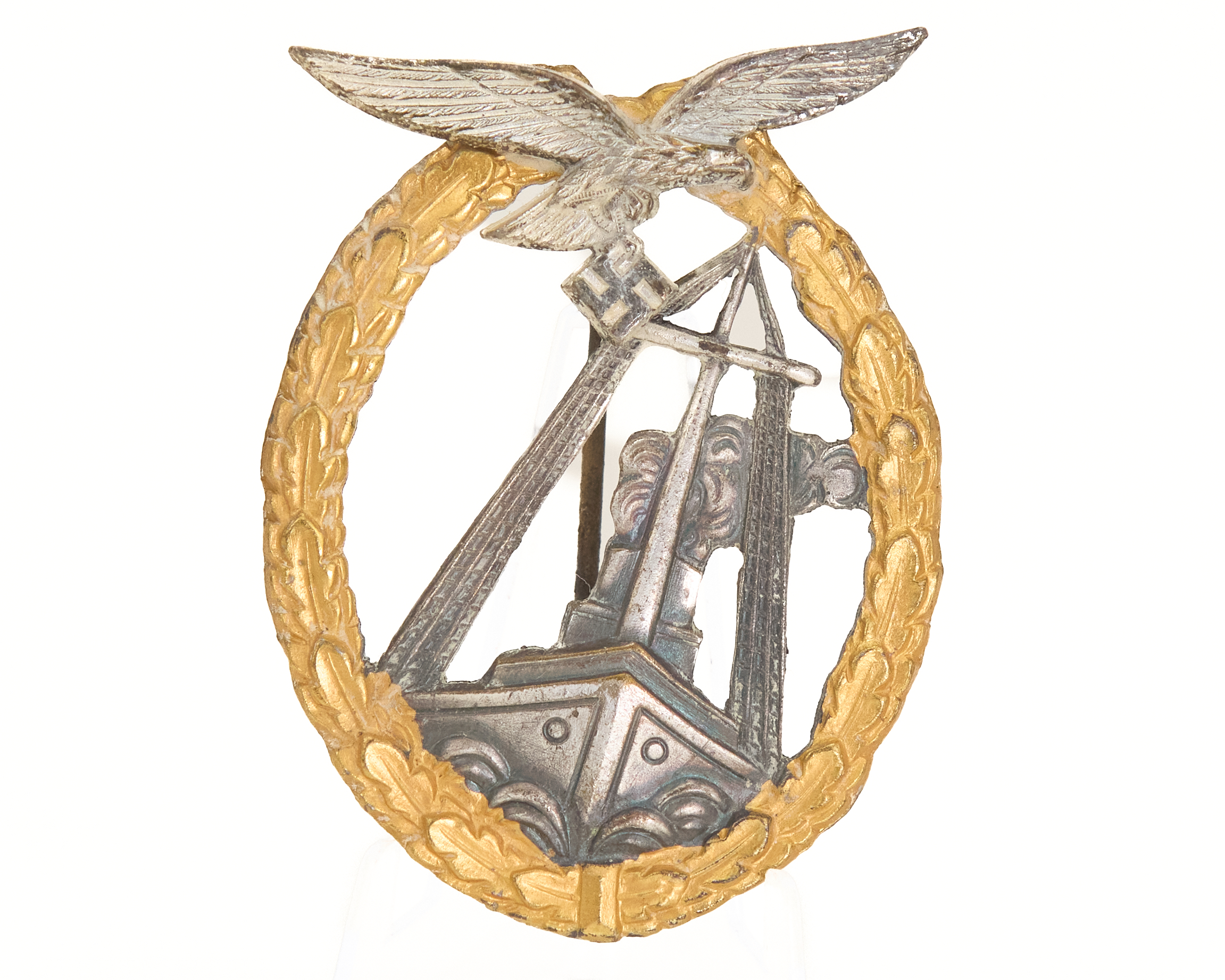
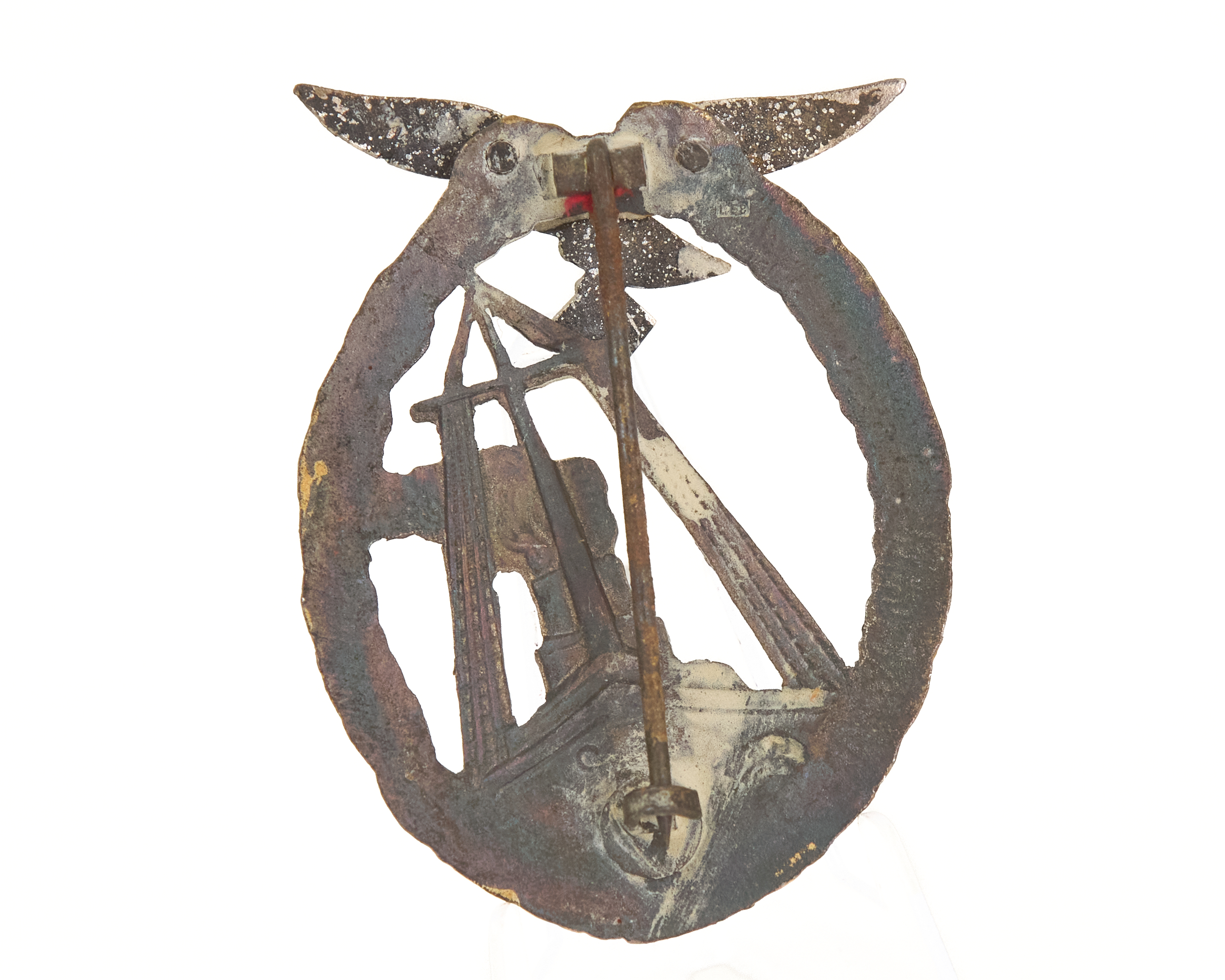
Luftwaffe Sea Battle Badge (Seekampfabzeichen der Luftwaffe) – Souval Made, L/58 Marked
This example is a Souval-produced Luftwaffe Sea Battle Badge, bearing the L/58 maker code, the wartime Präsidialkanzlei number assigned to Rudolf Souval of Vienna. While Souval held an official LDO code during the Third Reich, L/58-marked Sea Battle Badges are widely recognized by advanced collectors as post-war Souval productions, manufactured using Souval’s own tooling after 1945.
The Luftwaffe Sea Battle Badge was instituted on November 27, 1944, by Reichsmarschall Hermann Göring, making it the final Luftwaffe war badge authorized during World War II. It was intended for crews of Luftwaffe-operated surface vessels, including supply ships, air-sea rescue launches, ferry craft, and other special maritime units operating under Luftwaffe command.
Award criteria were based on accumulated time at sea, with one qualifying day defined as ten hours of maritime service, rather than calendar days. Combat actions, hazardous missions, or repeated operational deployments contributed toward qualification.
Due to the extremely late institution date, the collapse of Germany shortly thereafter, and industrial disruption, the badge never entered confirmed wartime mass production. Only a very small number of prototype or pre-production examples are believed to have existed during the war, and no conclusive documentation confirms widespread wartime award presentation. As a result, most examples encountered today—including L/58 Souval pieces—are post-war manufactured items.
Souval Sea Battle Badges are typically encountered in zinc or alloy construction, with characteristic Souval design traits and finishing. While not considered wartime-issued decorations, these badges are collected as historical representations of an officially authorized but unrealized Luftwaffe award, and as part of the broader study of post-war Souval output.
A notable piece for collectors focused on late-war German award history, Souval manufacture, or Luftwaffe maritime operations, clearly identified as post-war production rather than a wartime-issued decoration.