Description
Laser Devices Model 5/W Laser Sight – Original 1992 Pistol Accessory
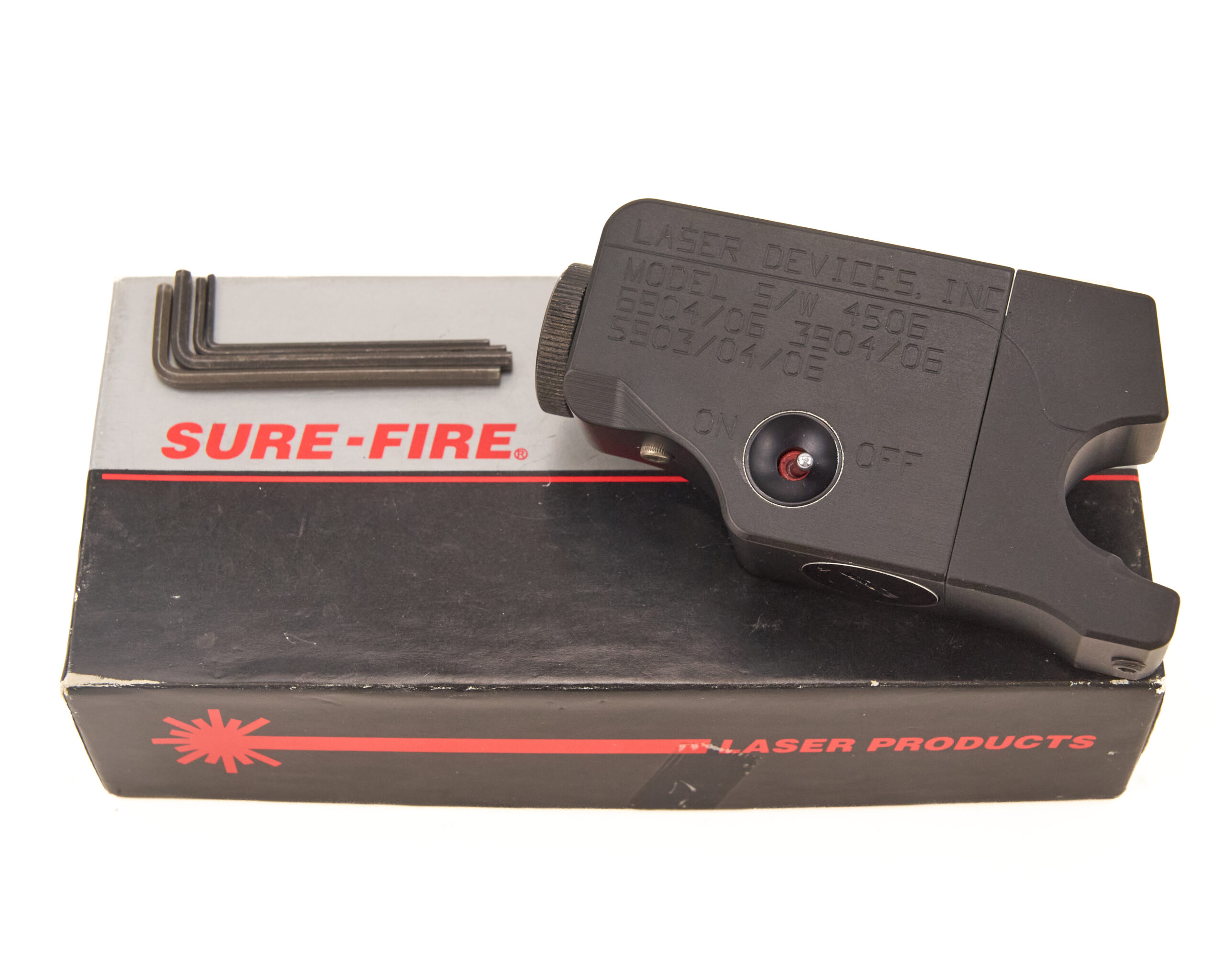
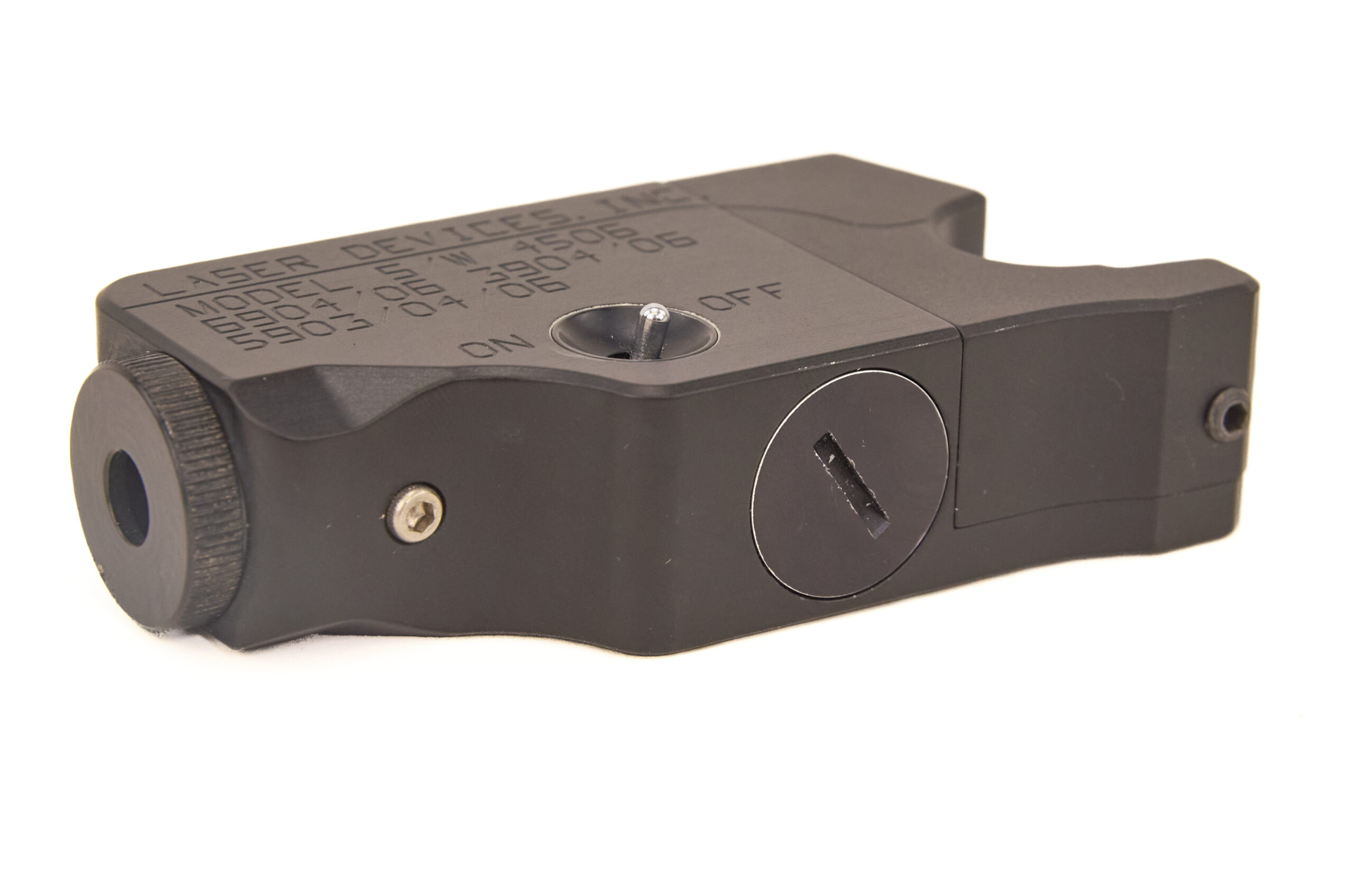
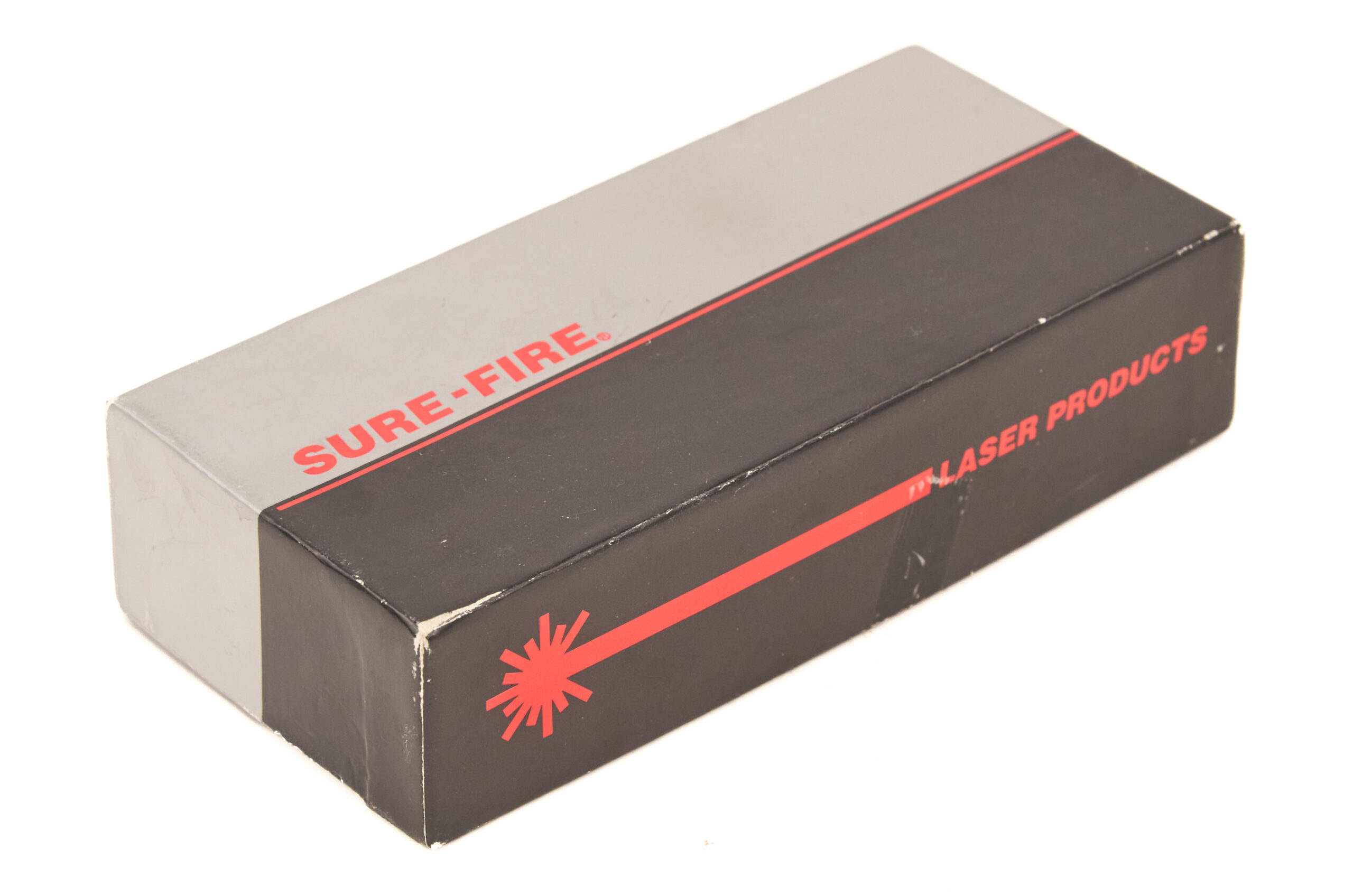
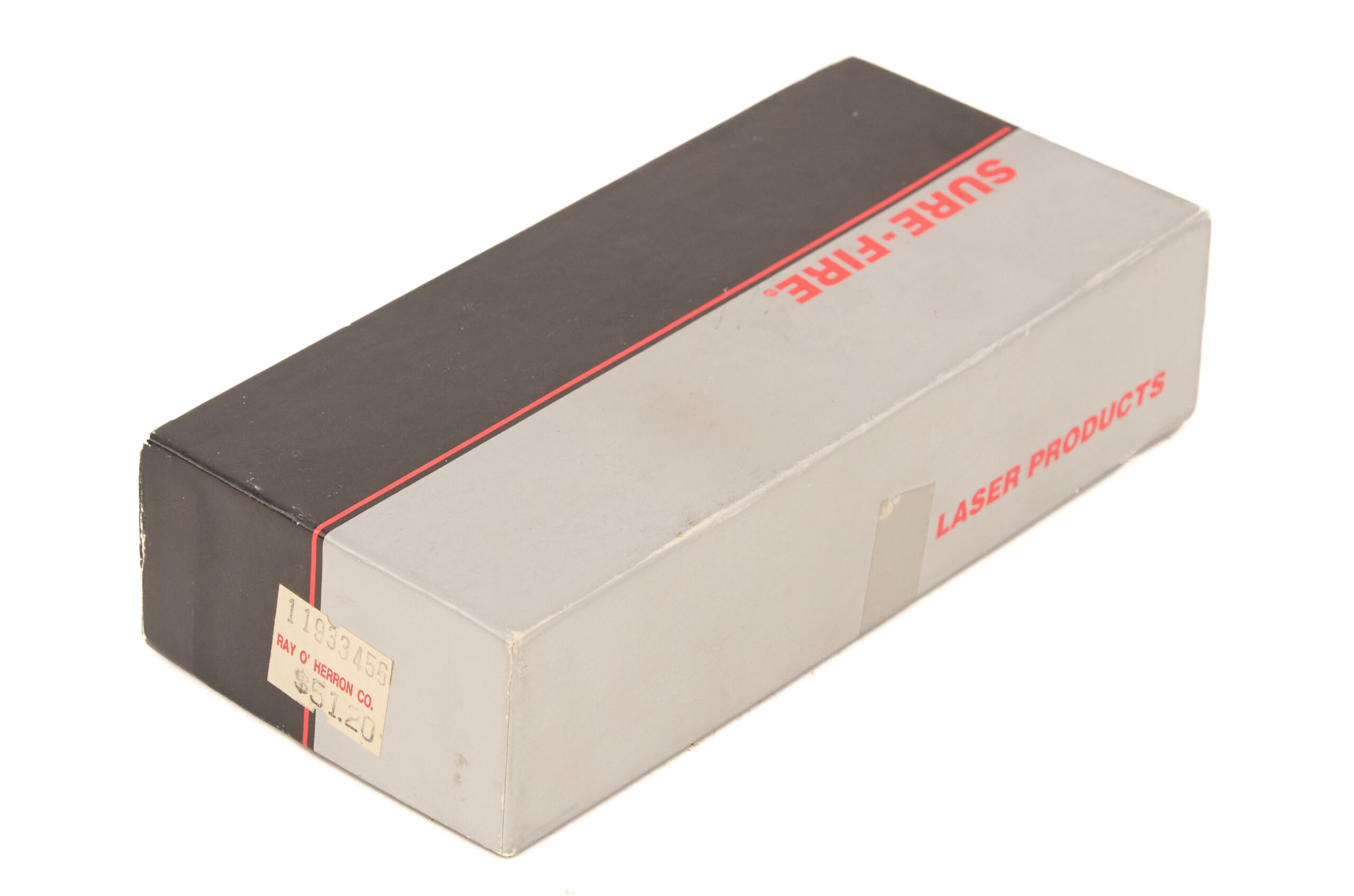
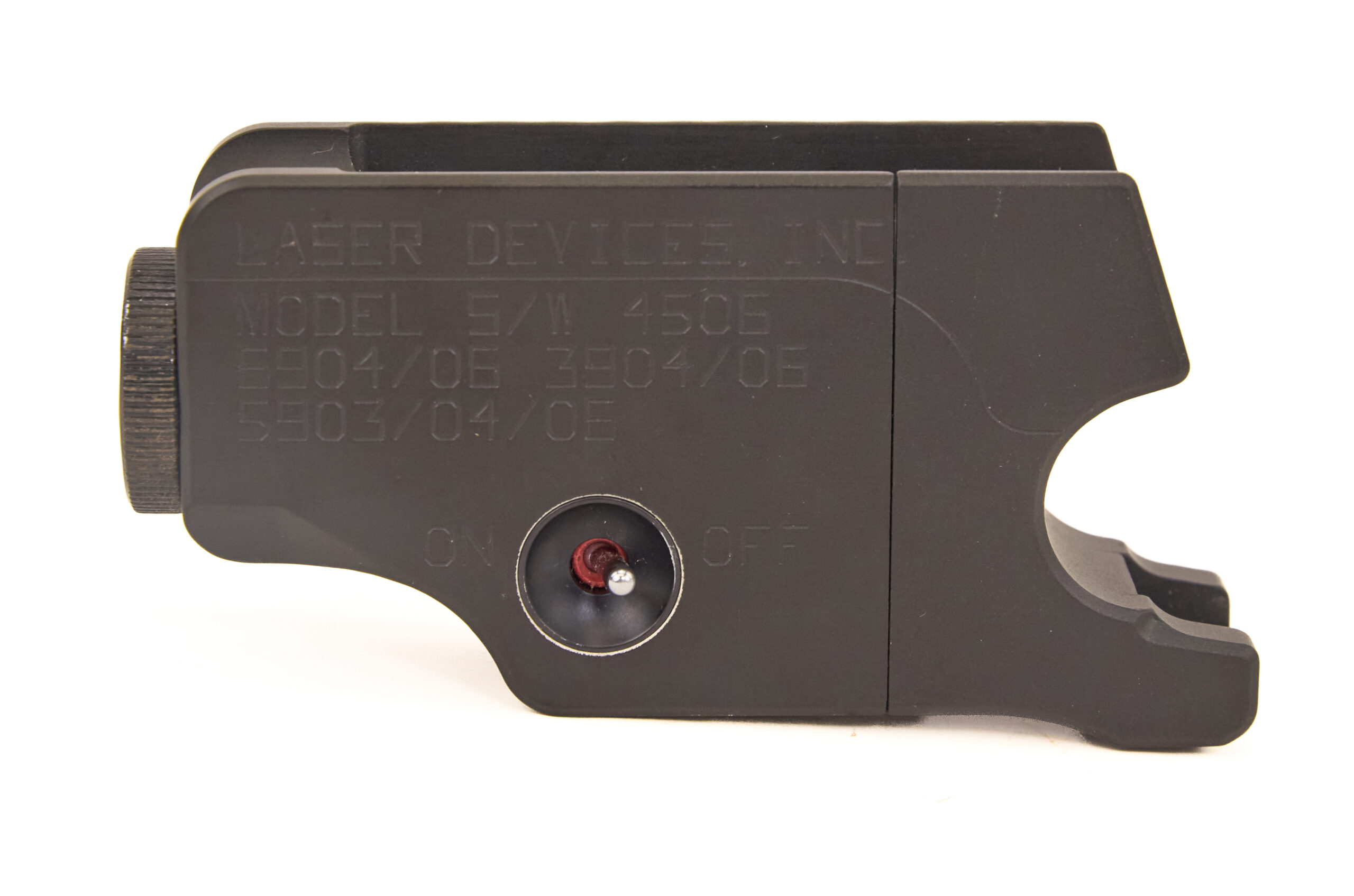
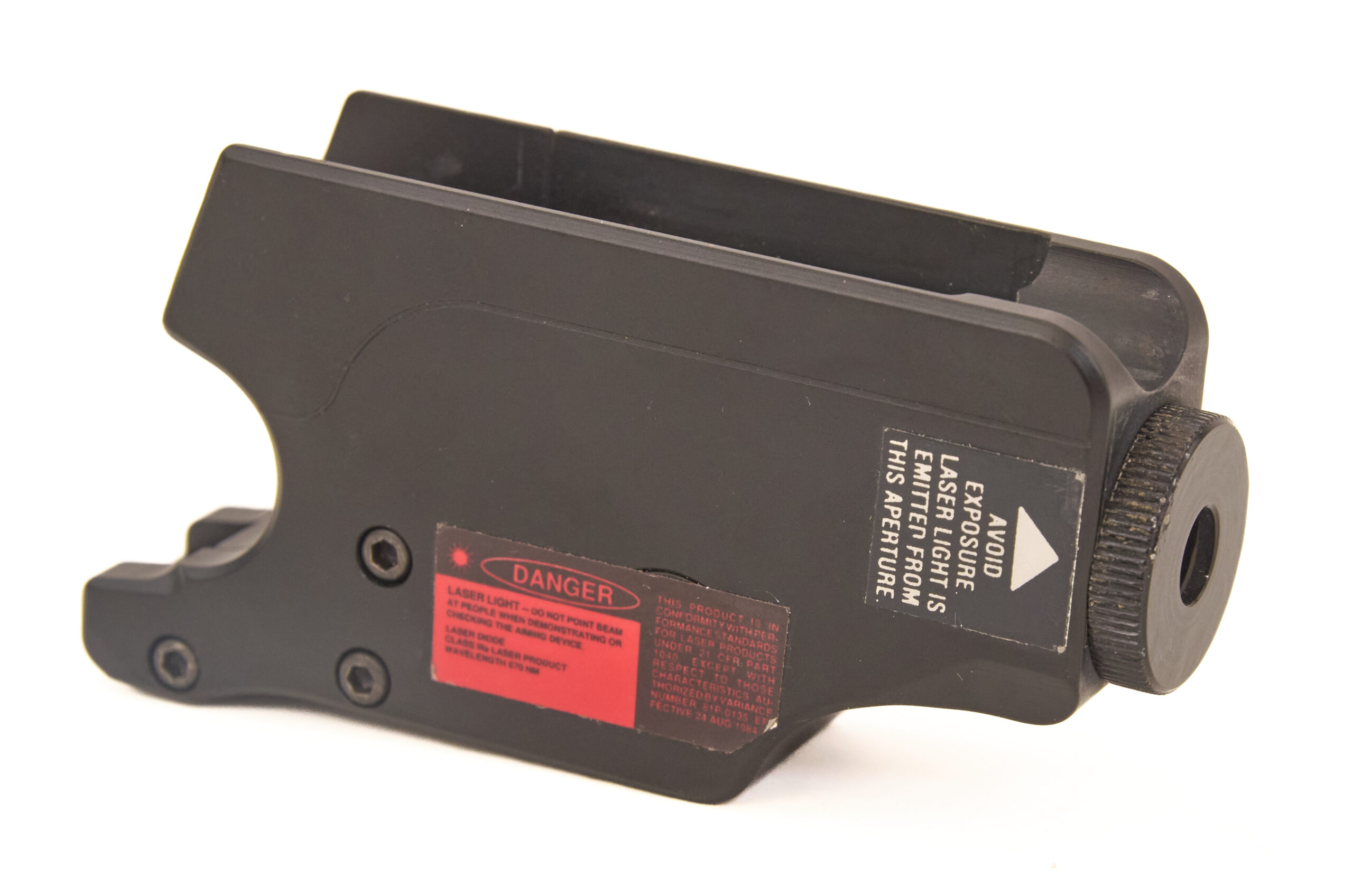
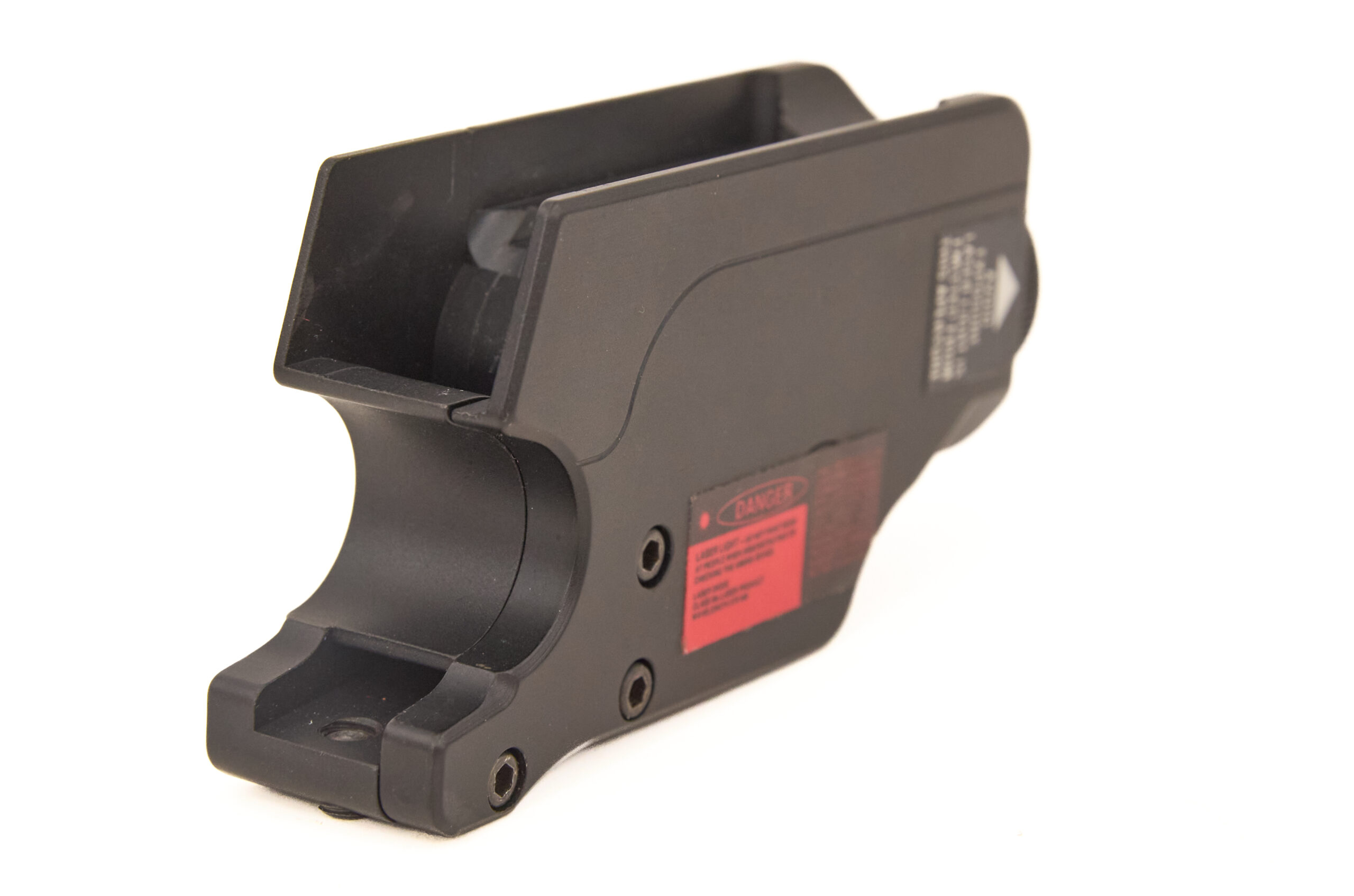
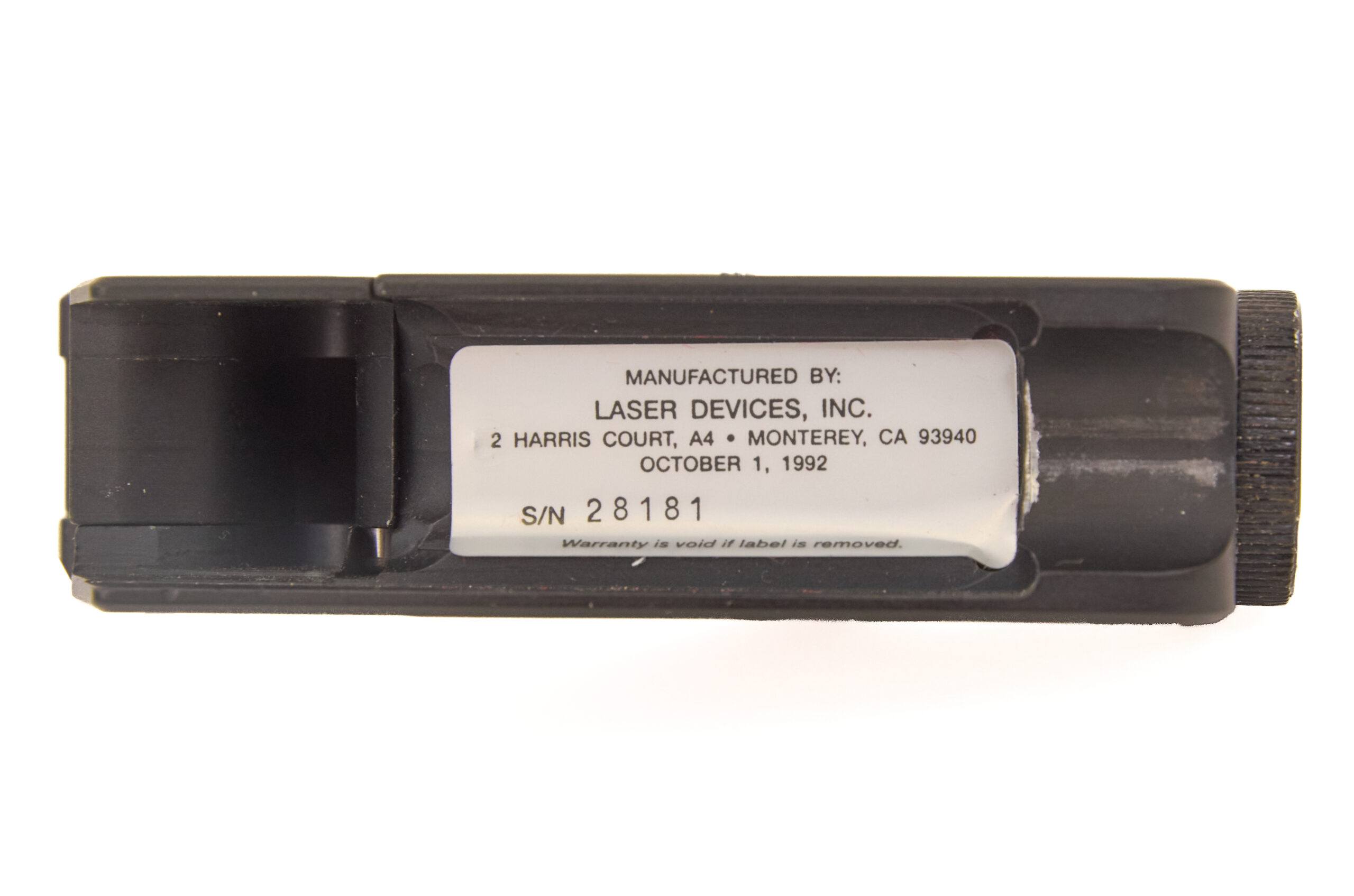
This Laser Devices, Inc. Model 5/W frame-mounted laser sight is an early pistol laser unit made for the Smith & Wesson 4506, 3904-3906, and 5903-5906 series pistols, dated October 1, 1992. It remains in very good condition and includes its tools. As a result, it stands as a strong example of the first serious generation of handgun-mounted aiming lasers adopted during the early 1990s.
Laser Devices, Inc. Model 5/W Frame-Mounted Laser Sight
The Model 5/W reflects a period when visible laser sights were moving from niche law enforcement and special-purpose equipment into broader tactical use. Unlike later compact rail-mounted units, this pattern was built as a dedicated frame-mounted system for specific Smith & Wesson pistol families. That matters because it places the piece in a very specific phase of firearms accessory development, when manufacturers were still designing laser systems around individual handgun models rather than universal accessory rails.
Construction / Configuration / Pattern
This unit is a frame-mounted laser sight made by Laser Devices, Inc. for the Smith & Wesson 4506 / 3904-3906 / 5903-5906 series pistols. It is dated October 1, 1992, which places it squarely in the early years of practical handgun laser use. The sight was designed as a dedicated fitment rather than a generic clamp-on accessory. That model-specific approach is one of its most important features, because it reflects how pistol lasers were engineered before rail systems became dominant.
The inclusion of the tools adds value as well. Early accessories often lose their supporting parts over time, especially when they pass through departments, armorers, or private ownership. Here, the presence of the tools helps keep the package closer to its original working setup. For collectors, that makes the unit more complete. For a period-correct pistol display, it also makes the piece easier to understand as an actual fielded accessory rather than a loose surviving component.
Historical Context / Provenance / Development
This is the kind of accessory that tells the story of a transition in handgun technology. In the late 1980s and early 1990s, visible laser aiming devices were still far from standard. They were specialized tools, often associated with law enforcement, tactical teams, executive protection, and the growing market for serious defensive handgun equipment. A unit like the Model 5/W belongs to that early phase, when laser sights still felt advanced, somewhat experimental, and closely tied to the rise of modern tactical pistol doctrine.
That 1992 date is especially useful. It places this laser in the same period that large metal-framed Smith & Wesson autos were common duty pistols. The 4506, 5906 family, and related third-generation Smith & Wesson pistols were serious service handguns of their era. Mounting a dedicated Laser Devices unit to one of them created a distinctly early-1990s fighting pistol setup. Today, that combination carries strong period appeal because it represents a real step in the evolution from iron-sight-only duty pistols to electronically enhanced handgun systems.
The model-specific design also says something important about the period. Before universal rails became common, manufacturers had to build around the shape and dimensions of particular pistol frames. That gave early laser units a more technical and purpose-built character. They were not casual accessories. They were specialized equipment meant for a known host pistol. Because of that, pieces like this connect strongly with collectors interested in the early tactical era, law enforcement equipment development, and the first practical wave of handgun lasers that preceded the compact modular systems familiar today.
In other words, this is more than an old electronic accessory. It is part of the story of how the fighting handgun changed. It belongs to the period when lasers shifted from novelty to viable service equipment, and when companies like Laser Devices were defining what that equipment looked like in real use. For the right collector, that story is the value.
Condition
This example remains in very good condition overall. It includes its tools, which strengthens the completeness of the set. Finish wear appears limited, and the unit presents well as a period accessory. As with many early electronic sighting devices, overall preservation matters heavily, and this example keeps the look of a well-maintained piece rather than a heavily worn leftover.
Explore More at Old Steel
Follow us on Instagram:
Old Steel Guns on Instagram