Description
German Anti-Partisan Badge (Bandenkampfabzeichen)
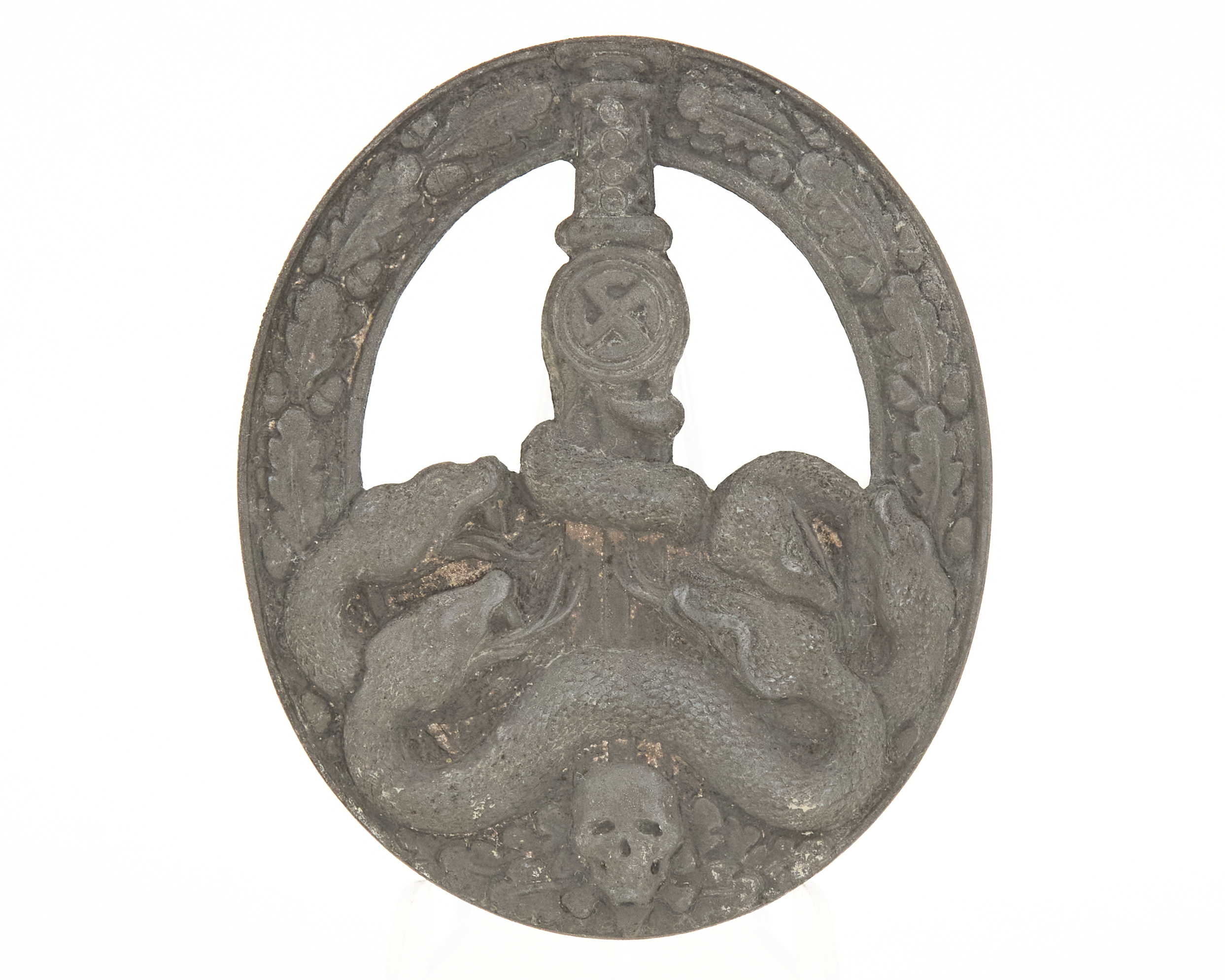
Presented is a German Anti-Partisan Badge, also known as the Bandenkampfabzeichen, a decoration originally instituted by Adolf Hitler on 30 January 1944. While the award itself is firmly rooted in the final phase of the Second World War, this particular example is a post-war manufactured badge produced by Rudolf Souval, identifiable by its distinctive hardware and construction characteristics.
The Bandenkampfabzeichen was awarded to members of the German Army, Luftwaffe, Kriegsmarine, Ordnungspolizei, and Waffen-SS for participation in anti-partisan operations. It was issued in three grades: bronze for 20 combat days, silver for 50 days, and gold for 100 days. The award is historically controversial due to the brutal nature of so-called “bandit warfare,” which frequently involved reprisals and atrocities against civilian populations.
This example is constructed of silvered tombac and follows the correct wartime design pattern. The obverse consists of an oval oak leaf wreath joined at the base by a prominent skull and crossbones. Overlaid centrally is a vertical sword bearing a sunwheel-style swastika at the ricasso, plunging downward into a writhing nest of multi-headed serpents—symbolic of the regime’s depiction of partisan forces. The design is crisp and well defined, consistent with Souval’s post-war use of original wartime dies.
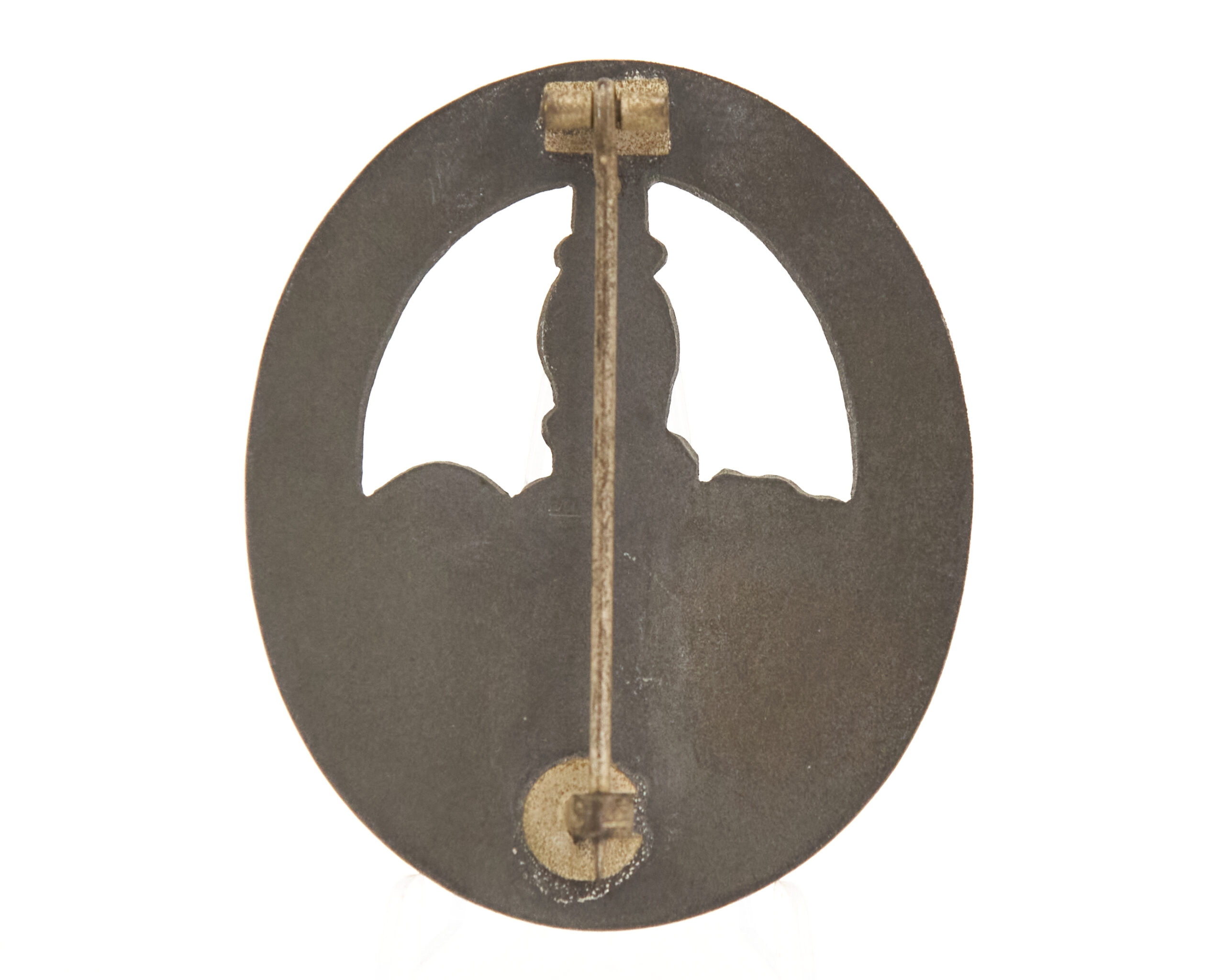
The reverse is plain and fitted with Souval-characteristic hardware, including a sheet-metal hinge and a vertical round wire catch. This catch type is a well-known identifier of Souval’s post-May 1945 production, as Rudolf Souval continued manufacturing German awards for the souvenir and collector market using remaining wartime tooling well into the 1950s and early 1960s. The badge bears the L/58 maker code.
As a post-war Souval piece, this badge is not a wartime award but remains an authentic period manufacture using original dies and materials. Such examples are collected in their own right and serve as tangible representations of how German military decorations continued to be produced and circulated after the collapse of the Third Reich.