Description
German–Austrian–Hungarian World War I & Interwar Medal Bar
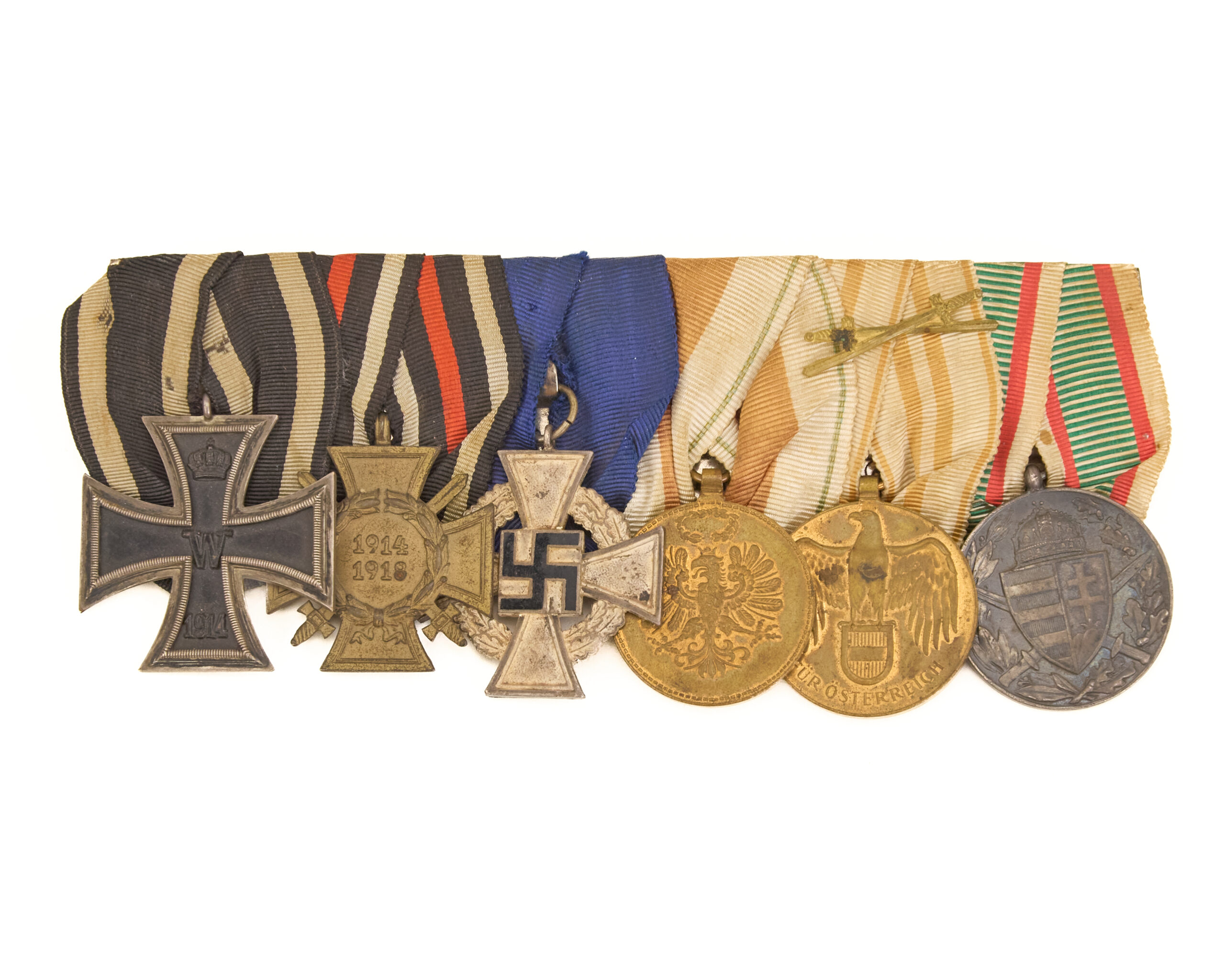
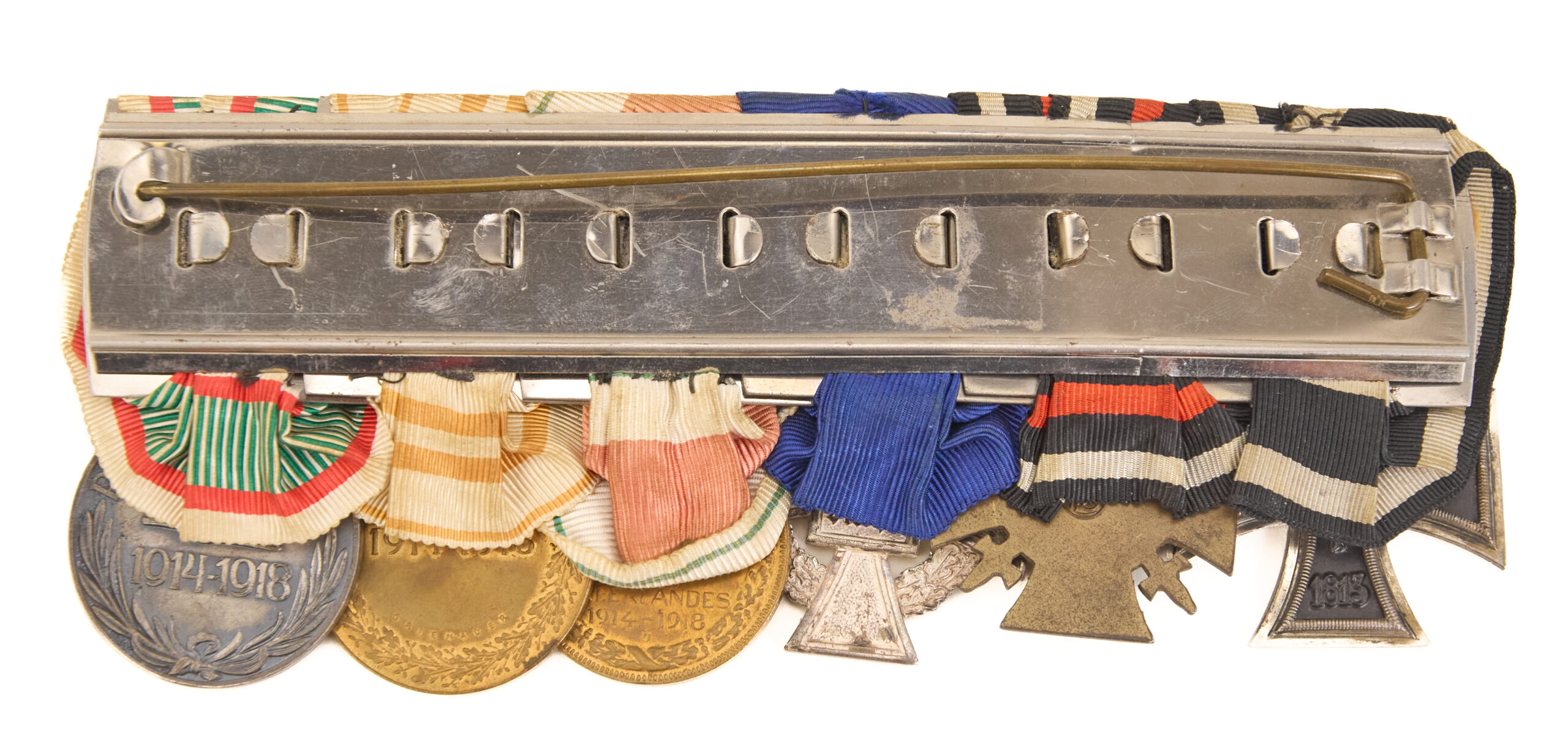
A well-composed medal bar representing German, Austrian, and Hungarian service spanning the First World War and the interwar period. The group reflects a veteran with combat service in World War I and later recognized long-term civil or state service.
Mounted decorations include:
• Iron Cross (Eisernes Kreuz)
A wartime award recognizing bravery or military merit. (Class not marked on the bar.)
• German Civil Service Faithful Service Medal, 2nd Class (Treudienst-Ehrenzeichen), for 25 Years
Instituted to recognize long and faithful service in German civil administration. Awarded for twenty-five years of service.
• German Hindenburg Cross for Combatants
(Ehrenkreuz des Weltkriegs 1914/1918 mit Schwertern)
Instituted on July 13, 1934, by Field Marshal Paul von Hindenburg to commemorate service in World War I.
The obverse bears the dates “1914 – 1918” within a laurel wreath. The combatant version is distinguished by crossed swords between the arms of the cross. This was Germany’s first official service decoration issued to World War I veterans.
• Austrian World War I Commemorative Medal
(Kriegserinnerungsmedaille 1914–1918)
Instituted in 1933 by the First Republic of Austria and awarded to military participants of the First World War. The bronze medal features the double-headed eagle of the former Austro-Hungarian Empire on the obverse and commemorates service between 1914 and 1918.
• Austrian War Commemorative Medal for 1914–1918
Also instituted in 1933 and awarded to Austrian citizens who participated in World War I.
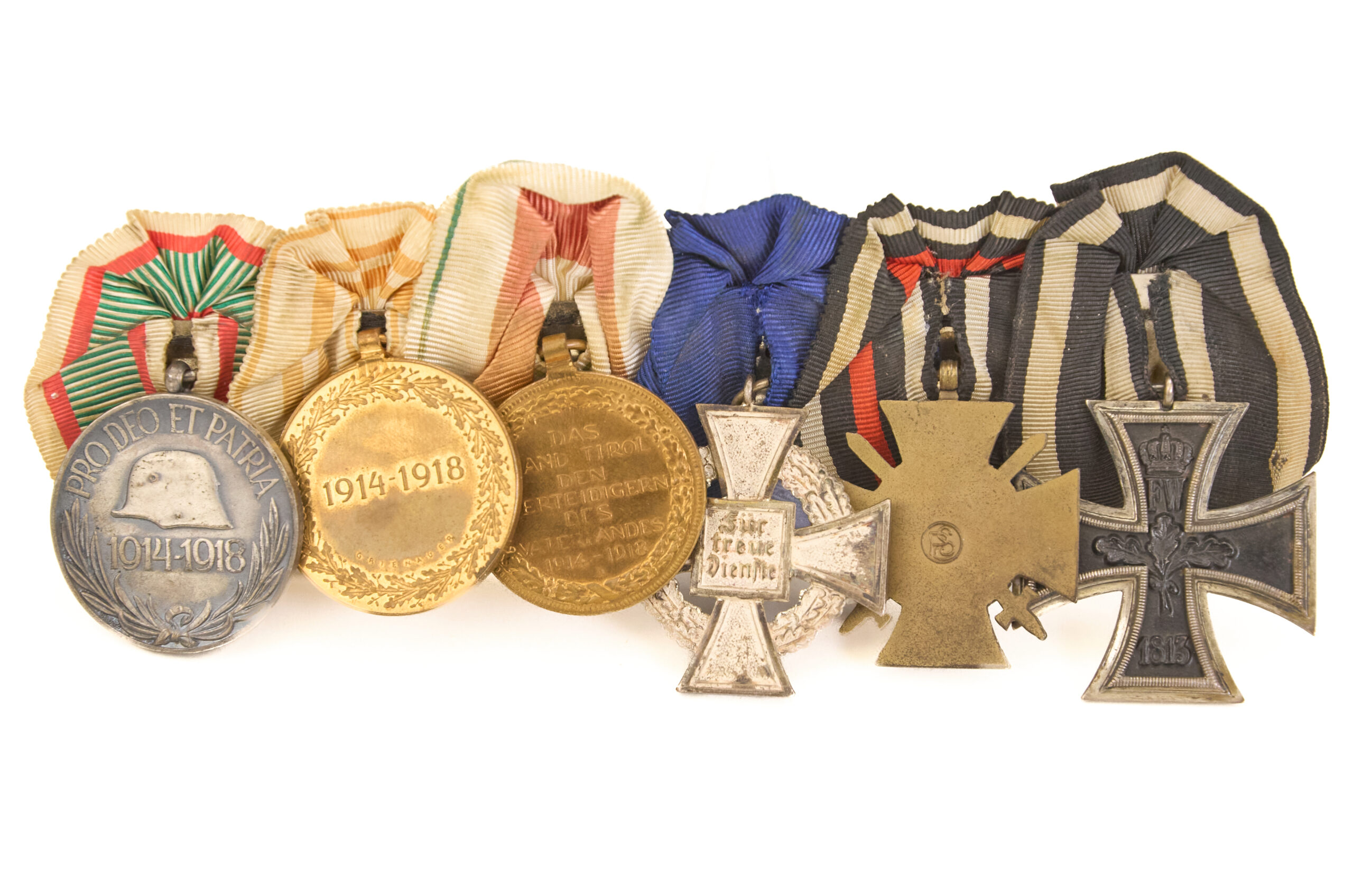
The obverse displays the Austrian federal eagle with shield and the inscription “FÜR ÖSTERREICH” (“For Austria”). The reverse shows the dates “1914–1918” encircled by the motto “IN TREUE FEST” (“Steadfast in Loyalty”).
• Hungarian World War I Commemorative Medal for Combatants
(Magyar Háborús Emlékérem)
Instituted on May 26, 1929, to honor those who served in the Austro-Hungarian forces during World War I.
The obverse features the coat of arms of the Kingdom of Hungary surmounted by the Crown of Saint Stephen, with crossed swords behind the shield and flanking laurel and oak branches. The reverse (not visible on the mounted bar) depicts a steel helmet above the dates “1914–1918” with the inscription “PRO DEO ET PATRIA” (“For God and Fatherland”).