Description
81mm M43A1B Mortar Round – Inert Example with RARE AM-M159 Nose Fuze
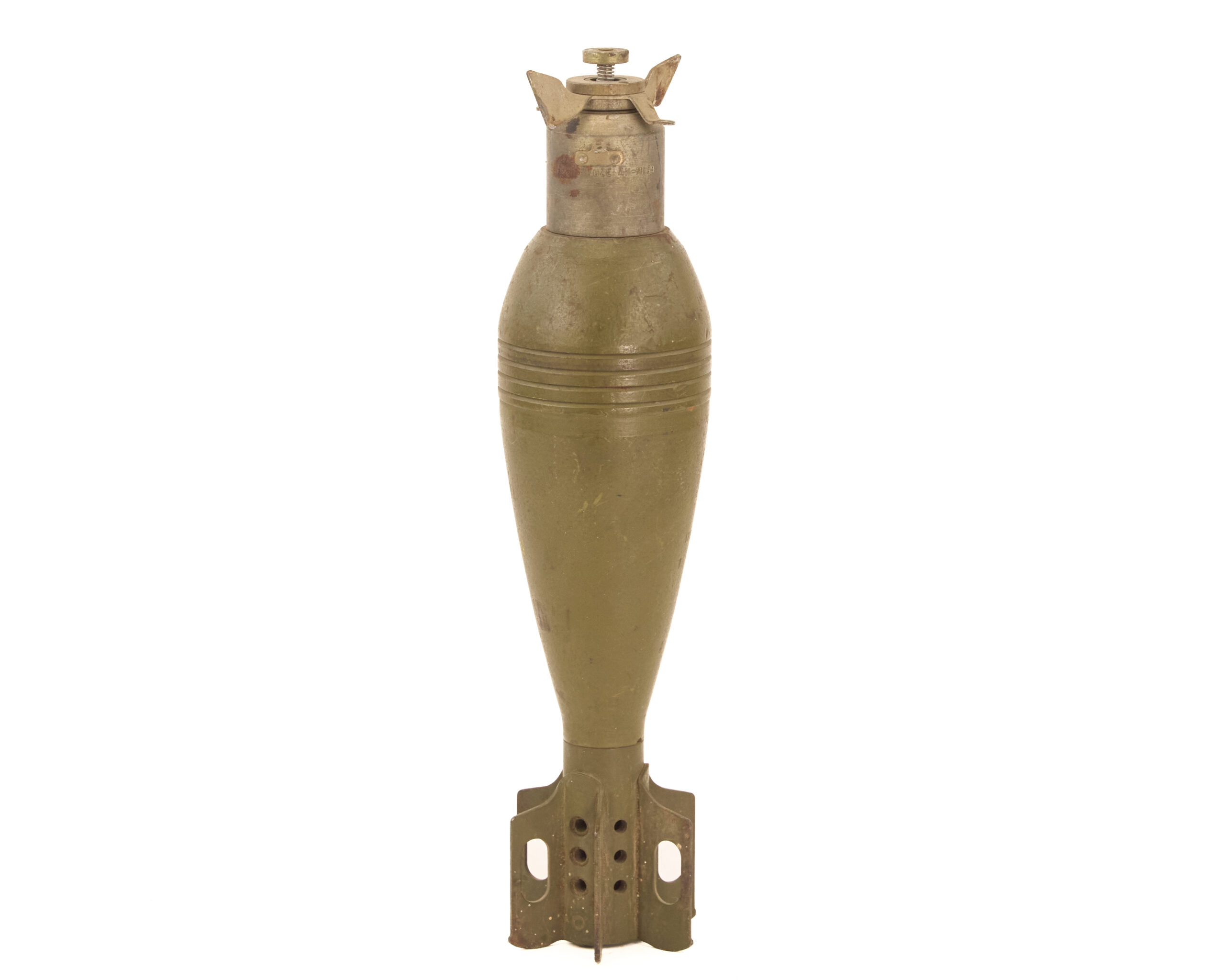
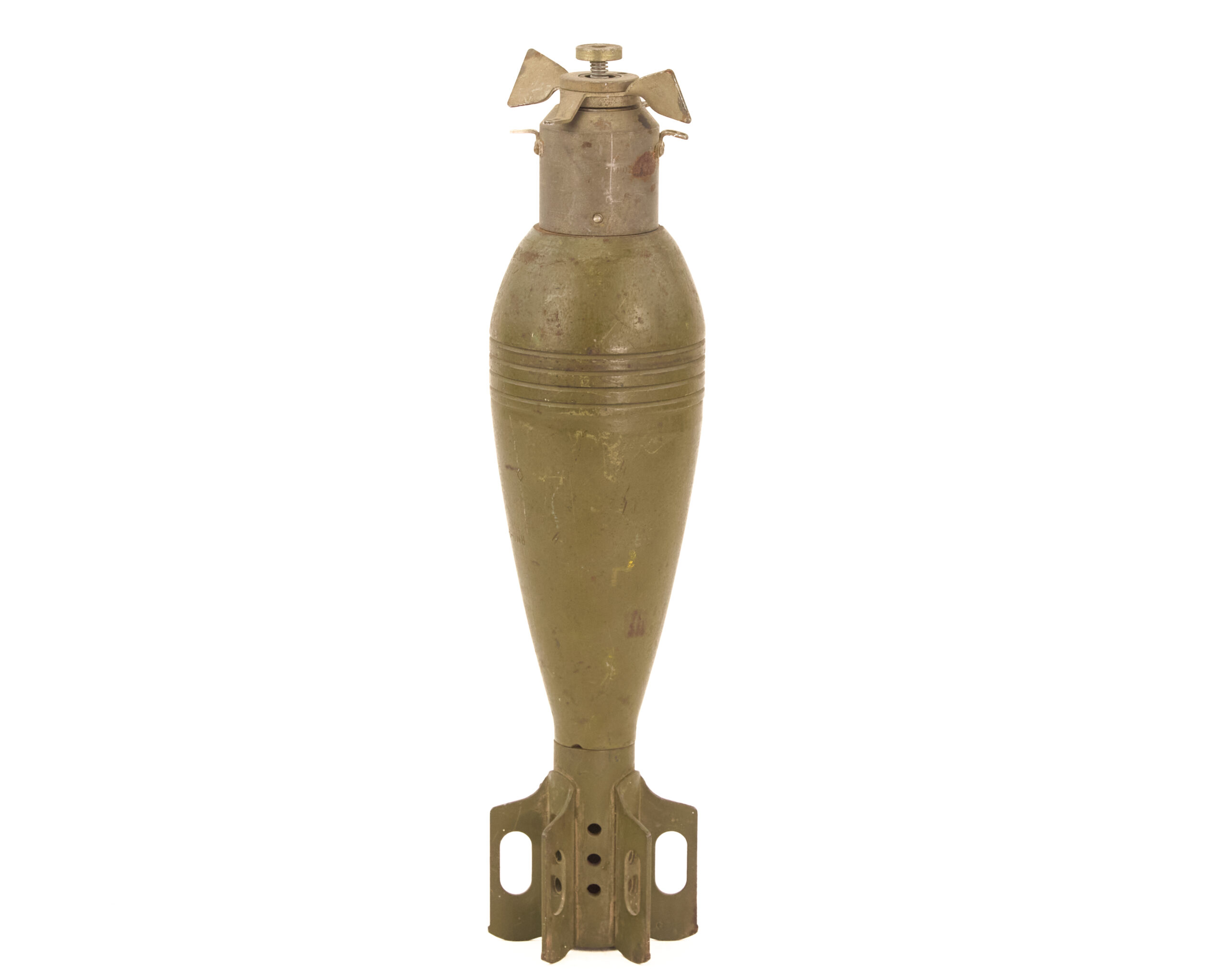
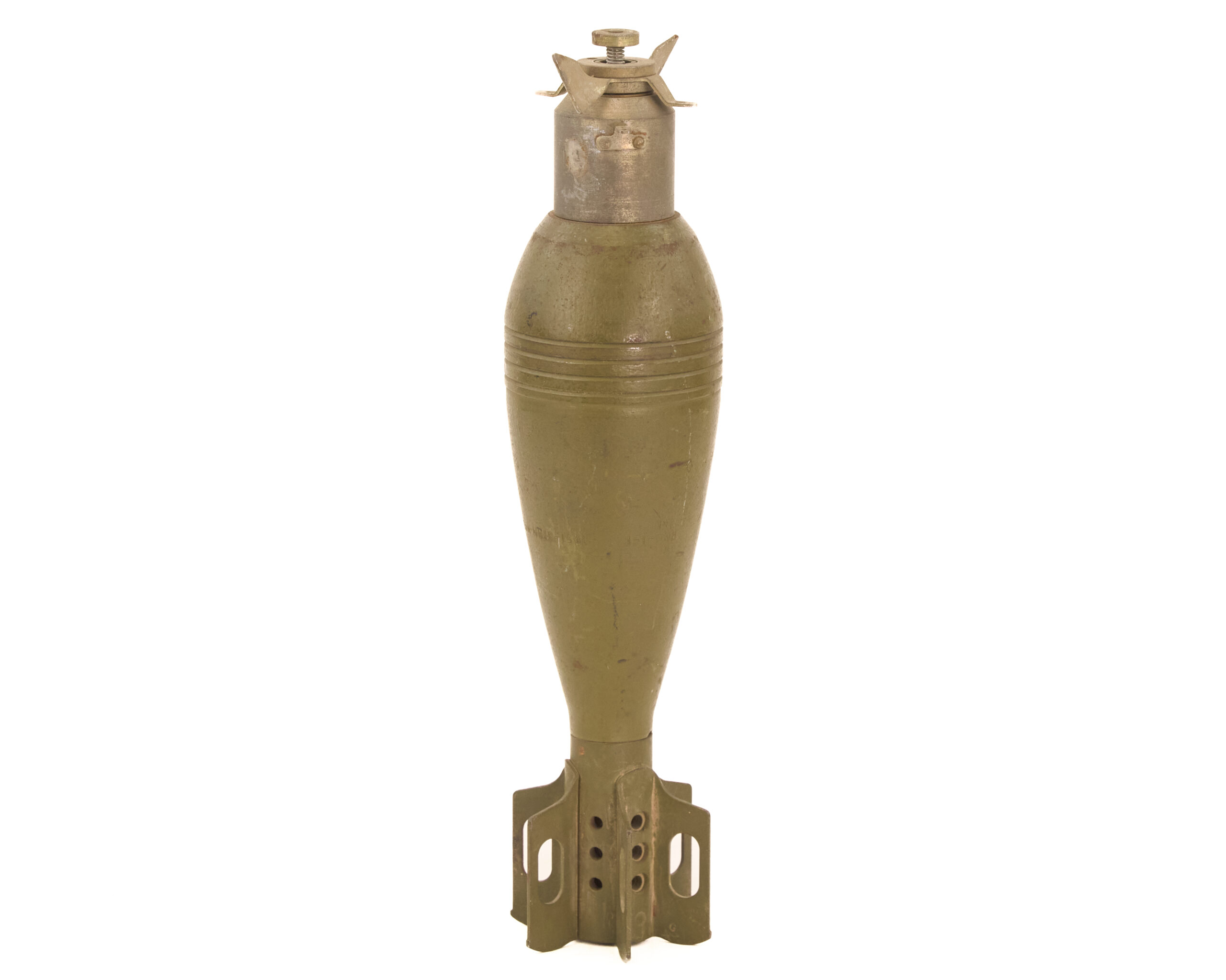
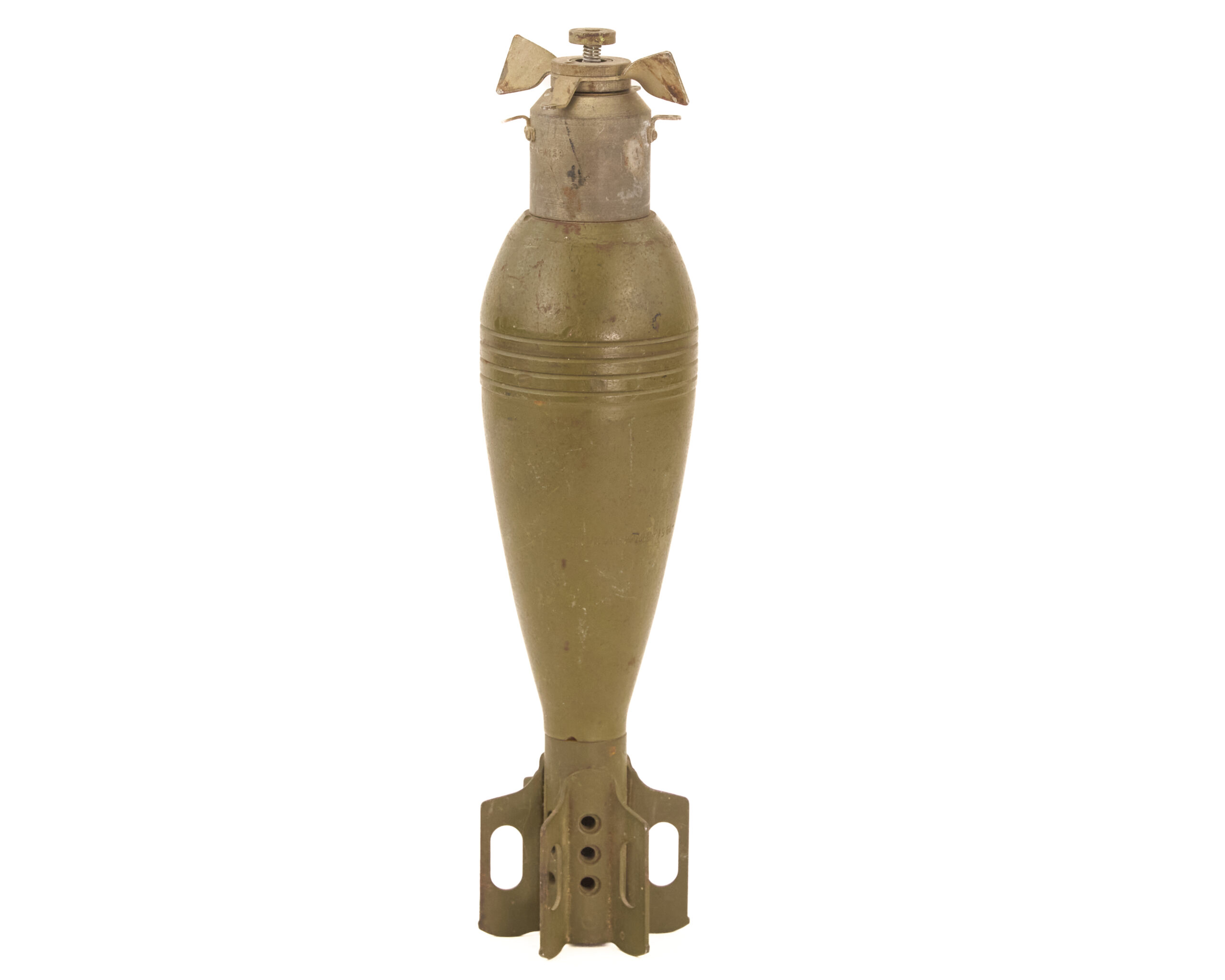
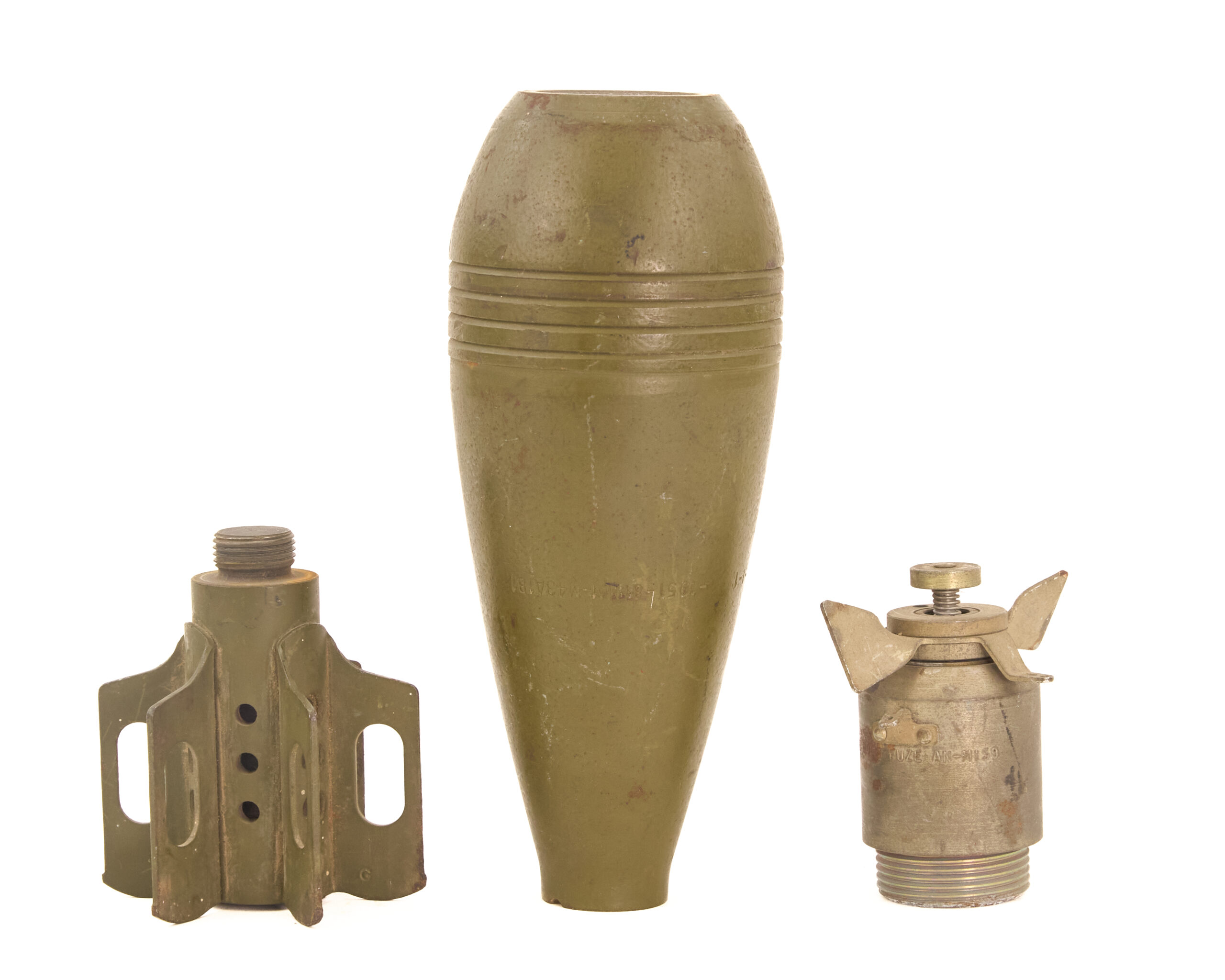
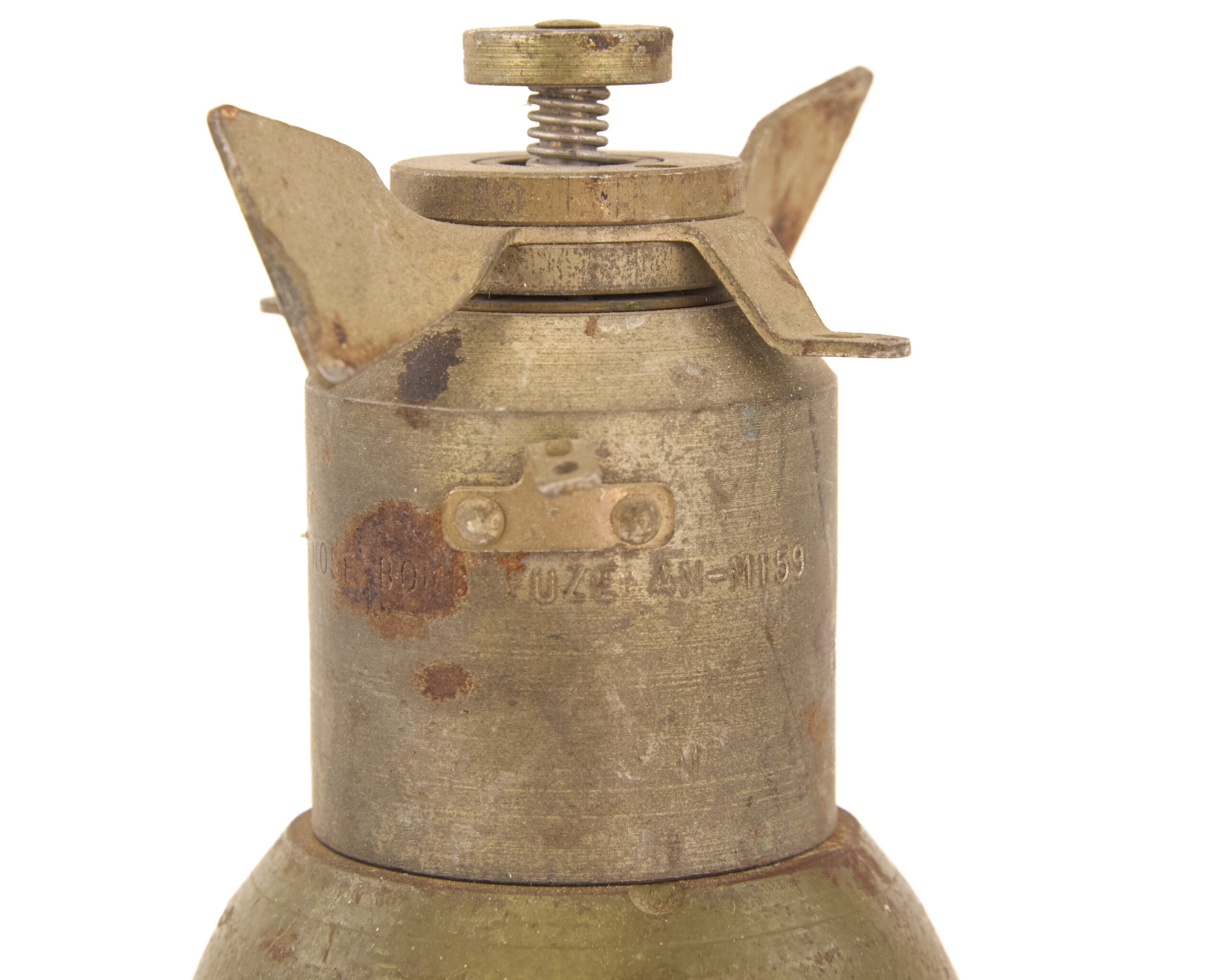
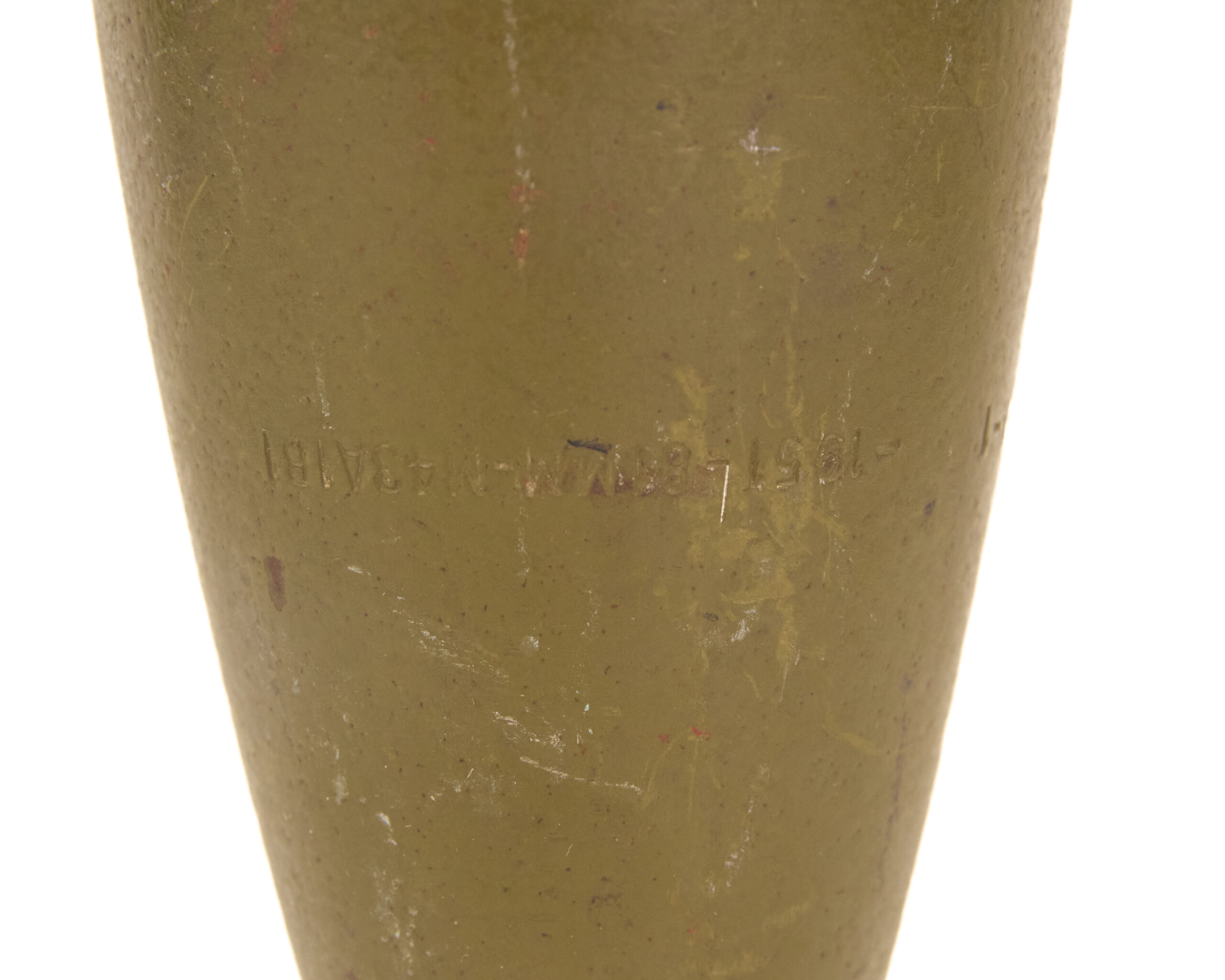
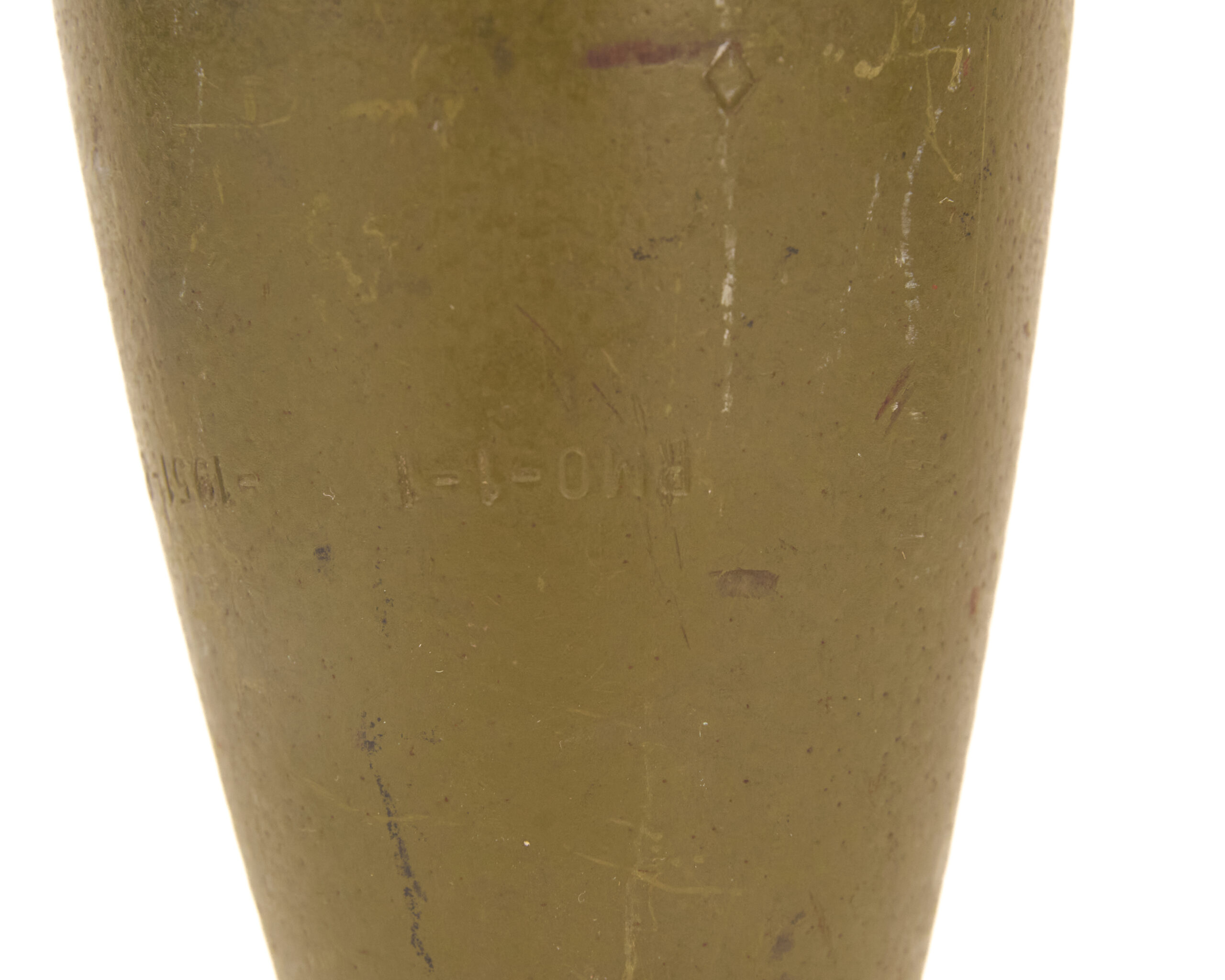
This 81mm M43A1B mortar round is an inert example fitted with a Nose Bomb Fuze AM-M159. It retains the classic teardrop mortar body, finned tail assembly, and complete fuze arrangement, giving it the unmistakable profile of mid-20th-century U.S. mortar ordnance. As a display piece, it presents as a strong representative example of portable infantry fire support ammunition.
81mm M43A1B Mortar Round
The M43-series 81mm mortar round belongs to the long-running family of American 81mm mortar ammunition developed for battalion- and company-level indirect fire support. In this case, the appeal lies in the complete visual package. The body, tail, and fuze remain together, and the shape reads immediately as a proper service-pattern mortar round rather than as a fragmentary relic or incomplete sectioned piece.
Construction / Configuration / Pattern
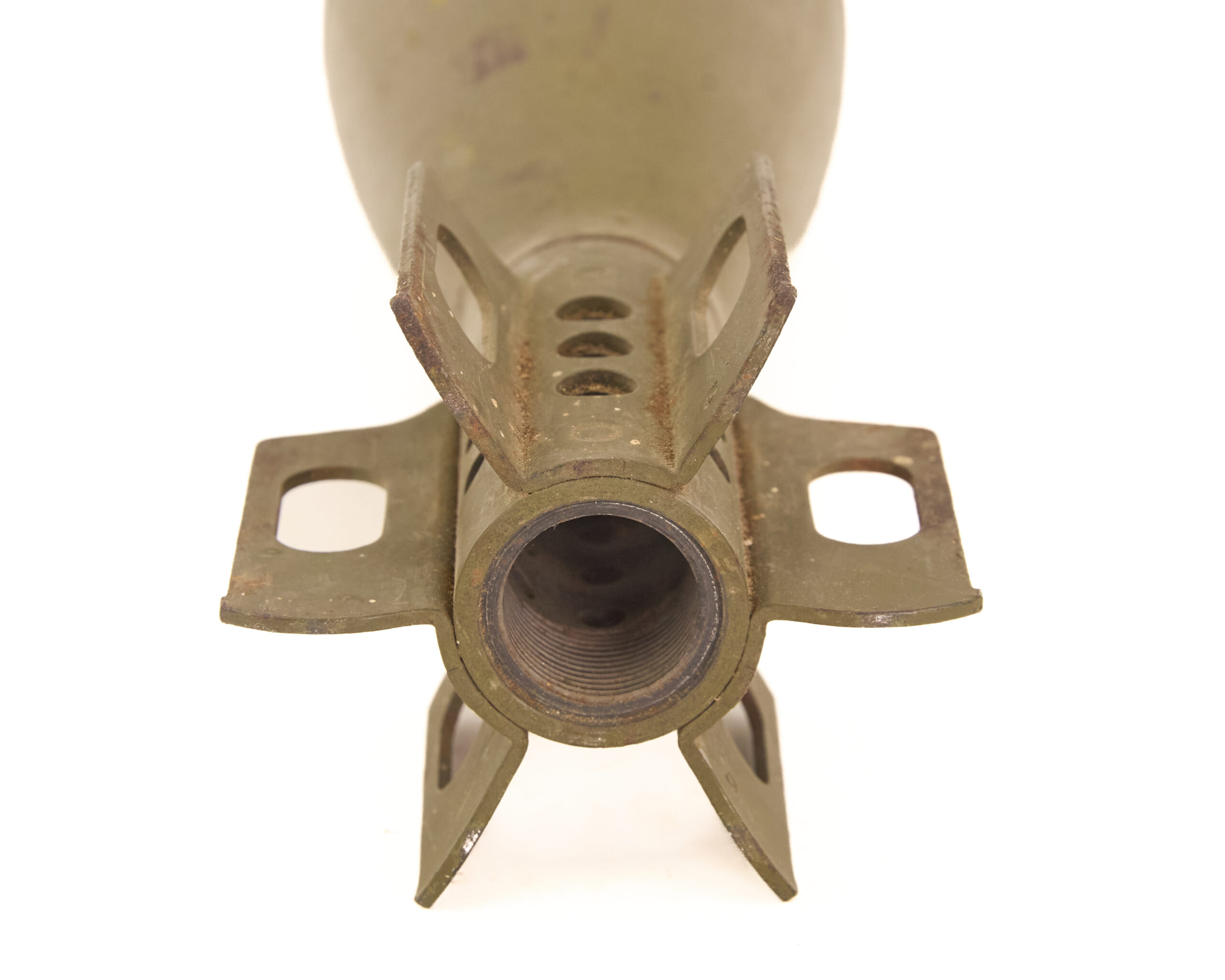
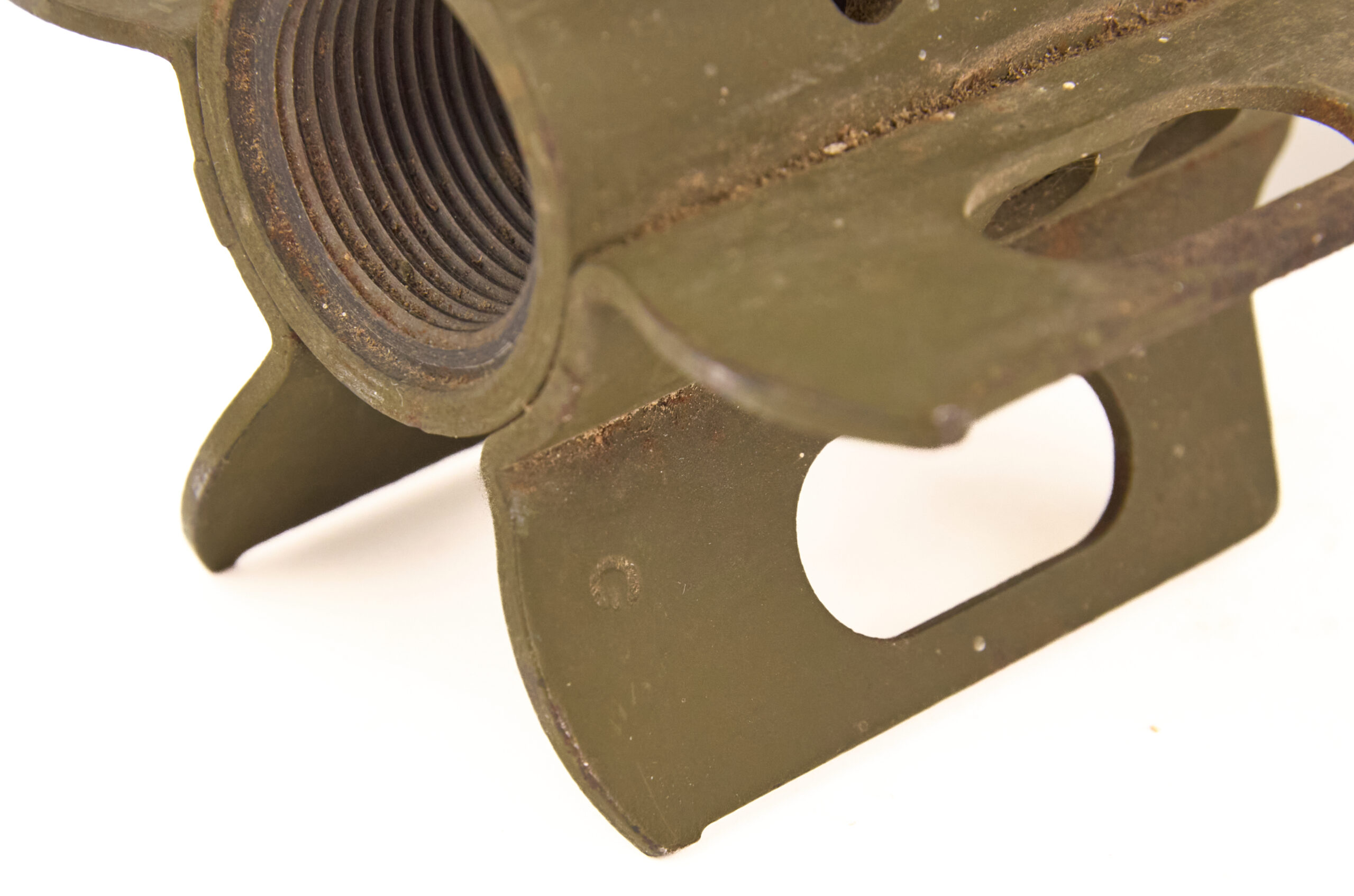
This round follows the standard 81mm mortar bomb pattern with a tapered steel body, ribbed midsection, and finned tail for stabilized flight. It is fitted with a Nose Bomb Fuze AM-M159, which remains an important identifying feature at the top of the assembly. The tail section retains its fin group and vented base arrangement, which are central to the mortar system’s method of launch and stabilization. Overall, the round keeps the clean, functional layout expected of a service mortar bomb, with no need for decorative detail beyond the purpose-built form itself.
Historical Context / Provenance / Development
The 81mm mortar occupied an important place in 20th-century infantry doctrine because it offered portable indirect fire without the logistical burden of full artillery. That is part of what gives a round like this its appeal. It represents the ammunition end of one of the most practical support weapons carried close to the infantry line. Mortars filled the space between small arms and heavier artillery by giving units a weapon that could drop explosive fire behind cover, into reverse slopes, and onto positions that direct-fire weapons could not reach.
It reflects the expendable side of military material culture. These were not personal carry items meant to last for years in the same way as a holster, helmet, or bayonet. They were ammunition, designed for immediate battlefield effect. Because of that, surviving inert examples often carry a strong sense of purpose. Their shape is entirely dictated by function, from the nose fuze to the finned tail.
The M43A1B designation and AM-M159 fuze also give the piece a more specific military identity than a generic “mortar shell” description would. For collectors of U.S. ordnance, training pieces, and inert display ammunition, those details matter. They place the round within a recognizable American mortar lineage and make the piece more useful for study, display, and comparison.
Condition
This example presents well overall as an inert ordnance display piece. The body retains its correct olive drab military finish and clear service profile. The fuze remains in place, and the fin assembly is intact, which is important for overall presentation. Light age, handling wear, and finish loss are present in places, but the round remains a clean and highly recognizable example.
Explore More at Old Steel
Follow us on Instagram:
Old Steel Guns on Instagram