Description
Original German WWII Panzerfaust 60m Version
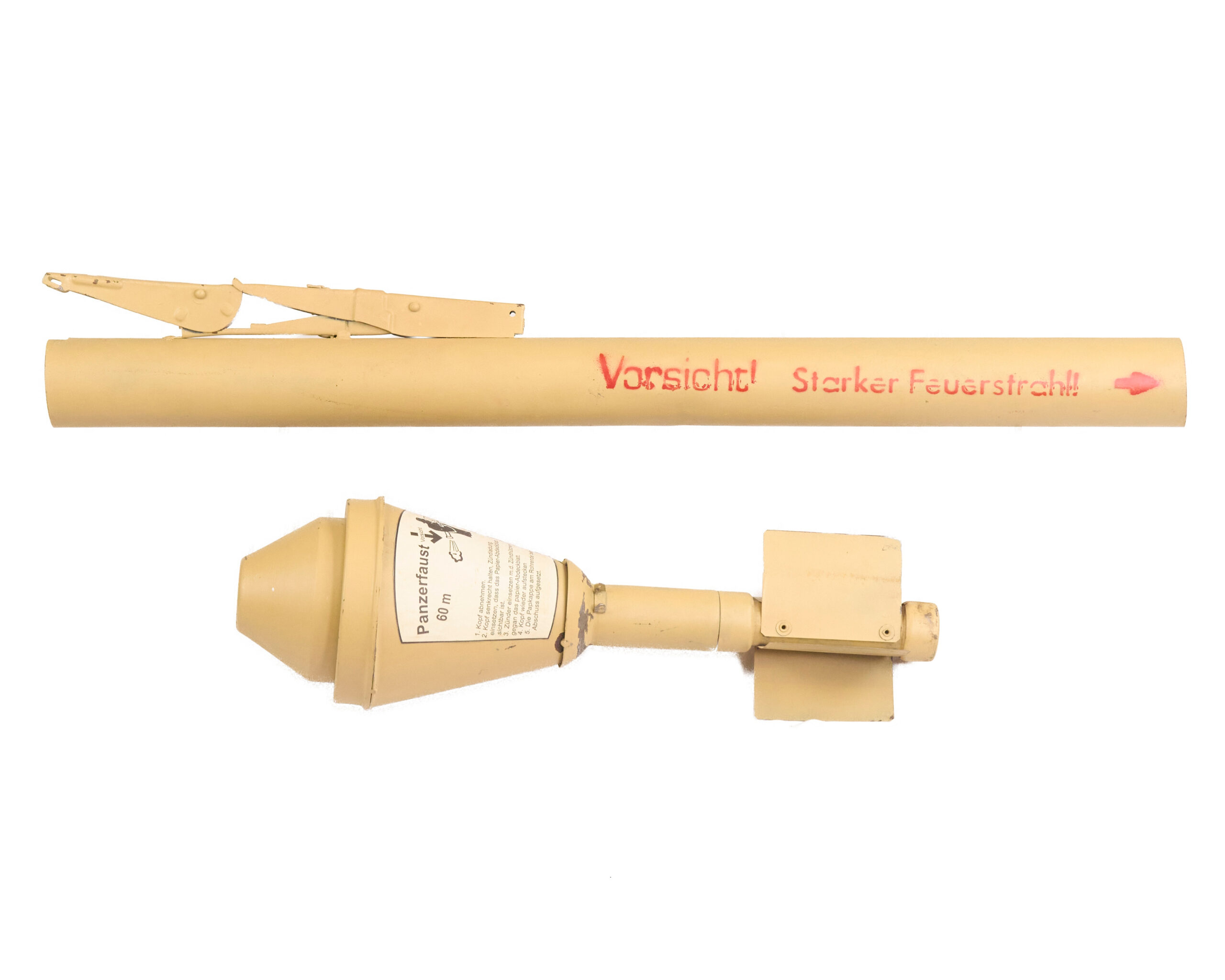
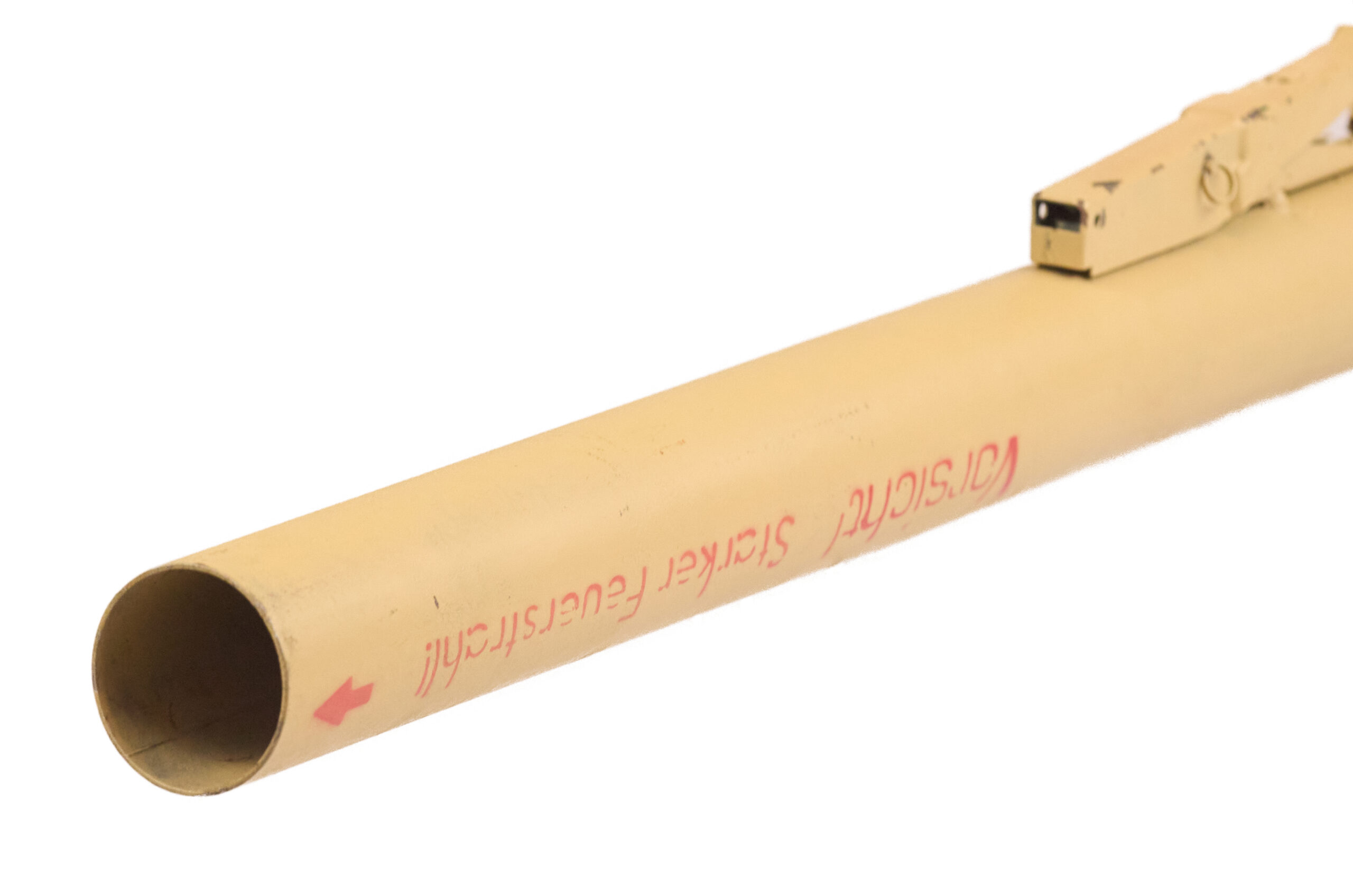
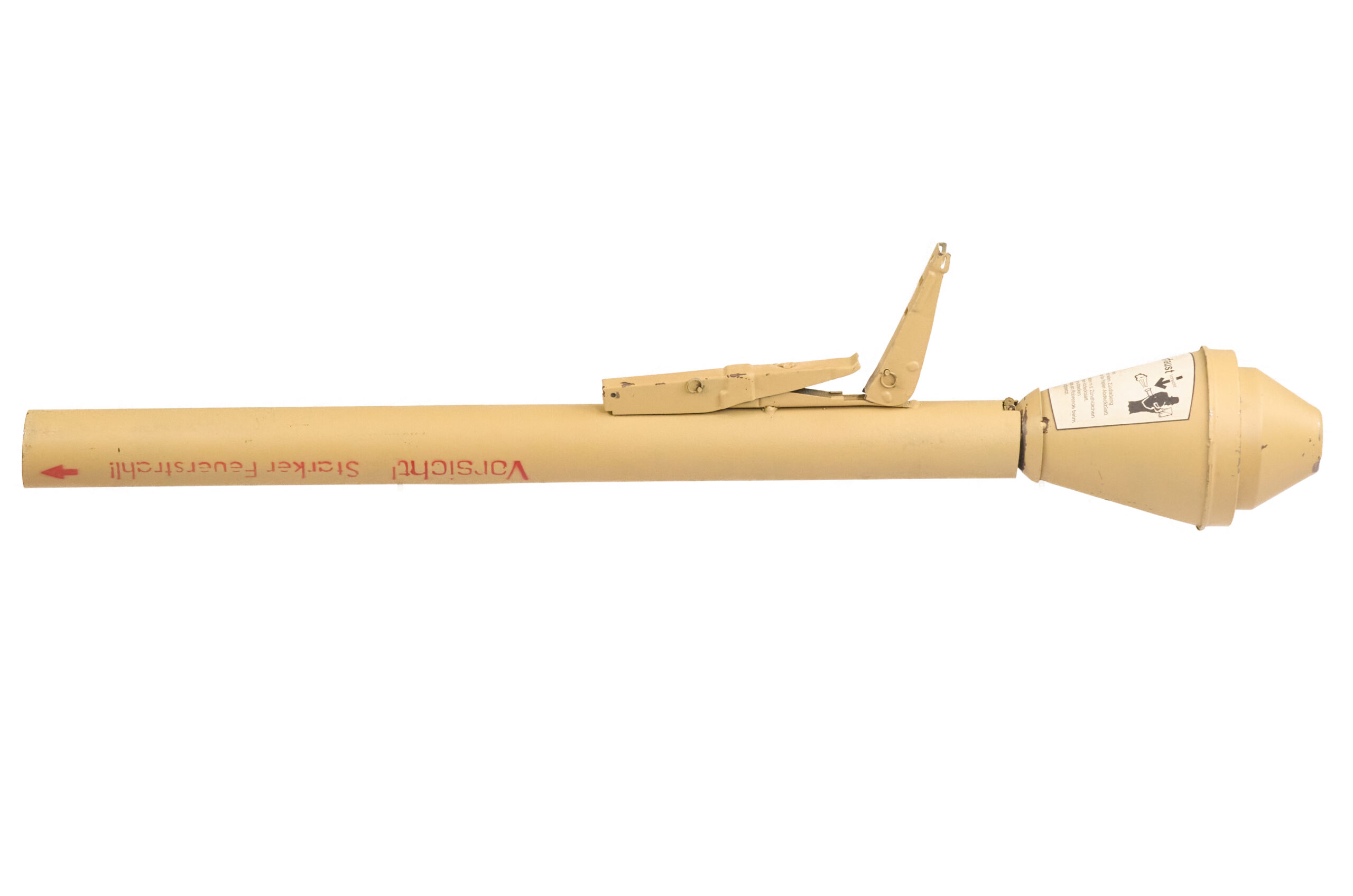
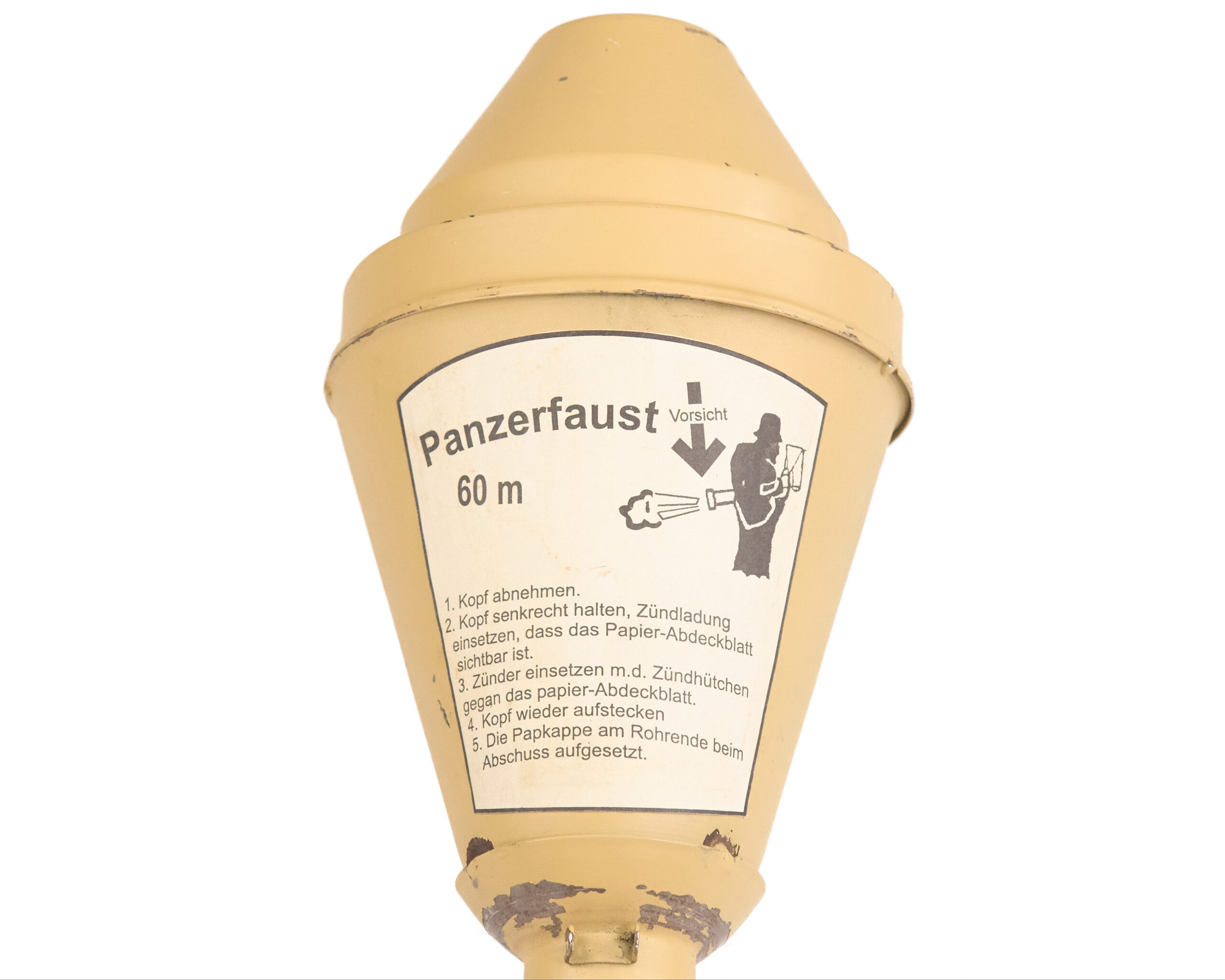
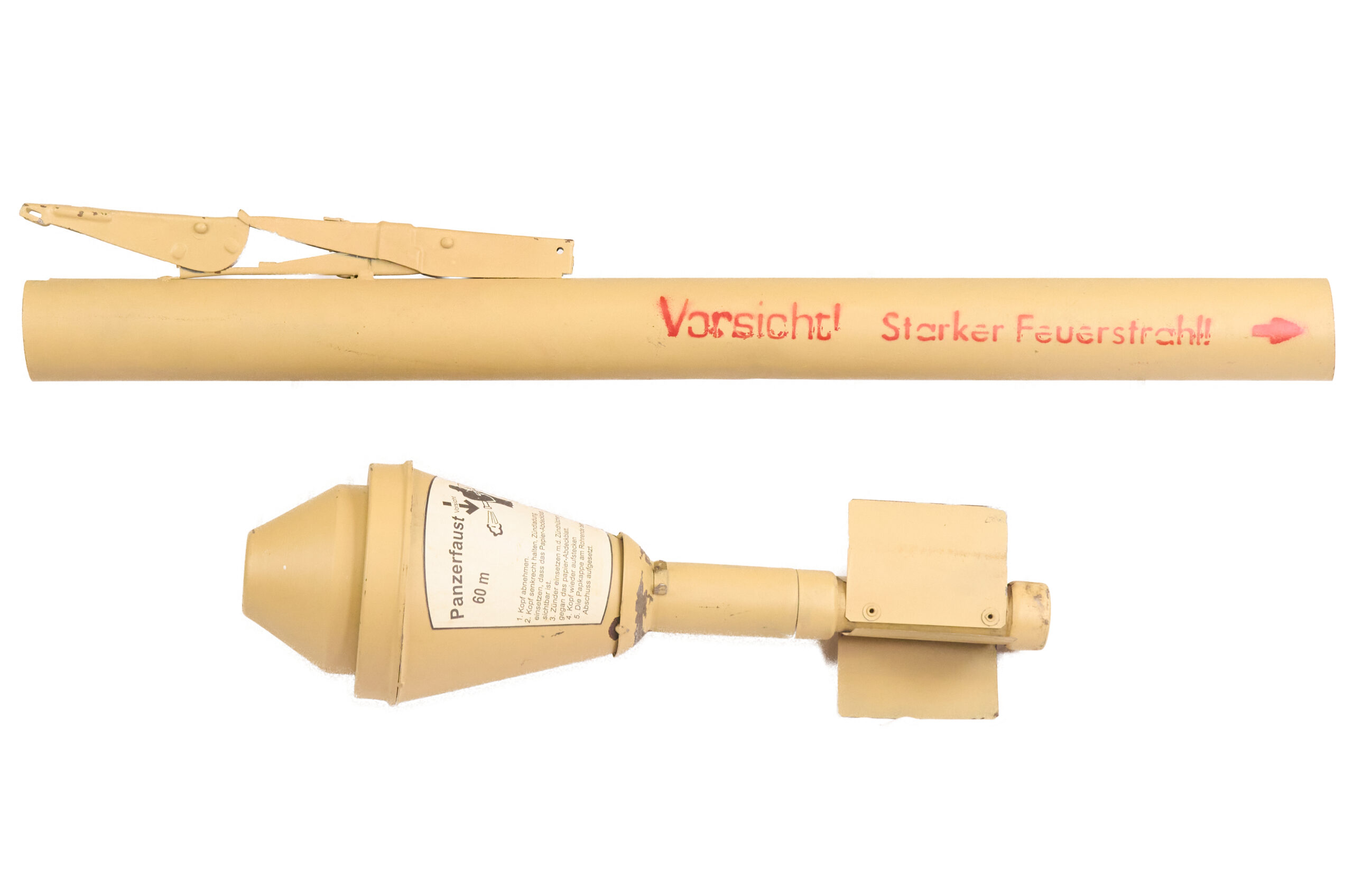
This Original German WWII Panzerfaust 60m is an inert example of one of Germany’s most recognizable late-war infantry anti-tank weapons. It retains its firing mechanism, integrated front sight, metal rocket body, and surviving original label in excellent condition. Finished in tan paint and complete with springing tail fins, it presents as a strong and highly visual display piece from the final period of German wartime weapons development.
Original German WWII Panzerfaust 60m
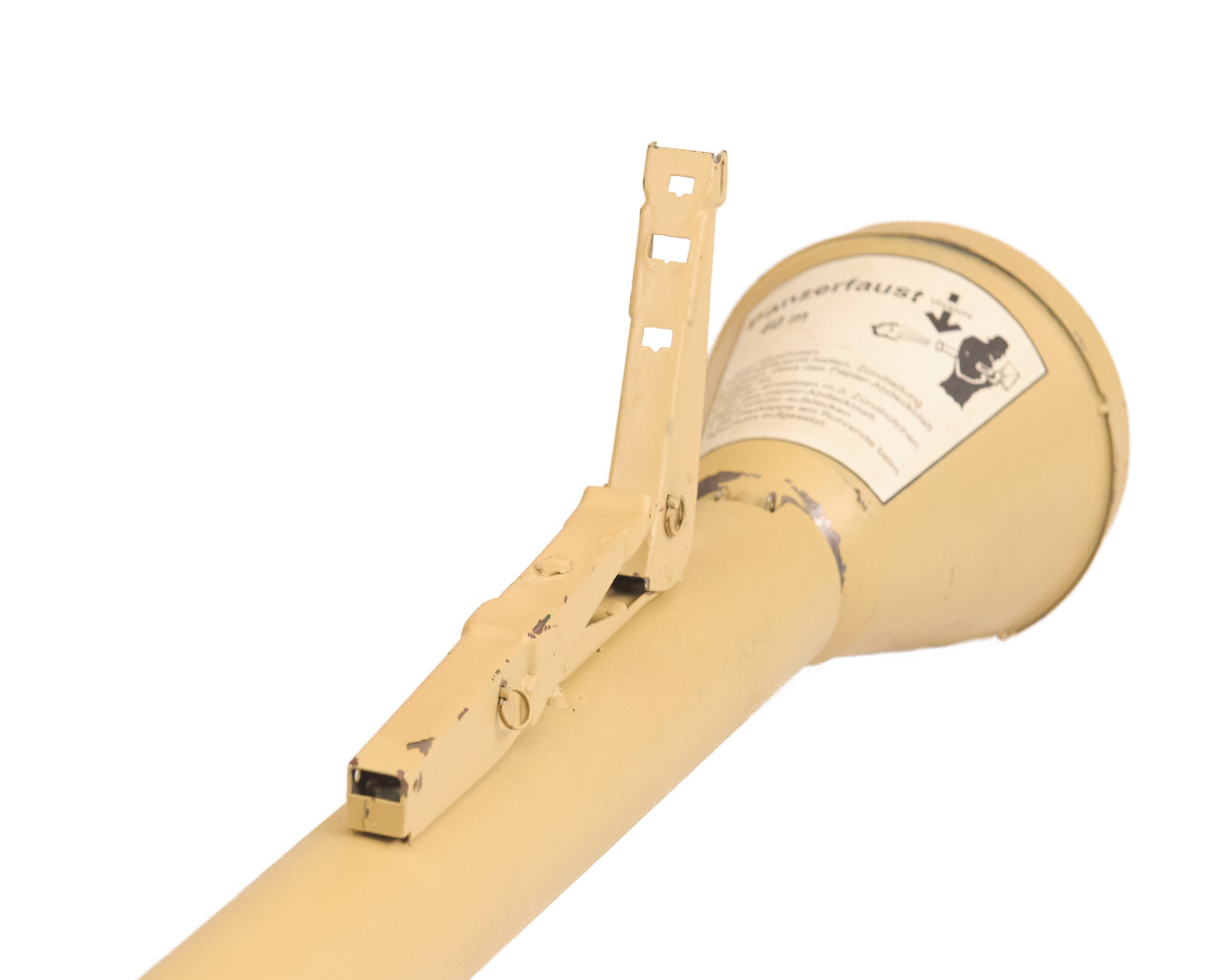
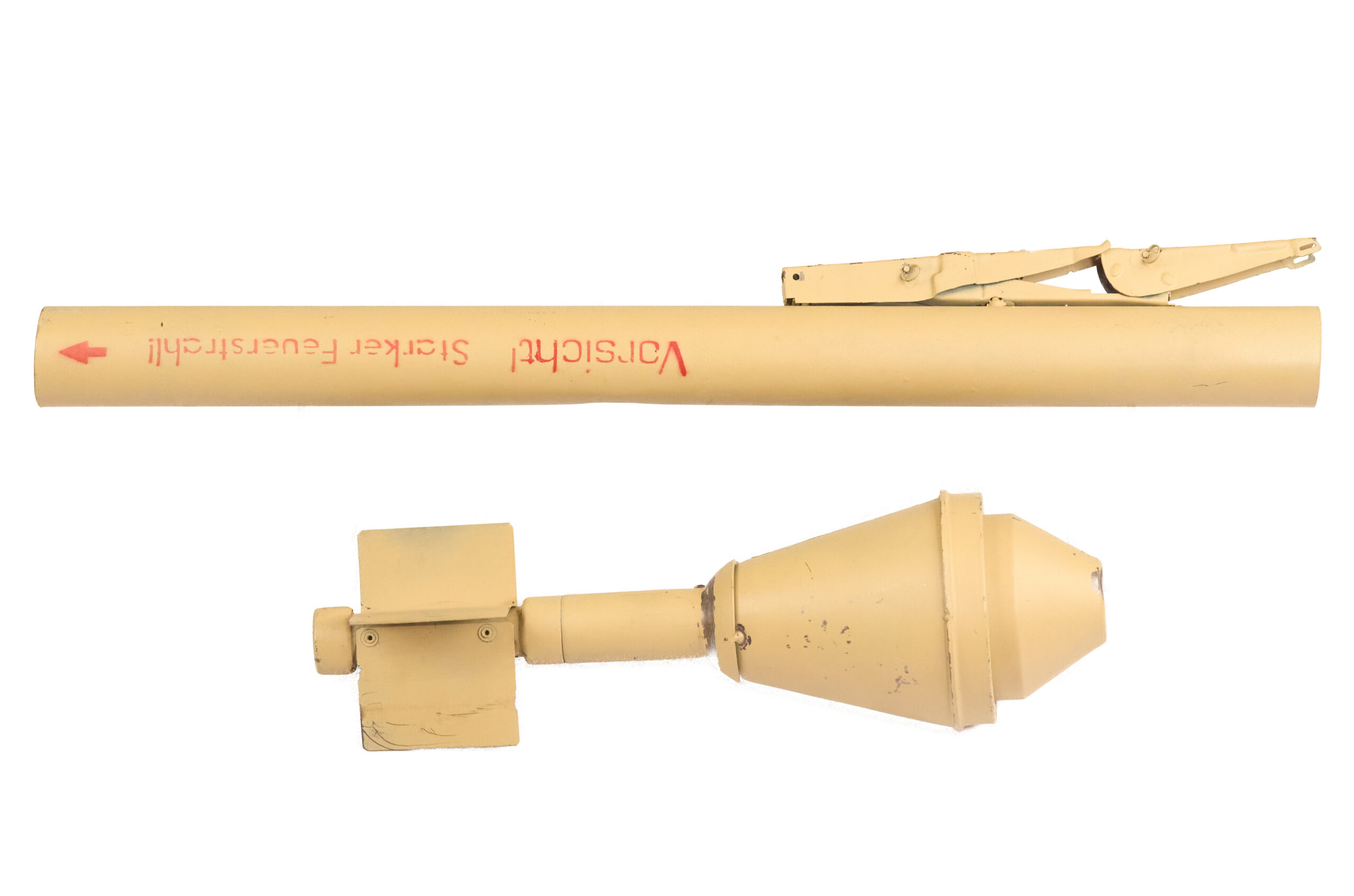
The Panzerfaust 60m combined simple construction with practical battlefield effect. Germany designed it as a disposable recoilless anti-tank weapon for ordinary infantry use, and the pattern gave individual soldiers a compact means of engaging armored targets at close range. This example shows the essential features of the type clearly, including the folding front sight, intact firing mechanism, and spring-deploying fins that extend when the projectile is drawn from the tube. As a result, it displays with strong mechanical interest as well as unmistakable wartime character.
Construction / Configuration / Pattern
This example is built in the classic Panzerfaust 60m pattern with launcher tube, integrated leaf sight, trigger assembly, and metal rocket body. The firing mechanism remains present, and the front sight still folds as intended. The fins spring outward when the projectile is pulled from the tube, which helps preserve one of the more distinctive functional details of the design. The launcher is finished in tan paint, consistent with the familiar dunkelgelb appearance often associated with these later-war examples.
The Panzerfaust design used a light recoilless launcher tube fitted with a single pre-loaded shaped-charge warhead projecting from the muzzle. It was cheap to produce, easy to issue, and simple to operate. The weapon functioned as a single-use anti-tank arm intended for one soldier, after which the launch tube was discarded. That simplicity is a major part of what makes the Panzerfaust such an important infantry weapon of the period.
Historical Context / Pattern Development
Development of the Panzerfaust began in 1942 with the earlier Faustpatrone concept. Germany then expanded the design into larger and more effective versions, including the Panzerfaust Klein, Panzerfaust Gross, and later range-marked models such as the 60m type. By the later years of the war, the Panzerfaust had become one of Germany’s most widespread infantry anti-tank weapons because it gave common soldiers a practical means to threaten armored vehicles without needing a heavier crew-served system.
The 60m version marked an important stage in that development because it reflected the effort to improve usable range while preserving the weapon’s basic simplicity. Even so, the Panzerfaust still operated as a close-range anti-tank arm fired from under the arm at an upward angle. Its combat reputation, distinctive silhouette, and massive wartime production have made it one of the defining German ordnance items of the Second World War.
Condition
This inert example remains a very attractive display piece overall. The label is still in excellent condition, which is an especially strong feature for a Panzerfaust. The firing mechanism is present, the front sight folds, and the fins spring out when pulled from the tube. The metal rocket body remains with the piece, and the tan painted finish gives it strong visual appeal.
This restored example is complete with launcher, integrated leaf sight, and trigger
Explore More at Old Steel
Follow us on Instagram:
Old Steel Guns on Instagram