Description
Original German WWII RZ20 Paratrooper Parachute – Camouflage Canopy Bring-Back Example with Papers
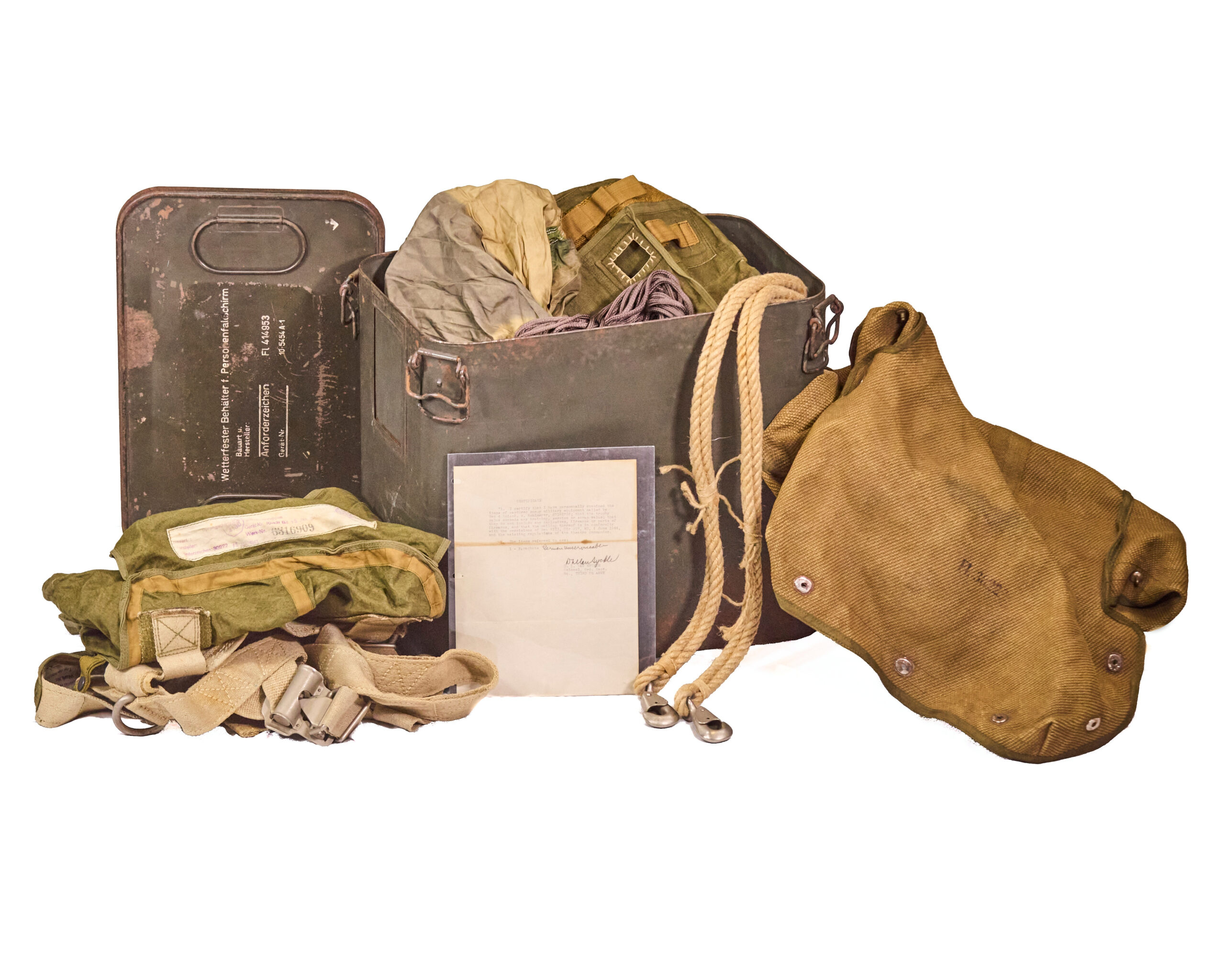
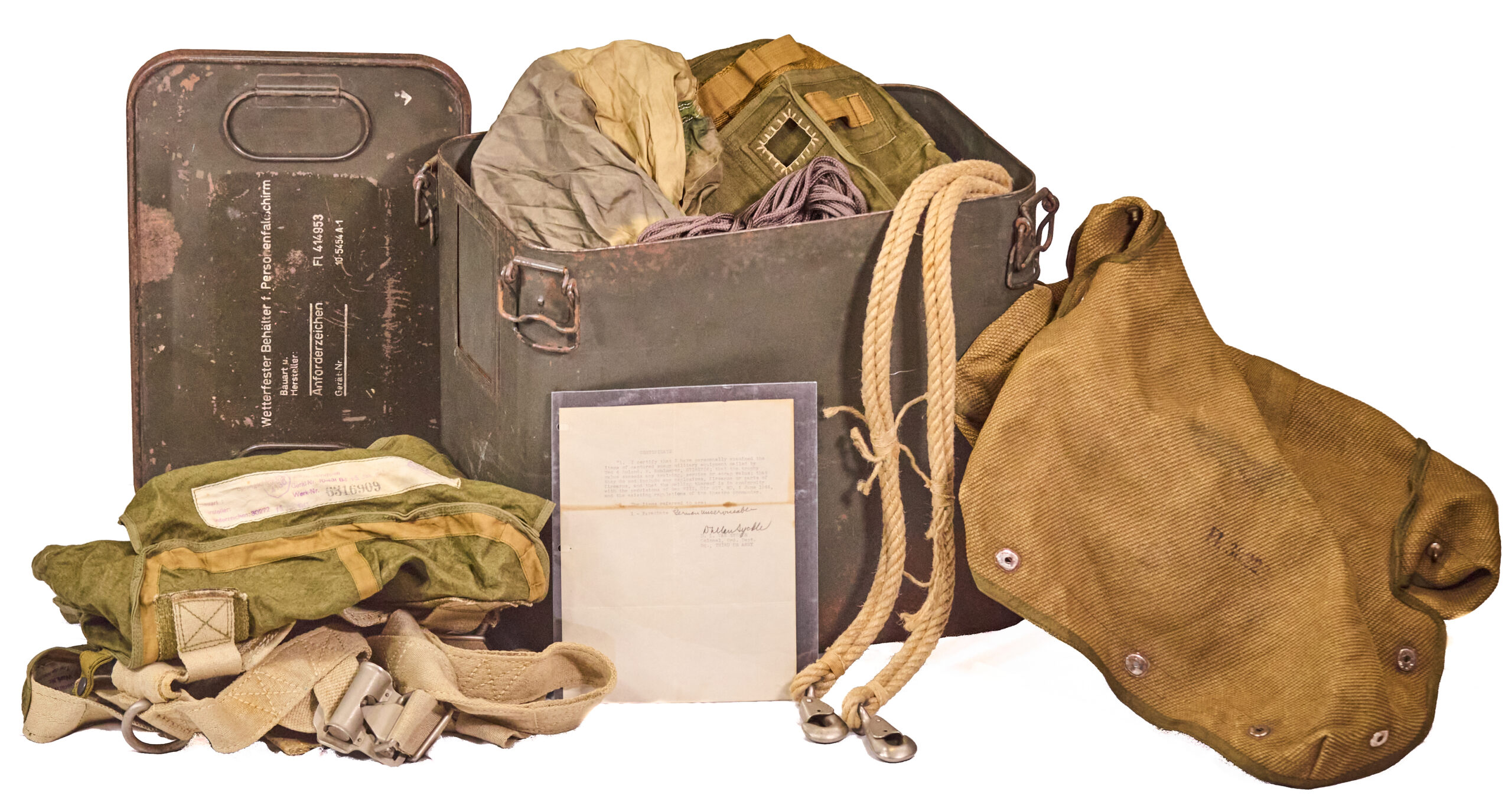
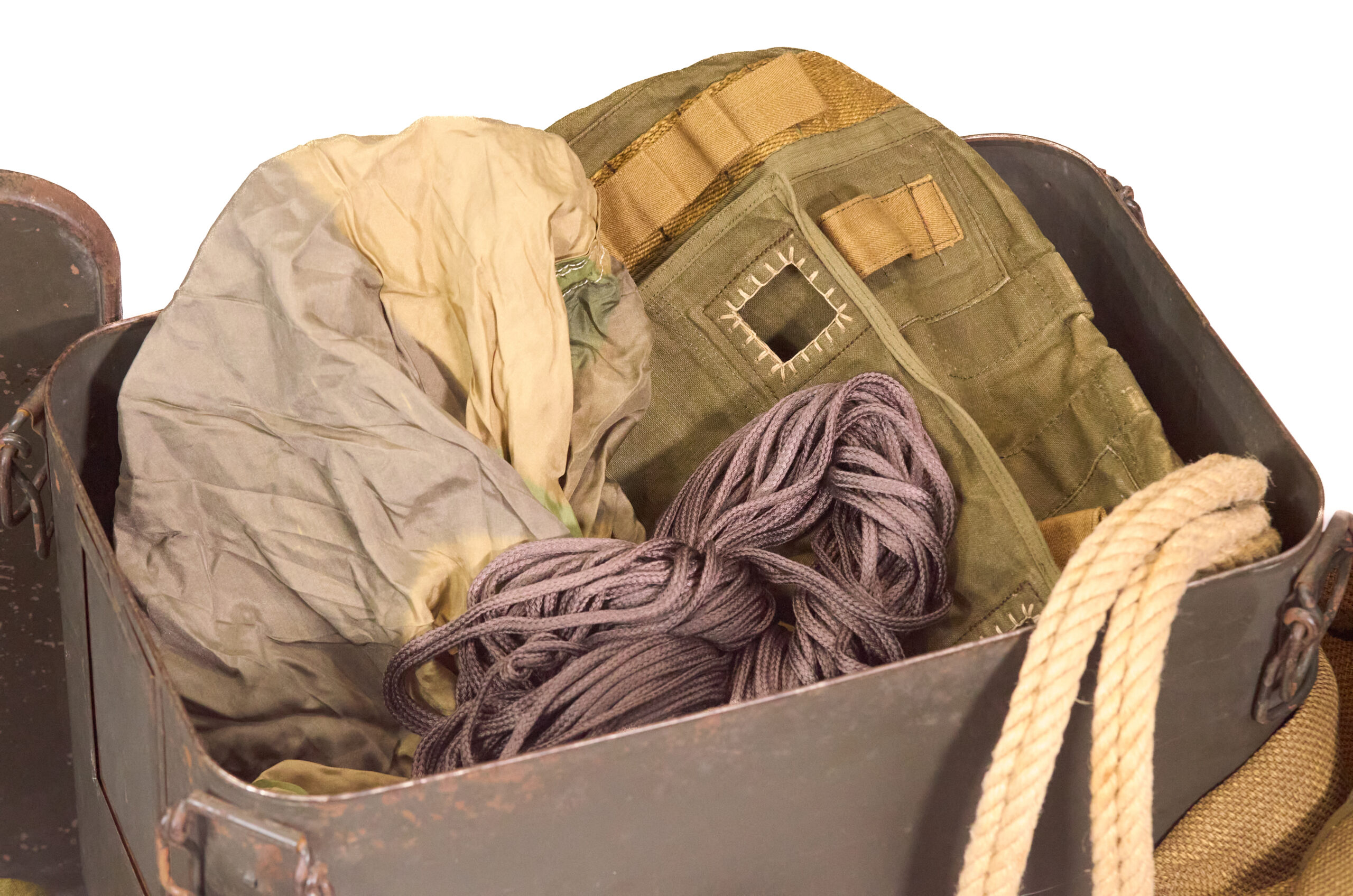
This Original German WWII RZ20 paratrooper parachute with bring back paperwork is a totally original Luftwaffe Fallschirmjäger bring-back with camouflage silk canopy, complete shroud lines, deployment bag, harness, weatherproof container, and post-jump bag. The set includes a 28-panel canopy, a marked harness dated 15 Jan. 1943, and a marked container, which together give the group strong display value and excellent historical depth. The RZ20 pattern entered service as an improved German parachute system that allowed quicker harness release after landing and remained in use through the war.
Original German WWII RZ20 Paratrooper Parachute
This example presents as a substantial and highly visual Fallschirmjäger display set rather than as a single loose parachute component. The camouflage canopy gives it immediate visual appeal. In addition, the marked harness, deployment bag, weatherproof container, and post-jump bag add the kind of completeness collectors look for in German airborne equipment. Because this is a USGI bring-back, the group also carries the added appeal of direct wartime recovery and postwar retention.
Construction / Configuration / Pattern
The parachute proper consists of a silk canopy and complete shroud lines. This example retains a 28-panel camouflage silk canopy with complete rigging lines and deployment bag. The broader system follows the standard German airborne arrangement of canopy, outer bag and deployment bag, harness, and accessories. The canopy construction uses tapered gore sections arranged within each panel, with serial numbering and factory, inspection, and Air Ministry markings placed on the numbered panel. The shroud-line arrangement runs through the canopy and down to the lift webs, which then connect into the harness hardware. When packed, the canopy and lines fold into the bag, which fastens to the static line before fitting inside the pack.
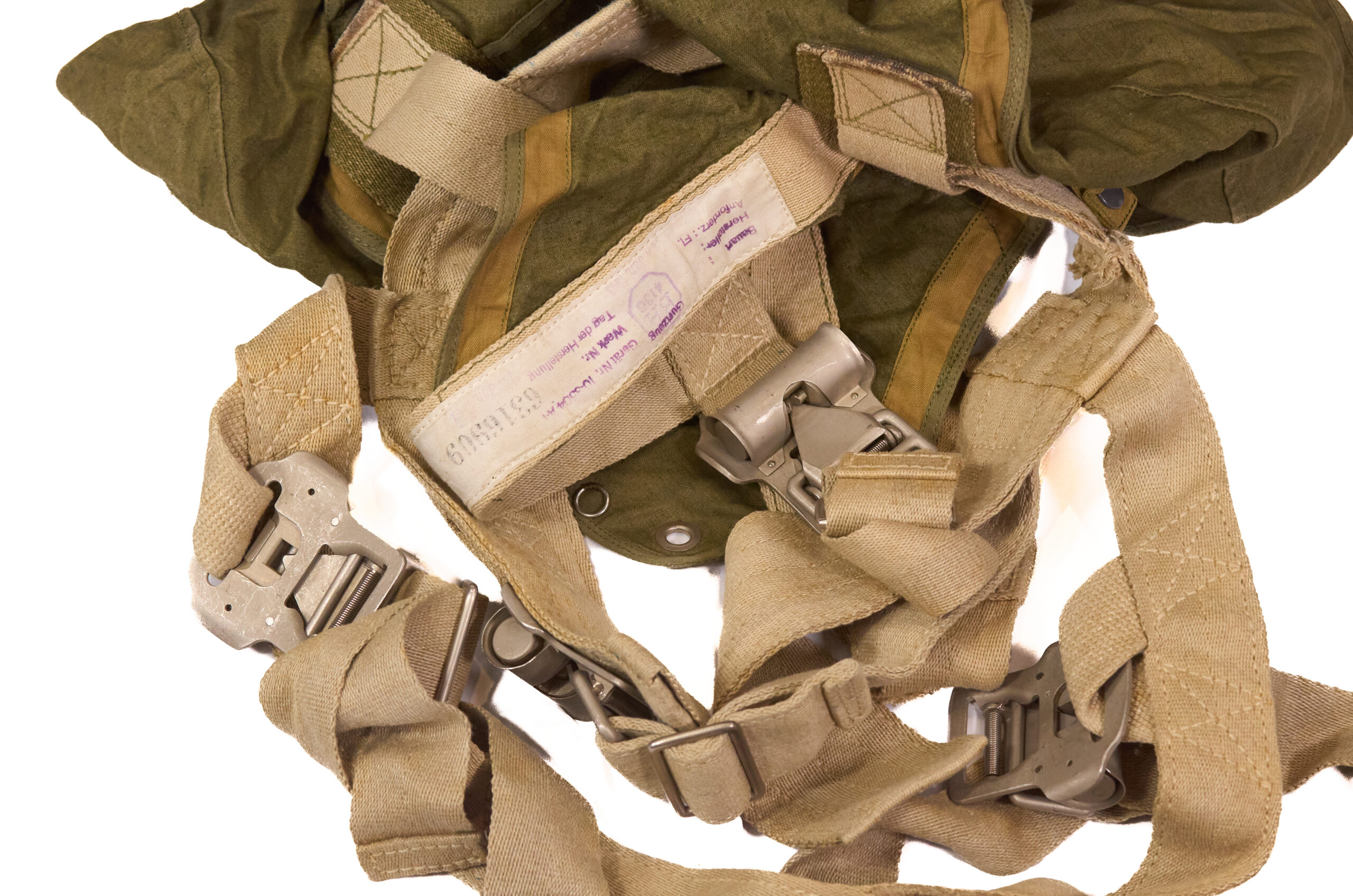
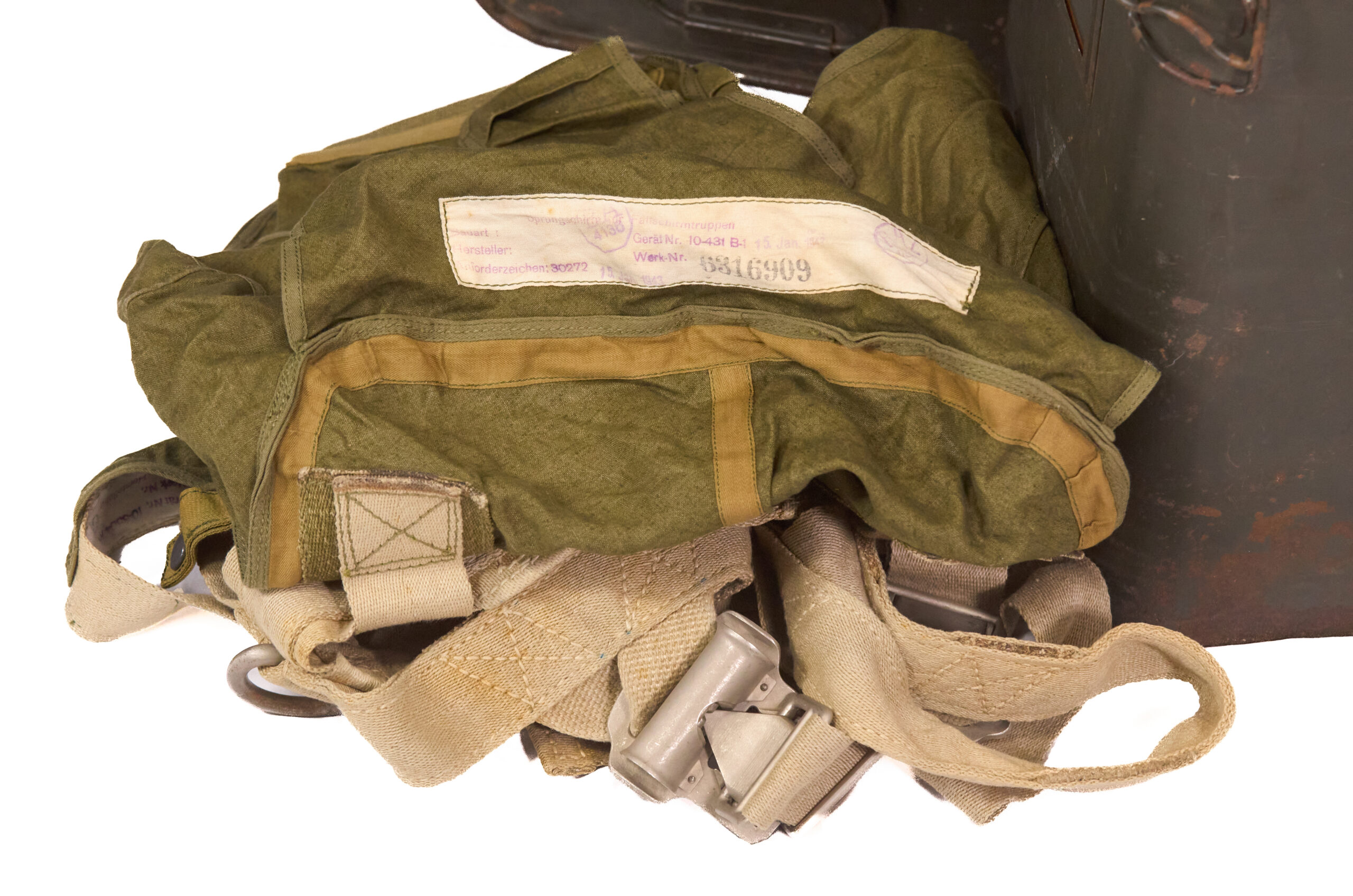
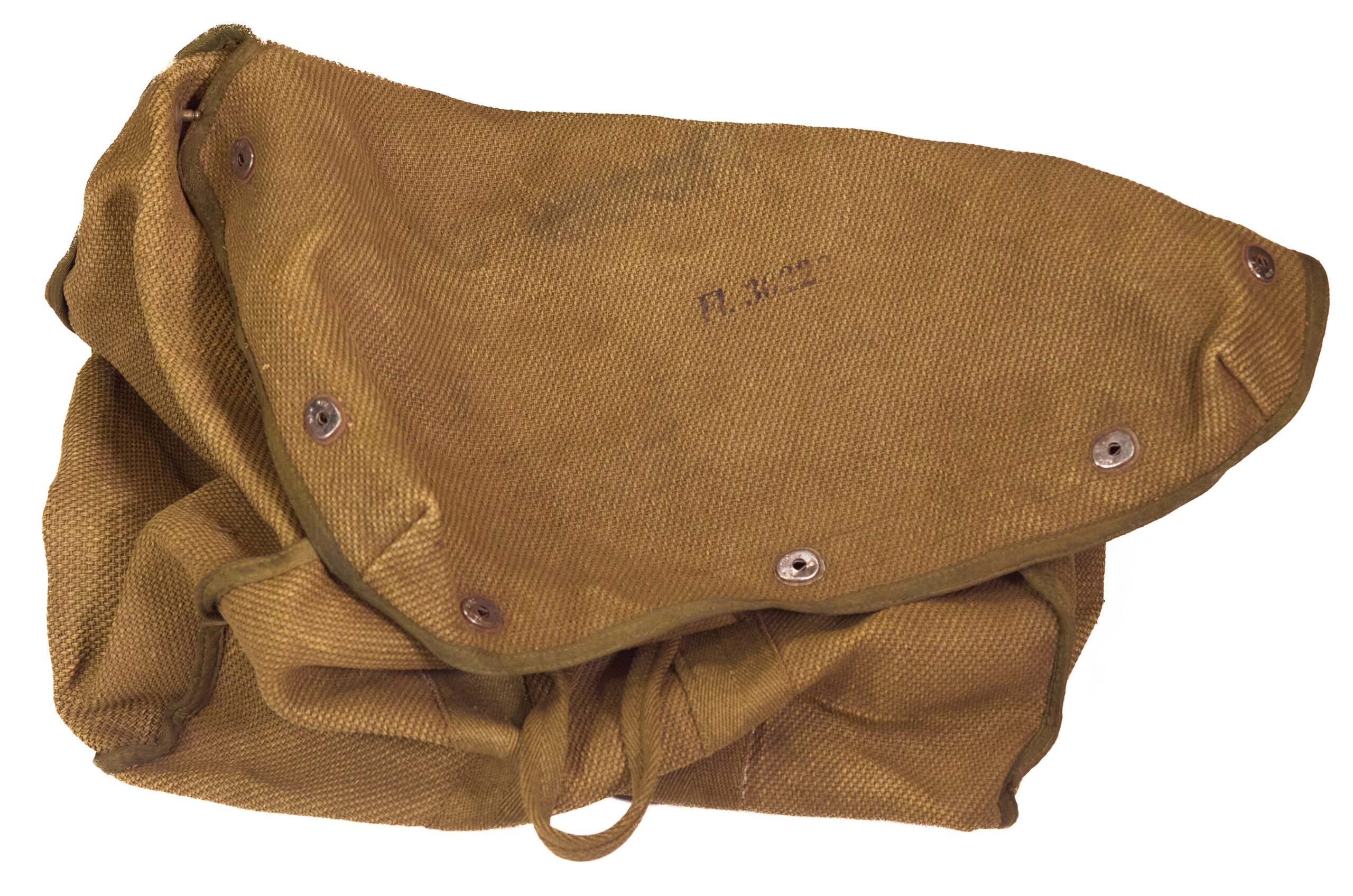
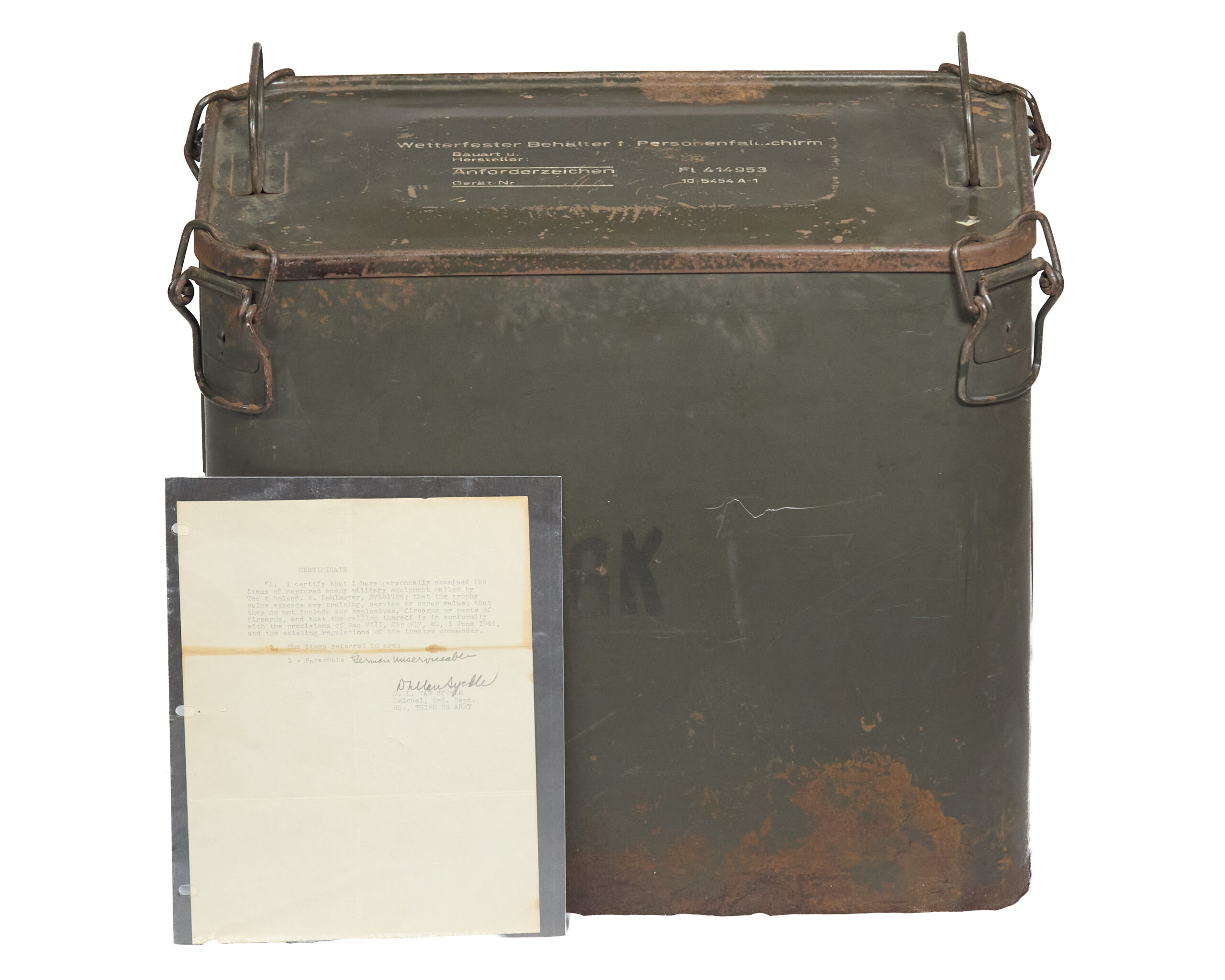
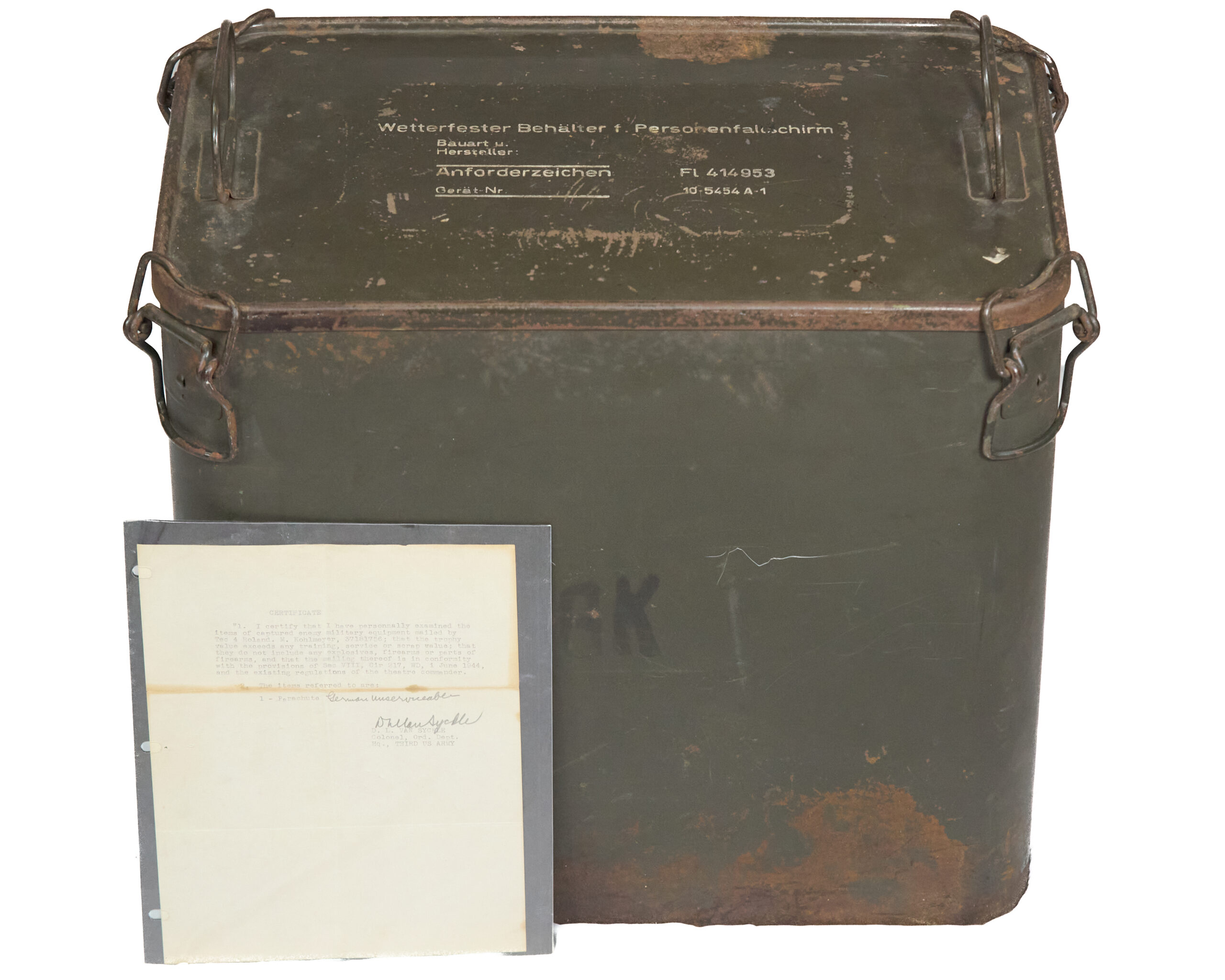
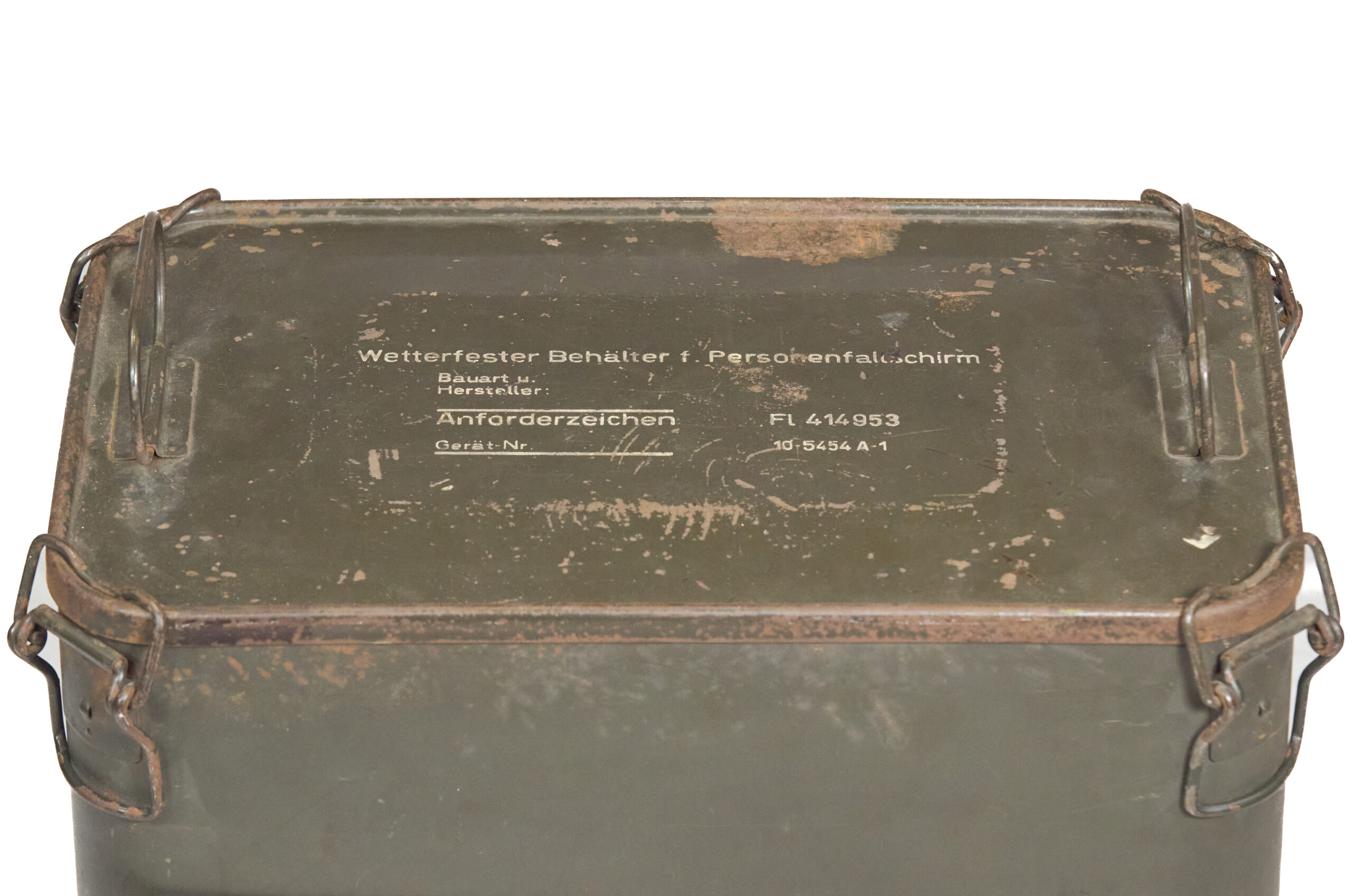
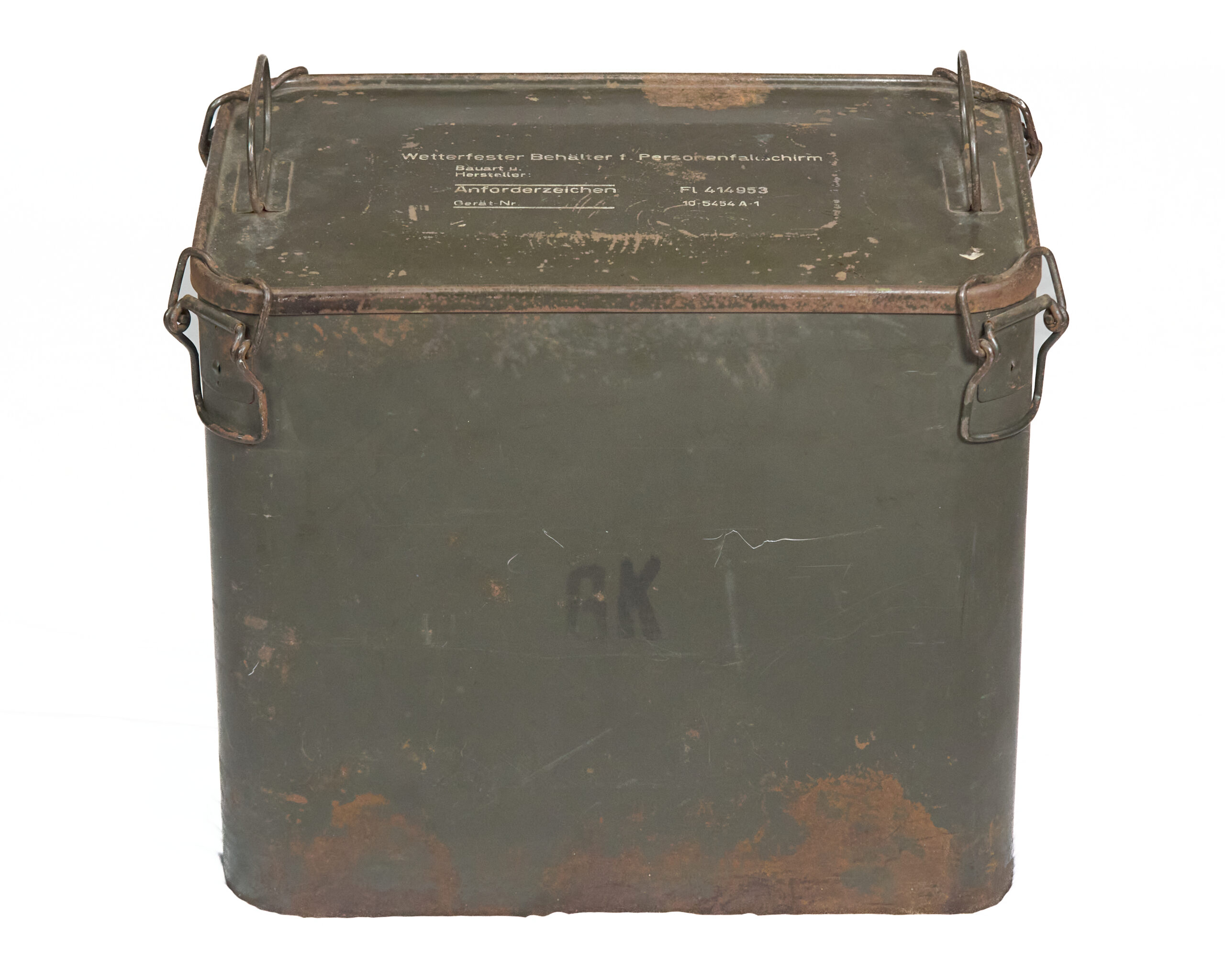
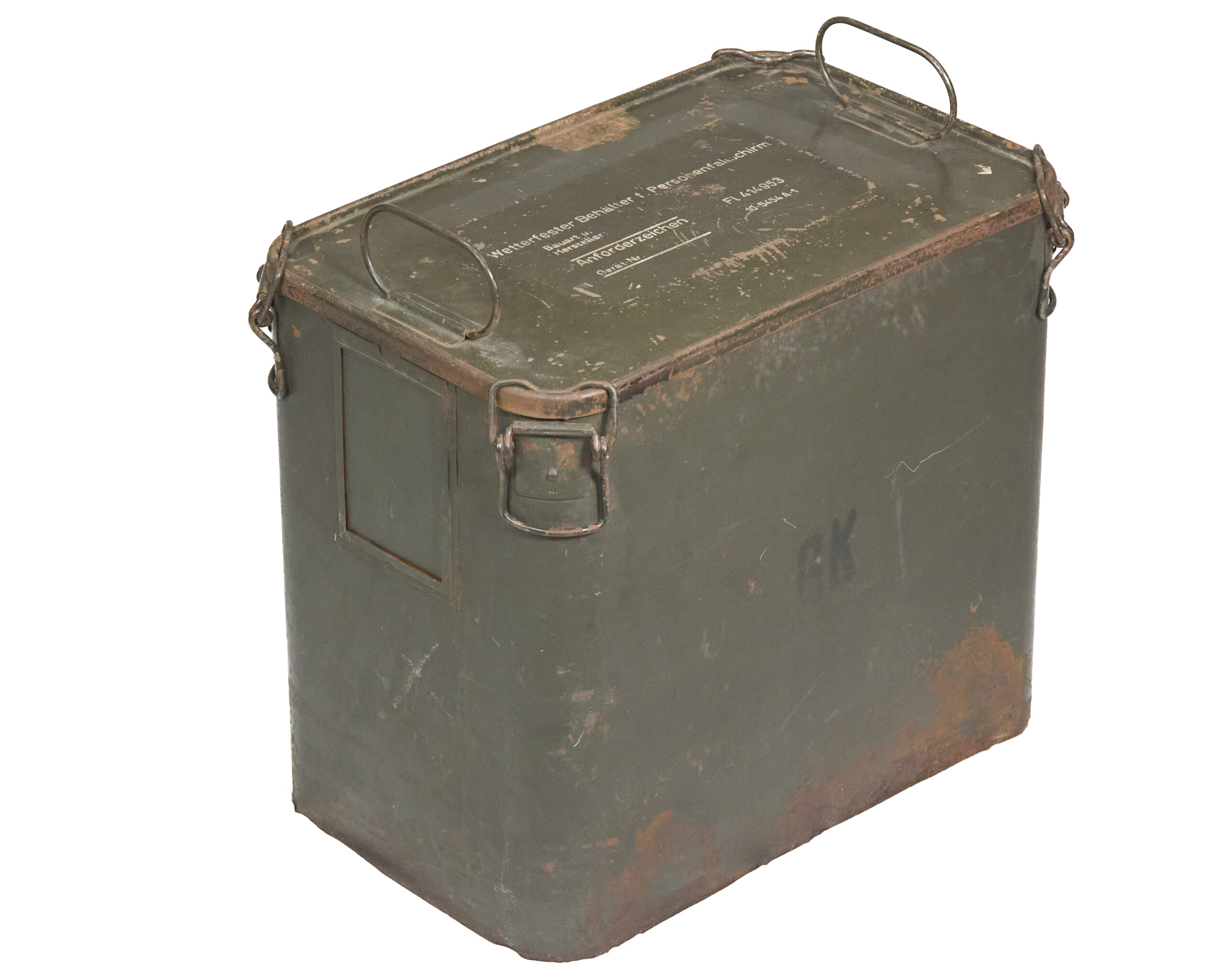
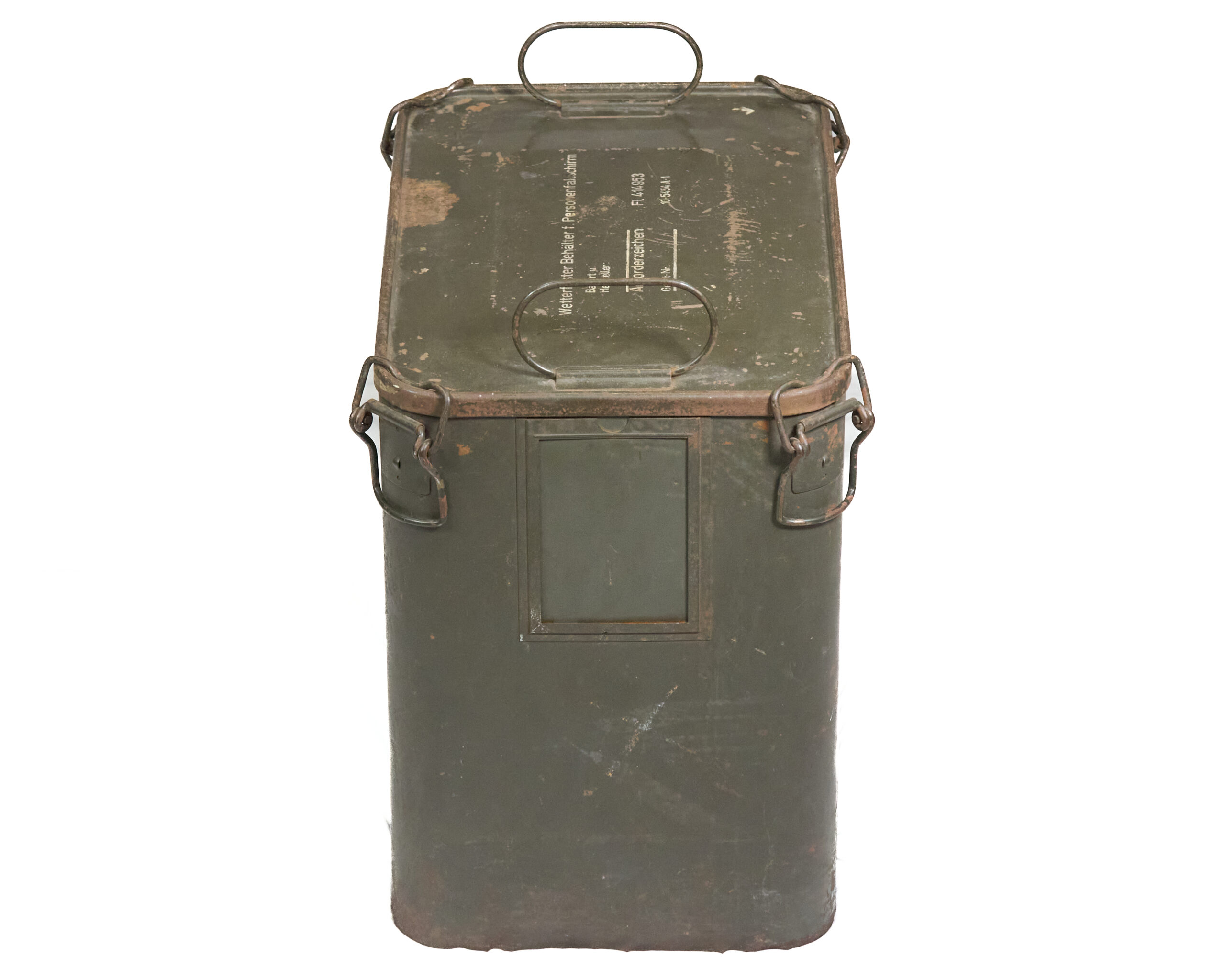
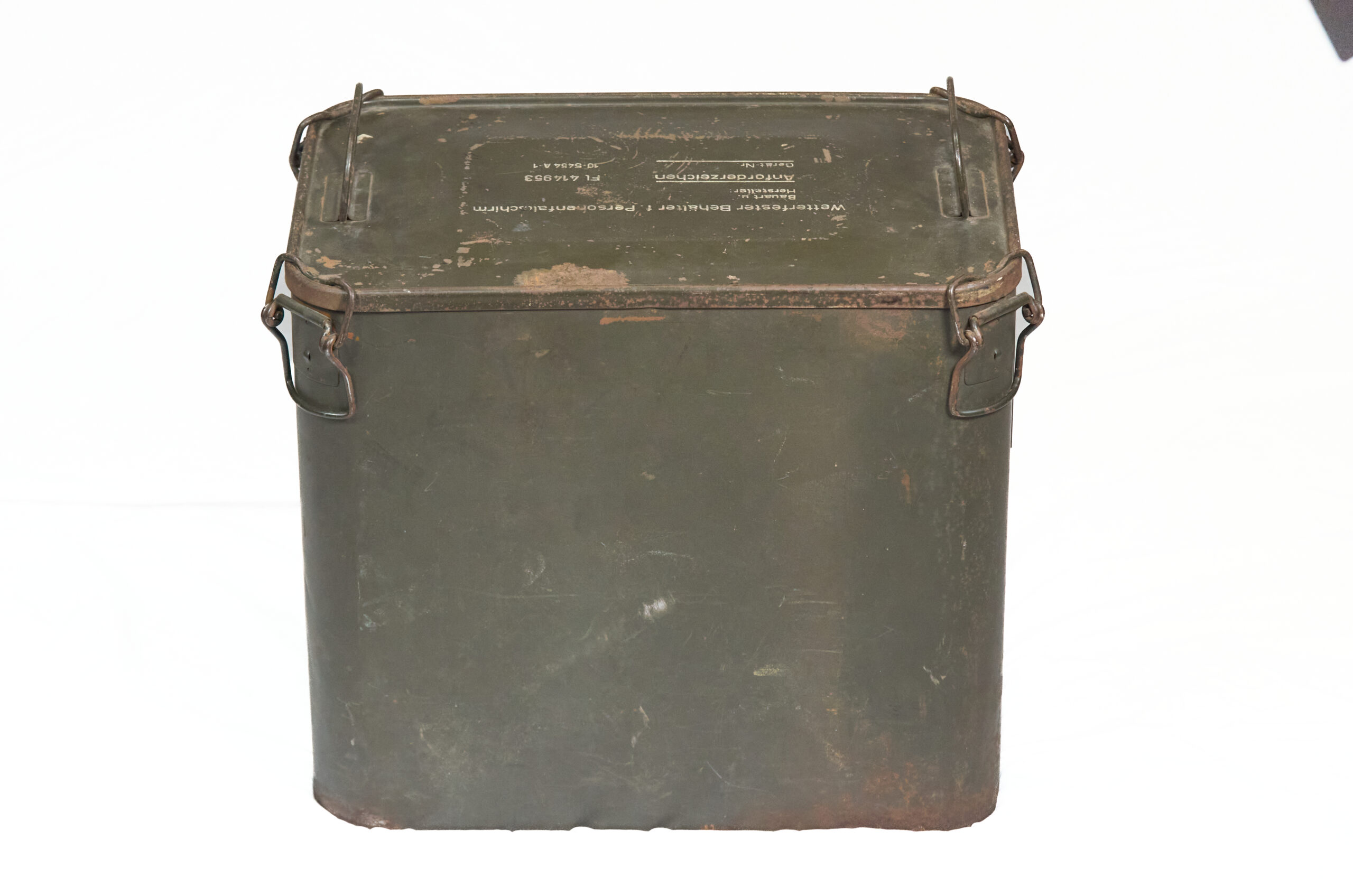
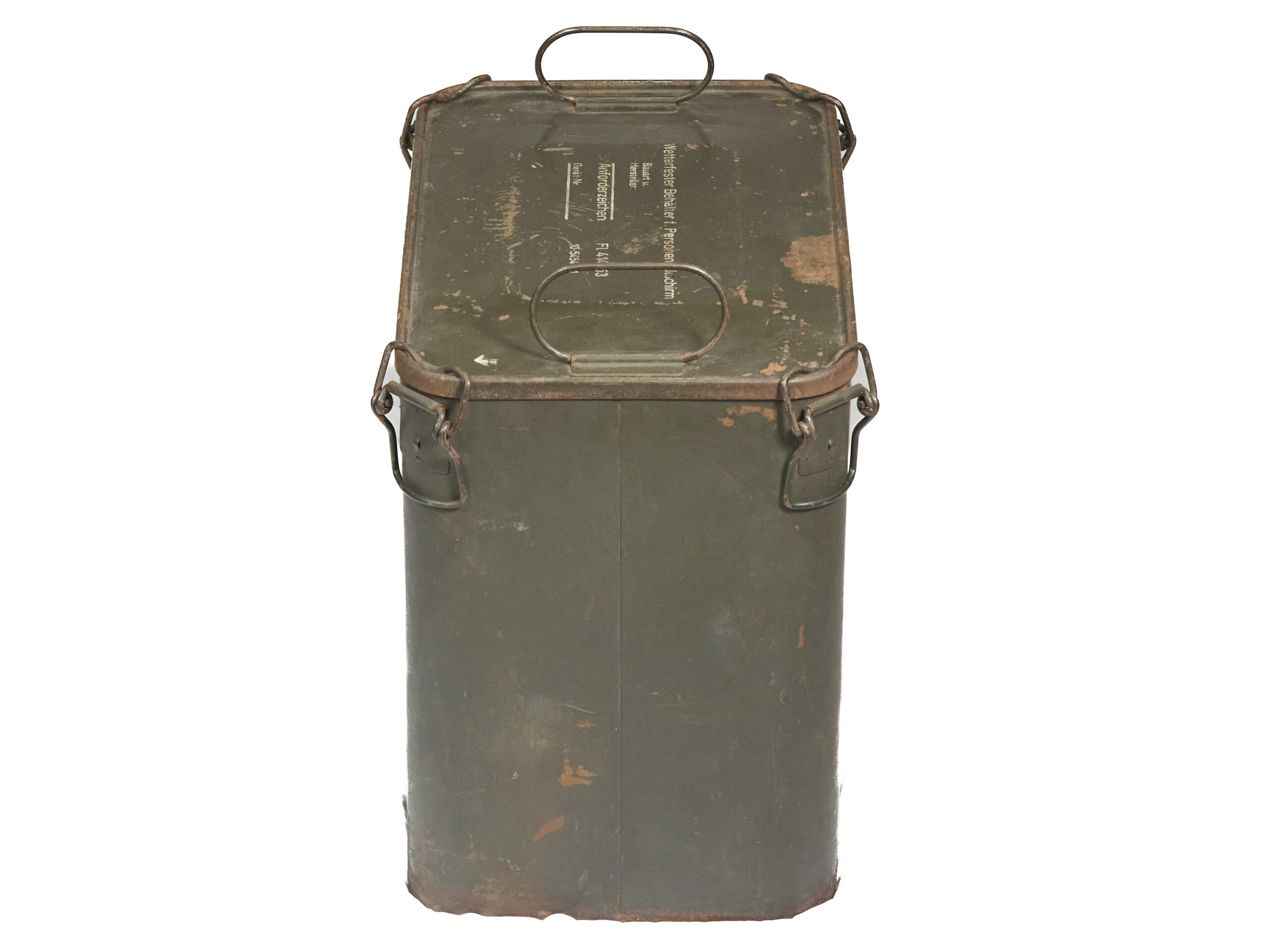
The harness is especially important here because it is clearly marked and helps confirm the type. It is stamped Sprungschirm f. Fallschirmtruppen, or “jump parachute for paratroops,” and also marked Gerät-Nr. 10-431 B-1, Werk-Nr. 6316909, Anforderzeichen 30272, and 15. Jan. 1943. The 10-431 B-1 device number is characteristic of the RZ20 system. Purple ink acceptance stamps remain present as military inspection marks that confirmed the item met field-use standards. The canvas post-jump bag is marked FL 30222. The box is also marked with standard German equipment identifiers, including Wetterfester Behälter f. Personenfallschirm, along with fields for design type, maker, requisition code, and device number. Altogether, those details make this far more than a canopy alone. They make it a marked and identifiable parachute set with strong research value.
Historical Context / Pattern Development
German parachute equipment evolved quickly before and during the war, and that development matters here. Earlier systems such as the RZ1 and RZ16 used harness arrangements that proved harder to remove after landing. That shortcoming mattered in combat because a paratrooper struggling to free himself could become an easy target or get caught in wind-dragged canopy material. The RZ20 addressed that problem with a revised harness fitted with four quick-release buckles, which allowed the user to get clear of the chute faster and more easily. It first saw use in the Battle for Crete in May 1941 and remained in service through the end of the war.
These were static-line parachute systems. The line attached inside the aircraft pulled the bag away from the pack, released the canopy, and then detached. The design gave German airborne forces a practical mass-drop system for aircraft such as the Junkers Ju 52. At the same time, camouflage canopies marked an important improvement over earlier light-colored examples because they reduced visibility on the ground. That change fit well with the combat lessons learned in early airborne operations.
Condition
The overall condition is excellent. The canopy remains in what appears to be factory folding. All components appear like new. this was common as the allied forces captured factories and storage facilities across the European theatre. The allied air superiority made the movement of supplies near impossible for the Germans leading to a disconnect of the front lines who needed the gear, and the factories far away. The canopy retains complete shroud lines, and the rigging remains present. The group also includes the deployment bag, marked harness, weatherproof container, and marked post-jump bag, which strengthens both display appeal and completeness. Because the piece is a USGI bring-back, it also carries the kind of preserved set integrity collectors value. Overall, this is a strong original German airborne grouping with excellent visual impact, clear markings, and substantial historical character.
Explore More at Old Steel
Follow us on Instagram:
Old Steel Guns on Instagram