Description
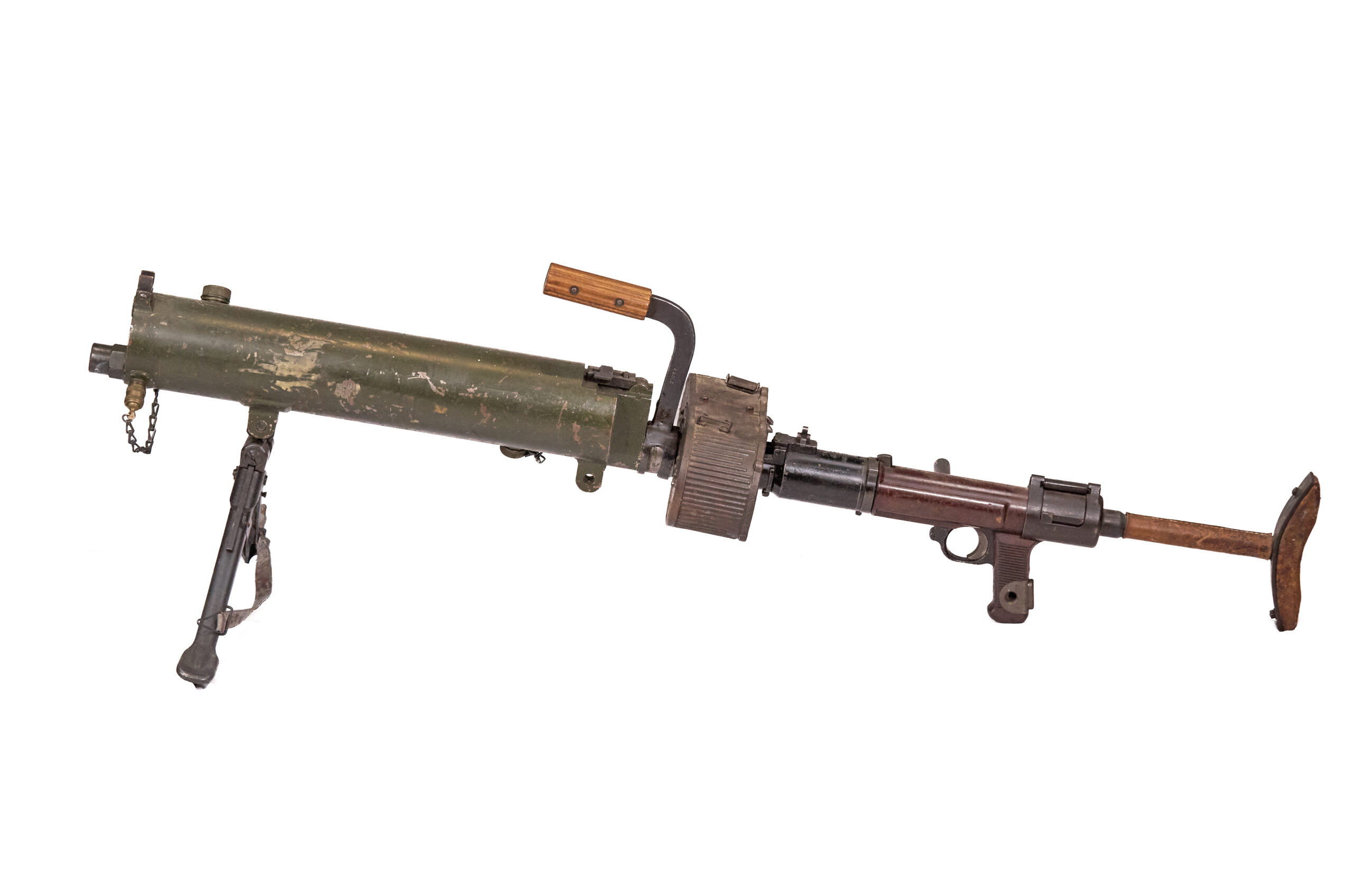
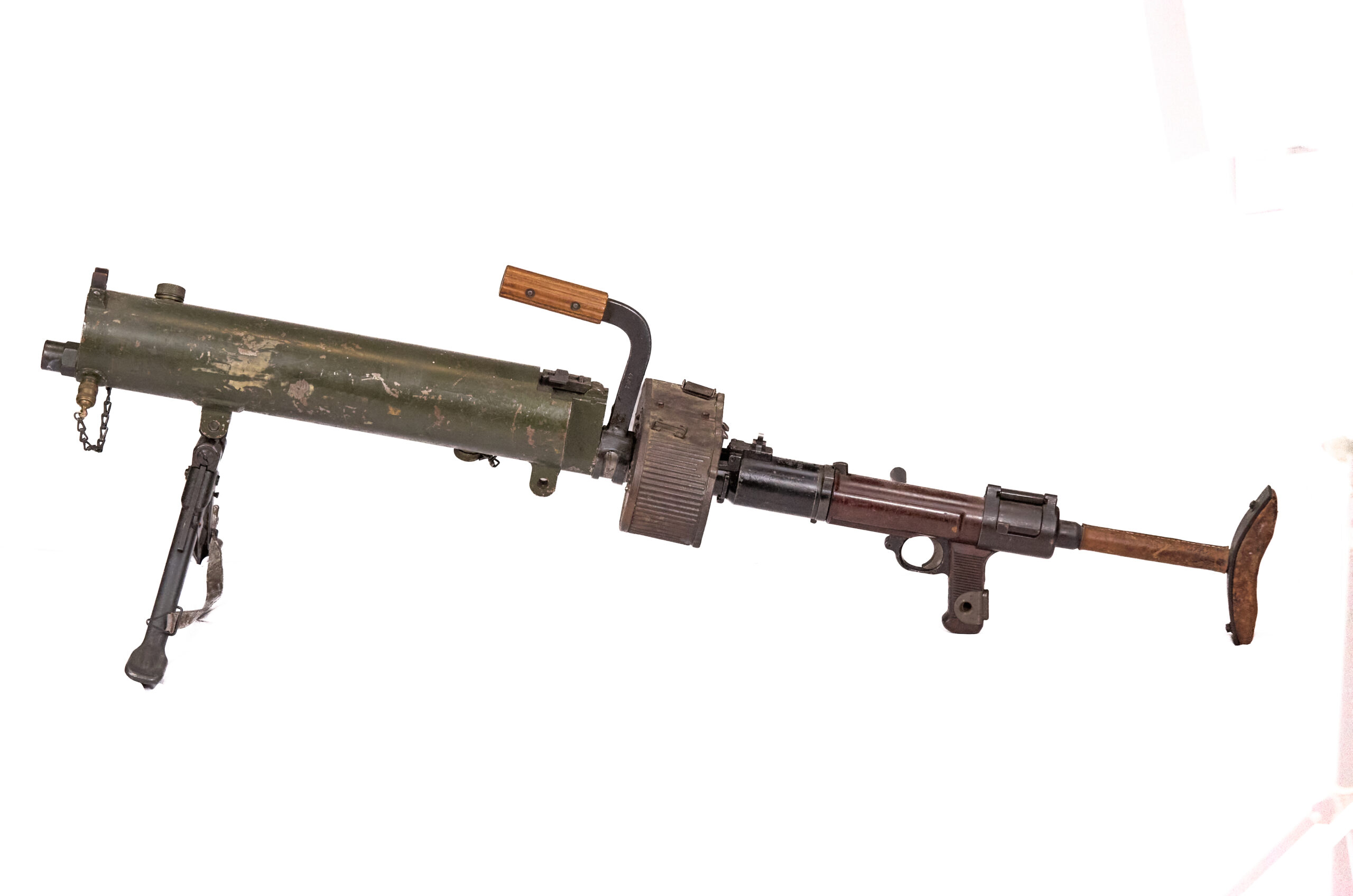
Original German WWII Rheinmetall Romanian ST-61 MG 15 Water Cooled Display Gun – Contract Ground Conversion Example
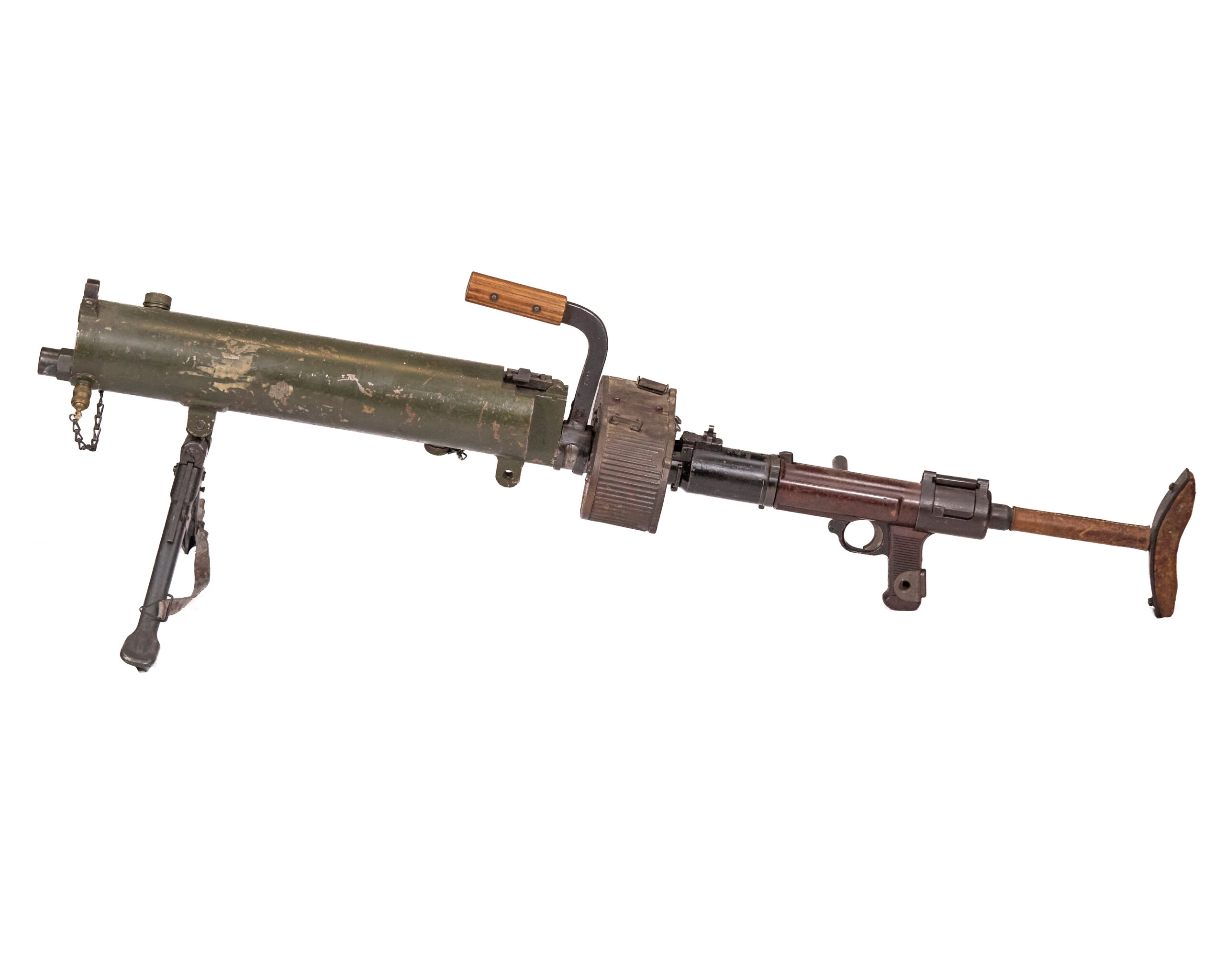
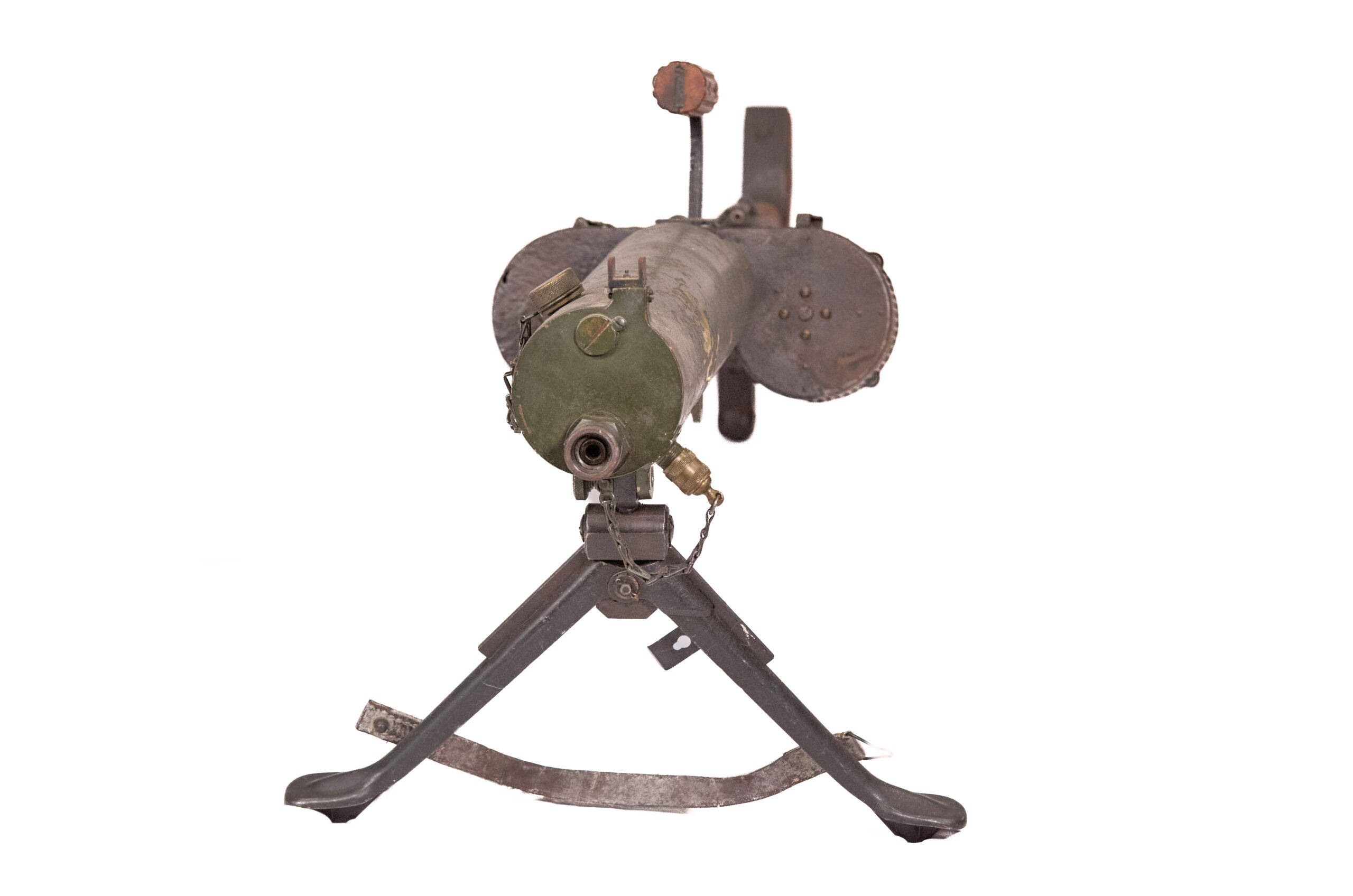
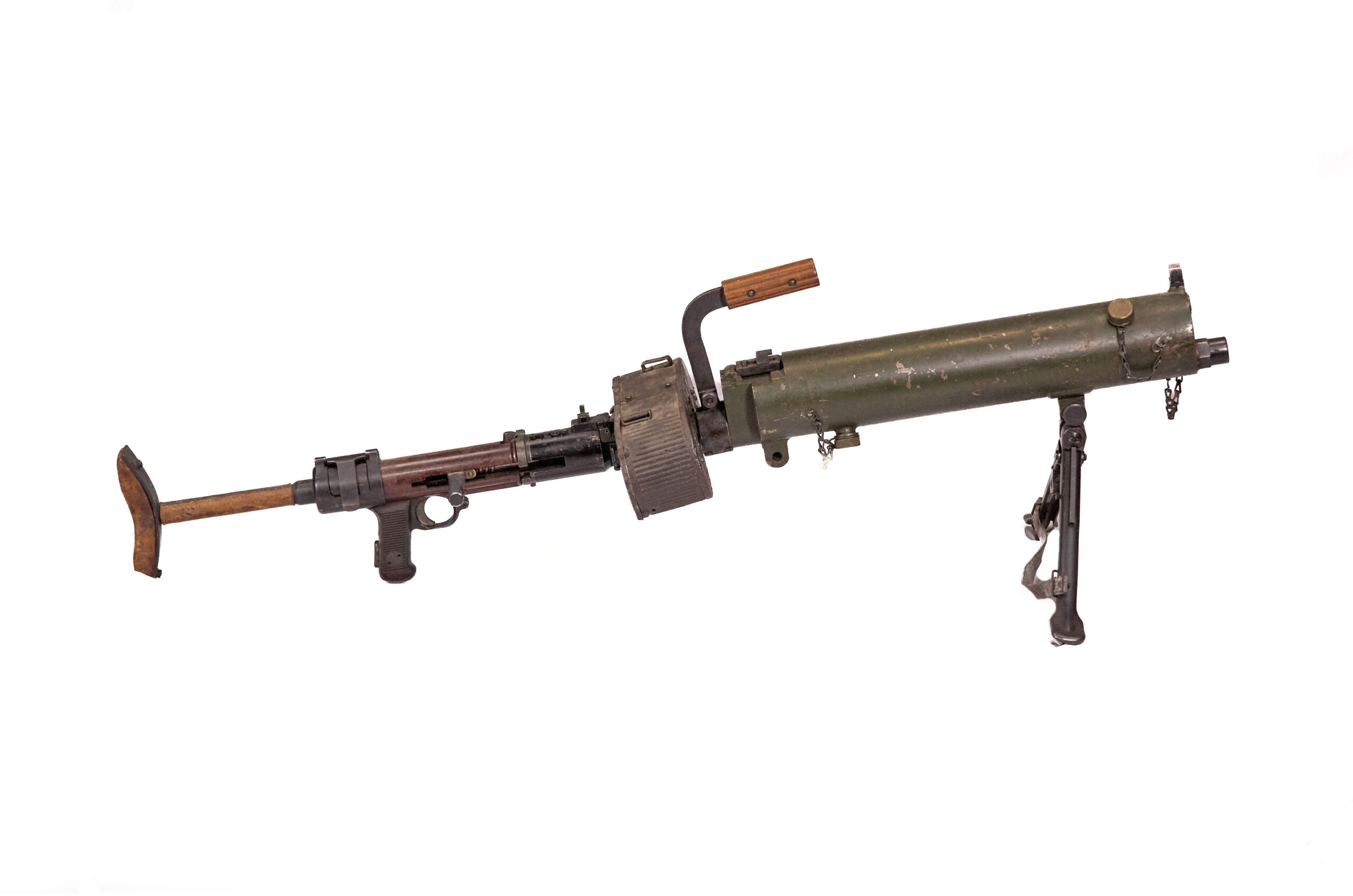
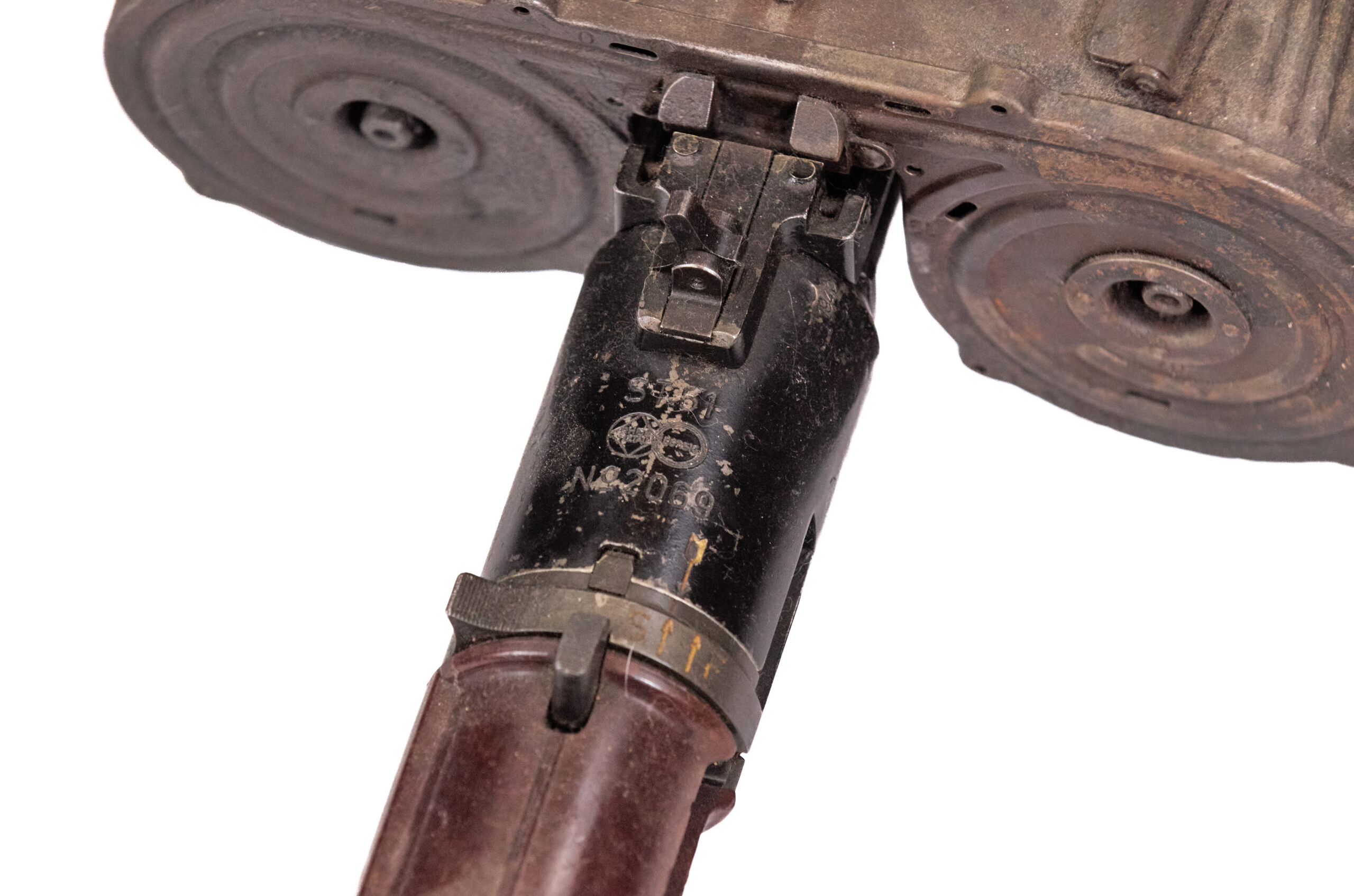
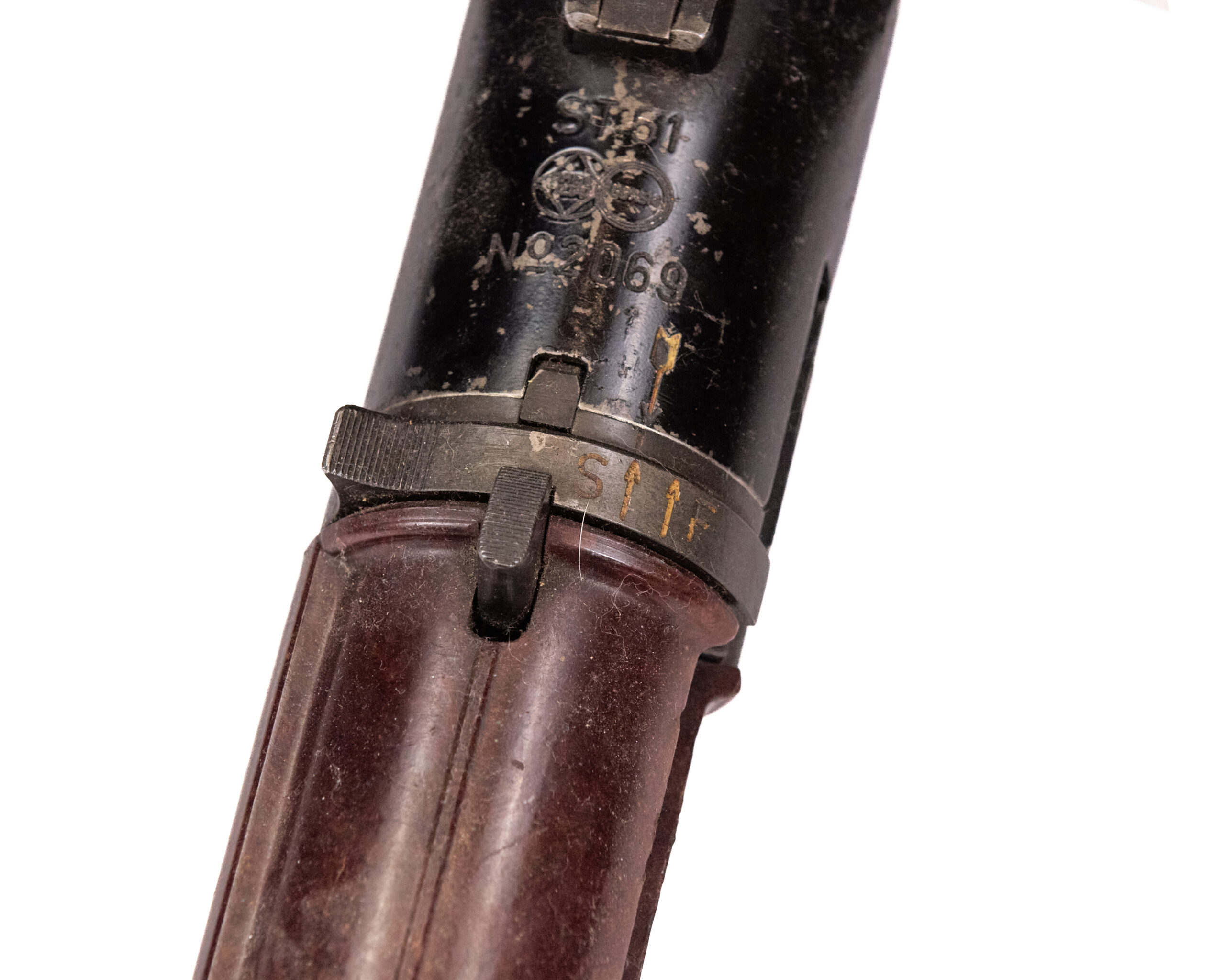
This Original German WWII Rheinmetall Romanian ST-61 MG 15 water cooled display gun is a rare German-made Romanian contract example marked with the RHEINMETALL-BORSIG logo over serial No. 2069. Originally developed from the MG 15 aircraft machine gun pattern, the export-designated ST 61 saw contract use in Romania during the war and remained in service afterward. This display gun also retains the later water-cooled ground configuration, which gives it a highly distinctive appearance and adds another layer of technical and historical interest.
Original German WWII Rheinmetall Romanian ST-61 MG 15 Water Cooled Display Gun
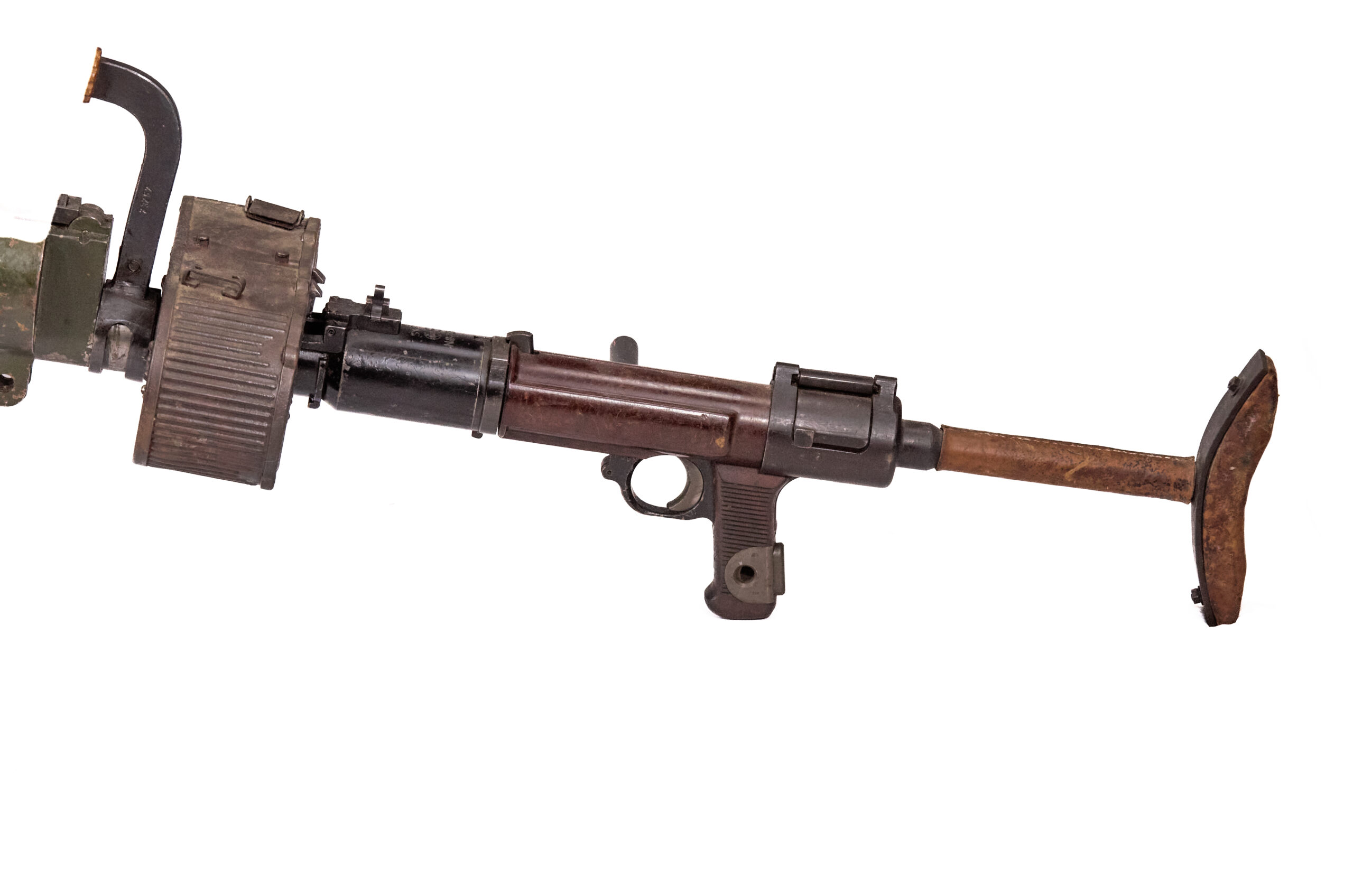
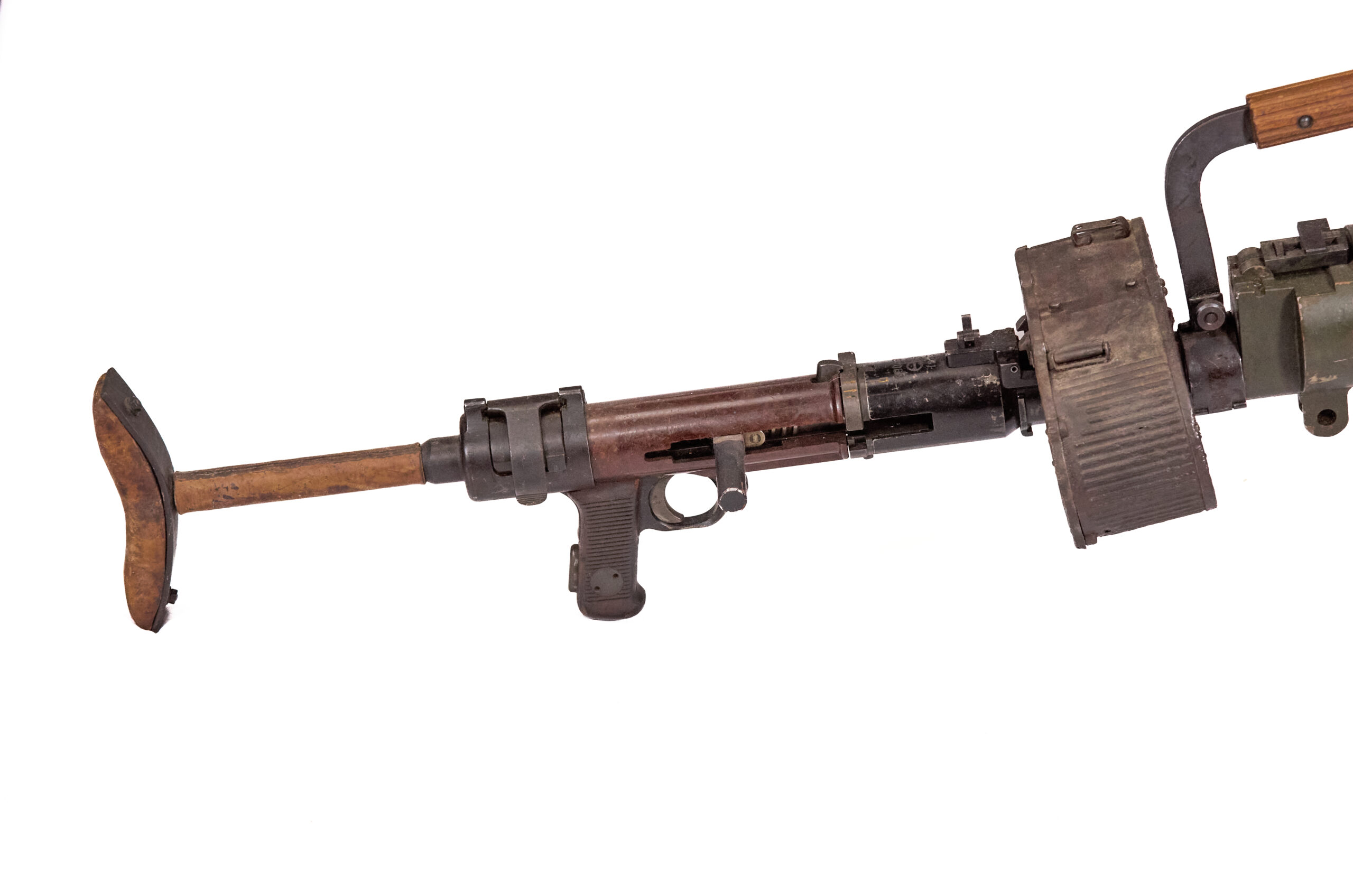
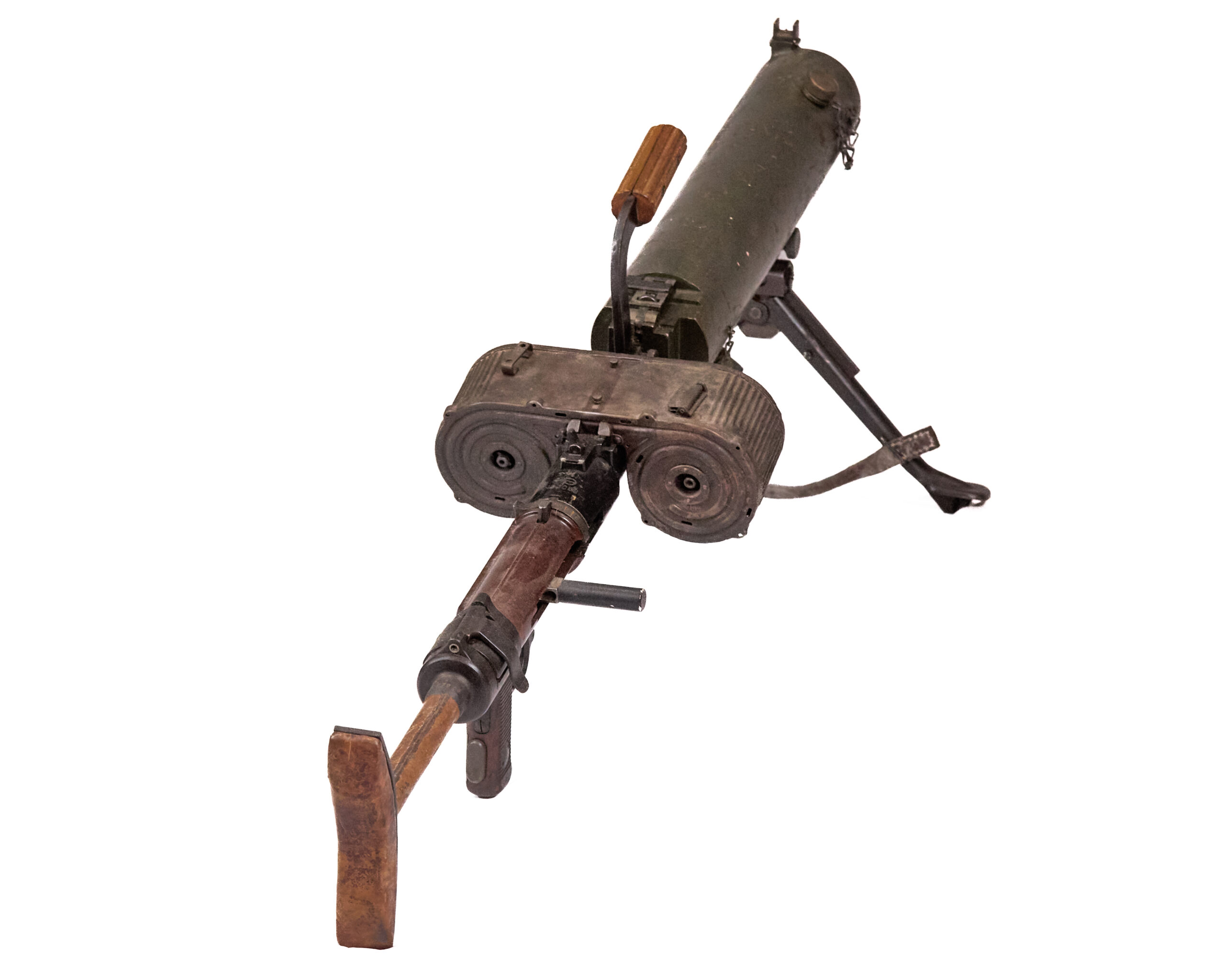
This example stands out because it brings together several features collectors rarely find in one piece. It combines a wartime German-made contract gun, Romanian service history, later ground-use conversion, and a 75-round saddle drum magazine. Just as importantly, it remains in excellent overall condition, with strong surviving original features in the Bakelite receiver extension, buttstock, leather wrapping, and wood handle. As a result, it presents as a substantial and very attractive display gun with real research value.
Construction / Configuration / Pattern
The gun is marked with the RHEINMETALL-BORSIG logo over serial No. 2069 and retains multiple Luftwaffe-style Weimar eagle Waffenamt proofs, along with part numbers and other markings that merit further study. The base gun follows the MG 15 pattern, which Rheinmetall developed for aircraft use in the early 1930s. For export, the pattern received the ST 61 designation, and many examples went to Romania under contract.
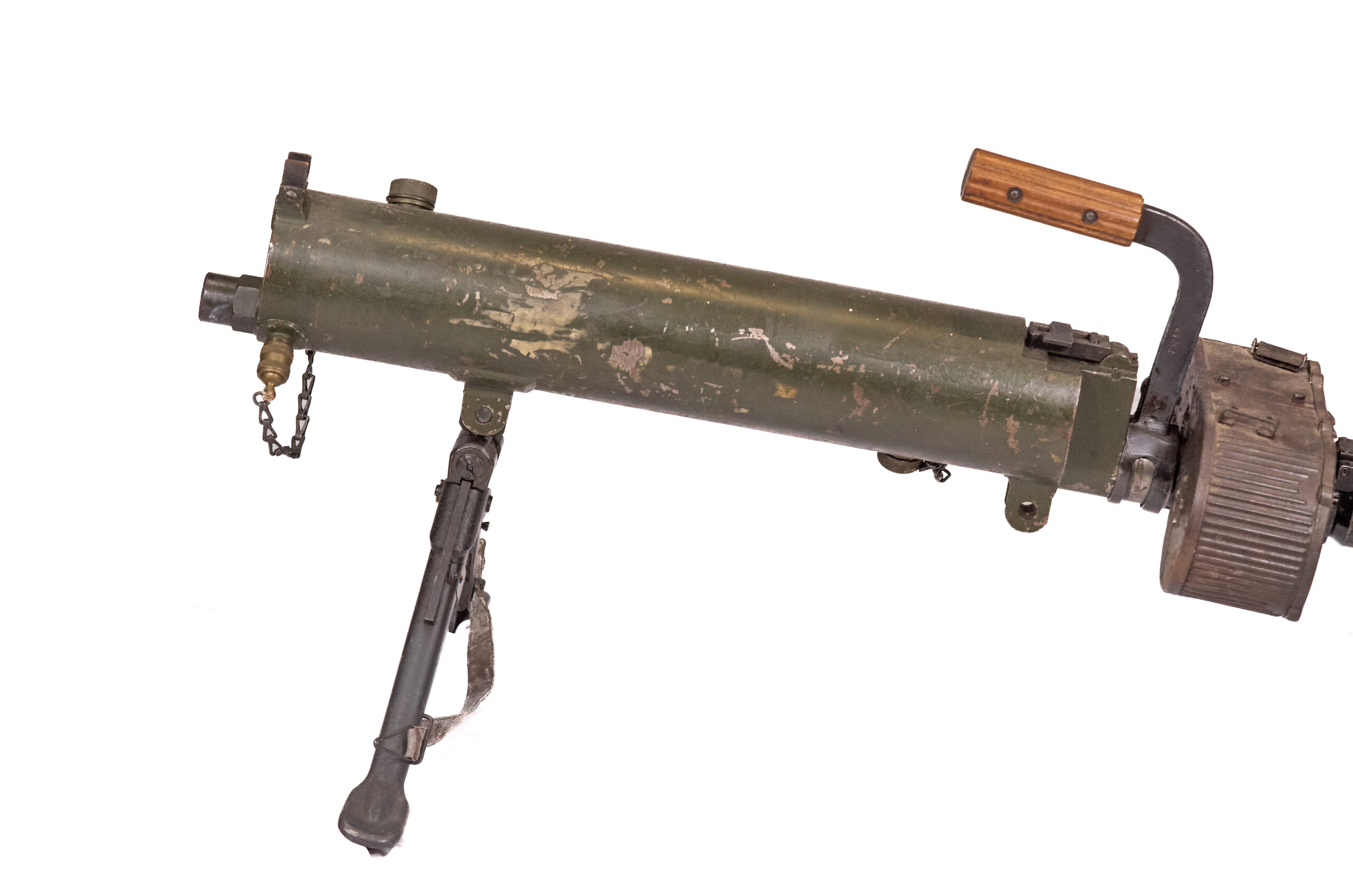
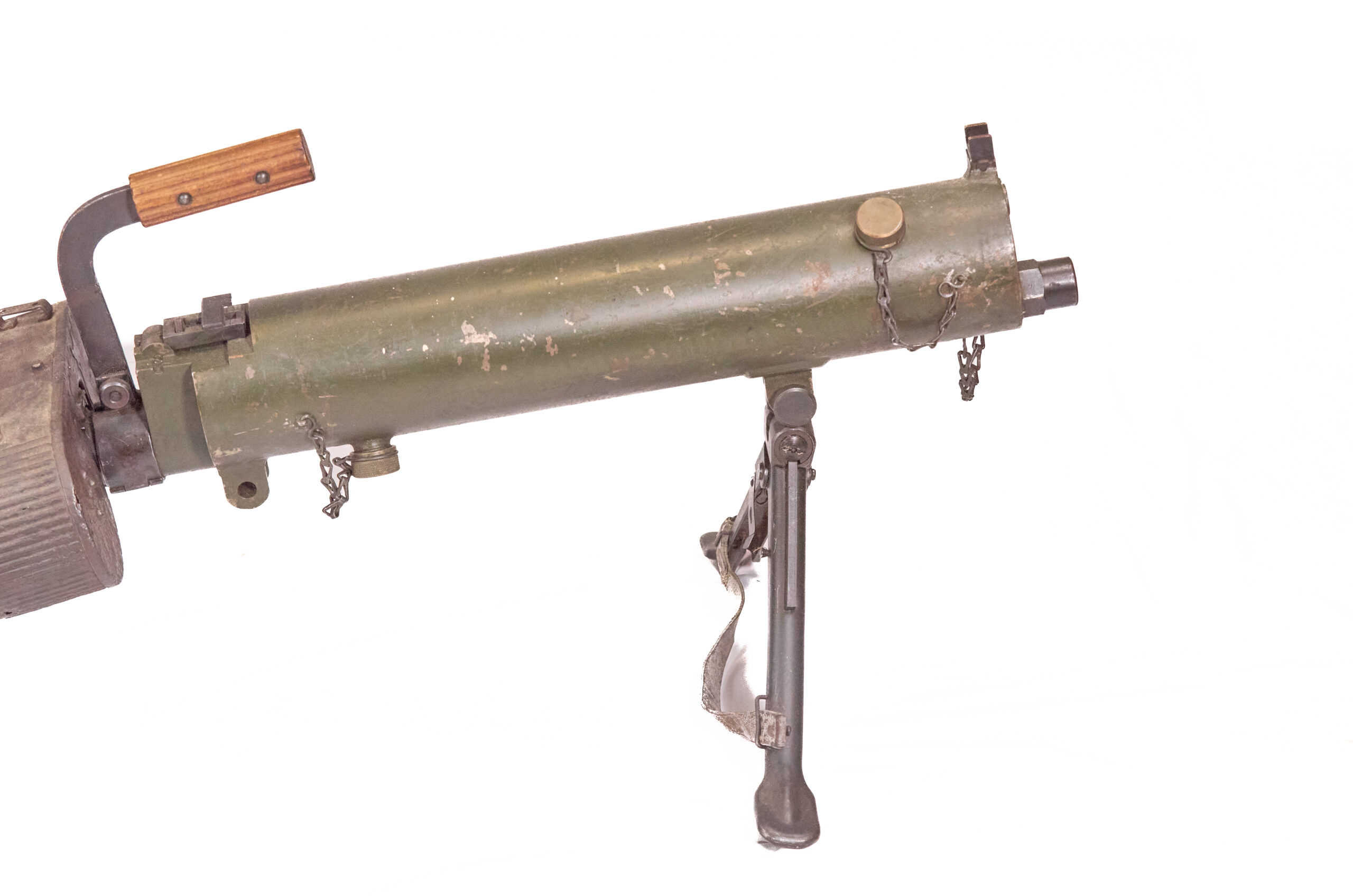
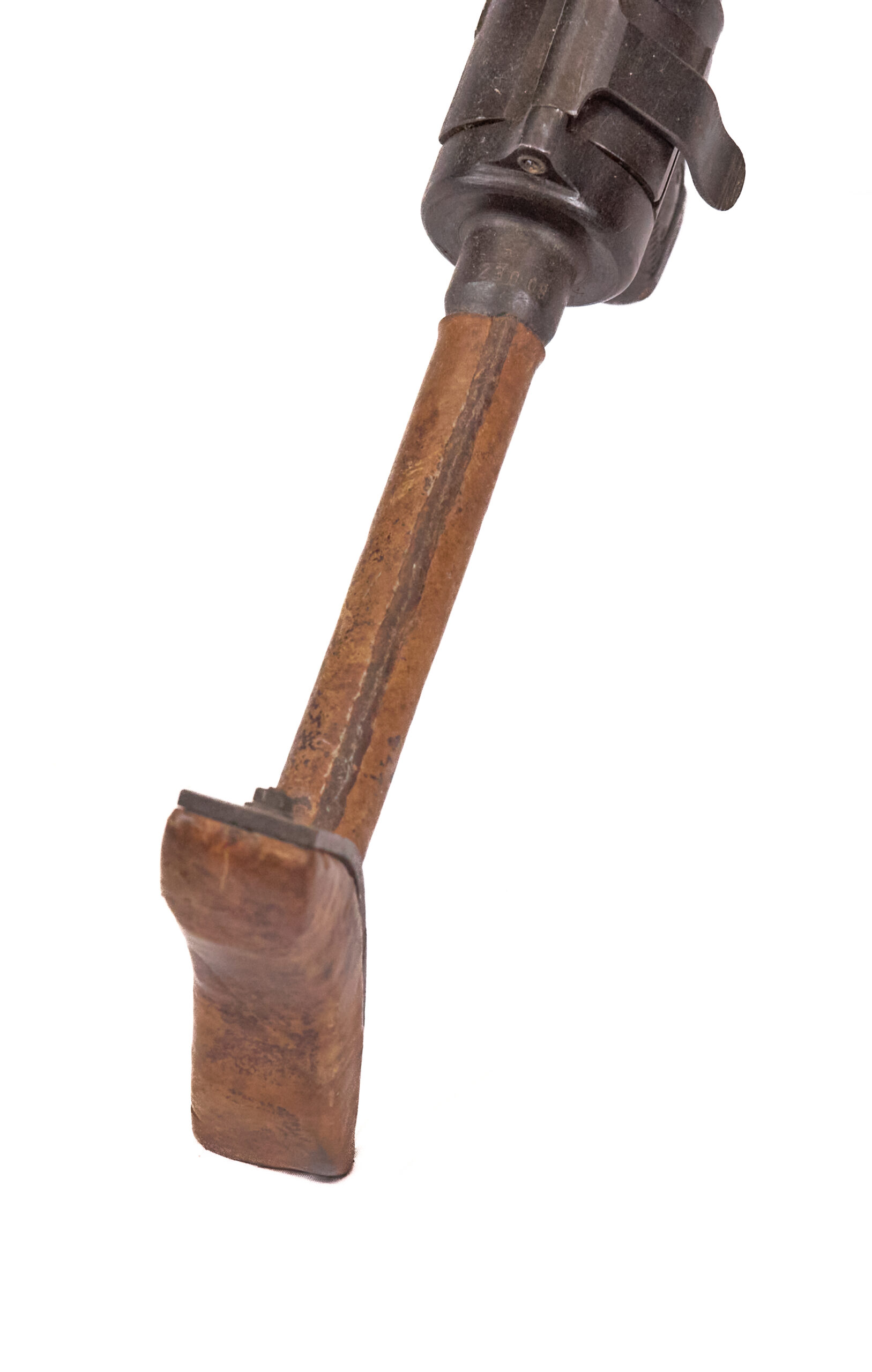
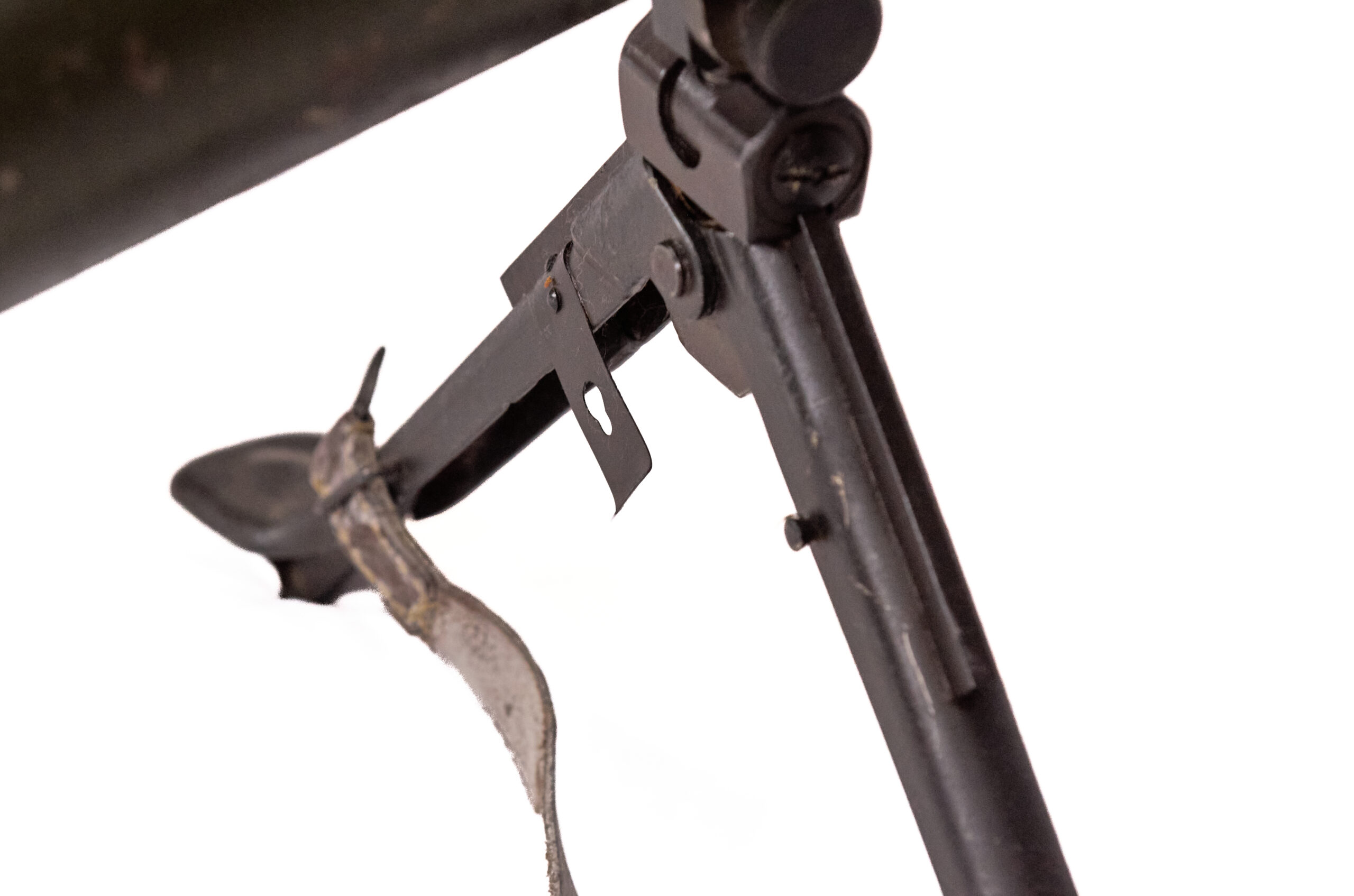
This display gun now appears in the later Romanian water-cooled ground configuration. That conversion replaced the original ventilated barrel jacket with a water jacket and sleeved the ends of the barrel to create a proper seal. In addition, the conversion added a bipod under the water jacket and fitted a buttstock at the rear, which made the gun more practical for ground use. The included 75-round double saddle drum magazine further reinforces the visual character of the set and remains one of the defining accessories associated with the MG 15 family.
Mechanically and visually, this gun reflects the transition from an aircraft-mounted flexible defensive weapon to a more stable ground-use role. Because of that, the piece carries much more interest than a standard aircraft-pattern display gun alone.
Historical Context / Pattern Development
The MG 15 traces its lineage back to the MG 30, which Rheinmetall developed using the locking system designed by Louis Stange in the mid to late 1920s. Although the designation “MG 15” had appeared earlier on a different Bergmann weapon, the later MG 15 neuer Art had nothing in common with the World War I gun beyond the model number. The earlier gun used a tipping-lock system. By contrast, the World War II MG 15 used a rotating bolt and lockring system.
During the Second World War, the MG 15 served in nearly all Luftwaffe aircraft fitted with flexible defensive positions. However, as aircraft armament advanced, the MG 15 became less effective in that original role. Even so, it remained entirely useful on the ground when paired with the right fittings. That practical afterlife explains why Romanian contract guns such as the ST 61 often saw continued service beyond their initial aviation role.
The Romanian water-cooled conversions are especially interesting because they show how an already specialized aircraft weapon could be adapted again for sustained ground use. Rather than discarding the pattern outright, Romanian service gave it a new role by adding a water jacket, bipod, and shoulder stock. That combination turned the gun into a much more specialized and visually distinctive field configuration. For collectors, that layered service history is a major part of the appeal.
Condition
This example is notable for several especially strong condition points. The Bakelite receiver extension remains in excellent condition. The buttstock is intact, and the leather buttstock wrapping also remains in great condition. The wood handle shows very well and adds to the overall presentation.
Because these contract guns often saw use both before and after conversion from aircraft mounting to ground service, condition matters here. This one presents very well overall. The saddle drum magazine shows signs of field use and issue, with surface pitting present. However, the unit remains whole and structurally sound. The water jacket is free of major dents, which is another strong point for a converted example of this type. Taken as a whole, this is an excellent ST 61 MG 15 display gun with strong originality, real visual presence, and clear service character.
Explore More at Old Steel
Follow us on Instagram:
Old Steel Guns on Instagram