Description
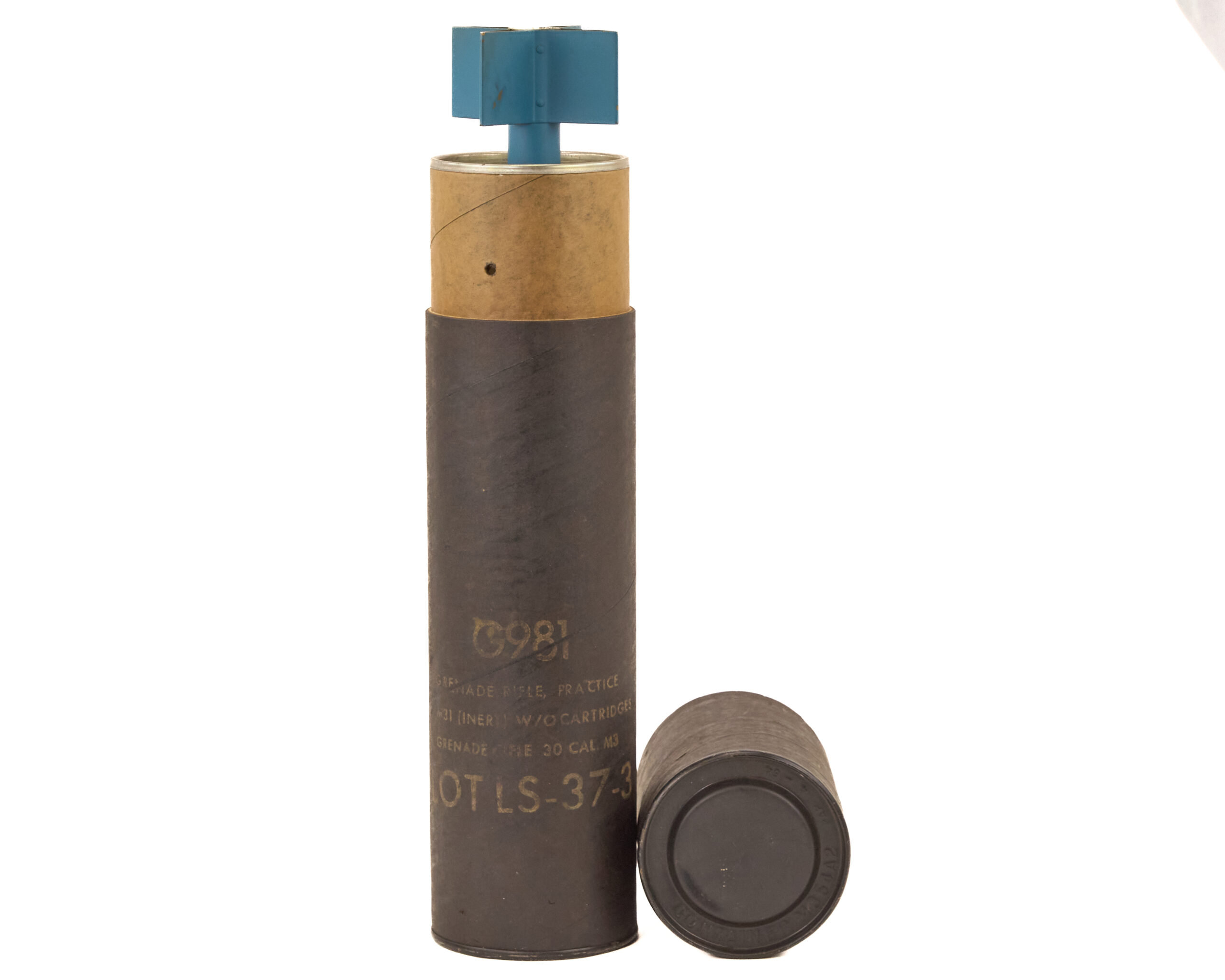
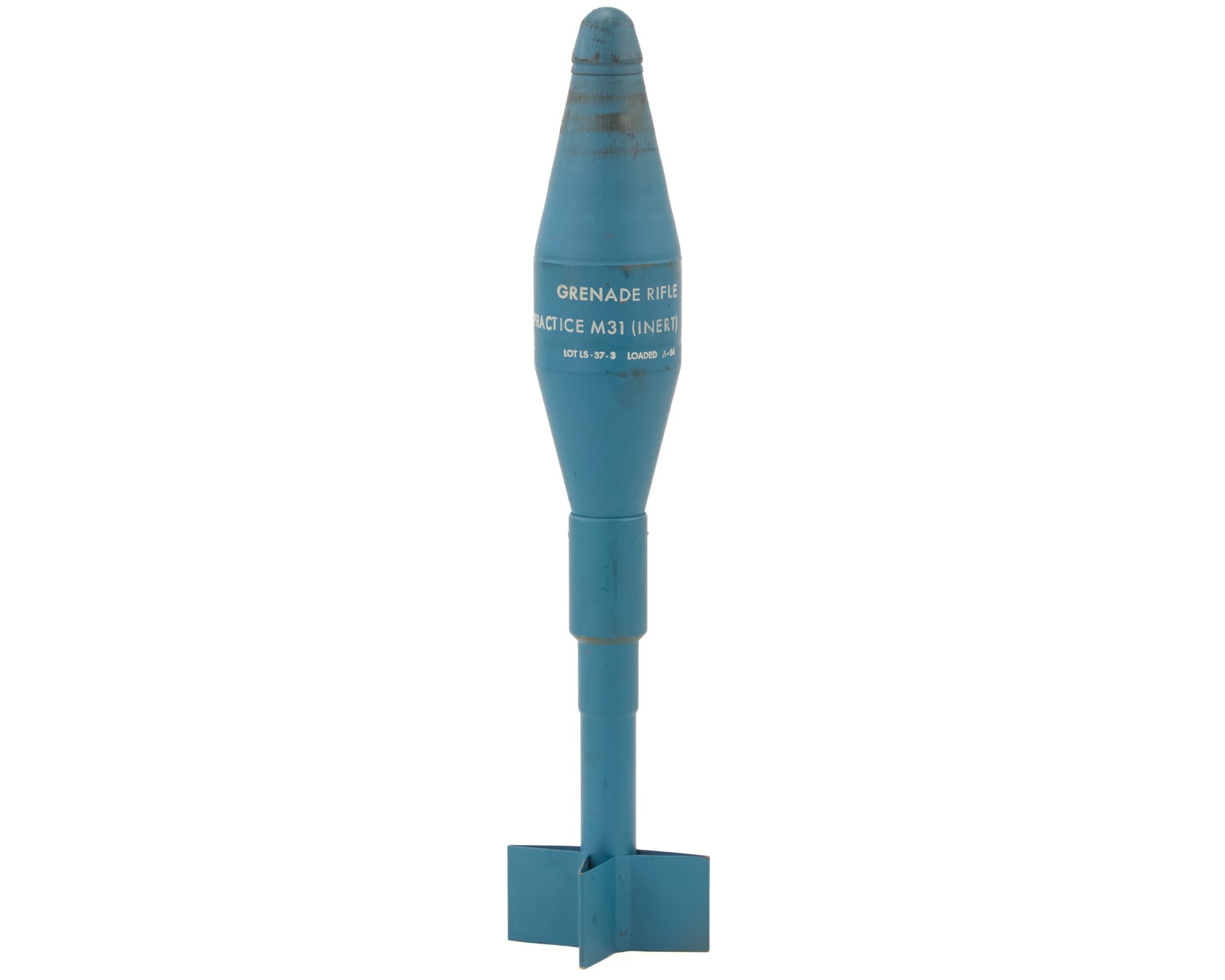
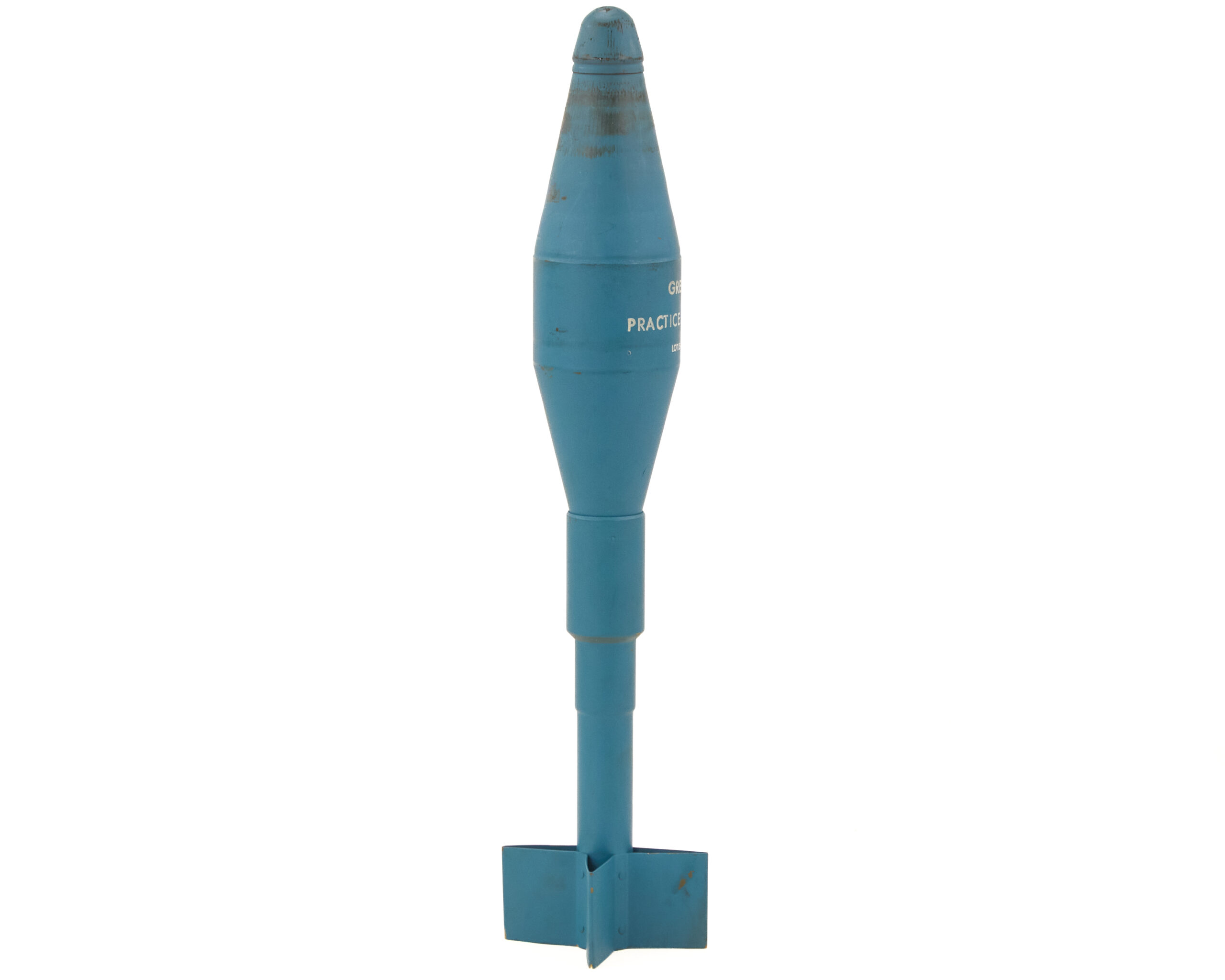
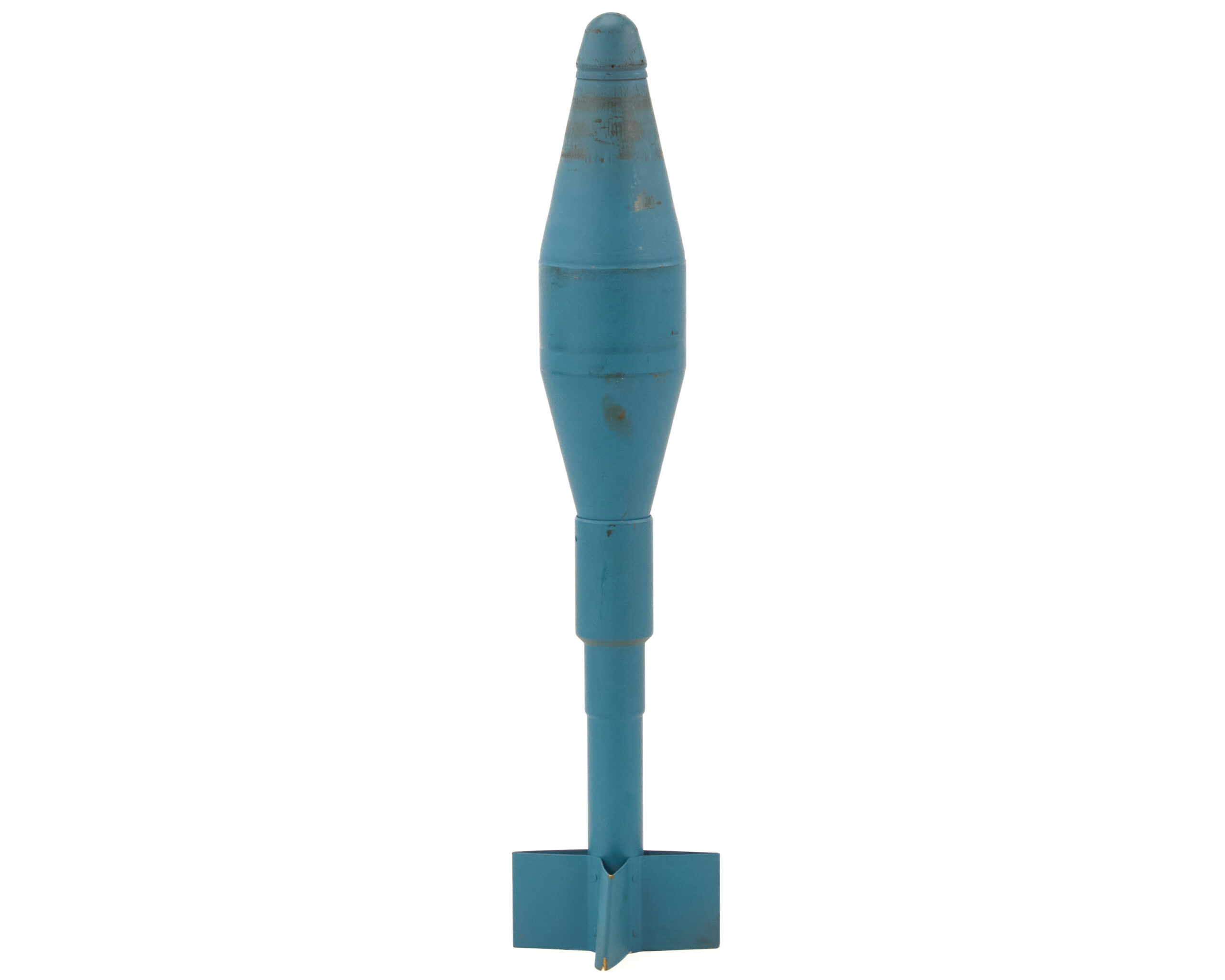
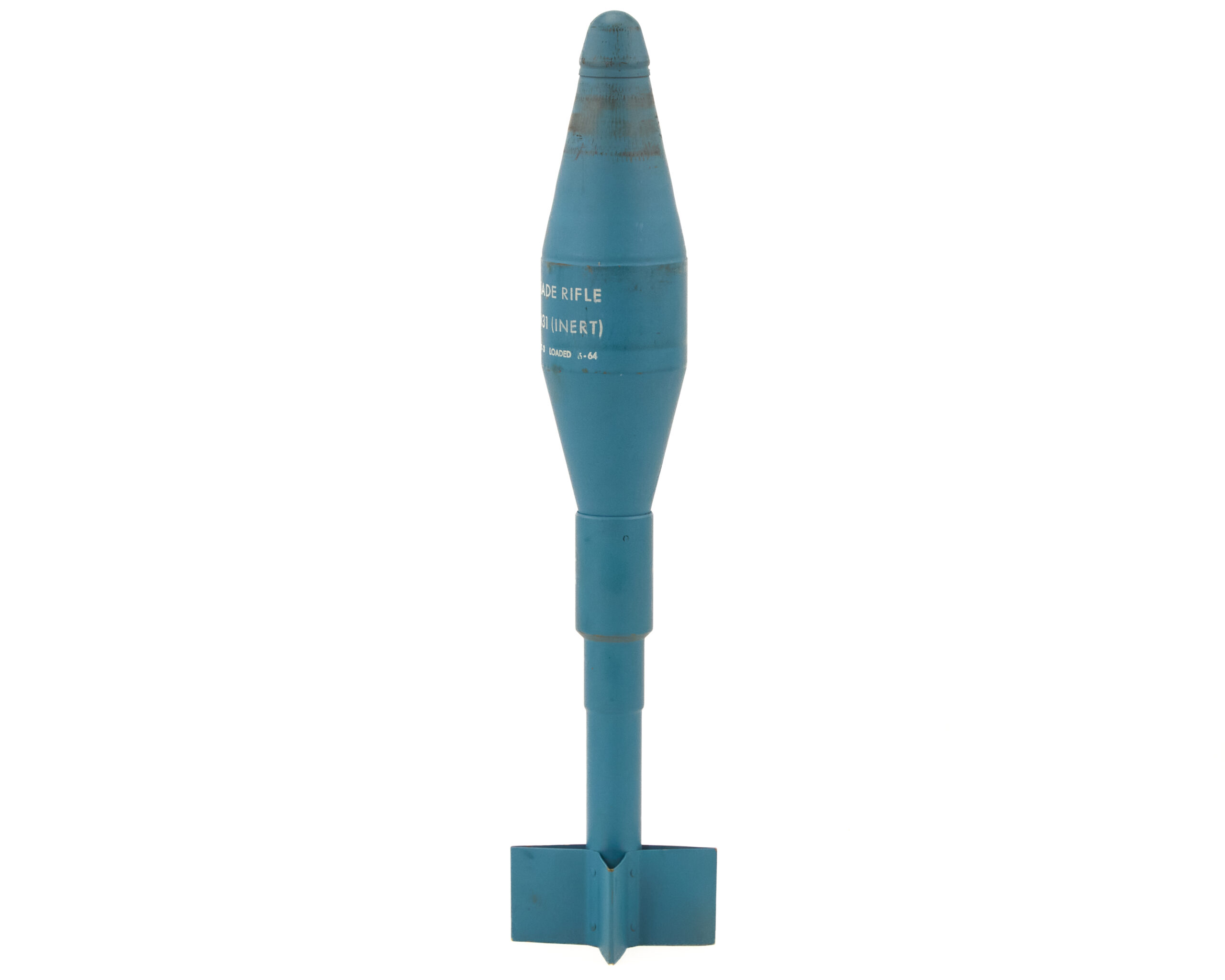
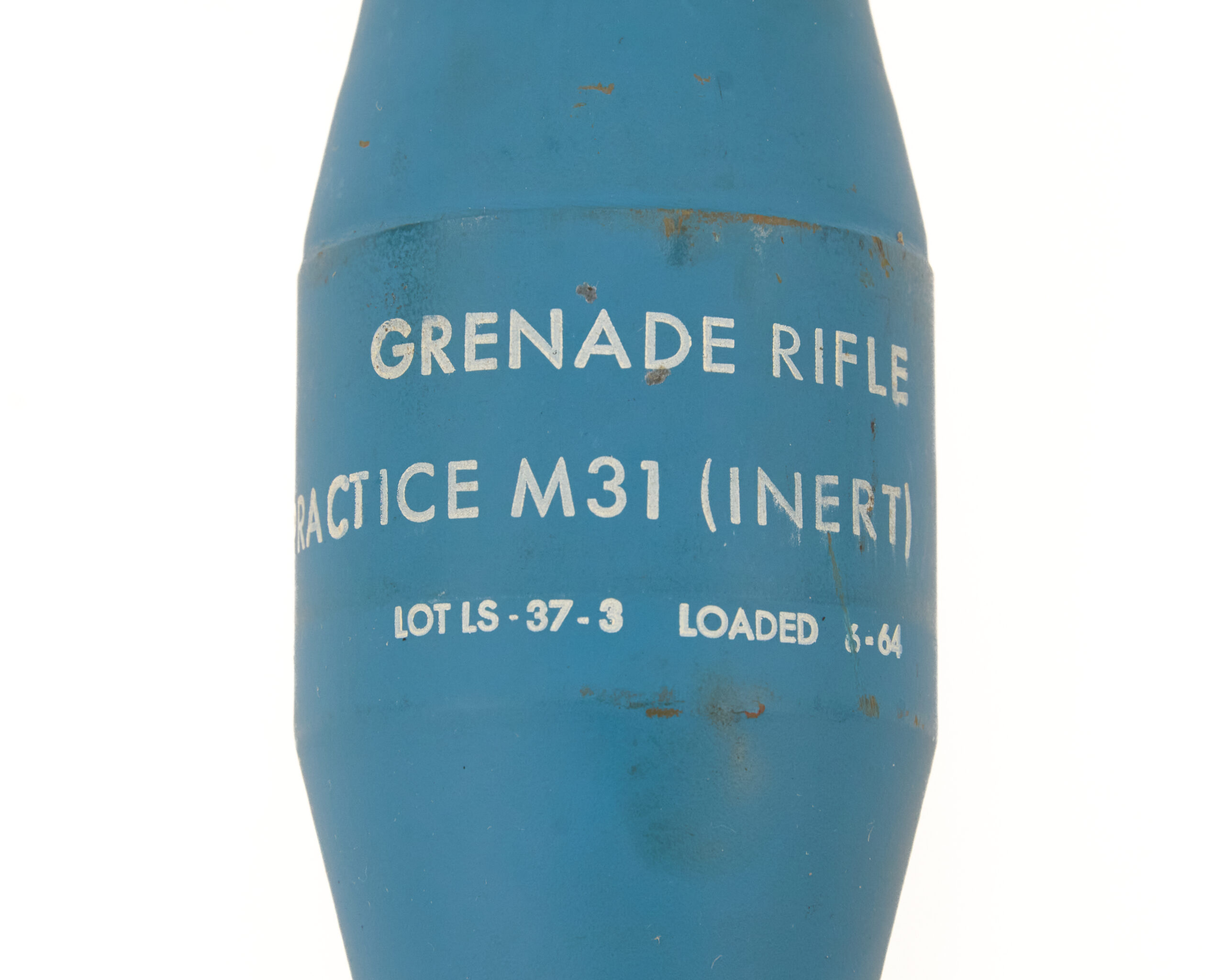
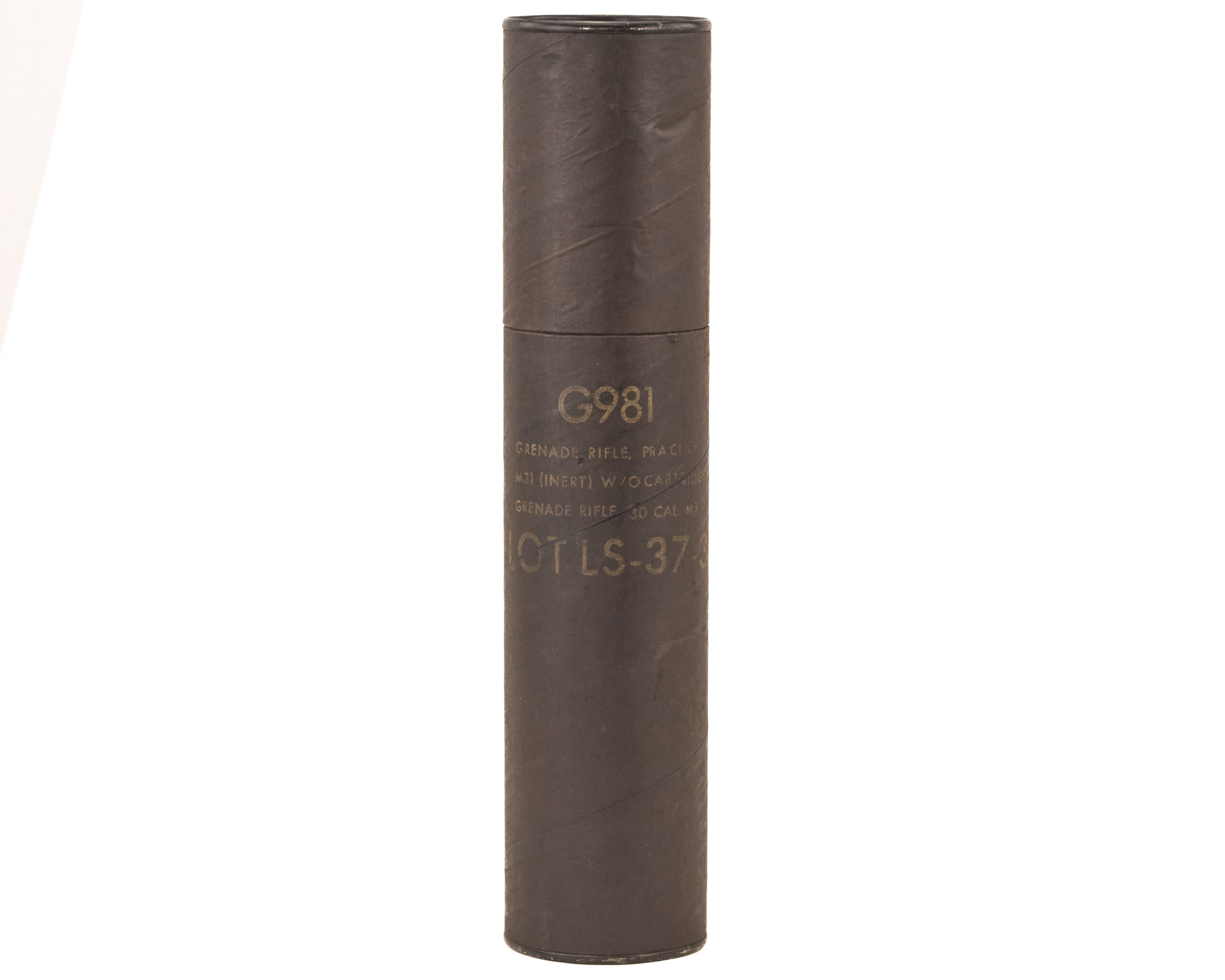
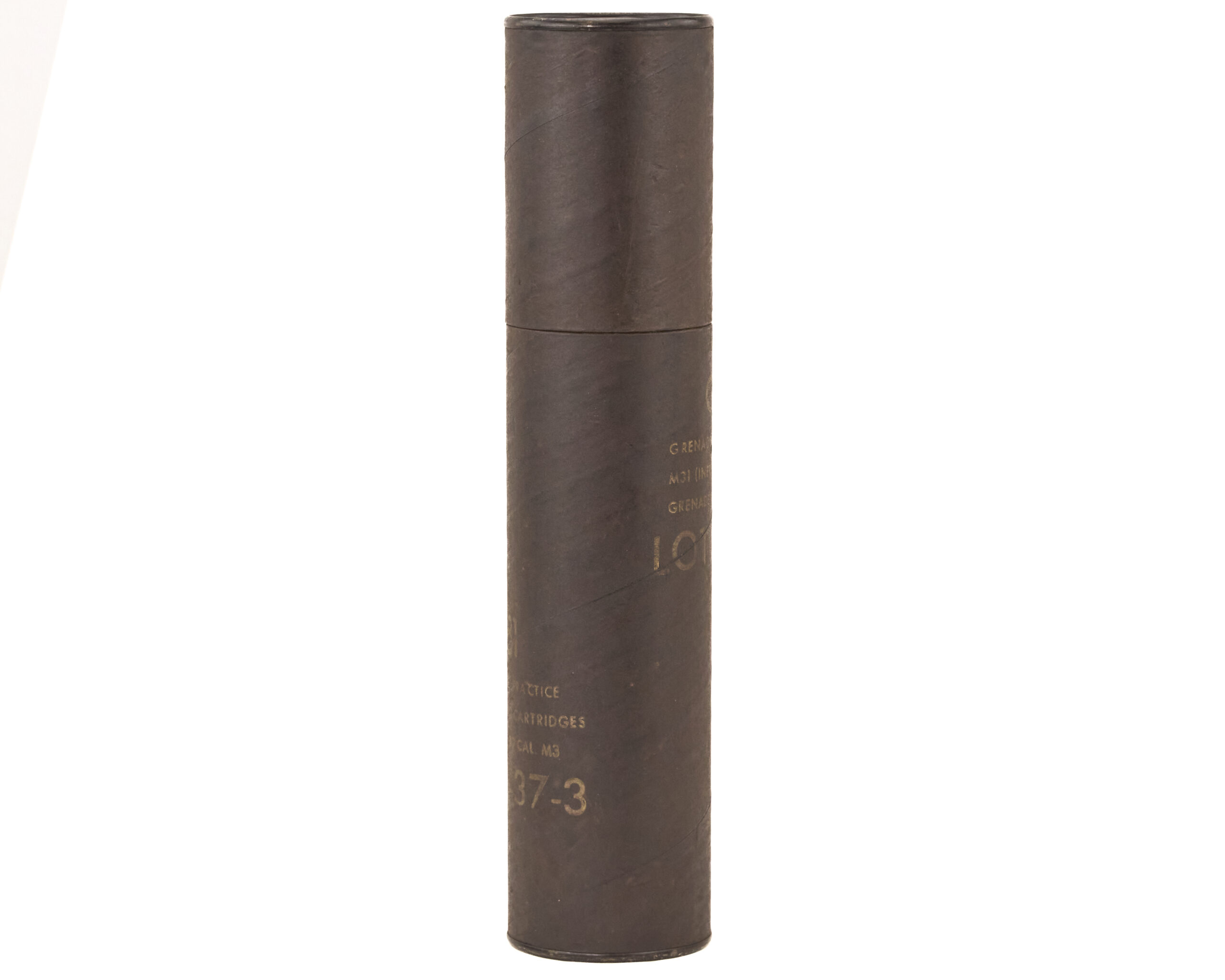
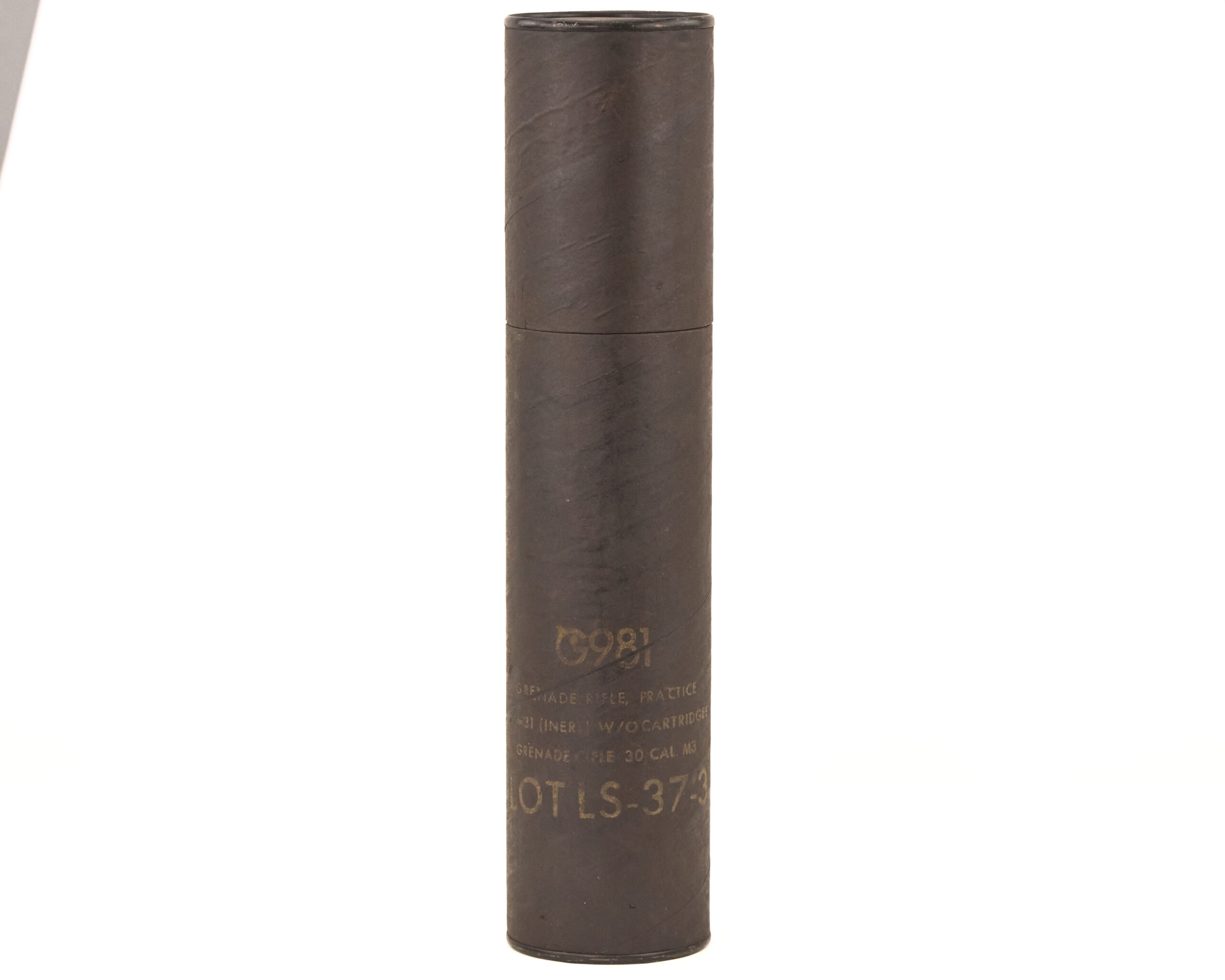
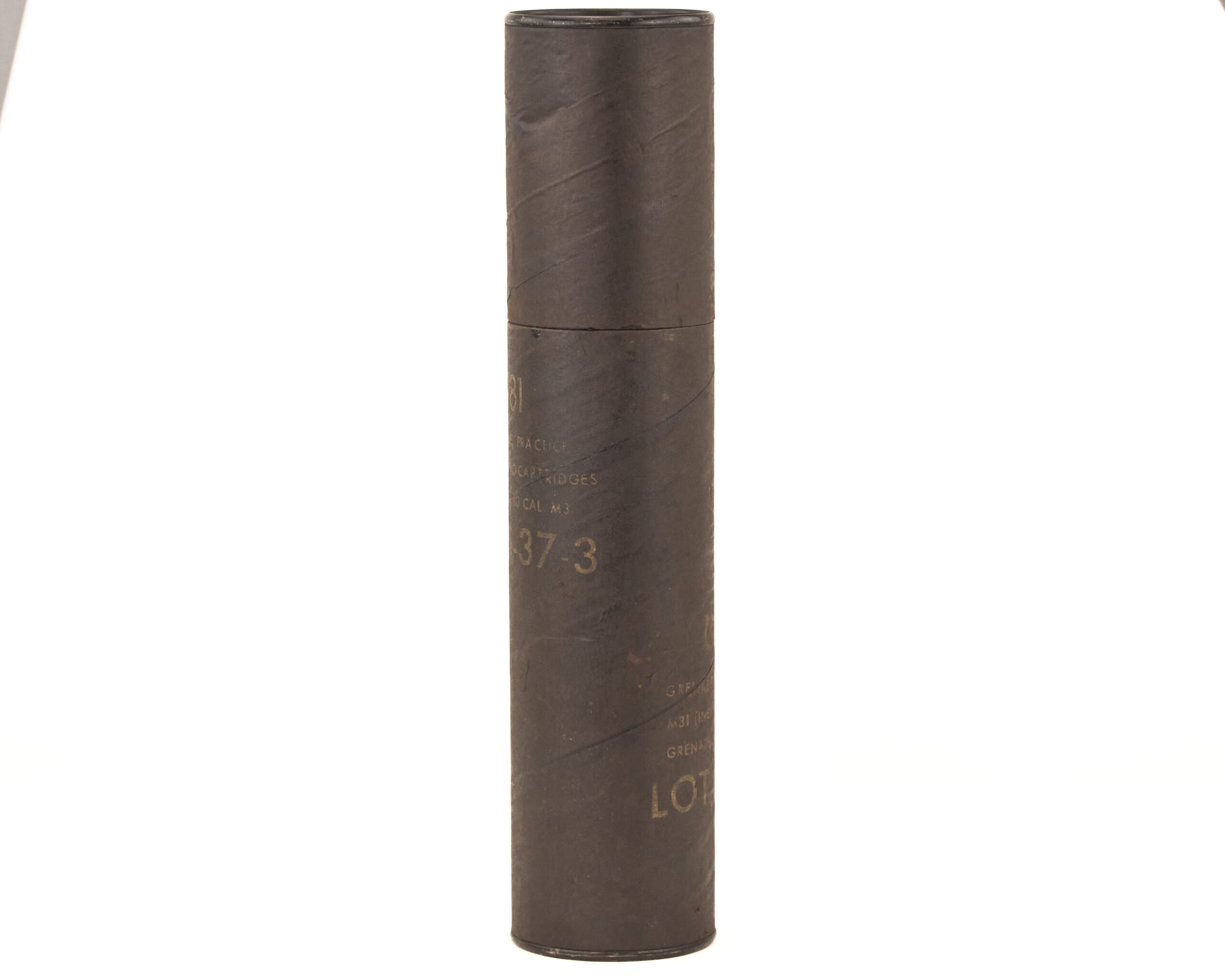
Grenade Rifle Practice M31 (Inert) in Original Correct Husk
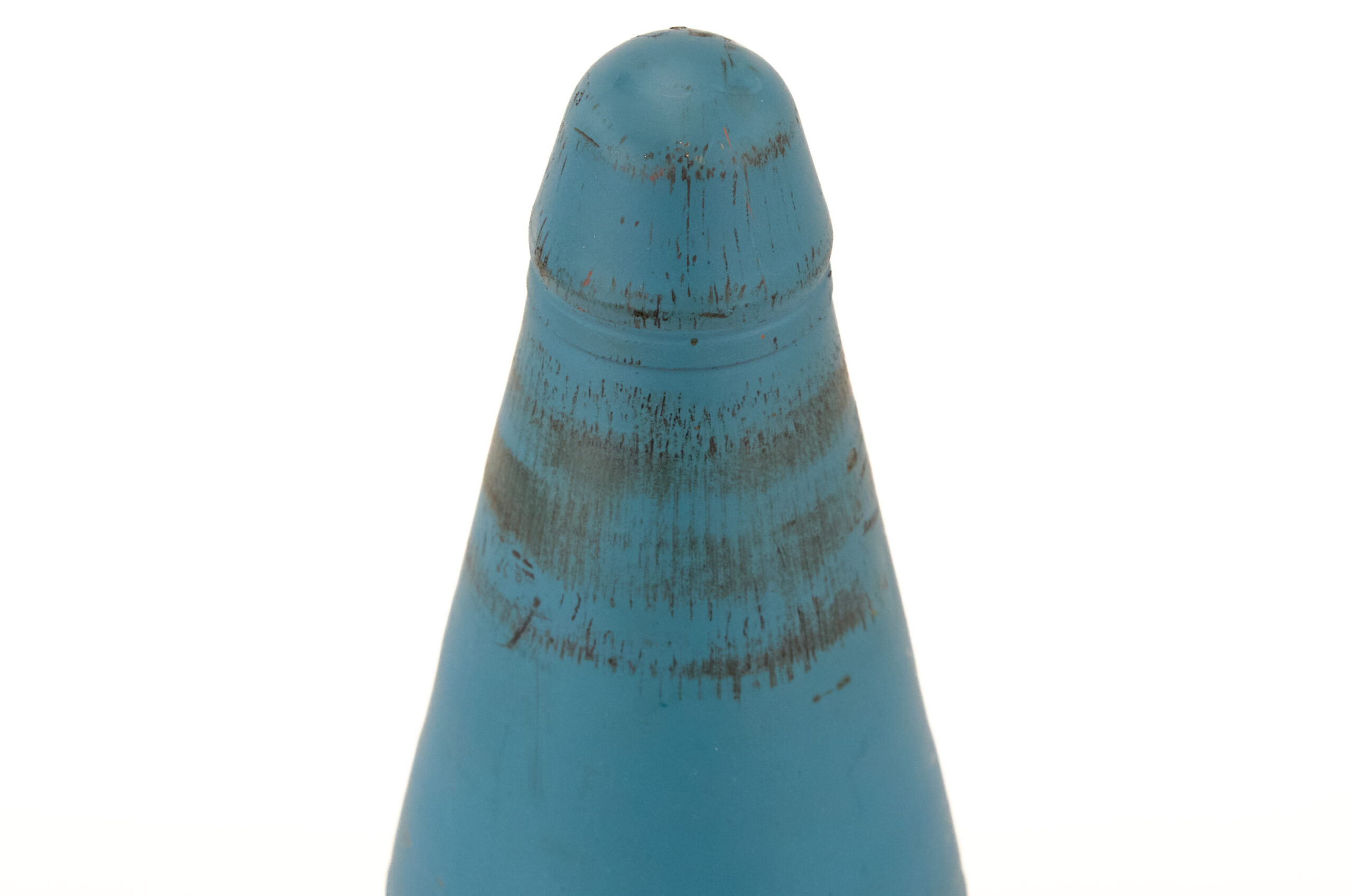
Blue Training Rifle Grenade M31 (Inert)
This inert Grenade Rifle Practice M31 represents the U.S. military’s fin-stabilized anti-tank rifle grenade developed in the late 1950s. The M31 HEAT replaced the Belgian ENERGA rifle grenade, which the United States Army and United States Marine Corps had adopted as an interim solution during the Korean War.
Unlike the ENERGA’s mechanical impact fuse, the M31 utilized a more reliable piezo-electric fuse system. As a result, it allowed effective detonation at impact angles up to 65 degrees. The HEAT (High-Explosive Anti-Tank) warhead featured a nose-initiated, base-detonated configuration. Furthermore, the warhead technology later influenced development of the M72 LAW disposable anti-tank rocket.
Historical Context and Service Use
The M31 was originally designed for use with the M1 Garand. However, it could also be launched from the M14 rifle and later the M16 rifle. To fire the grenade, soldiers fitted a detachable spigot launcher to the rifle’s muzzle—specifically the M7A3 for the M1 and the M76 for the M14. They then loaded a crimped M3 ballistic cartridge designed exclusively for grenade launching.
Although early documentation claimed effectiveness against main battle tanks (excluding frontal armor), by 1972 revised U.S. anti-armor doctrine limited its effectiveness to light tanks and thin-skinned vehicles. Subsequently, as doctrine evolved during and after the Vietnam War, rifle grenades were phased out in favor of the M72 LAW and the M203 grenade launcher.
The M31 remains documented in U.S. Army TM 43-0001-29 C2, “Data Sheets for Grenades,” confirming its formal classification and DODIC reference codes.
Design and Function
On impact, the nose cap collapses and compresses a crystal element, generating an electrical current. This current travels through an internal wire to a base-mounted detonator. A mechanical setback safety system grounds the firing circuit until approximately 10 meters of flight, after which the rotating disks align to complete the circuit. Compared to the ENERGA, the M31 was lighter and featured a 66mm warhead rather than 75mm. Penetration estimates reached approximately 200mm (8 inches) of rolled homogeneous steel.
Condition of This Example
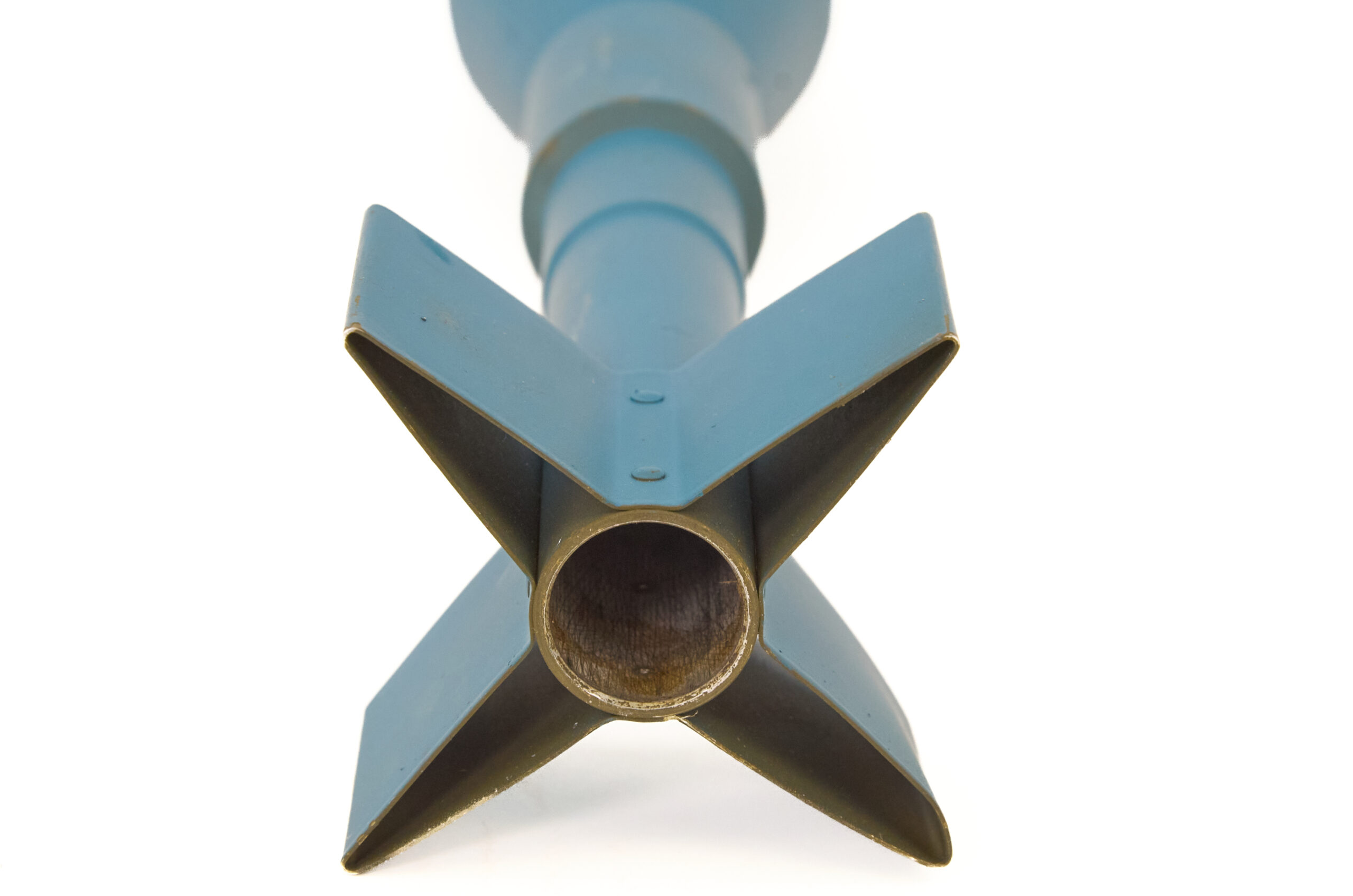
This example is completely inert and offered strictly as a non-explosive display item. The body remains in excellent condition, showing minimal handling or storage wear. The fins are intact and straight. The practice configuration and external components remain well preserved.
Importantly, the original husk is also present and in excellent shape. It shows minimal signs of use and retains strong structural integrity. The overall presentation reflects careful storage rather than extended field handling.
The
Because many surviving rifle grenades exhibit heavy wear or damage, examples in this condition are increasingly scarce. Consequently, this inert M31 represents an excellent display piece for advanced U.S. Cold War ordnance collections.
Explore More from Old Steel Guns
Minor variations in finish, markings, and small production details may appear from one example to another.
Militaria
Field Gear
Miscellaneous Equipment
Follow us on Instagram:
Old Steel Guns on Instagram